
Living in an apartment doesn’t mean you can’t enjoy fresh herbs, colorful blooms, or even homegrown veggies. Your outdoor area – whether it’s a cozy balcony or narrow terrace – holds surprising potential. With smart planning and a dash of creativity, you can turn even the tightest spot into a green retreat.
The secret lies in reimagining how you use vertical space. Walls, railings, and hanging structures become prime real estate for plants. Choose compact varieties like cherry tomatoes or dwarf citrus trees that thrive in containers. Mix textures and heights to add depth without crowding.
What you grow depends on your vision. Crave a peaceful escape? Try lush ferns and trailing ivy. Want fresh ingredients? Herbs like basil and mint grow happily in small pots. Your space might surprise you – many plants adapt well to limited areas when given proper care.
This guide will show you how to work with your balcony’s unique features. Learn to select multi-functional furniture, use light strategically, and arrange plants for maximum impact. You’ll discover that gardening in tight quarters isn’t just possible – it’s rewarding.
Understanding Your Balcony’s Unique Potential
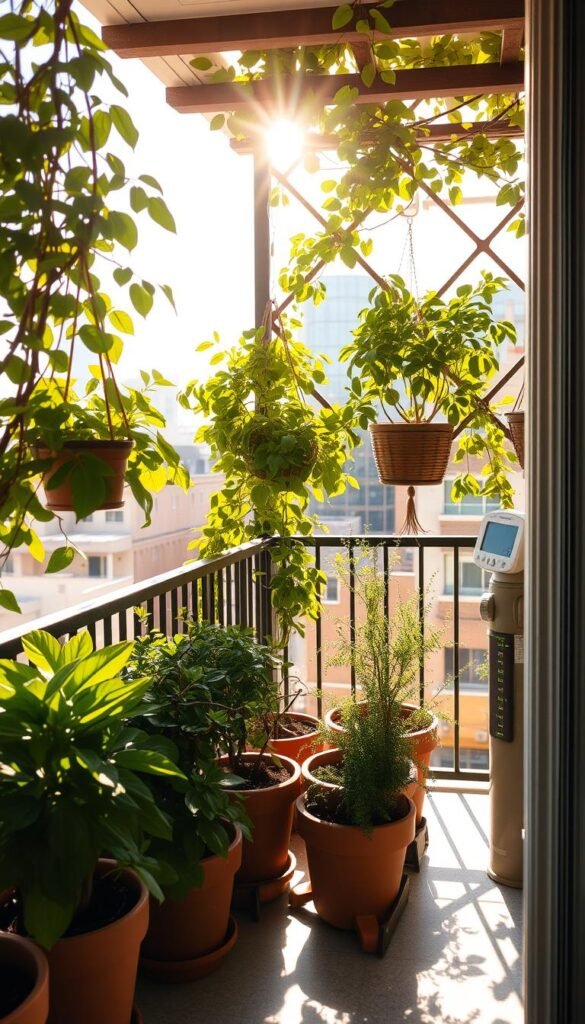
Every balcony has a personality shaped by its environment and layout. To create a thriving green retreat, start by observing how natural elements interact with your outdoor area. This knowledge helps you work with your space rather than against it.
Assessing Sunlight, Wind, and Microclimate
Track how sun moves across your balcony over a full day. South-facing spots get intense light, while north-facing ones stay shaded. Use free apps like Sun Seeker to map light patterns accurately.
Wind behaves differently at higher elevations. Test your space by hanging lightweight ribbons – their movement reveals airflow strength. Pair this with temperature checks using a basic thermometer.
Measuring Your Space and Structural Limits
Grab a tape measure and note floor dimensions, wall heights, and railing widths. Vertical surfaces often hold untapped potential for container gardens or wall planters.
Check building codes for weight limits – soil-filled pots get heavy fast. A typical concrete balcony supports 50 lbs per square foot, but wooden decks may have stricter rules.
| Factor | Common Challenges | Smart Solutions |
|---|---|---|
| Sun Exposure | Limited light in shaded areas | Use shade-loving plants like hostas |
| Wind Patterns | Drying soil quickly | Install windbreak screens |
| Structural Limits | Weight restrictions | Opt for lightweight fiberglass planters |
City balconies face unique issues like reflected heat from windows. Place heat-sensitive plants away from glass surfaces. If buildings block sunlight, try grow lights for herbs and veggies.
Planning Your Small Balcony Garden Vision
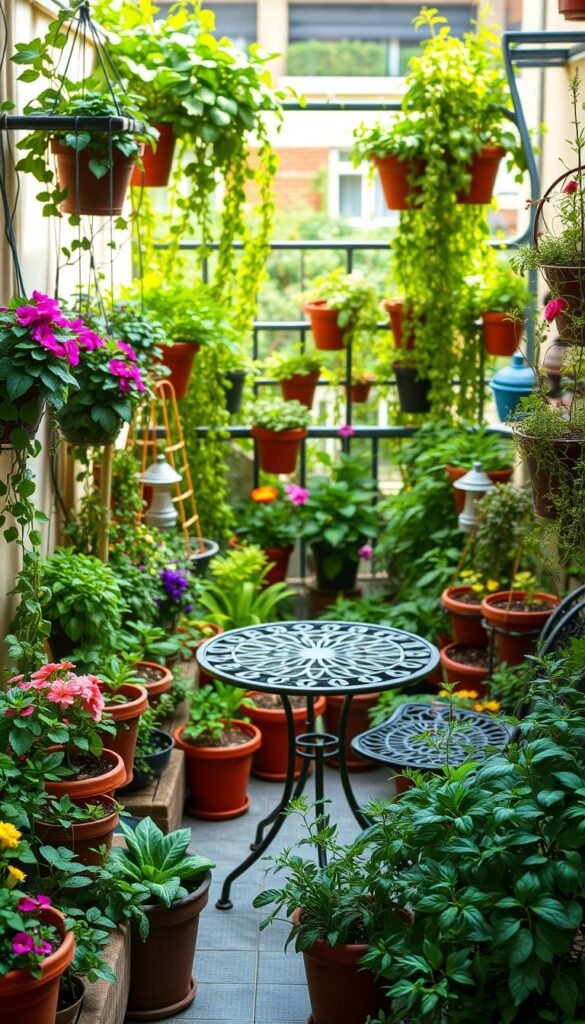
Transform your outdoor area into a personalized green sanctuary starts with a clear plan. Think of your balcony as a blank canvas where every inch matters. Before buying pots or plants, define what success looks like for your garden – is it fresh herbs for cooking, a colorful flower display, or a quiet reading nook?
Setting Your Garden Objectives
Start by asking how you want to use your space. Do you crave privacy from neighbors? Maybe vertical vines on a trellis could help. Need fresh ingredients? Compact herbs like thyme and oregano thrive in tight spots. Urban dwellers often combine multiple goals – like mixing edible plants with fragrant jasmine for dual-purpose beauty.
Sketching a Layout and Choosing Focal Points
Grab graph paper and map your balcony’s dimensions. Mark permanent features like doors or electrical outlets first. Then play with movable elements – will that bistro table work better near the railing or against the wall? Small balcony garden layouts benefit from one standout feature, like a dwarf lemon tree in a decorative pot or a cascading flower wall.
| Focus Area | Common Mistakes | Smart Solutions |
|---|---|---|
| Plant Selection | Overcrowding with too many species | Pick 3-5 complementary plants |
| Furniture Placement | Blocking walkways | Use foldable chairs |
| Seasonal Planning | Ignoring weather changes | Rotate plants quarterly |
Leave 18-24 inches between planters for easy access. Dark corners? Add reflective surfaces to bounce light onto shade-loving ferns. Remember – your sketch isn’t set in stone. Test arrangements with painter’s tape on the floor before committing.
Maximize Small Spaces with Clever Balcony Garden Design Ideas
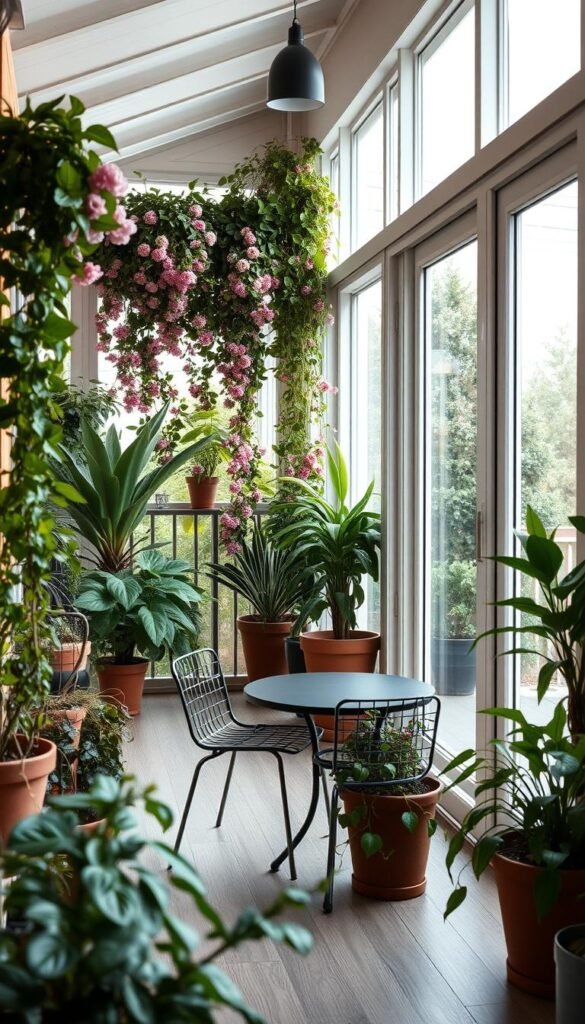
Blurring the line between inside and outside creates a harmonious flow that expands your living area visually. Treat your balcony as an extension of your home’s personality by mirroring interior colors and textures. A neutral indoor palette? Try soft greens and whites outdoors. Bold accent walls inside? Add matching throw pillows or planters outside.
Furniture style matters too. If your home leans modern, choose sleek metal chairs with geometric planters. For rustic interiors, weathered wood benches paired with terracotta pots work beautifully. This approach makes both areas feel connected rather than disjointed.
Plants play a starring role in bridging these zones. Ferns near a bohemian reading nook inside? Repeat them in hanging baskets outside. Herbs in the kitchen window? Grow matching varieties in railing planters. Explore more tips for elevating your space with a gardening aesthetic.
Consider sightlines from your main rooms. Position statement plants where they’re visible through windows – like a flowering hibiscus beside your sofa’s view. This clever trick makes your entire space feel larger and intentionally designed.
Textiles tie everything together. Outdoor rugs that match indoor patterns create continuity. Weather-resistant curtains in similar hues to your drapes add softness. Even small touches like coordinating candle holders or artwork frames strengthen the connection between your home and its leafy extension.
Selecting the Perfect Containers and Materials
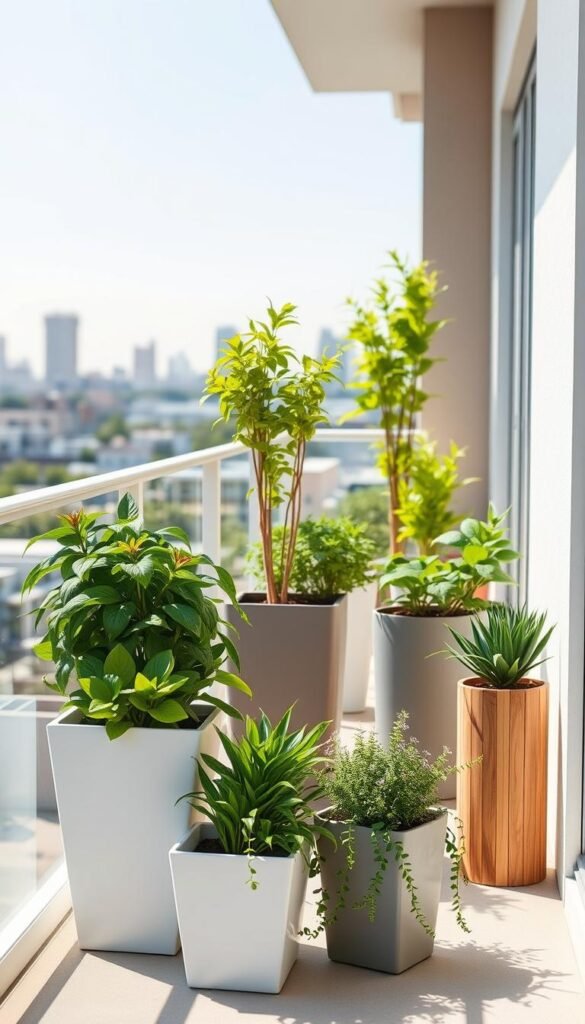
Your container choices make or break your balcony oasis. The right materials protect your plants while keeping structural stress low. Let’s explore how to balance practicality with style in your elevated gardening setup.
Prioritizing Lightweight and Durable Options
Plastic and fiberglass planters shine here – they’re 60% lighter than traditional clay pots. Fabric grow bags add versatility, folding flat when empty. For windy spaces, opt for textured finishes that grip railings securely.
Consider this comparison:
| Material | Weight | Best For |
|---|---|---|
| Plastic | 1-3 lbs | Herbs & annuals |
| Fiberglass | 4-8 lbs | Small trees |
| Fabric | 0.5-2 lbs | Vegetables |
Ensuring Proper Drainage and Safety
Always check for drainage holes – drill extras if needed. Elevate pots 1″ off the floor using wooden slats to prevent water stains. In hurricane-prone areas, secure containers with clear fishing line tied to anchors.
Rot-resistant materials like cedar or UV-stabilized polypropylene last longest. Remember: a 10-gallon ceramic pot can weigh 40 lbs when wet – stick to lighter options unless your balcony’s built for heavy loads.
Creative Vertical Gardening Solutions
Unlock new dimensions in your outdoor oasis by thinking upward. Vertical surfaces offer untapped opportunities to grow lush greenery without cluttering your floor. This approach lets you use vertical space creatively while maintaining room for relaxation and movement.
Using Wall-Mounted Planters and Trellises
Transform blank walls into vibrant plant displays with modular systems. Magnetic herb boards let you rearrange pots like living artwork. For climbing plants, install tension rod trellises that require no drilling – perfect for renters.
Consider light exposure when positioning planters. South-facing walls suit sun-loving strawberries, while shaded areas host ferns beautifully. Mix textures by pairing smooth metal containers with woven bamboo screens.
Experimenting with Hanging Baskets and Shelves
Overhead spaces become productive with cascading plants. Use adjustable pulley systems for easy watering access. Try tiered shelves along railings – the top level for herbs, lower tiers for flowering annuals.
For wind protection, secure hanging displays with carabiners. Trailing varieties like sweet potato vine soften edges while drawing eyes upward. This trick creates depth, making compact areas feel spacious.
DIY and Upcycling for Unique Planter Ideas
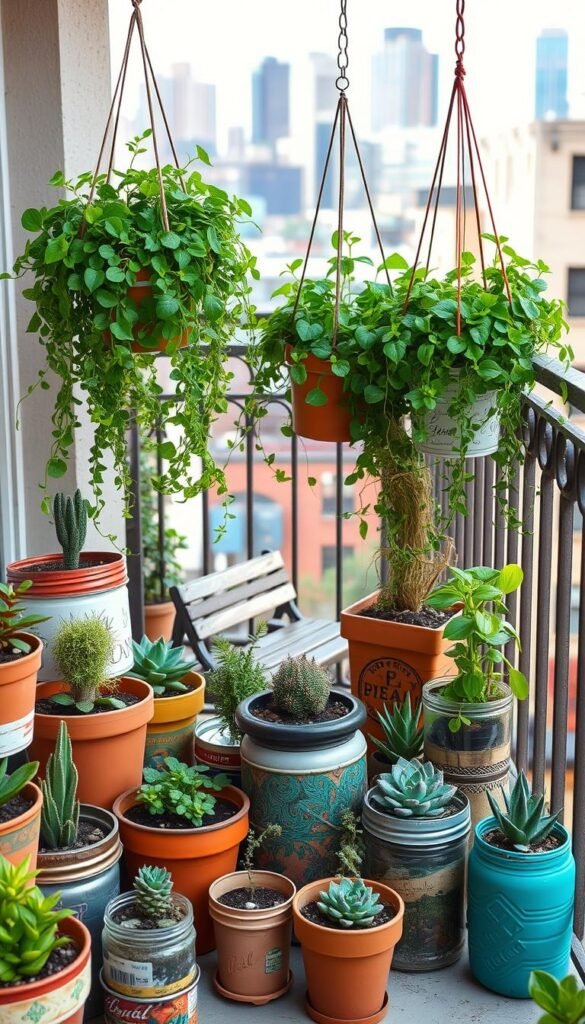
Your balcony deserves planters as unique as your green thumb. Transforming everyday objects into plant homes adds personality while stretching your budget. This hands-on approach lets you craft containers that fit like puzzle pieces in tricky spots.
Repurposing Household Items into Garden Displays
That chipped teapot collecting dust? Drill drainage holes and turn it into a whimsical herb planter. Old rain boots become quirky homes for succulents when hung vertically. You’ll find endless ideas in forgotten items – wooden crates stack for modular systems, while colanders make perfect strawberry planters.
| Material | Upcycling Idea | Best For |
|---|---|---|
| Old Boots | Hanging planter | Drought-tolerant plants |
| Wooden Crates | Modular garden wall | Herbs & lettuce |
| Ladders | Vertical display | Trailing ivy & petunias |
Custom-Building Planters to Fit Your Space
Measure awkward corners and build planters that hug walls or wrap around railings. Use rot-resistant cedar for window box frames or PVC pipes for vertical towers. One gardener transformed gutters into a cascading mint garden – perfect for narrow spaces.
Add interest with foldable designs that expand as your plant collection grows. Built-in water reservoirs keep roots hydrated during hot weeks. For more creative gardening ideas, explore unconventional container combinations that spark joy every time you step outside.
Incorporating Multifunctional Outdoor Furniture
Your outdoor oasis deserves furniture that works as hard as your plants. Think beyond basic seating – every piece should solve multiple challenges. A rolling bar cart becomes a herb station by day and cocktail hub by night. Foldable stools tuck under tables when not in use, freeing up precious walking areas.
Choosing Pieces That Pull Double Duty
Storage ottomans offer hidden space for tools while providing extra seating. Look for weather-resistant fabrics like solution-dyed acrylic that shrug off rain. Aluminum frames resist rust and stay lightweight – perfect for rearranging when hosting friends.
Wheeled plant stands let you chase sunlight for potted veggies. Pair them with stackable chairs that disappear into corners. For homes with limited square footage, wall-mounted folding tables create instant dining spots without permanent footprint.
Match your furniture style to your home’s interior for seamless flow. Neutral tones work well for modern spaces, while repurposed items add rustic charm. A vintage trunk weatherproofed with sealant becomes both storage and coffee table.
Prioritize quick-dry cushions and rot-resistant materials. You’ll love how easy it is to refresh your layout seasonally when pieces move effortlessly. Your balcony becomes an extension of your living area – ready for morning coffee or evening gatherings.