
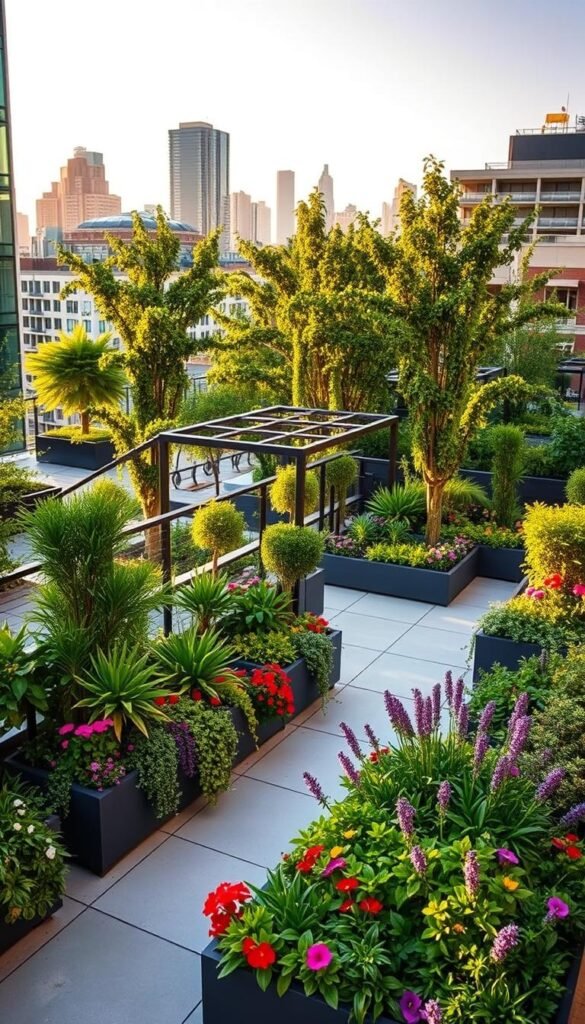
Modern cities face a growing challenge. As populations expand, concrete dominates landscapes, creating heat-trapping environments that lack natural beauty. But there’s hope—innovative design approaches are reshaping how we interact with our surroundings, blending nature and architecture to benefit both people and the planet.
Imagine walking through a neighborhood where vibrant plant life softens steel structures. These green havens do more than look pretty—they clean the air, reduce temperatures, and create gathering spots for communities. Across the U.S., forward-thinking projects prove that even small interventions can dramatically improve quality of life in dense areas.
You’ll discover how cities are reimagining unused lots, rooftops, and sidewalks as opportunities for ecological growth. From vertical gardens to rainwater-capturing parks, these solutions address climate challenges while fostering social connections. It’s not just about adding plants—it’s about crafting spaces that work smarter for everyone who calls the city home.
Urban Transformation: The Rise of Bold Garden Design
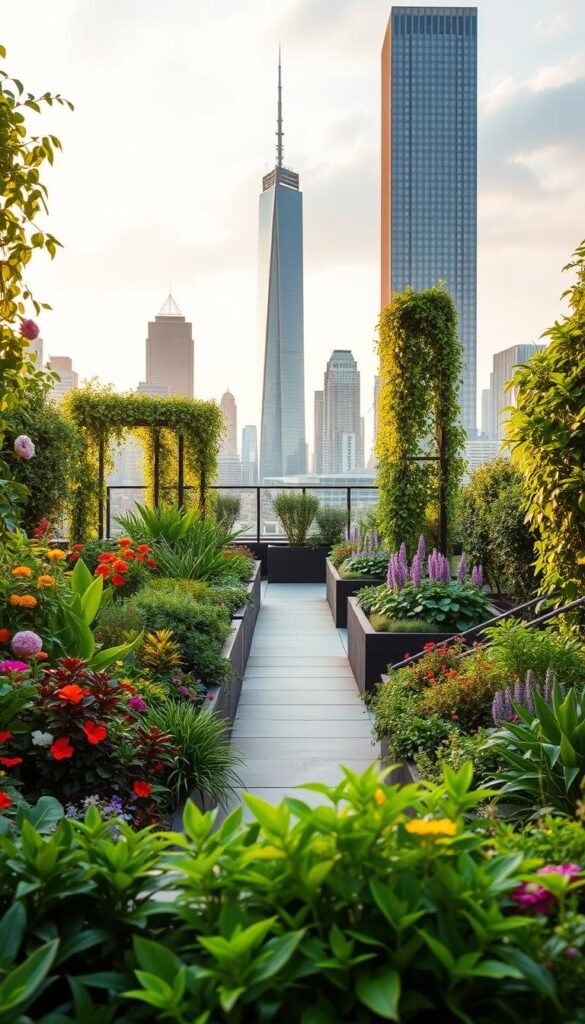
Traditional city planning can’t keep up with today’s environmental demands. You’ll find cities swapping gray infrastructure for living systems that tackle heat islands and polluted environments. This shift isn’t just aesthetic—it’s survival strategy.
The Need for Innovative Urban Renewal
Why does urban development need rethinking? Walk through any major metro area at noon. You’ll feel pavement radiating heat and smell exhaust lingering in stagnant air. These conditions worsen yearly, pushing communities toward breaking points.
Bold green interventions reverse this trend. Rain gardens absorb stormwater while filtering toxins. Rooftop meadows insulate buildings, cutting energy costs. “Green infrastructure isn’t just decoration—it’s critical urban medicine,” notes Lila Torres, NYC Urban Planner.
Impact on Community and Environmental Health
You might notice neighbors lingering longer in revitalized plazas. Studies show access to green urban areas reduces stress hormones by 15%. Trees along sidewalks don’t just beautify—they trap particulate matter, improving air quality for entire blocks.
| Feature | Traditional Approach | Bold Garden Design |
|---|---|---|
| Green Space Integration | Occasional parks | Connected green corridors |
| Community Involvement | Top-down planning | Resident-led planting initiatives |
| Environmental Impact | Localized benefits | Ecosystem-wide improvements |
These changes create ripple effects. Cooler microclimates let communities enjoy outdoor spaces year-round. Cleaner air means fewer asthma cases. When cities invest in nature-forward urban development, everyone breathes easier—literally.
Revitalize Urban Spaces with Bold Urban Garden Design Solutions
Cities aren’t static—they’re living ecosystems needing smart interventions. Successful renewal projects blend beauty with purpose, turning forgotten corners into vibrant destinations. Let’s explore how green strategies create lasting value where concrete once dominated.
Think beyond flower beds. The best design solutions serve dual roles—beautifying spaces while solving practical challenges. A pocket park might cool sidewalks and host weekend markets. Rooftop gardens can grow food while insulating buildings.
Four key principles drive transformation:
- Connect green areas to form wildlife corridors
- Use native plants that thrive with minimal care
- Design flexible layouts for community events
- Integrate rainwater harvesting systems
These tactics turn bland zones into lively hubs. In Detroit, community-led green initiatives transformed vacant lots into playgrounds and urban farms. Property values near these sites rose 9-14% within three years.
Your city can achieve similar results. Strategic placement of trees along shopping districts increases foot traffic by 20%. Green plazas become natural gathering spots, fostering connections between neighbors. When spaces work harder, everyone benefits—from cleaner air to stronger local economies.
The proof? Philadelphia’s Green City Plan reduced stormwater costs by $170 million while creating 1,200 jobs. Smart design isn’t just pretty—it’s profitable.
Nature and Architecture: Creating Living Urban Landscapes
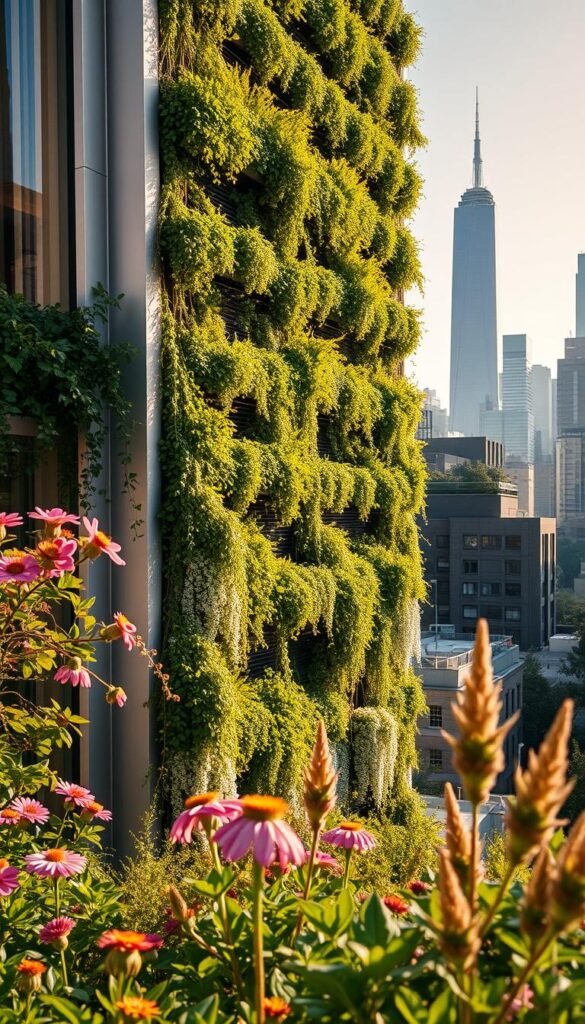
Imagine working in an office where walls breathe with life. Architects now weave nature into buildings, turning concrete jungles into thriving ecosystems. This fusion cools cities, cleans air quality, and makes daily life healthier.
Vertical Gardens: More Than Just Pretty Walls
Those leafy structures climbing skyscrapers? They’re working overtime. Milan’s Bosco Verticale towers host 900 trees that filter pollution equal to 30,000 square feet of forest. During summer, their greenery slashes surface temps by 8°C—cutting energy bills for residents below.
Living walls do triple duty. They trap dust particles while creating habitats for birds and bees. Rainwater flows through their irrigation systems, reducing storm drain overload. You’ll find these plant-covered buildings in hot zones like Phoenix, where they combat urban heat islands.
Design That Heals Body and Mind
Hospitals with garden views speed patient recovery by 8%. Offices using biophilic design see 15% happier teams. Why? Our brains relax when surrounded by natural patterns. Even fake plant walls boost creativity—though real ones work better at improving air.
Schools in Chicago report calmer classrooms after adding living walls. “Students focus better when nature’s present,” says Principal Maria Gomez. The approach works across cities—from apartment complexes to transit stations. When buildings breathe, people thrive.
Designing Walkable, Mixed-Use Urban Communities

Picture stepping out your front door to find everything you need within a 15-minute stroll. This vision drives today’s most exciting city planning innovations, reshaping how people live, work, and connect.
The 15-Minute City Concept in Everyday Life
You might find your morning routine transformed. A corner café for coffee, a pharmacy two blocks away, and workplaces within biking distance. Mixed-use developments combine housing with shops and parks, turning streets into vibrant social hubs.
Key features make this work:
- Essential services clustered in walking zones
- Protected bike lanes connecting neighborhoods
- Shared public spaces that host markets and events
Paris shows what’s possible. Since launching their 15-minute plan, cycling surged 60% while air pollution dropped. “When people rediscover their neighborhoods, magic happens,” says urbanist Anne Hidalgo. Locals spend more at nearby businesses, strengthening communities.
Melbourne’s 20-minute neighborhoods achieved similar wins. Traffic stress decreased as residents chose walking over driving. Local economies grew 18% faster than other districts, proving walkable urban life boosts prosperity.
Your commute could become a pleasant walk past shops and green spaces. Fewer cars mean cleaner air and spontaneous chats with neighbors. This approach allows cities to create inclusive spaces where everyone—regardless of income—accesses fresh food and healthcare nearby.
Smart Urban Infrastructure: Technology Meets Sustainability
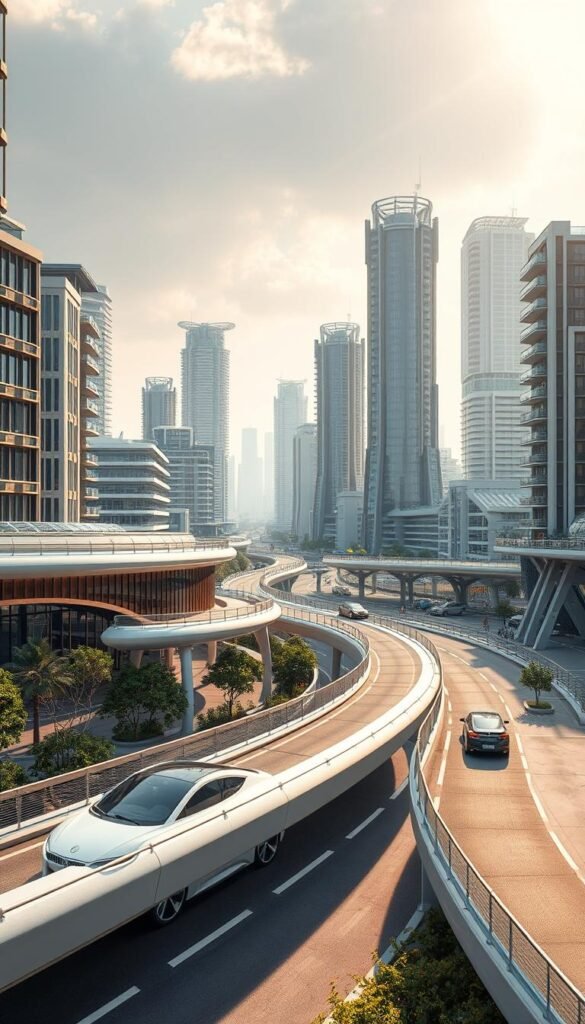
Imagine streetlights that dim when no one’s around. Cities now use smart tech to tackle energy waste while improving daily life. Sensors and AI help manage resources in real time, creating cleaner, more efficient environments.
Deploying Smart Grids and IoT Sensors
Amsterdam’s smart grid pilot cut peak energy use by 22% through smart load balancing. These systems integrate solar panels and wind turbines, preventing blackouts during heatwaves. You’ll find similar grids in San Diego, where they’ve reduced power outages by 34% since 2022.
Singapore’s water sensors show how tech prevents waste. Their system saves 12 million liters daily—enough for 40,000 households. IoT devices track leaks instantly, slashing water loss to under 5% citywide.
Real-Time Data for Dynamic Urban Management
Barcelona’s smart lighting adjusts brightness based on foot traffic, saving €35 million annually. Sensors in trash cans notify crews only when full, cutting fuel use by 17%. This strategy keeps streets cleaner while reducing emissions.
| System | Traditional Approach | Smart Solution |
|---|---|---|
| Energy Grids | Fixed power distribution | AI-adjusted renewable integration |
| Water Management | Monthly manual checks | Continuous sensor monitoring |
| Public Lighting | All-night operation | Motion-activated dimming |
| Waste Collection | Fixed schedules | Demand-based pickup alerts |
Chicago uses air quality sensors to redirect traffic when pollution spikes. These tools help cities act before problems escalate. As Boston’s energy commissioner notes: “Real-time data lets us fix issues citizens haven’t noticed yet.”
Public Placemaking: Revitalizing Parks and Community Spaces
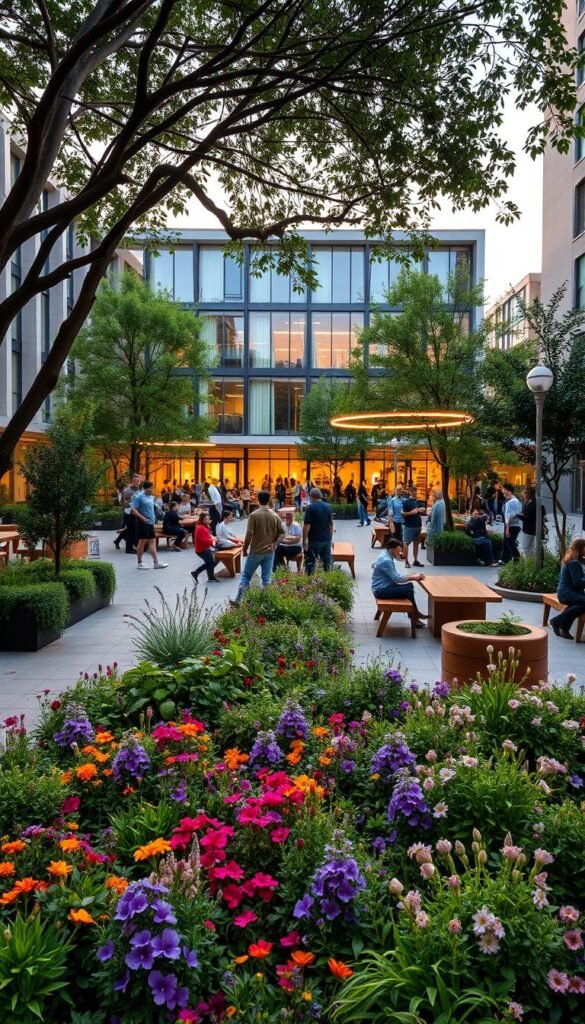
What if empty corners could become neighborhood treasures? Across the globe, cities are proving that neglected public spaces hold untapped potential. By reimagining forgotten areas, communities forge stronger connections while boosting local economies.
Transforming Vacant Lots into Community Hubs
Medellín’s Metrocable system shows how infrastructure can spark change. The city built plazas around cable car pylons, creating lively community hubs with food stalls and shaded seating. Violent crime dropped 90% in these zones as residents reclaimed ownership of their streets.
You’ll find similar success in Nairobi’s Kibera settlement. Locals transformed trash-filled ditches into playgrounds using recycled materials. “When people shape their environment, they protect it fiercely,” explains urban designer Kwame Otieno.
Creating Safe, Inviting Streetscapes
Santiago’s Las Condes plaza proves collaboration works. Businesses, artists, and residents redesigned a bleak transit area into a vibrant marketplace. New lighting and native plants made the public space feel welcoming day and night.
Three elements make streetscapes thrive:
- Movable seating for spontaneous conversations
- Clear sightlines that naturally deter crime
- Local art installations reflecting community identity
These strategies turn bland sidewalks into destinations. As foot traffic increases, nearby shops see sales jump 18-25%. Well-designed public spaces don’t just look nice—they become engines for neighborhood revival.
Urban Farming and Edible Landscapes: Greening Food Production
What if your grocery store grew on top of your apartment building? Cities are rewriting the rules of food production by transforming buildings and forgotten corners into edible ecosystems. This shift tackles two challenges at once—feeding communities while cooling concrete jungles.
Rooftop Farms and Indoor Hydroponics
Your lettuce might soon come from the office down the street. Brooklyn’s Gotham Greens grows 30 million leafy greens annually on rooftops—cutting food miles to zero. These farms insulate buildings, reducing energy costs by 25% in summer months.
Indoor hydroponics takes it further. No soil? No problem. Chicago’s Plant Chicago uses fish tank water to nourish basil and kale in repurposed warehouses. “We’re feeding neighborhoods while teaching circular city systems,” explains founder John Edel.
Turning Underutilized Spaces into Productive Gardens
That cracked parking lot? It could become tomorrow’s tomato patch. Detroit’s Recovery Park Farms turned 60 acres of vacant lots into thriving plots. Locals earn $18/hour growing peppers and herbs—proving community gardens boost both plates and paychecks.
Three ways edible landscapes transform spaces:
- Abandoned factories become vertical strawberry farms
- Highway underpasses host mushroom cultivation
- Schoolyards double as outdoor classrooms with fruit trees
| Space Type | Traditional Use | Urban Farming Use |
|---|---|---|
| Rooftops | HVAC equipment | Vegetable production + insulation |
| Vacant Lots | Trash accumulation | Community food hubs |
| Basements | Storage | Year-round hydroponic systems |
Phoenix residents now pick lemons from sidewalk trees instead of big-box stores. When cities think creatively about spaces, they grow more than food—they cultivate resilience.
Innovative Urban Mobility: Reducing Traffic and Boosting Quality of Life
Your morning commute could soon feel like a breeze instead of a battle. Forward-thinking cities are redesigning streets to prioritize people over engines. This shift cuts congestion while creating cleaner, more livable environments.
Car-Free Zones and Dedicated Bike Lanes
Oslo shows what happens when car traffic gets replaced. After banning most downtown vehicles, air pollution dropped 35%. Now 77% of residents live within 300 meters of green transport options. “Removing cars let us rediscover our city,” says Oslo’s mobility director.
Amsterdam’s 400 km bike lane network proves cycling works at scale. Over 60% of trips happen on two wheels here. Protected lanes and bike parking hubs make pedaling safer than driving. The result? Healthier people and quieter streets.
| Aspect | Traditional Approach | Modern Solution |
|---|---|---|
| Commuting Options | Single-occupancy cars | Protected bike lanes + walkable zones |
| Infrastructure Focus | Road expansion | EV charging stations + bike shares |
| Energy Use | Fossil fuel dependency | Renewable-powered transit |
Electric Transit and Mobility-as-a-Service Solutions
Bogotá’s TransMilenio buses slash emissions while moving millions. Paired with Sunday Ciclovía events closing roads to cars, they’ve created a blueprint for equitable access. Low-income ridership jumped 22% since 2020.
Apps like Whim now bundle trains, bikes, and rideshares into single subscriptions. You might pay $80 monthly for unlimited access—cheaper than owning a car. These platforms cut traffic while boosting local economies through increased foot traffic.
Smart cities prove that reducing vehicles improves quality life. Cleaner air means fewer sick days. Quieter streets let cafes expand outdoor seating. When energy powers buses instead of brake lights, everyone wins.
Empowering Local Economies and Community Engagement
Neighborhoods thrive when residents shape their surroundings. Across New York, programs like the Downtown Revitalization Initiative prove that investing in shared spaces sparks economic growth. You’ll see towns transforming empty lots into markets where local artisans sell handmade goods, creating jobs while preserving community character.
Fostering Local Markets and Public Spaces
Picture a weekend plaza buzzing with activity. Farmers’ markets boost small businesses, while pop-up stages host musicians from the area. These hubs become economic engines—every dollar spent locally circulates three times longer in the community. Projects like Lake George’s art trail show how creative placemaking attracts visitors without losing hometown charm.
Building Inclusive, Vibrant Neighborhoods
True vibrancy comes from welcoming everyone. Mixed-income housing near transit stops lets workers live where they play. Pedestrian-friendly designs ensure grandparents and toddlers alike enjoy strolls past cafes. When you prioritize accessibility, like Hoosick Falls’ skating rink upgrades, towns become magnets for families and entrepreneurs.
These efforts prove that local economies grow strongest when rooted in community pride. From Schuylerville’s new community center to statewide pro-housing funds, smart investments create places where people want to stay—and build futures.