
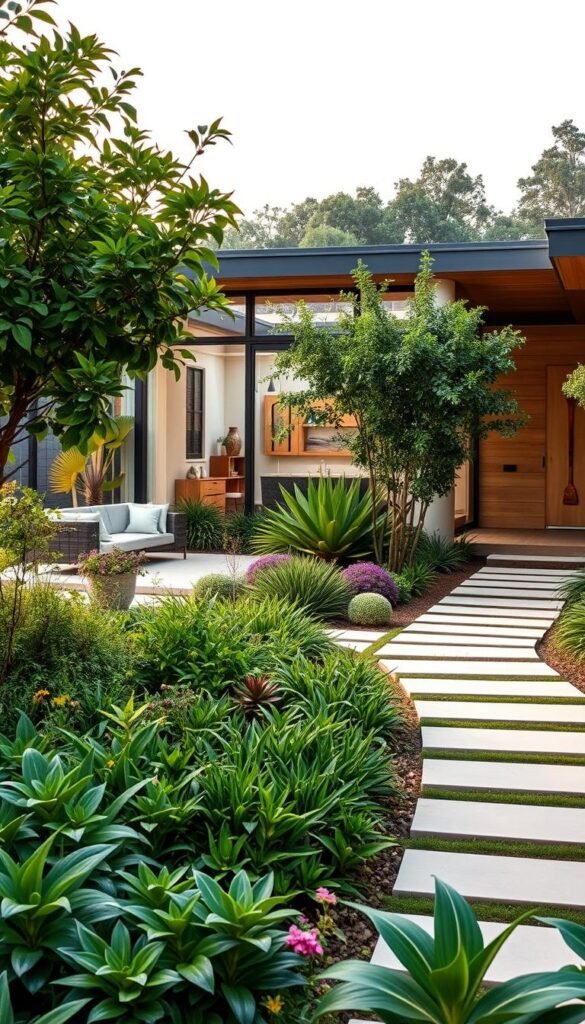
Imagine stepping outside your door into a space where every detail feels connected to the natural world. Thoughtful home design isn’t just about walls and roofs—it’s about crafting environments that celebrate the outdoors. When you integrate greenery into your property, you’re not adding decorations. You’re building a bridge between daily life and nature’s calming rhythms.
Plants do more than boost curb appeal. They purify air, reduce stress, and create pockets of serenity. Even small patios can become lush retreats with strategic planters or vertical gardens. The key lies in choosing species that thrive in your climate while complementing your architecture.
This approach transforms how you experience your living areas. Open your windows to fragrant blooms or arrange seating near trickling water features. These touches make indoor and outdoor spaces feel like parts of a unified whole. It’s not about size—it’s about intentionality.
Ready to reimagine your surroundings? We’ll guide you through principles that balance structure and landscapes. Discover how texture, color, and flow turn ordinary yards into extensions of your living room. Let’s create spaces where every season brings fresh beauty and moments of quiet joy.
Understanding the Harmony Between Home Design and Nature
Your home becomes a sanctuary when nature and structure coexist effortlessly. Integrating green spaces does more than elevate aesthetics—it fosters a deeper connection to the environment. This synergy between built and natural elements cultivates spaces where you can thrive physically and mentally.
Why Green Spaces Matter Beyond Beauty
Plants act as silent partners in your daily life. Studies show they filter pollutants, boost oxygen levels, and lower stress hormones like cortisol. Even a modest balcony garden can:
- Improve air quality within hours
- Create natural sound barriers
- Offer visual calm during hectic days
The Wellness Power of Natural Elements
Water features or flowering trees near windows do double duty. They attract wildlife while providing sensory therapy through gentle sounds and movement. Research reveals that just 20 minutes in nature-rich environments can:
- Reduce blood pressure
- Enhance creativity
- Strengthen focus
When your design includes views of greenery from key rooms, it creates psychological breathing room. This connection to the outdoors makes indoor areas feel expansive yet grounded—a recipe for lasting well-being.
Selecting Complementary Plants for Your Home
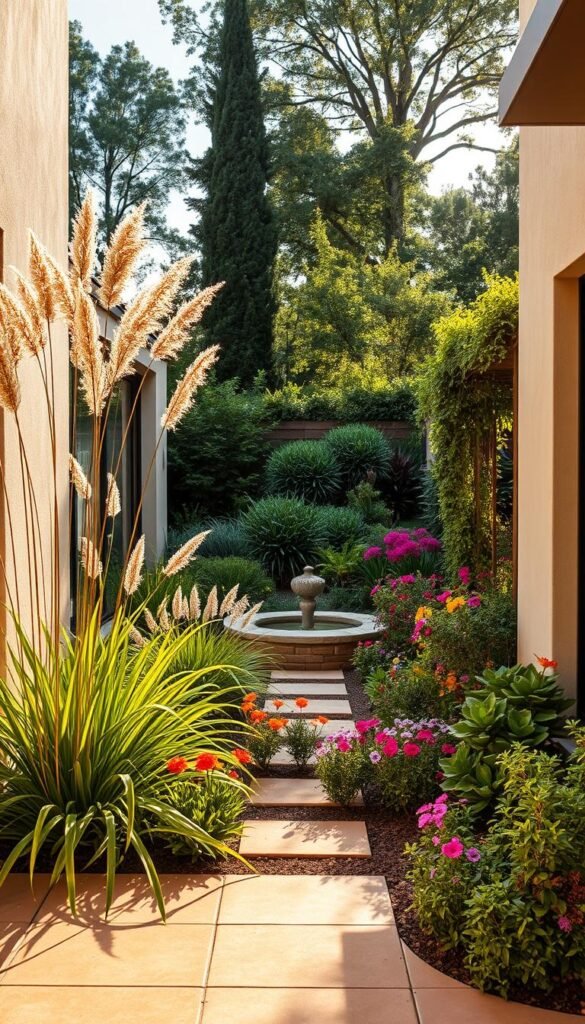
Your landscape should mirror your property’s personality through intentional plant choices. Matching greenery to your structure’s character creates instant visual harmony. Let’s explore how to pair flora with your unique architecture while balancing color and seasonal changes.
Choosing Species That Suit Your Architecture
Modern homes shine with clean-lined plants. Try upright ornamental grasses or geometric boxwood hedges. For example, bamboo adds vertical rhythm to angular structures. Traditional cottages? Go for billowy hydrangeas or climbing roses that soften brick facades.
Scale matters too. Tall trees like Japanese maples frame entryways without overwhelming. Compact shrubs like rosemary work near windows. As landscape designer Paula Refi notes: “A well-curated garden doesn’t compete with your home—it elevates it.”
Balancing Color, Scale, and Seasonal Interest
Your plant’s hues should complement—not clash with—your exterior. Check this table for smart pairings:
| Home Style | Plant Options | Color Tips |
|---|---|---|
| Modern | Yucca, Agave | Silver-green tones |
| Farmhouse | Peonies, Lavender | Soft pinks/purples |
| Mediterranean | Olive trees, Sage | Gray-green foliage |
Plan for year-round appeal. Early bulbs like crocuses welcome spring. Summer-blooming hibiscus adds drama. Autumn brings fiery maple leaves. Even winter has structure—evergreen holly maintains shape under snow.
Remember: Your garden should evolve with the seasons just like your living spaces. Mix textures and heights to keep things engaging without feeling chaotic.
Framing Your Home with Trees and Shrubs
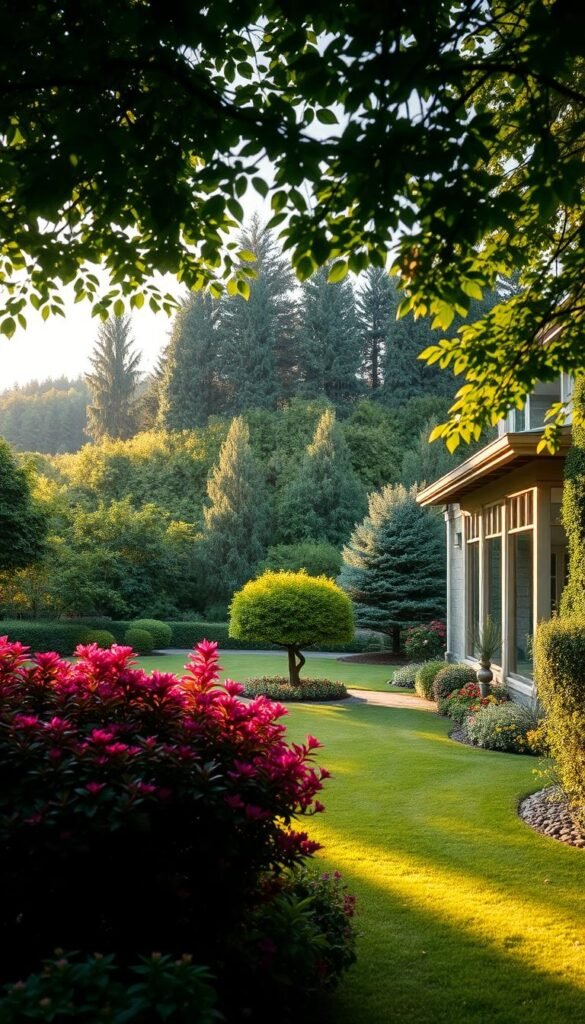
Strategic placement of trees and shrubs transforms ordinary yards into living frames that highlight your property’s best features. These elements act as nature’s architecture, shaping views and guiding attention where it matters most.
Accentuating Architecture Through Tree Placement
Tall specimens like oaks or red maples draw eyes upward, emphasizing rooflines or entryways. For example, flanking a front door with columnar trees creates instant grandeur. Medium-sized options—think flowering dogwoods—add softness near bay windows without blocking light.
Consider growth patterns. Weeping varieties soften angular modern designs, while upright evergreens complement traditional facades. As landscape architect Mia Torres advises: “Trees should echo your home’s proportions—never compete with them.”
Shaping Spaces with Strategic Shrub Layers
Shrubs build visual depth while solving practical needs. Low-growing thyme or dwarf boxwood neatly edge pathways, keeping walkways defined yet inviting. Taller varieties like inkberry holly form living fences that screen utility areas.
Layering creates rhythm. Try this approach:
- Back row: Evergreen shrubs for year-round structure
- Middle: Seasonal bloomers like azaleas
- Front: Fragrant herbs or groundcovers
This tiered effect makes small landscape designs feel expansive. Bonus? Birds and pollinators love the diversity.
Designing Inviting Garden Beds and Planters
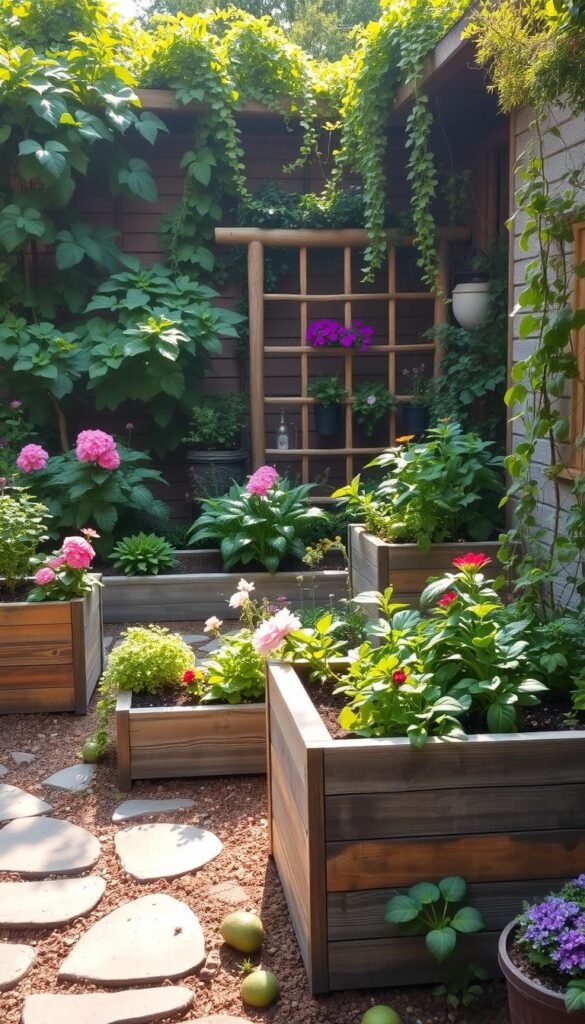
Your outdoor areas become extensions of your living space when shaped by intentional planting. Thoughtfully arranged beds and containers add structure while letting nature take center stage. They carve out purpose in every corner, from welcoming entryways to private relaxation zones.
Defining Outdoor Spaces with Tailored Garden Beds
Garden beds act as living borders that guide movement and focus attention. Line driveways with low-growing lavender for fragrant definition. Frame patios with ornamental grasses that sway gently in breeze—their motion adds life to static areas. For pathways, try staggered blooms like alliums or daylilies that create rhythm.
Match plants to your style for instant cohesion. Modern homes shine with structural succulents in geometric beds. Cottage-style properties burst with loose clusters of peonies and daisies. As landscape artist Elena Carter notes: “A well-placed bed doesn’t just fill space—it tells your property’s story.”
Incorporating Planters for Flexibility and Visual Appeal
Containers solve spatial challenges while adding personality. Use tall, narrow pots to flank garage doors without blocking walkways. Cluster mixed-size planters on balconies for instant visual interest. Discover 15 ideas for landscaping with planters that adapt to any layout.
Material choices matter. Sleek zinc planters mirror metallic accents on contemporary facades. Weathered terracotta enhances rustic themes. Rotate seasonal flowers like pansies in spring or chrysanthemums in fall—it’s an easy refresh trick. For year-round structure, evergreens like boxwood thrive in containers.
Group planters at varying heights near entrances or seating spaces. Combine trailing ivy with upright grasses for dynamic contrast. These mobile gardens let you experiment with creative gardening ideas without permanent changes.
Tips for Integrating Outdoor Spaces with Home Exteriors
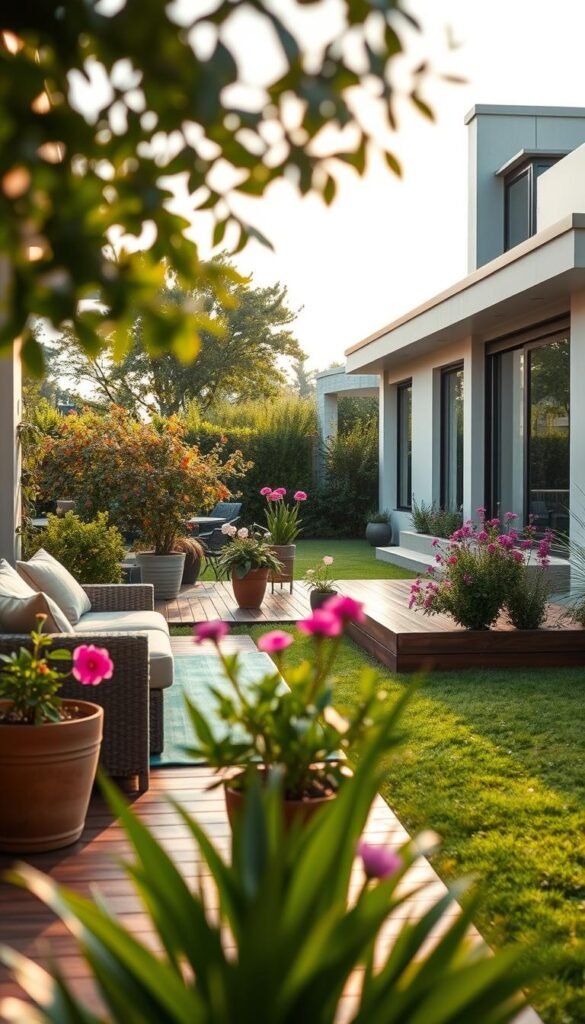
Your home’s exterior deserves the same attention to detail as your indoor rooms. By weaving greenery into pathways and surfaces, you create harmony between built structures and living landscapes. These practical tips help soften edges while enhancing curb appeal.
Linking Driveways and Walkways with Greenery
Shrubs like dwarf boxwood or hydrangeas soften concrete or stone surfaces. Place them 18-24 inches apart along driveways—close enough to unify the space but far enough for easy maintenance. This creates a living frame that guides visitors naturally toward your entry.
Natural Focal Points That Captivate
A single flowering dogwood or sculpted juniper becomes instant art in your landscape. Position these specimens where sightlines converge—near front gates or patio corners. Landscape designer Marco Tieri suggests: “Focal plants should command attention without blocking functional views.”
Adaptable Ideas for Any Space
Small yards thrive with vertical gardens on fences or clustered potted evergreens. Larger properties benefit from layered plantings—tall grasses behind mid-sized azaleas, with creeping thyme along edges. Match plant sizes to your home exterior proportions for balanced integration.
For pathways, alternate stepping stones with low-growing sedum or moss. This blends hardscaping with organic textures while preventing mud spread. Your outdoor spaces become cohesive extensions of your living areas through these intentional connections.
Seamlessly Blend Home and Nature with Garden Home Design Concepts
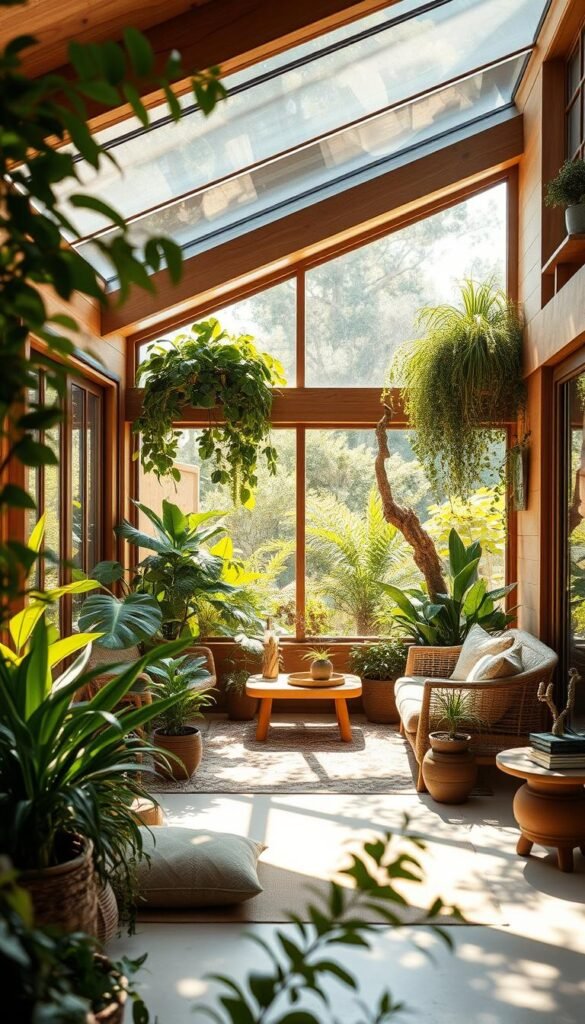
Your home’s true potential shines when interior and exterior spaces feel like parts of a single canvas. Start by evaluating sightlines from key rooms—what garden views could become natural focal points? Large glass doors act as portals connecting your living areas to patios or decks. Bi-fold styles disappear completely when open, erasing boundaries.
A Step-by-Step Guide to Unified Spaces
First, align flooring materials. Continue interior tiles or wood planks outward for visual flow. Next, position furniture to mirror your indoor layout—place a sofa facing the garden just like your living room setup. This creates rhythm between spaces.
Use plants as transitional elements. Potted ferns near doorways soften edges between zones. For patios, try weather-resistant rugs matching indoor color schemes. Designer Lara Kim notes: “The magic happens when textures repeat—stone accents inside echo gravel paths outside.”
Strategic lighting extends usability. Hang pendant lights over alfresco dining areas that mimic kitchen fixtures. Solar path lights guide evening strolls while reinforcing your design language. Discover how mixing vintage and modern elements adds character to these blended zones.
Finally, frame views with nature’s artwork. Prune shrubs to reveal a flowering dogwood visible from your breakfast nook. Install windows at seated eye level to integrate garden features into daily moments. These intentional touches make every glance outside feel like part of your home’s living tapestry.
Incorporating Siding Elements that Complement Nature
The materials wrapping your house play a crucial role in bridging built spaces with the outdoors. Your home exterior should mirror the textures and tones found in surrounding gardens, creating visual continuity that feels intentional yet effortless.
Selecting Materials That Harmonize With Garden Views
Wood siding brings warmth to properties surrounded by greenery. Its natural grain patterns echo organic shapes in your landscape. For durability, fiber cement offers similar earthy aesthetics while resisting moisture and pests—ideal for humid climates.
Consider how colors interact with seasonal changes. Soft gray tones blend with misty mornings, while warm cedar hues complement autumn foliage. If you enjoy repurposed vintage items, try weathered boards or reclaimed barnwood for rustic charm.
Match texture to your garden’s personality. Smooth stucco suits minimalist succulent beds, while rough-sawn planks pair with wildflower meadows. Always test samples at different daylight hours—materials shift appearance under sun or shadow.
These choices ensure your exterior doesn’t just coexist with nature but celebrates it. The result? A cohesive retreat where every angle feels thoughtfully connected to the land.