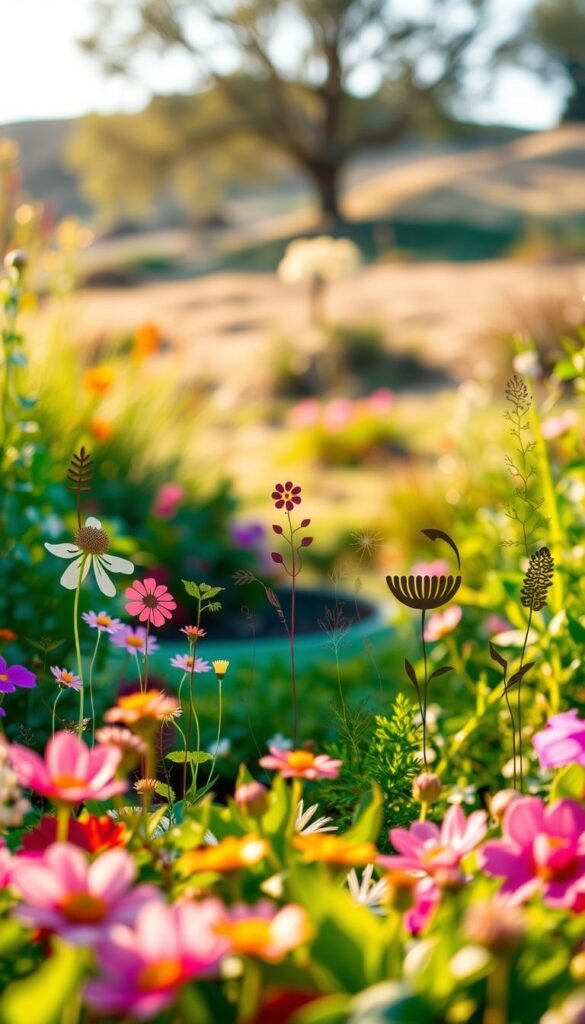
Imagine stepping into an outdoor space that feels alive with purpose. Every path, sign, and planting tells a story. This is the power of thoughtful graphic design in garden spaces. It’s not just about aesthetics—it’s about crafting environments that spark curiosity and forge emotional connections.
By understanding core principles of visual design, you can transform ordinary landscapes into memorable destinations. Elements like color palettes, texture contrasts, and strategic layouts guide visitors while reflecting your space’s unique character. Professionals in this field blend artistry with functionality, ensuring every detail serves both beauty and purpose.
These components work together to shape how people experience your garden. A well-placed mural might become a photo hotspot, while clear signage improves navigation without disrupting natural charm. The best designers consider how light shifts through the day or how seasonal changes affect the space’s mood.
Your outdoor area becomes more than just plants and pathways—it evolves into a living brand statement. Whether through bold patterns or subtle typography, every choice communicates values and invites engagement. The right balance of elements doesn’t just catch the eye—it lingers in memory long after visitors leave.
Grasping the Power of Garden Graphic Design in Your Space
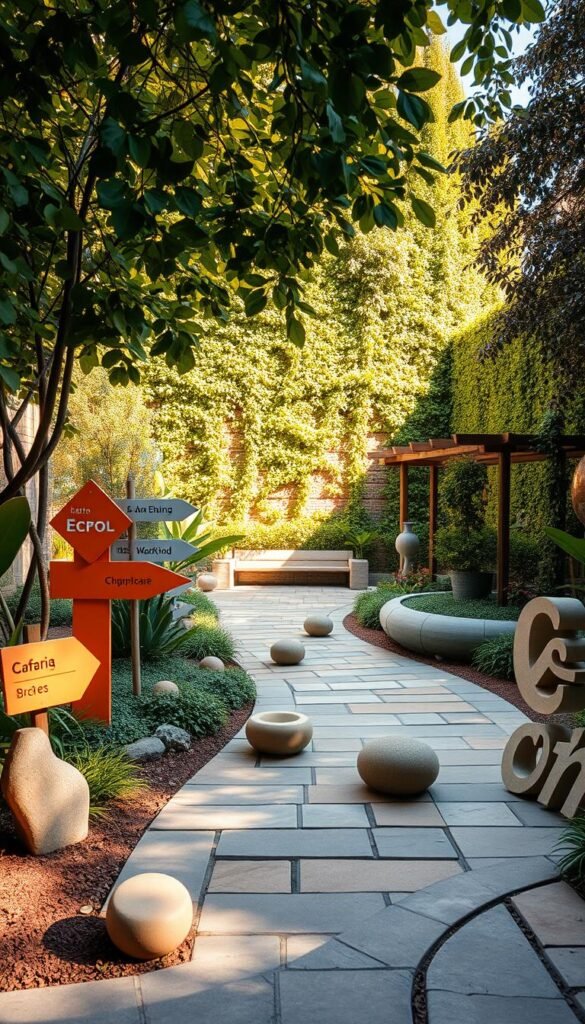
What if your garden could guide visitors with visual cues that feel part of nature? This is where environmental and experiential principles shine. They turn ordinary landscapes into interactive journeys, blending human-centered ideas with organic beauty.
Understanding Environmental and Experiential Graphics
Environmental graphic design (EGD) shapes how people connect with places. The Society for Experiential Graphic Design explains it’s about “creating spaces that tell stories”. Think wayfinding signs hidden in rock formations or murals mimicking seasonal foliage patterns.
These techniques solve practical needs while sparking joy. Custom signage becomes art. Supergraphics add drama without overwhelming natural textures. Your space becomes a branded environment that feels both intentional and wild.
Integrating Nature with Modern Design Concepts
Balance is key. Use sleek metal benches beside moss-covered stones. Try laser-cut screens casting shadow patterns over native grasses. Modern materials can highlight nature’s imperfections rather than compete with them.
| Traditional Elements | Modern Pairings | Visitor Impact |
|---|---|---|
| Wooden arbors | Geometric steel frames | Creates contrast |
| Stone pathways | Glowing resin inlays | Improves night navigation |
| Hand-painted signs | Digital projection mapping | Blends old & new |
Your garden’s story unfolds through these layered details. Visitors might pause at a carved log doubling as a directional marker or smile at typography shaped like vine tendrils. Every choice deepens their connection to the space.
Essential Design Elements for a Captivating Garden
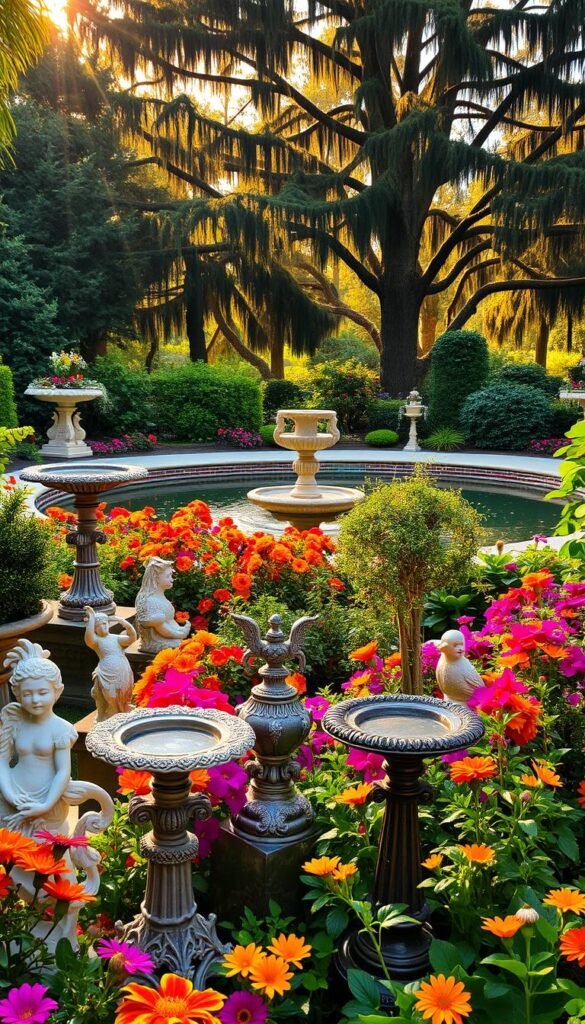
Your garden’s personality shines through intentional choices that guide eyes and emotions. The right combination of core components transforms green spaces into immersive experiences.
Color, Texture, and Shape as Key Drivers
Color psychology works wonders outdoors. Warm reds energize seating areas, while cool blues calm water features. Pair bold flowers with neutral stone paths to avoid sensory overload.
Texture adds depth you can almost feel. Combine smooth pebble mosaics with rough bark mulch. Try fuzzy lamb’s ear plants beside glossy ceramic markers.
Shapes define your space’s rhythm. Geometric planters create order, while winding gravel paths invite exploration. For DIY flair, craft abstract metal sculptures using DIY garden art projects that echo your theme.
Typography and Layout for Effective Branding
Signage fonts should match your garden’s voice. Playful scripts suit cottage gardens; clean sans-serifs fit modern spaces. Keep text large enough for easy reading from pathways.
Layout principles direct movement naturally. Cluster related elements using the “rule of three” – like matching benches, planters, and signs. White space between zones prevents visual clutter.
Consistent branding elements make your space memorable. Repeat signature colors in planters, labels, and art. Use shape motifs from your logo in stepping stones or trellis designs.
Enhance Visual Impact with Creative Garden Graphic Design Elements
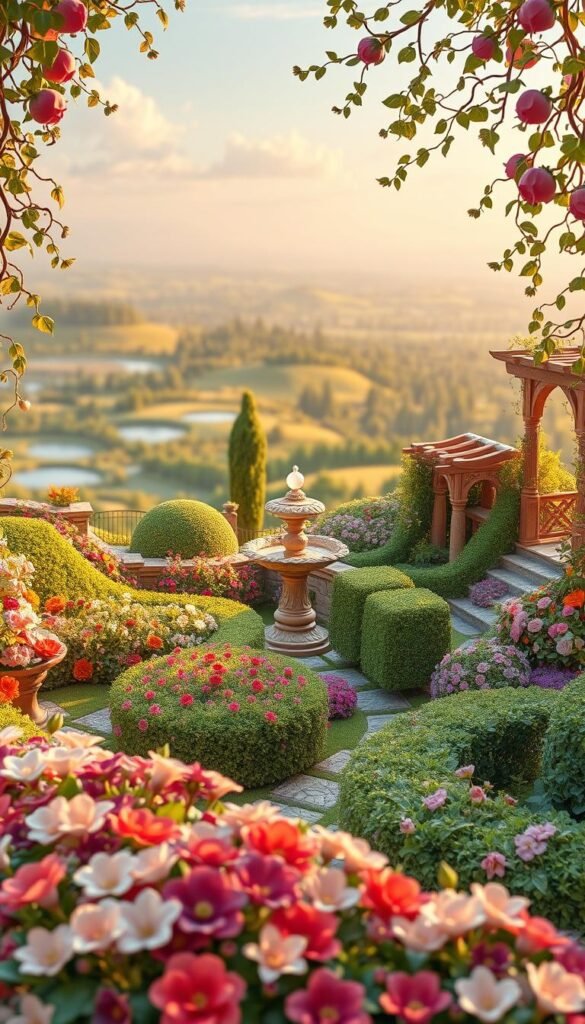
Modern outdoor areas demand solutions that work with nature’s rhythm. Specialized approaches help your space stand out while respecting its environment. Let’s explore methods that make graphics pop in sunlight and intrigue under moonlight.
Implementing Garden-Specific Design Techniques
3D modeling tools let designers create illusions of depth on flat surfaces. Imagine vine patterns that appear to climb walls or stonework that seems to ripple. These tricks work with natural light shifts throughout the day.
| Technique | Modern Upgrade | Benefit |
|---|---|---|
| Flat signage | 3D layered panels | Adds depth perception |
| Static displays | Motion-activated lights | Creates interactive effects |
| Basic typography | Weather-resistant fonts | Ensures year-round clarity |
Dynamic effects make elements respond to weather changes. Frost-resistant materials reveal hidden patterns in winter. Summer rains might activate water-sensitive color displays in pathways.
Your space design benefits from layered approaches. Place bold graphics where sunlight highlights them. Use subtle textures in shaded areas for discovery moments. This balance helps visitors navigate while enjoying surprises.
Weather-ready tools protect your investment. Powder-coated metals withstand humidity. UV-resistant inks keep colors vibrant. These practical choices let creative solutions shine through seasons.
Incorporating Digital Graphic Design Tools for Your Garden Project
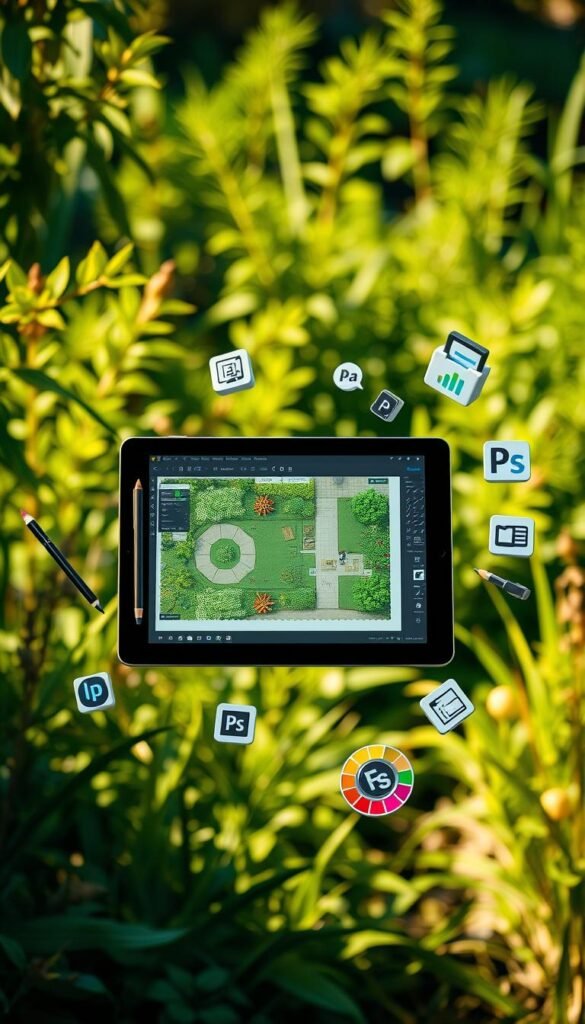
Digital tools are reshaping how we plan and execute garden projects. Whether you’re a professional designer or a passionate hobbyist, modern software simplifies complex tasks while boosting creativity. Let’s explore how these platforms can elevate your outdoor space planning.
Leveraging Tools like Adobe Creative Cloud
Adobe Creative Cloud offers specialized solutions for garden projects. Use Photoshop to enhance planting scheme mockups or adjust lighting in landscape photos. Illustrator creates crisp vector graphics for custom signage that scales perfectly. Need visitor maps or plant catalogs? InDesign handles multi-page layouts with professional polish.
These tools work together seamlessly. Transfer plant illustrations from Illustrator to InDesign brochures or add motion to garden tours using After Effects. The ecosystem saves time while maintaining brand consistency across materials.
Exploring Figma and Canva for Garden Themes
Figma shines for team-based projects. Share garden layout concepts with landscapers in real-time, gathering feedback directly on the design. Create interactive prototypes showing how signage integrates with planting beds.
Canva democratizes design for quick wins. Choose from hundreds of garden-themed templates for social media posts or event banners. Drag-and-drop tools let anyone produce polished graphics without training – perfect for community garden groups or small businesses.
| Tool | Best For | Time Saver |
|---|---|---|
| Adobe CC | Professional branding | Cross-app workflows |
| Figma | Team collaboration | Instant feedback loops |
| Canva | Quick visuals | Pre-built templates |
Many landscape design apps now integrate with these platforms, letting you import 3D models or plant databases. Web-based options like Figma mean you can tweak designs from your tablet while walking the site. Automation features handle repetitive tasks, freeing you to focus on unique garden features.
Your design process becomes more adaptable. Test multiple color schemes for garden markers in minutes. Update plant lists across all materials simultaneously. These tools don’t replace creativity – they give you space to explore it.
Blending Traditional and Modern Techniques in Garden Graphics
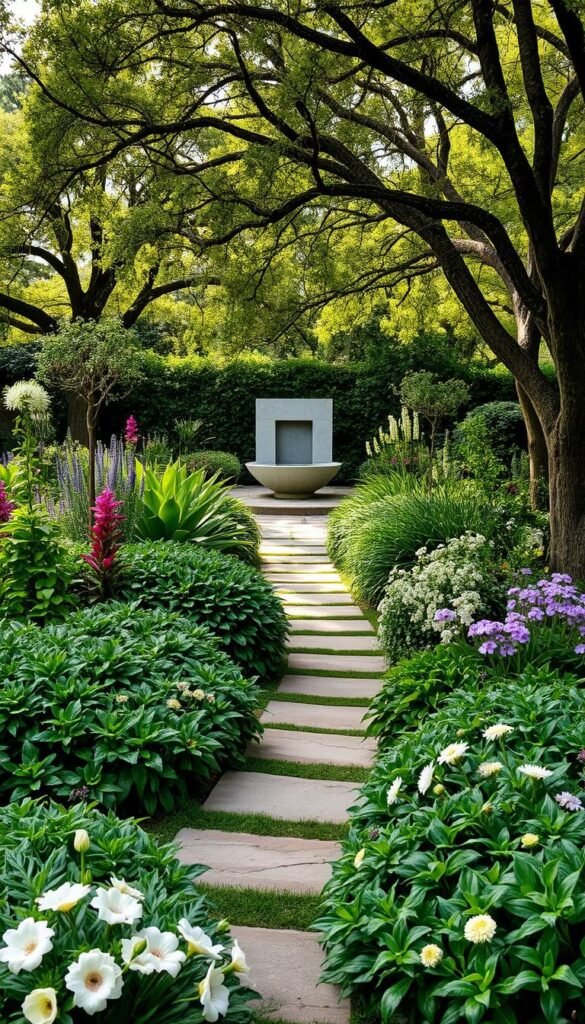
Great outdoor spaces feel like they’ve always belonged – yet surprise you with modern flair. The secret lies in balancing weathered textures with crisp lines, creating harmony between nature’s randomness and human ingenuity.
Where Nature Meets Innovation
Start by repeating key shapes across your space. A curved stone wall might echo the flow of nearby streams, while triangular planter boxes mirror distant mountain peaks. This repetition builds visual consistency without monotony.
Try these pairings:
- Moss-covered rocks beside polished metal sculptures
- Hand-carved wooden signs with LED-lit typography
- Wildflower meadows framed by geometric gravel patterns
Modern design solutions solve old problems creatively. Glowing pathway markers replace bulky lamps. Weather-resistant vinyl wraps update vintage benches. As one landscape architect notes: “We’re not erasing history – we’re writing its next chapter.”
| Traditional Element | Modern Twist | Result |
|---|---|---|
| Clay pots | 3D-printed planters | Merges craft with tech |
| Bird baths | Solar-powered fountains | Adds motion + sound |
| Hedge mazes | Augmented reality guides | Blends physical/digital |
Your creative gardening ideas gain depth through contrast. Rough bark mulch looks richer against smooth resin art. Vintage tools displayed as wall art tell your space’s story across generations.
Consistency matters most. Choose two colors from existing foliage for all man-made elements. Use one signature material – like copper or reclaimed wood – throughout. This approach creates a top visual identity that feels intentional yet effortless.
Advanced Branding and Visual Storytelling for Garden Design
Your garden becomes a storyteller when every element speaks with purpose. Through strategic branding, you craft a cohesive narrative that visitors experience through their senses. This approach turns pathways into plot points and resting areas into chapter breaks.
Creating Consistency Across Spaces
Repeat key colors from your logo design in planters and benches. Use matching materials for signage and directional markers – weathered wood or corten steel work beautifully. This repetition builds recognition without feeling repetitive.
Develop a design system for seasonal updates. Summer might feature floral patterns on maps, while autumn introduces leaf-shaped icons. The core branding remains constant, creating familiarity through change.
Using Graphics to Share Your Mission
Subtle logo placements make impact. Etch your symbol into stone seating areas or imprint it on recycled glass mulch. One landscape architect notes: “Great designers create moments where branding feels discovered, not advertised.”
Interactive signage deepens engagement. QR codes on trail markers can link to planting guides. Decorative panels might reveal your garden’s conservation efforts through illustrations and brief stories.
Your visual design choices become silent ambassadors. Color-coded paths guide different visitor types – blue for quick routes, green for exploratory trails. Every detail reinforces your space’s unique character while serving practical needs.
Parting Insights for Transforming Your Garden’s Visual Appeal
Your outdoor area becomes a living canvas where design systems and nature collaborate. By balancing movement and scale, you craft journeys that feel both intentional and organic. Thoughtful placement of signage or clustered plant groupings guides eyes without force, letting discovery happen naturally.
Seasonal adaptability keeps your space relevant. Swap modular art pieces as flowers bloom or integrate weather-responsive materials that shift with temperatures. This flexibility ensures your design solutions age gracefully, maintaining interest year-round.
Digital tools streamline this process. Collaborate with landscapers using shared platforms, testing color palettes against photos of your actual garden. Many find that mixing analog sketches with 3D modeling sparks their best ideas.
Remember: Great designers create through iteration. Start small with a single path redesign or experimental planter arrangement. Each tweak teaches you about light patterns, visitor flow, and how graphics interact with living elements. Your garden’s story evolves through these lessons, becoming a place that delights at every turn.