
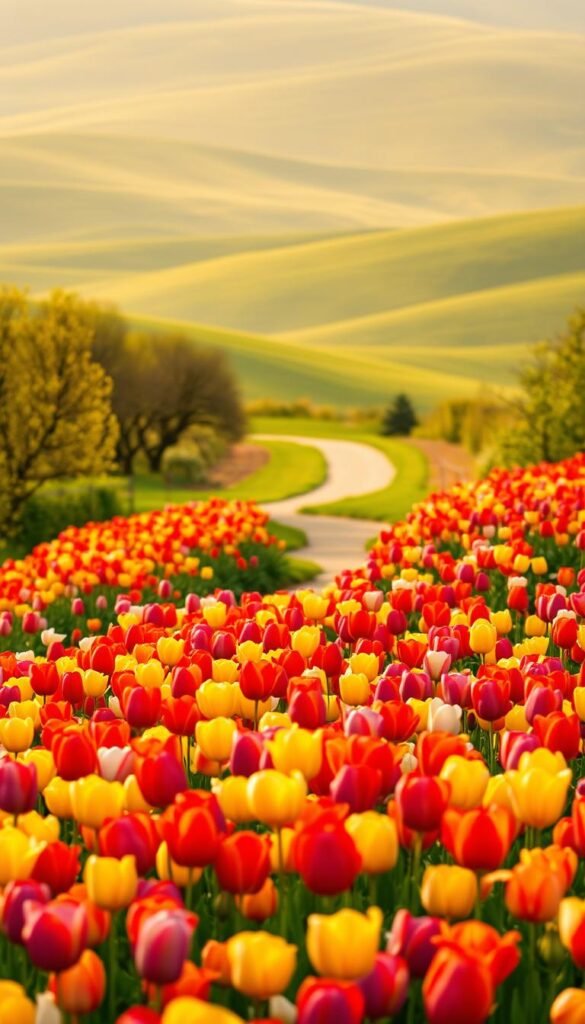
Spring’s arrival brings a perfect opportunity to refresh your landscape. Tulips, with their bold hues and elegant shapes, offer endless possibilities for creating eye-catching displays. These flowers thrive in zones 3–8, adapting to diverse climates while requiring minimal effort to grow.
Did you know tulips come in 15 distinct types? From ruffled doubles to classic singles, their varieties let you mix textures and bloom times. Pair early-season ‘Apricot Beauty’ with late-blooming ‘Queen of Night’ for weeks of color. Their heights—ranging from 6 to 24 inches—allow layered designs that add depth to beds or containers.
Successful growth starts with understanding their needs. Plant bulbs in fall for 14–15 weeks of winter chill, ensuring they’ll flourish when temperatures hover between 45°F and 60°F. Whether you’re working with raised beds or patio pots, these blooms adapt effortlessly. For more ideas on creating cohesive spaces, explore our guide to gardening aesthetics.
Color selection plays a huge role in design impact. Combine warm reds and oranges for energy or soft pinks and purples for serenity. With strategic planning, your spring showcase will become the neighborhood’s standout feature—no professional expertise required.
Planting Fundamentals and Soil Preparation
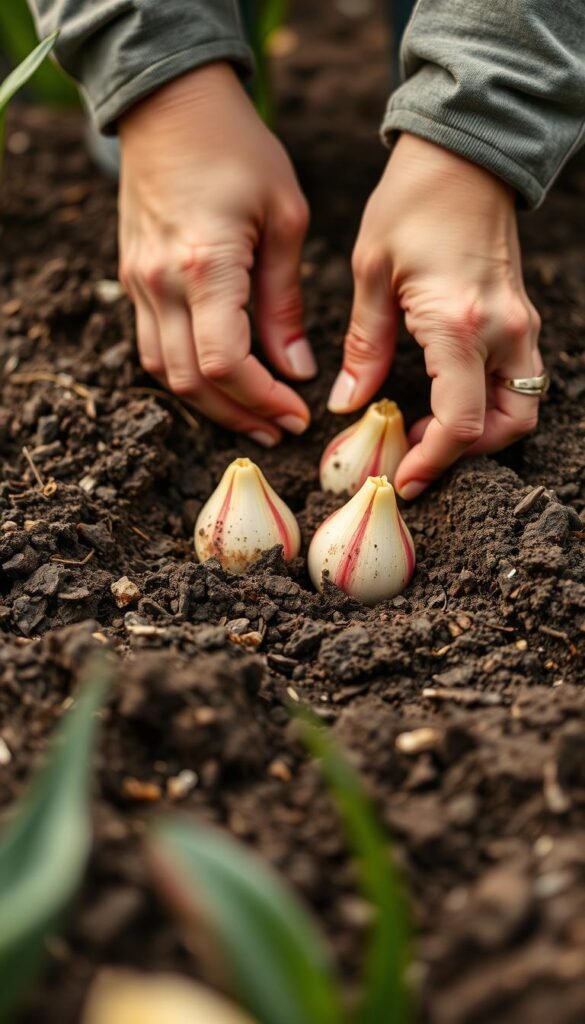
Timing is everything when preparing for a vibrant spring display. Your tulip bulbs need precise conditions to develop strong roots before winter sets in. Let’s break down the essentials for creating the perfect growing environment.
Choosing the Right Tulip Bulbs for Your Climate
Your location dictates when to plant. Northern gardeners (Zones 4–5) should start in September, while those in warmer areas (Zones 8–10) wait until November or December. Consistent soil temperatures below 55°F signal ideal planting time.
Tips for Proper Planting Depth, Spacing, and Soil Drainage
Dig holes three times deeper than the bulb’s height—usually 6–8 inches. Space them 4–6 inches apart to prevent overcrowding. A pro tip: use a ruler to ensure uniform depth for synchronized blooming.
Sandy loam soil works best, but you can improve drainage by mixing in compost or perlite. Avoid clay-heavy areas where water pools. Remember: rot-prone bulbs thrive in dry feet and sunny spots!
Integrating Tulips and Daffodils in Your Garden Design
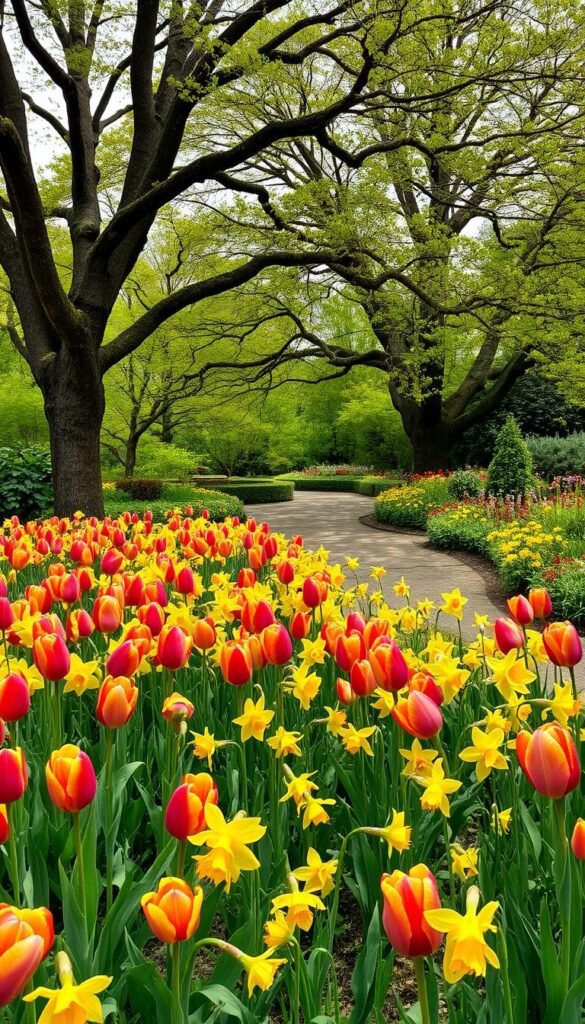
Unlock new possibilities by combining these spring favorites. Their staggered bloom times and contrasting forms let you craft displays that evolve weekly.
Maximize Early Season Drama
Pair early tulips like ‘Red Emperor’ with mid-spring daffodils. This extends your floral show as one fades while the other peaks. Try these combos:
- Lemon-yellow Dutch Master Daffodils beside purple ‘Negrita Double’ Tulips
- White ‘Bridal Crown’ Daffodils behind pink ‘Angelique’ Tulips
Craft Cohesive Color Stories
Mix textures for depth—ruffled daffodils add movement near sleek tulip cups. Warm tones create energy when grouped, while cool hues soothe. For bold contrast:
Plant ‘Replete Pink’ Daffodils with deep maroon ‘Queen of Night’ Tulips. Their colors pop against each other, drawing eyes across beds.
Remember to vary heights. Tall daffodils make perfect backdrops for medium tulips, with crocuses edging the front. This layered approach ensures every flower shines in your evolving spring masterpiece.
Brighten Your Garden with Colorful Tulips Garden Design Strategies
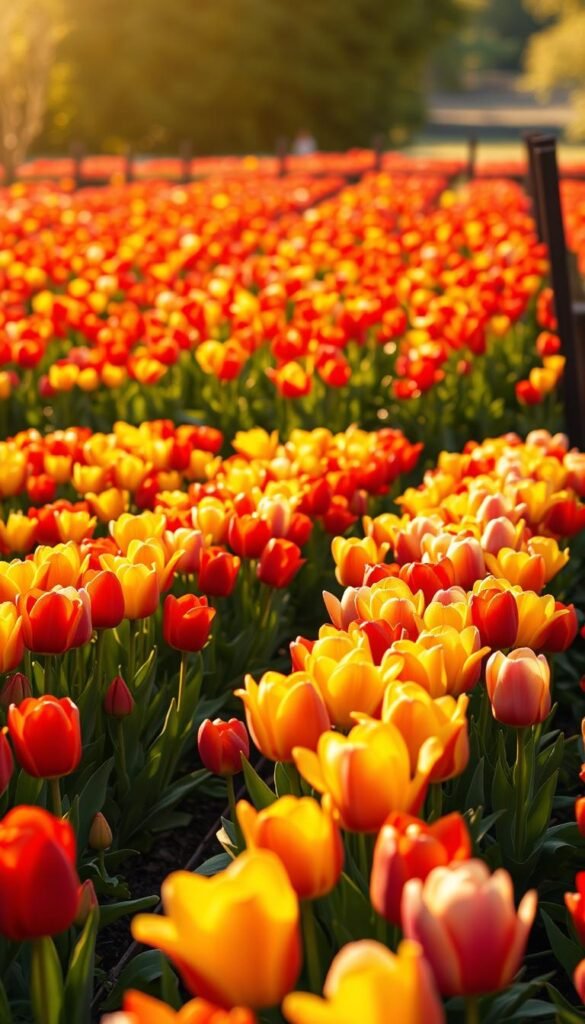
Transform your outdoor space into a living canvas using clever tulip arrangements. Mixing textures and companion plants elevates ordinary beds into seasonal masterpieces. Start by selecting bulbs that align with your local climate and aesthetic goals.
Step-by-Step Guidance for Creating a Vivid Tulip Display
Group flower bulbs in odd-numbered clusters for natural appeal. Place taller varieties like Crystal Star Fringed Tulips behind low-growing pansies. This creates depth while letting each plant shine. For wildflower charm, scatter Kung Fu Triumph Tulips randomly between ornamental grasses.
Striped varieties like ‘Carnival de Rio’ add unexpected flair. Pair them with solid-colored blooms to highlight their patterns. Try blending sunset hues—Orange Juice Triumph Tulips alongside peach-toned daffodils create warm, inviting borders.
Incorporating Seasonal Bulbs and Complementary Flowers
Combine early-spring bloomers for nonstop color. Royal Virgin Triumph Tulips work beautifully with hellebores, both thriving in partial shade. For bold contrast:
- Plant Orange Princess Double Tulips beside violet violas
- Edge pathways with Yellow Pomponette Tulips and blue forget-me-nots
Mix tulips with perennials like bleeding hearts. Their arching stems soften formal bulb shapes. Remember to stagger planting depths—this extends bloom times while conserving space. With these strategies, your flower beds will become evolving works of art through spring.
Creative Layouts: Pathways, Containers, and Flower Beds
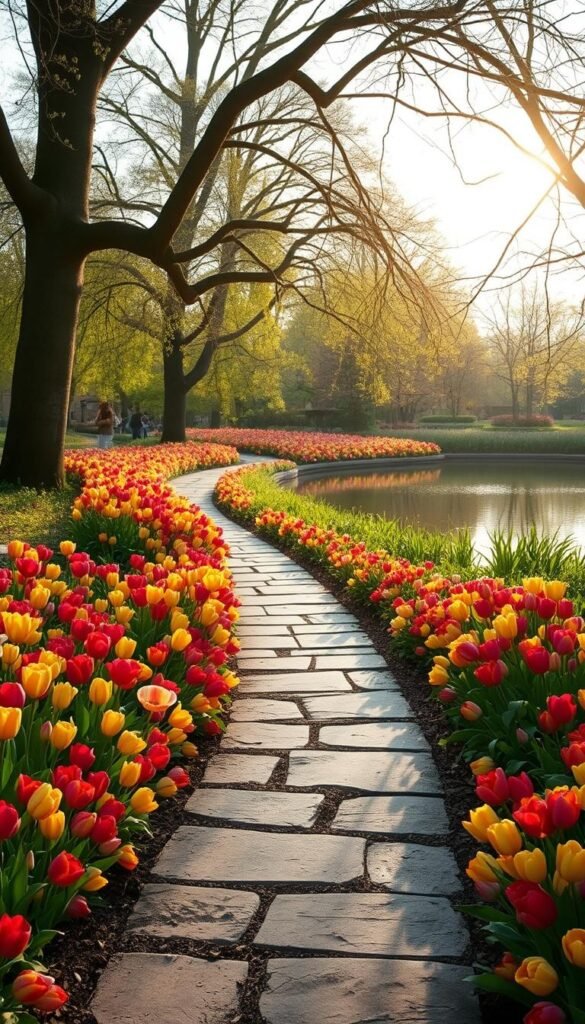
Revitalize your outdoor areas with imaginative arrangements that highlight tulips’ versatility. Whether working with sprawling yards or compact balconies, these strategies maximize visual impact while fitting your space.
Designing the Golden Parade Pathway for a Welcoming Entrance
Line walkways with Tulip ‘Golden Parade’ to create sunny guides through your landscape. Their sturdy 20-inch stems hold bright yellow blooms upright, perfect for medium to large gardens. Winding paths amplify their effect, creating natural flow that invites exploration.
In smaller spaces, integrate these bulbs into existing walkways. A short border of golden tulips adds cheerful pops of color without overwhelming narrow areas. Pair them with blue grape hyacinths for striking contrast visitors will remember.
Arranging Colorful Container Clusters for Urban Gardens
Group pots filled with tulip bulbs on patios or balconies for instant spring charm. Cluster three to five containers in varying sizes for dynamic displays. Mix ‘Apricot Beauty’ tulips with trailing ivy and purple pansies to play with heights and textures.
For modern flair, use matching pots with single-color blooms. Rotate containers seasonally—replace spent tulips with summer annuals while keeping the structure intact. This approach works wonders in creative gardening ideas that maximize limited square footage.
Remember: tulips thrive in well-draining soil. Add perlite to potting mix and choose containers with drainage holes. With smart layouts, you’ll transform any area into a tulip showcase that adapts as your vision evolves.
Essential Tulip Care and Maintenance Tips
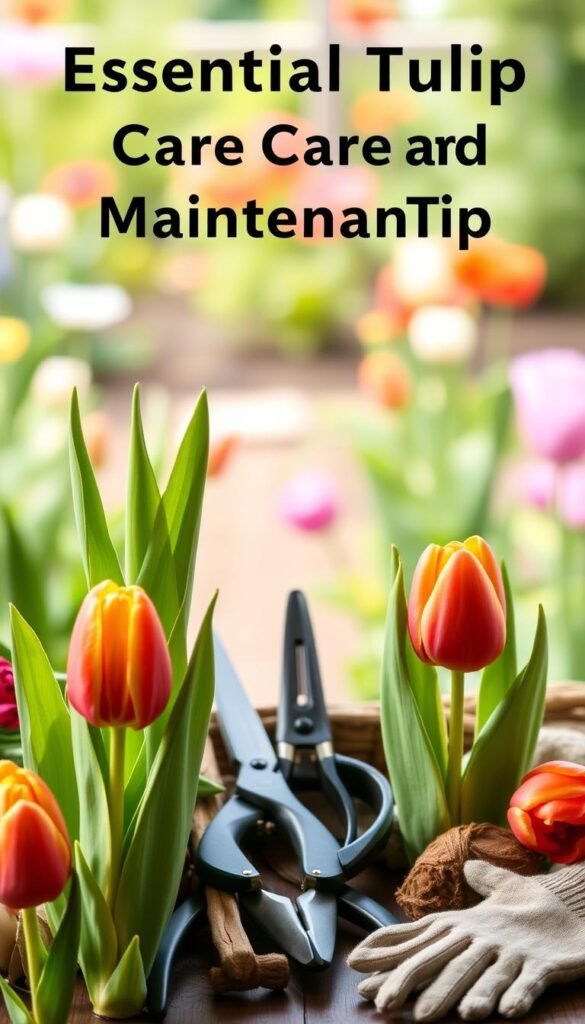
Keeping your tulips vibrant requires smart routines tailored to their growth cycle. These low-maintenance beauties still need strategic attention to thrive season after season. Let’s explore how to nurture healthy bulbs while tackling common challenges.
Watering, Fertilizing, and Pruning for Long-Lasting Blooms
Hydrate bulbs thoroughly at planting time, then stop watering until green shoots appear. Soggy soil causes rot during dormancy. Once foliage emerges, water weekly if rainfall stays below 1 inch.
Feed bulbs twice: mix bone meal into soil during fall planting, then apply balanced fertilizer when leaves first sprout. Never fertilize after blooms open—this redirects energy from bulb development.
Snip spent flowers once petals drop, but leave stems and leaves intact. Foliage continues photosynthesizing for 6-8 weeks, storing nutrients for next year’s growth. Resist cutting back until leaves turn completely yellow.
Preventing Pests and Managing Common Diseases
Crushed oyster shells or holly leaves around bulbs deter digging rodents. For slugs and aphids, apply diatomaceous earth or insecticidal soap weekly during damp weather.
Gray mold thrives in humidity. Space plants properly and avoid overhead watering. If bulb rot strikes, dig up affected plants and solarize the soil before replanting.
Most hybrid varieties fade after one season. Dig bulbs six weeks post-bloom when foliage yellows. Store in mesh bags with good airflow until fall planting. Species tulips often return reliably with proper care.
Bringing Your Garden Vision to Life
Your dream landscape starts with a simple bulb and a dash of creativity. Blend tulips with daffodils and perennials for year-round charm. Curved pathways lined with flower clusters invite exploration while making small spaces feel larger—perfect for gardens needing visual impact.
Choose bulbs that fit your space: dwarf varieties for pots or tall parrot tulips for borders. Pair them with self-seeding annuals like forget-me-nots to fill gaps naturally. For whimsical flair, add vintage decor or herbs alongside vibrant blooms. This mix balances aesthetics with practicality.
Remember to layer heights and textures. Plant low-growing crocuses near mid-sized tulips, backed by feathery grasses. If you love soft, romantic vibes, explore our guide to cottagecore charm using mauves and creamy whites.
With thoughtful placement and bulb care, your garden becomes a living masterpiece. Now’s the time to dig in and watch your vision bloom!