
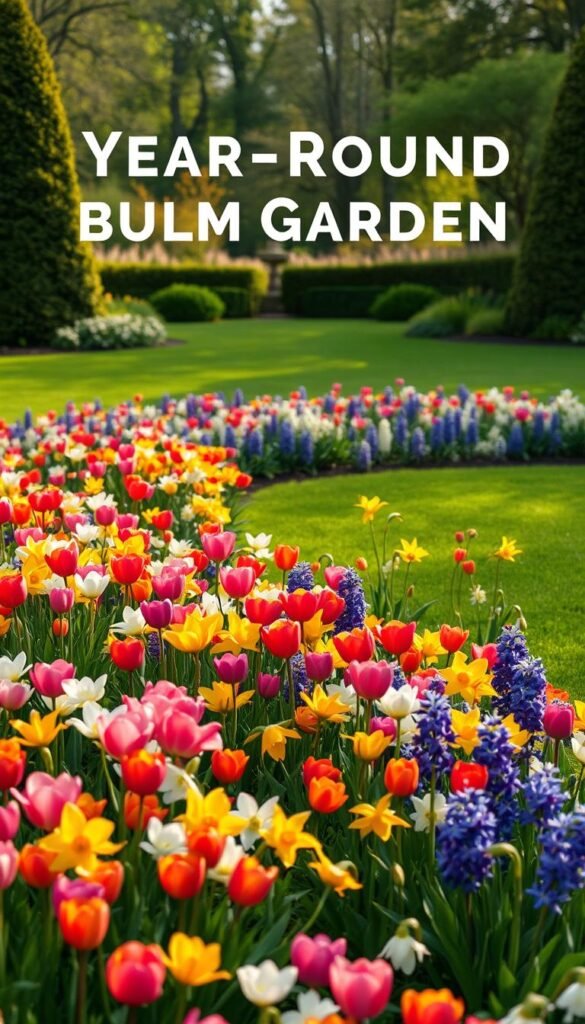
Imagine stepping outside to a vibrant outdoor space that delights your senses every month of the year. A thoughtfully arranged four-season landscape turns your yard into a living canvas where early crocuses push through winter snow and autumn chrysanthemums blaze until frost. This approach combines flowering bulbs with strategic companions for non-stop visual drama.
You’ll learn how to layer plants so something’s always blooming. Early risers like snowdrops give way to summer lilies, while fall-blooming alliums add fireworks before winter sets in. Four-season design principles help you select varieties that support bees and butterflies through colder months too.
Great arrangements balance more than just flowers. Evergreen shrubs provide winter structure, while ornamental grasses sway in icy breezes. You’ll discover how textures and shapes keep your space engaging even when blooms take a break.
The secret lies in understanding growth cycles and color harmonies. We’ll show you how to pair spring tulips with summer perennials that hide fading foliage. By coordinating heights and bloom times, you create seamless transitions that surprise and delight through every season.
Getting Started: Evaluating Your Garden’s Space and Soil
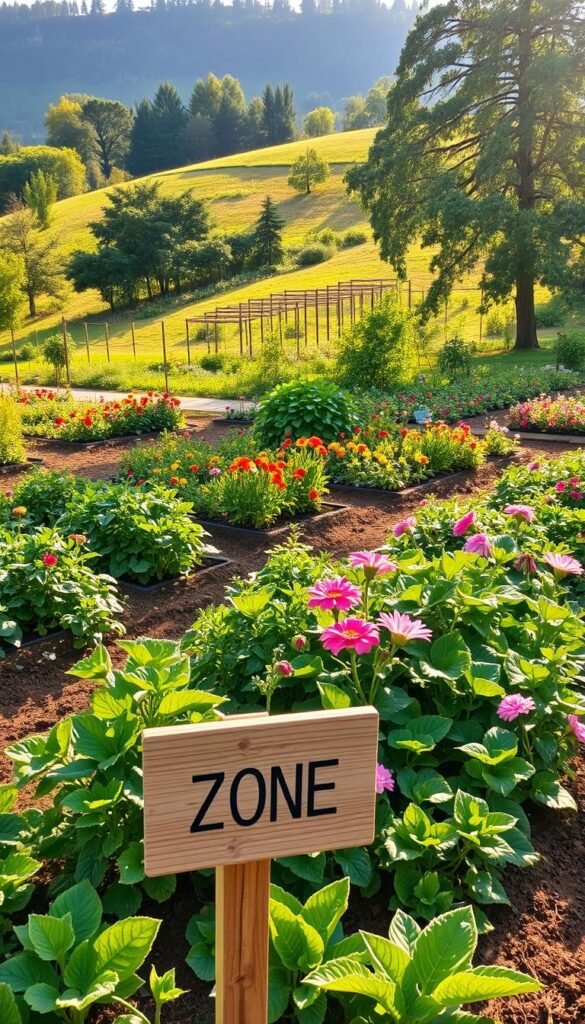
Your outdoor canvas begins with three key factors: your regional climate, daily sunlight patterns, and earth composition. These elements determine which plants will flourish naturally and where to place them for maximum impact.
Assessing Your USDA Zone and Climate
Your growing zone acts like a plant survival guide. The USDA map divides North America into 13 zones based on average winter lows. Tulips thrive in zones 3-8, while dahlias prefer zones 8-10. Check your zone using the official online tool before buying bulbs.
Microclimates create unique pockets in your space. South-facing walls radiate heat for tender varieties, while low spots hold frost longer. Track shadows throughout the day – that “full sun” area might get afternoon shade from nearby trees.
Understanding Sunlight Exposure and Soil Type
Most flowering bulbs demand 6+ hours of direct light. Woodland varieties like bluebells handle dappled shade. Use a sun calculator app or observe patterns over a week to map bright vs dim areas.
Test your earth’s texture by rolling damp soil between your fingers. Sandy types drain quickly but need compost. Clay holds moisture but requires grit for root growth. A simple pH test kit reveals acidity levels – most bulbs prefer slightly acidic to neutral conditions (6.0-7.0).
Selecting and Arranging Bulbs for Year-Round Bloom

Creating a non-stop floral show starts with knowing when each bulb struts its stuff. Timing plantings across seasons ensures fresh blooms emerge as others fade. This rhythm turns your space into a living calendar where crocuses herald spring and lilies bask in summer heat.
Choosing Bulbs by Season for Continuous Color
Fall-planted varieties like tulips and daffodils need winter’s chill to bloom early. Tuck them into soil before frost, and they’ll reward you with spring fireworks. Summer stars like dahlias go in after last freeze – their bold flowers thrive as temperatures rise.
Don’t overlook autumn’s performers. Plant Colchicum in July, and they’ll push through fallen leaves with September color. For indoor magic, amaryllis bulbs adapt to any season when potted and forced.
Arrange taller varieties behind shorter ones. Alliums make striking backdrops, while grape hyacinths edge walkways. Cluster bulbs in odd numbers for natural-looking drifts. Mix types with overlapping bloom times – snowdrops can share space with late-winter hellebores.
Remember: true bulbs (tulips) store energy differently than corms (crocus). This affects how deep to plant and when to divide. Pair low-maintenance narcissus with showier varieties that need annual replanting.
Plan Year-Round Color with Bulbs Garden Design Techniques for Flower Beds
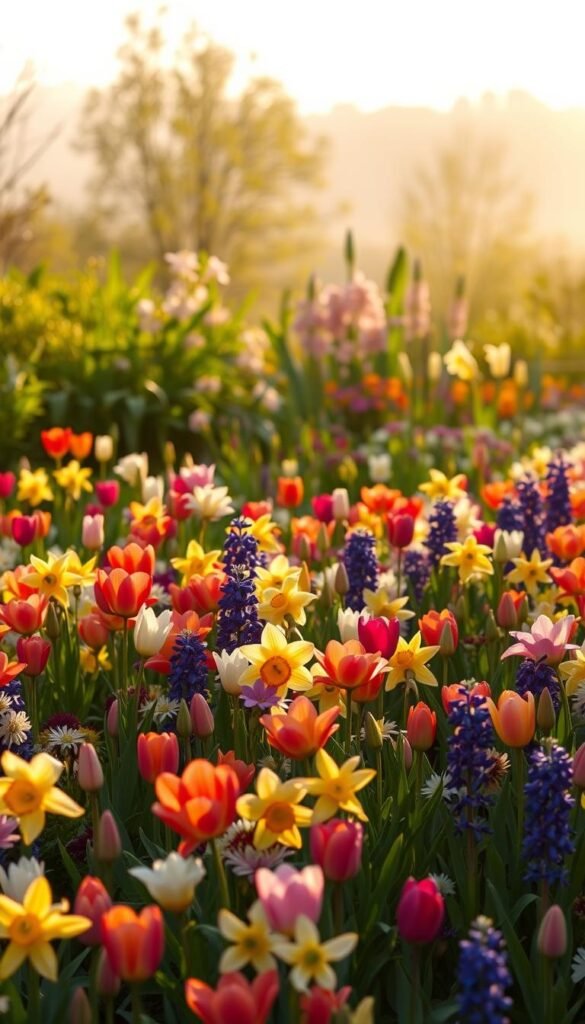
Transform your outdoor area into a dynamic display that evolves with the seasons. By pairing bulbs with complementary plants, you’ll craft a space where fresh blooms emerge just as others fade. This rhythm creates visual momentum that carries through spring showers, summer heat, and autumn frosts.
Incorporating Blooms from Spring to Winter
Kick off the growing season with snowdrops and crocuses pushing through thawing soil. Pair them with early risers like bleeding hearts, whose arching stems complement round bulb flowers. As temperatures climb, let lilies mingle with black-eyed Susans – their golden petals mirror the sun’s intensity.
When summer fades, saffron crocuses and asters create a warm transition. These late performers thrive alongside ornamental grasses that catch morning frost. For winter structure, plant scarlet willow branches that glow crimson against snowdrifts.
Layer varieties at different depths for staggered blooming times. Early tulips can share space with peonies that hide fading foliage. This approach keeps beds lively while reducing maintenance – nature handles the transitions.
Color coordination ties everything together. Soft pink hyacinths flow into bold daylilies, then mellow into purple asters. Evergreen shrubs provide backbone during dormancy, while seed heads like coneflowers add texture. For more ideas on elevating your space with thoughtful design, explore these creative approaches.
Integrating Hardscaping and Non-Living Elements
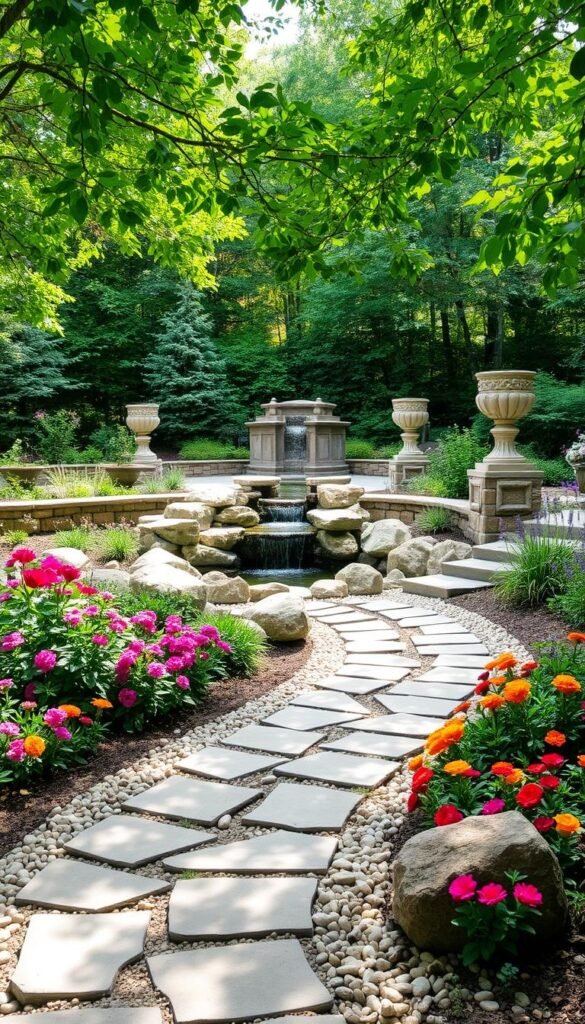
The true magic of a four-season space lies in its structure. Permanent features like stone pathways and raised planters act as your landscape’s skeleton, offering shape and interest even when blooms fade. These elements anchor your design while creating practical routes through your outdoor areas.
Crafting Visual Rhythm with Structural Elements
Stone paths do more than guide footsteps—they establish flow. Crushed gravel crackles underfoot, while slate slabs darken after rain for dramatic contrast. Place decorative boulders near seating areas to create natural focal points that draw the eye year-round.
Containers offer flexibility for tricky spots. Move potted tulips to catch morning light or shield dahlias from afternoon storms. For small spaces, try colorful container arrangements that bloom successively from spring through fall.
Water features add motion and sound. A simple birdbath attracts pollinators, while recirculating fountains mask street noise. Pair these with alliums whose spherical blooms echo water droplets.
Raised beds solve drainage issues while elevating displays. Build tiered planters to showcase crocuses at eye level. Use weathered wood or stone walls to blend functionality with rustic charm.
Maintenance Tips for Continuous Garden Vibrancy

Keeping your outdoor space lively requires smart care routines. Proper timing and nutrient management help bulbs return stronger each year while supporting pollinators through multiple seasons.
Seasonal Pruning and Bulb Care
Resist trimming leaves until they turn yellow – about six weeks after blooming. This lets energy return to underground storage for next year’s show. Snip spent flowers regularly to encourage new buds on repeat bloomers like dahlias.
Pair early bulbs with late-emerging perennials. Daylilies or hostas effectively hide fading foliage while adding summer interest. Divide crowded clusters every 3-4 years when flowers shrink or leaves overlap.
Smart Feeding and Weather Prep
Boost soil health by mixing bone meal into planting holes. Feed actively growing plants with liquid kelp every 14 days until leaves wither. This strengthens roots and improves bloom size.
| Season | Task | Timing |
|---|---|---|
| Spring | Apply balanced fertilizer | When shoots emerge |
| Summer | Deadhead spent blooms | Weekly checks |
| Fall | Plant new bulbs | 6 weeks before frost |
| Winter | Apply protective mulch | After ground freezes |
Shield tender varieties from sudden temperature drops. Use burlap wraps for container plants and frost blankets for in-ground specimens. These tips help extend blooming periods by 2-3 weeks in unpredictable weather.
Designing with Bulbs: Expert Tips and Inspiration
Unlock your landscape’s full potential by blending bulb varieties with strategic arrangements. Even seasoned growers face challenges – here’s how to solve common issues while boosting visual impact.
Troubleshooting Common Growing Challenges
Overcrowding steals nutrients and reduces blooms. If plants stop flowering but leaves remain, dig up clusters in fall. Replant with proper spacing – three times bulb width apart. Mix in compost to refresh tired soil.
Missed bloom cycles often stem from incorrect planting depths. Use a ruler: most bulbs need 2-3x their height in soil. Forgot when to plant? Store summer varieties in paper bags until spring thaw passes.
Rodent-resistant options like alliums protect vulnerable tulips. Surround plantings with sharp gravel or interplant with daffodils – their toxicity deters nibblers. For persistent pests, try raised beds lined with hardware cloth.
Extend displays by combining early and late varieties. Pair quick-fading hyacinths with creeping phlox that masks dying foliage. Keep notes on yearly performance to refine your design – nature’s surprises often spark the best ideas.