
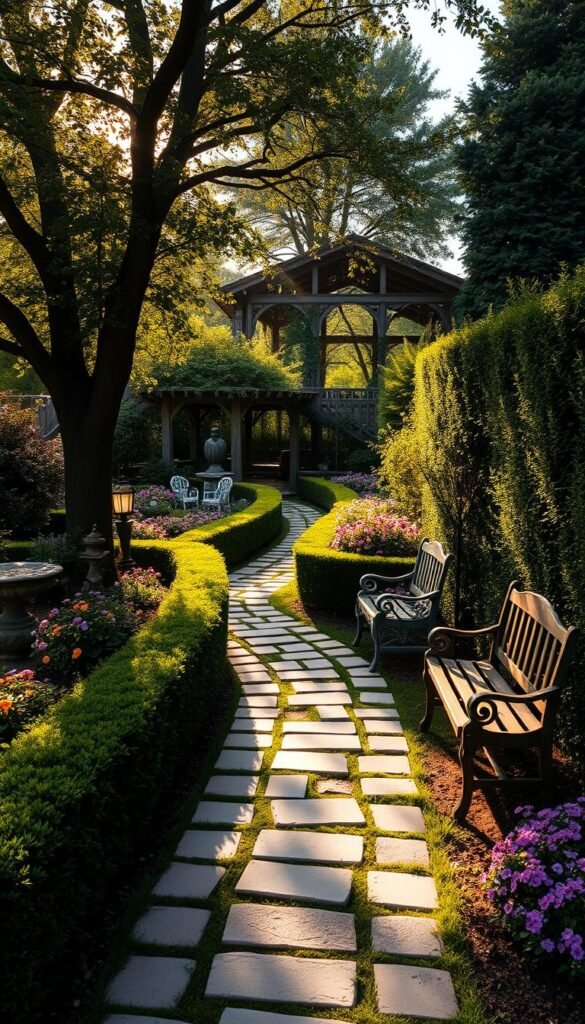
Does your backyard feel more like a hallway than an oasis? Many homeowners struggle with slender spaces that seem impossible to decorate. These areas often come with uneven surfaces, forgotten patios, and untapped possibilities waiting for creative solutions.
Professional landscapers see these spaces differently. What looks limiting at first glance becomes a canvas for smart spatial storytelling. Through clever zoning and strategic planting, even the most awkward dimensions transform into multi-functional retreats.
You’ll learn how to create natural pauses in linear areas using color-blocked flower beds or textured pathways. Discover why defining activity zones matters more in tight quarters than sprawling lawns. We’ll show you how to balance privacy needs with airflow considerations unique to confined yards.
The secret lies in working with your space’s proportions rather than against them. Proper preparation helps uncover hidden assets like reusable brickwork or ideal sun patterns. By the end, you’ll see your yard not as a challenge, but as an opportunity to craft something uniquely yours.
Setting Your Priorities for a Long, Narrow Garden
Start by grabbing paper and listing every feature you dream of having. Grilling stations? Flower arches? Kids’ play zones? Now circle the three non-negotiables. This simple exercise reveals what truly matters for your household.
Building Your Essential List
Ground space disappears fast in tight yards. A dining table for six might push out that fire pit you wanted. Rank items by how often you’ll use them weekly. Daily needs beat seasonal luxuries every time.
Working With What You Have
Sunlight patterns and drainage issues aren’t enemies – they’re design helpers. That shady corner? Perfect for ferns instead of struggling roses. Existing brick walls become textured backdrops for vertical gardens.
| Functional Needs | Aesthetic Desires | Compromise Solutions |
|---|---|---|
| Durable seating | Ornate furniture | Weather-resistant benches with colorful cushions |
| Lawn area | Water feature | Compact bubbling urn near stepping stones |
| Storage shed | Open sightlines | Slender vertical cabinet disguised as trellis |
Measure twice, plant once. Sketch your yard’s exact dimensions including permanent structures. This prevents buying oversized furniture that blocks natural pathways. Remember – narrow spaces thrive on purposeful choices, not crowded collections.
Planning Your Layout for Maximum Functionality

Smart space management turns restrictive yards into inviting retreats. Your secret weapon? Strategic organization that feels effortless. Think of your outdoor area as a series of connected rooms rather than one endless corridor.
Creating Zones for Different Activities
Divide your yard into purposeful areas using visual cues. A stone patio becomes an instant dining room, while gravel under lounge chairs signals relaxation space. “The best divisions whisper rather than shout,” notes landscape designer Mara Housley.
Try these subtle separators:
- Low hedges that guide movement without blocking views
- Contrasting pavers that define cooking zones
- Hanging lights that spotlight conversation areas
Optimizing Pathways and Flow
Curved walkways trick the eye into seeing width. Offset stepping stones create natural pauses, while diagonal patterns break the straight-line effect. Keep main routes at least 3 feet wide for comfortable two-way traffic.
| Path Type | Best Use | Material Tips |
|---|---|---|
| Serpentine | Front to back access | Irregular flagstone with creeping thyme |
| Stepping stones | Garden access | Concrete squares with moss filler |
| Linear | Utility areas | Stamped concrete with wood plank texture |
Position your grill near seating but downwind. Tuck storage benches under windows where they double as plant stands. Every choice should serve multiple purposes in tight quarters.
Integrating Trendy Garden Ideas and Inspirations
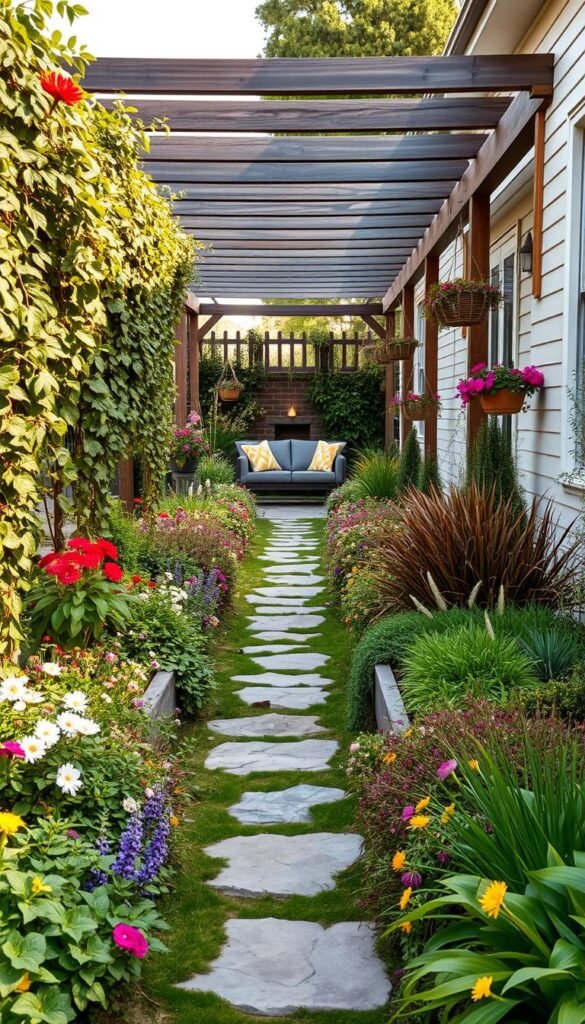
Modern gardening trends prove even slim spaces can burst with creativity and flavor. Raised planters solve two problems at once – they add visual structure while giving roots room to thrive. This approach lets you grow salad greens and strawberries alongside marigolds that deter pests naturally.
Using Raised Beds and Vegetable Gardens
Tall cedar boxes make harvesting easier and define garden zones clearly. Try arranging three narrow planters diagonally across your space – this clever trick creates depth. Mix edible and ornamental plants like purple kale with pansies for double-duty beauty.
| Bed Type | Best Plants | Space Saver Tip |
|---|---|---|
| Tiered | Herbs & lettuce | Stack planters vertically |
| Windowbox | Cherry tomatoes | Mount on fences |
| Galvanized | Carrots & radishes | Use square foot spacing |
Incorporating Seasonal Flowers and Foliage
Rotate blooms that work hard through changing seasons. Spring bulbs make way for summer zinnias, followed by mums in fall. “Evergreen shrubs anchor the design during winter months,” suggests Brooklyn gardener Lila Torres.
Try these combos for year-round interest:
- Tulips + lavender (spring/summer)
- Ornamental grasses + asters (fall)
- Red twig dogwood + hellebores (winter)
Plan for Long, Narrow Yards with Long Garden Design Layout Strategies

Transform your slim outdoor area into a dynamic retreat using spatial illusions. Professionals manipulate perspectives through three key methods: disrupting straight lines, layering textures, and controlling viewpoints. Diagonal walkways instantly add 15% more visual width compared to straight paths, according to landscape architect Jenna Marlowe.
- Offset seating areas with angled planters
- Install curved trellises that interrupt linear boundaries
- Use staggered lighting posts to create rhythm
Strategic focal points guide movement through confined areas. A bubbling fountain draws attention midway, while color-blocked perennials create depth near fences. “Alternate bold and subtle elements every 8-10 feet to prevent tunnel vision,” advises designer Marco Lin.
| Technique | Purpose | Example |
|---|---|---|
| Mirrored surfaces | Double perceived space | Polished steel garden art |
| Tiered planters | Add vertical layers | Herbs → shrubs → small trees |
| Mixed materials | Define zones | Decking + gravel + grass |
Balance functional surfaces with green areas using the 40-60 rule: 40% hardscape for seating/dining, 60% planting beds. This ratio maintains airflow while providing usable surfaces. For tighter yards, maximize your garden’s potential with foldable furniture that disappears when not in use.
Classic design principles adapt beautifully to linear spaces. Repeat key colors across different zones to unify the area. Vary plant heights to create natural screens without bulky structures. Your transformed yard will feel intentionally crafted, not confined by its shape.
Selecting the Right Plants and Trees for Your Space
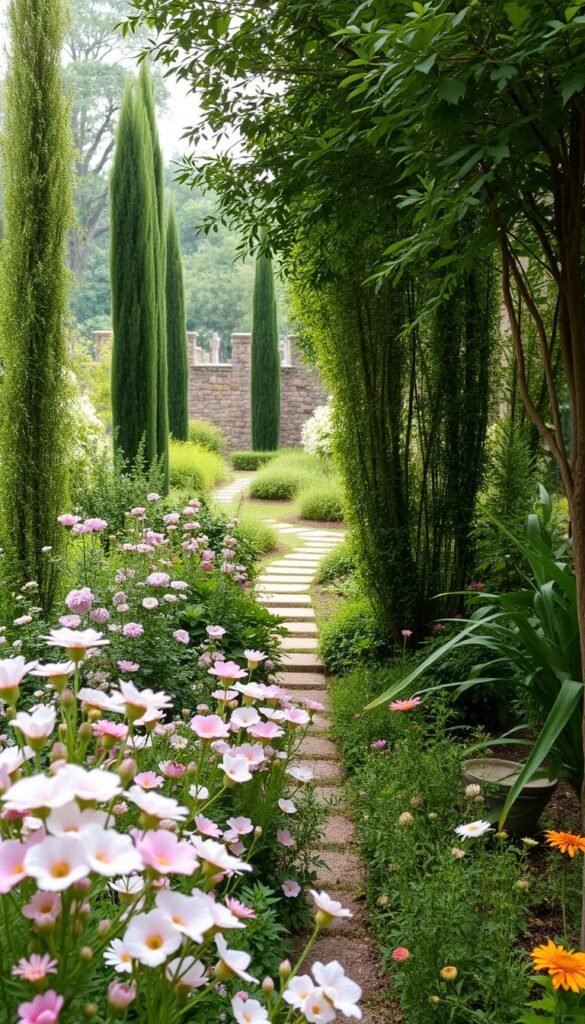
Your slender yard becomes a lush paradise when plants pull double duty. Smart selections maximize greenery without overcrowding, blending beauty with practical benefits like shade and screening.
Choosing Trees for Privacy and Structure
Columnar varieties work wonders in tight quarters. Italian cypress trees form natural screens, while flowering dogwoods add spring color without sprawling. For edible options, try dwarf cherry or apple trees grafted onto compact rootstocks.
| Tree Type | Key Benefit | Space-Saving Feature |
|---|---|---|
| Arborvitae | Year-round privacy | Grows 3-5′ wide |
| Japanese maple | Seasonal color | Upright growth habit |
| Espalier pear | Fruit production | Flat against walls |
Incorporating Colorful and Seasonal Blooms
Layer plants like nature’s staircase. Start with creeping phlox at ground level, add hydrangeas at mid-height, and finish with redbud trees. This vertical approach creates depth without eating up precious square footage.
- Spring: Tulips + azaleas
- Summer: Daylilies + lavender
- Fall: Chrysanthemums + ornamental kale
For winter interest, try witch hazel’s spidery blooms. Pair with evergreen ferns in container gardens that adapt to changing seasons. Rotate annuals in strategic spots for continuous color bursts.
Designing Comfortable Outdoor Living Areas
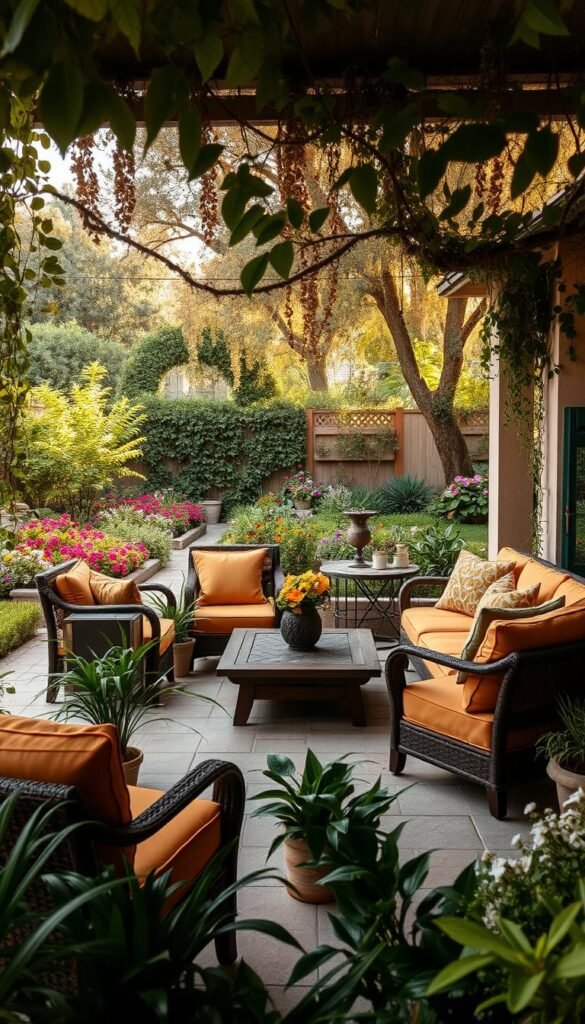
Your slender yard becomes a hospitality hotspot when you balance cozy gatherings with smart spatial planning. Multi-functional surfaces and clever seating turn limited square footage into inviting destinations for morning coffee or evening cocktails.
Patio and Seating Options
Brick patios shine in narrow settings when laid diagonally. A herringbone pattern with curved edges softens straight lines, while built-in benches maximize perimeter space. “Floating seating wrapped around fire pits creates intimacy without clutter,” notes landscape architect Elena Torres.
| Material | Best Feature | Space-Saving Tip |
|---|---|---|
| Stamped concrete | Mimics stone at lower cost | Use light colors to reflect light |
| Composite decking | Low maintenance | Run boards width-wise to suggest breadth |
| Porcelain tiles | Slip-resistant | Match indoor flooring for continuity |
Modular sectionals adapt to different group sizes. Look for weather-resistant pieces with hidden storage – ottomans that open for blankets or benches holding gardening tools. Keep main walkways clear with tucked-away seating nooks.
Blending Indoor-Outdoor Living
Expand your home’s footprint visually with coordinated design elements. Continue interior paint colors onto exterior walls, or mirror window placements with matching creative decor ideas in planter arrangements. Large sliding doors erase boundaries, while outdoor rugs define conversation zones.
Try these seamless transitions:
- Align patio stones with kitchen tile patterns
- Use matching throw pillows indoors and out
- Install matching pendant lights above dining areas
Partial pergolas over seating areas create “outdoor rooms” with dappled shade. Add curtains for privacy or weather protection – they billow beautifully in summer breezes while softening hard edges.
Maximizing Vertical Space in Tight Areas
Small yards gain big personality when you look up. Vertical surfaces become secret weapons for adding depth and function without cluttering limited ground areas. Let walls, fences, and airspace work harder to create lush layers that trick the eye upward.
Vertical Gardens and Planter Walls
Transform blank surfaces into living art with modular systems. Stackable planters let you grow herbs and strawberries while creating privacy screens. Wall-mounted pockets work great for trailing plants like ivy or sweet potato vine, softening harsh lines.
| Planter Type | Best Plants | Installation Tip |
|---|---|---|
| Pocket panels | Succulents, ferns | Use south-facing walls for sun lovers |
| Gutter gardens | Lettuce, pansies | Angle slightly for drainage |
| Ladder shelves | Herbs, petunias | Anchor securely to prevent tipping |
Train climbing roses or clematis on trellises to create natural room dividers. These vertical elements break up sightlines while adding fragrance and color. For quick results, try annual vines like morning glory from creative vertical systems.
Creative Use of Hanging Planters
Overhead spaces host surprising possibilities. Macramé holders with spider plants add boho charm above seating areas. “Mix materials like metal baskets and ceramic pots for visual texture,” suggests urban gardener Tina Reyes.
- Hang recycled cans as quirky herb containers
- Suspend tiered planters near sunny windows
- Use pulley systems for easy watering access
Edible gardens thrive vertically too. Cherry tomatoes cascade beautifully from hanging buckets, while mint grows vigorously in suspended jars. Keep heavier planters near support beams, and rotate light-loving plants weekly for even growth.
Utilizing Hardscape Features for Style and Function
Hardscape elements turn challenging spaces into functional art galleries. The right combination of stone, pathways, and walls adds structure while guiding movement through your outdoor area. These permanent features create rhythm and purpose in linear yards.
Material Mixology for Visual Impact
Blend textures to trick the eye into seeing width. A flagstone walkway flanked by gravel beds breaks up straight lines. Retaining walls double as casual seating when capped with smooth limestone slabs.
Try these budget-friendly pairings:
- Stamped concrete patios with pebble borders
- Recycled brick paths beside steel edging
- Wooden decking transitioning to stone steps
| Material | Best Use | Budget Tip |
|---|---|---|
| Flagstone | Curved pathways | Use irregular shapes for mosaic effect |
| Concrete | Extended patios | Stain to mimic pricier materials |
| Dry-stack stone | Retaining walls | Install without mortar for rustic look |
Winding paths create discovery moments in tight spaces. Angle stepping stones toward focal points like water features or specimen trees. “A slight curve adds 30% more visual journey,” notes landscape contractor Derek Mills.
Address slopes creatively with terraced walls. Plant cascading sedum between stones for softness. These structures prevent erosion while adding usable surfaces for pots or benches.
Incorporating Lighting and Sustainable Elements
Lighting transforms your outdoor space into a multi-season retreat. The right combination of illumination and eco-conscious choices elevates evenings while respecting natural resources. Let’s explore how to balance beauty with sustainability.
Landscape Lighting Ideas for Ambience
Layer light sources to create depth. Solar path markers guide footsteps, while uplighting showcases textured walls. Dimmable LEDs let you adjust mood from bright summer gatherings to cozy winter nights.
Add fairy lights around seating areas or water features for instant charm. These delicate touches pair beautifully with glowing focal points that draw the eye. Use warm-toned bulbs to mimic sunset hues year-round.
Eco-Friendly Materials and Xeriscaping
Choose permeable pavers that reduce runoff while complementing your garden’s style. Recycled composite decking withstands weather without constant sealing. Group drought-tolerant plants like lavender and sedum to minimize watering needs.
Xeriscaping principles thrive in tight spaces. Native grasses and succulents provide texture through all seasons. Rain barrels tucked beside sheds collect water for summer containers. Your landscape becomes a testament to thoughtful, earth-friendly design.