Working with a long, narrow outdoor area might seem daunting at first glance. But this shape actually offers endless possibilities to craft a space that’s both beautiful and practical. The key lies in understanding how to balance structure with creativity.
Wide, horizontal spaces let you spread out features like seating nooks, flower beds, or even a small vegetable patch. Without careful planning, though, these areas can feel disconnected or overly stretched. That’s where smart zoning comes into play.
By dividing your yard into distinct zones—like a cozy patio spot or a vibrant planting area—you create visual interest and purpose. Pathways or low hedges help guide movement, making the whole space feel intentional. You’ll avoid that “runway” effect while keeping everything easily accessible.
Think about how each section serves your needs. Maybe you want a sunny spot for morning coffee or a shaded corner for summer gatherings. With thoughtful arrangement, every inch of your outdoor area can shine.
Ready to turn that challenging stretch into your favorite retreat? Let’s explore how to blend practicality with personality in ways that make your yard truly yours.
Understanding the Unique Characteristics of Rectangular Gardens
Rectangular yards offer a clean canvas for creative landscaping. Their linear shape creates natural pathways for both movement and visual rhythm. Start by measuring your plot—length and width determine how to balance greenery with functional zones.
Recognizing Horizontal Potential
A width-to-depth ratio above 1:2? You’ve got horizontal space to play with. Wider plots let you layer features side by side, like a dining spot next to flower beds. Narrower ones benefit from vertical elements like trellises or tiered planters.
Evaluating Sunlight and Natural Flow
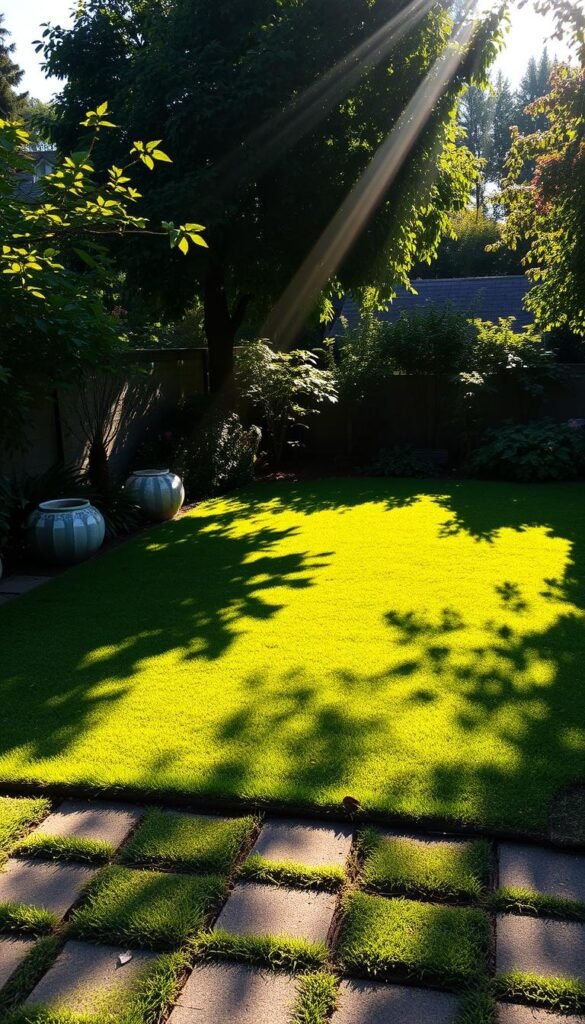
Track where shadows fall at 9 AM, noon, and 3 PM. Sunny zones suit tomatoes or roses, while shaded ground thrives with hostas or ferns. Notice how wind sweeps through—this affects plant health and comfort.
| Sun Exposure | Best Plants | Design Tip |
|---|---|---|
| Full Sun (6+ hours) | Lavender, Sage | Use as focal points near seating |
| Partial Shade | Hydrangeas, Astilbe | Pair with decorative stones |
| Full Shade | Ferns, Heuchera | Create texture contrasts |
Slopes and soil quality matter too. Sandy soil drains fast—ideal for succulents. Clay holds moisture, perfect for moisture-loving plants. For a cohesive gardening aesthetic, match plant choices to your yard’s natural rhythm.
Key Strategies to Achieve Symmetry and Function in Rectangular Garden Design Layouts
Transforming your outdoor space starts with smart organization. Divide your plot into clear zones for dining, relaxing, and growing. This approach prevents a cluttered look while making every area purposeful.
Zone Creation and Eye-Catching Features
Start by mapping out where you want activity hubs. A fire pit surrounded by benches creates a social zone. Flower beds or raised planters work well as natural dividers between areas.
Add visual anchors like a decorative urn or flowering tree where paths meet. These focal points guide movement while adding personality. Place them where you want people to pause and enjoy the view.
Pathways That Connect and Charm
Mix straight walkways with gentle curves for natural flow. Gravel paths work for casual styles, while pavers suit modern design. Curved routes make small spaces feel larger by hiding what’s ahead.
For narrow plots, try diagonal pathways. They break up straight lines and create interesting angles. Pair them with compact plants that won’t crowd walkways.
Need help with limited space? Discover clever small-space gardening hacks to enhance your layout. Proper zoning and path placement turn basic rectangles into inviting retreats that feel both organized and welcoming.
Design Principles: Balancing Symmetry and Asymmetry
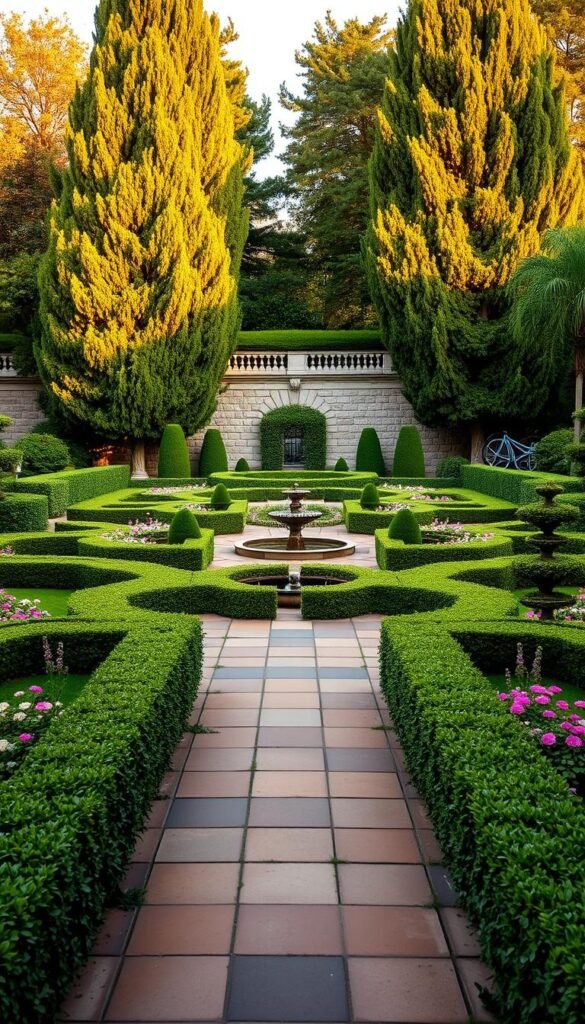
The magic of great garden spaces lies in their balance between order and spontaneity. Too much uniformity feels stiff, while pure randomness lacks focus. Your goal? Blend crisp structure with playful natural energy.
Mixing Structured Elements with Organic Touches
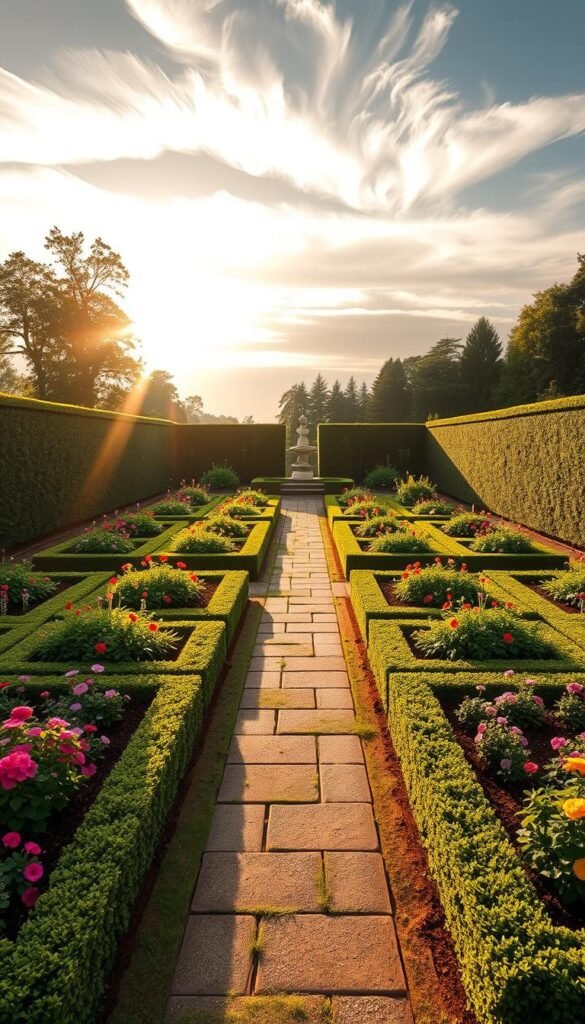
Start with symmetrical anchors—like twin hydrangeas flanking a bench or boxwood hedges framing a path. These create instant rhythm. Then soften them with meandering lines of wildflowers or a gravel trail that curves unexpectedly.
Try pairing geometric raised beds with billowy ornamental grasses. The contrast keeps eyes moving while maintaining harmony. As landscape architect Thomas Church once said:
“Gardens should combine the patterns of nature with the shapes of human need.”
Using Lines and Layers for Depth
Straight lines in fences or pathways establish order. Offset them with zigzagging borders or circular stone patterns. Vertical layers add intrigue—place tall grasses behind mid-height shrubs, with creeping thyme at ground level.
| Structural Elements | Organic Accents | Combination Tips |
|---|---|---|
| Rectangular pavers | Irregular river rocks | Alternate materials every 3 feet |
| Pruned hedges | Drifts of daisies | Let flowers spill over edges |
| Grid-style trellis | Rambling clematis | Train vines through openings |
Depth tricks work wonders in narrow spaces. Position bold-leafed plants up front, finer textures farther back. This optical illusion makes your garden feel deeper than its true size. Remember—your space should feel curated, not controlled.
Selecting Essential Features for a Functional Garden
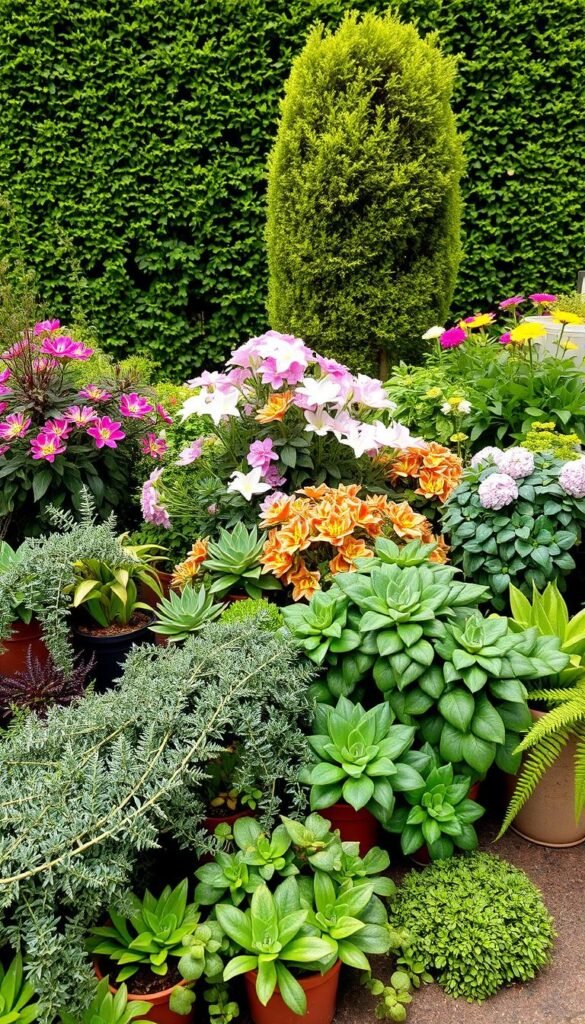
Your outdoor space becomes truly special when beauty meets purpose. Start by curating elements that work together while reflecting your personal style. Let’s break down how to pair living features with practical touches.
Choosing Plants, Trees, and Ground Covers
Think of your plot as a living painting. Tall maples or cypress trees form the backdrop. Mid-height shrubs like hydrangeas add middle depth, while creeping thyme or sedum carpets the front. Mix textures—pair spiky ornamental grasses with soft lamb’s ear leaves.
For year-round color, combine spring tulips with summer coneflowers and fall-blooming asters. Evergreen boxwoods keep structure in winter. As master gardener Julie Moir Messervy advises:
“A great planting scheme feels intentional yet wild enough to surprise you.”
Incorporating Seating, Water Features, and Borders
Place benches where they frame views—like facing a bubbling fountain or flowering dogwood. Modern corten steel chairs pop against natural stone, while reclaimed wood stools blend into creative garden designs.
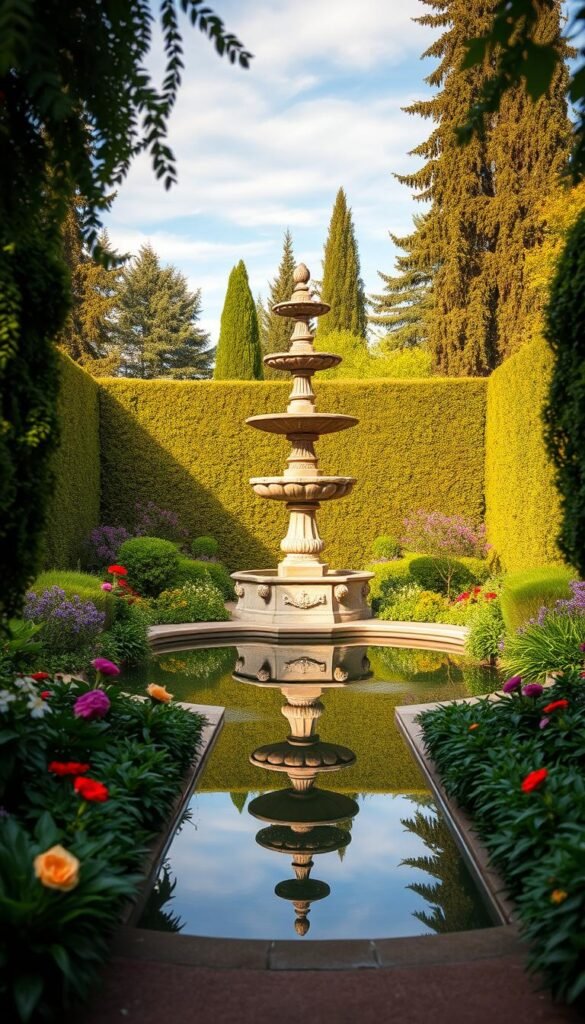
Water elements anchor spaces. A narrow reflecting pool elongates tight areas, while bowl fountains add sound without bulk. Use low borders of brick or lavender to separate zones subtly. They guide feet without blocking sightlines.
| Layer | Plant Examples | Design Role |
|---|---|---|
| Back | Redbud trees, tall grasses | Height & privacy |
| Middle | Roses, salvias | Color bursts |
| Front | Moss, succulents | Texture & edge definition |
Remember: every chair, shrub, and stone should invite you to linger. Your choices turn raw space into a destination.
Exploring Design Ideas for Varied Garden Styles
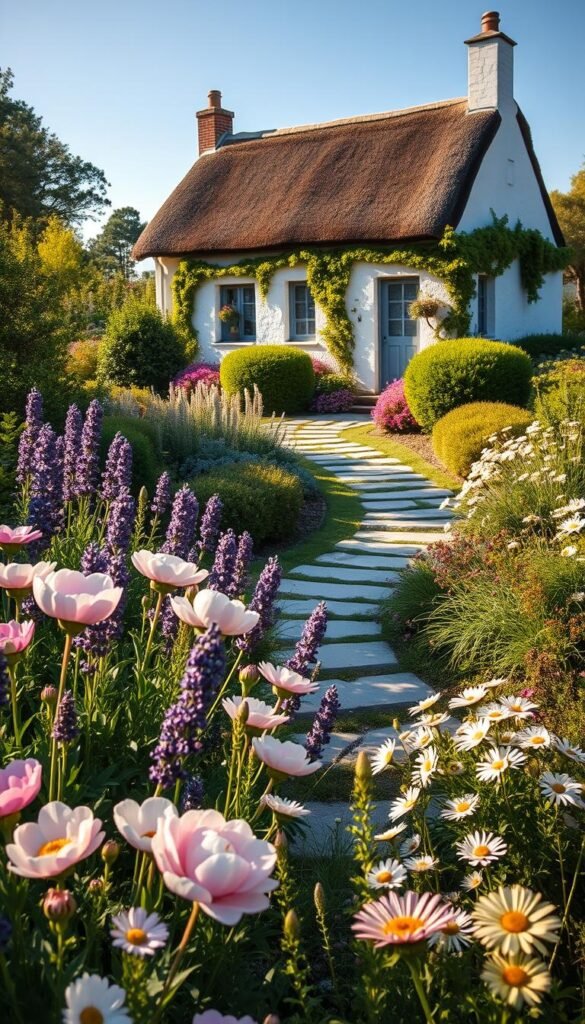
Your outdoor area’s personality shines through when you match its layout to your taste. Whether you crave crisp simplicity or vibrant chaos, there’s a style that fits your vision—and your maintenance tolerance.
Modern Minimalism and Clean Lines
Think sleek lines and open spaces. Picture geometric raised beds filled with spiky agave or feathery miscanthus grass. Straight gravel paths guide feet, while vertical planters add height without clutter. As landscape designer Mia Lehrer notes:
“Modern gardens thrive on restraint—every element must earn its place.”
Stick to a muted palette: silver-toned succulents, black mulch, and charcoal pavers. Add drama with a single sculptural element, like a corten steel fire bowl.
Cottage Charm and Traditional Elegance
For a relaxed vibe, let flowers run wild. Combine climbing roses with lavender and foxgloves along winding stone paths. Wooden benches tucked under arbors invite lazy afternoons. Traditional layouts favor symmetry—think twin yew hedges framing a central fountain.
| Style | Key Plants | Signature Features |
|---|---|---|
| Modern | Ornamental grasses, sedum | Geometric planters, monochromatic schemes |
| Cottage | Peonies, hollyhocks | Mixed borders, weathered wood accents |
| Traditional | Boxwood, roses | Symmetrical hedges, formal pathways |
Struggling to adapt these ideas to long rectangular plots? Use vertical layers in modern spaces or diagonal flower beds in cottage themes. Your plot’s shape becomes a canvas, not a constraint.
Enhancing Visual Interest with Artistic Elements
Ever feel like your outdoor space needs a spark? Mixing natural materials and creative accents turns ordinary plots into captivating retreats. Let’s explore how stones, gravel, and lighting can add depth while keeping your space functional.
Utilizing Stones, Gravel, and Textural Materials
Natural stone anchors your layout. Flagstone paths guide feet, while river rock borders soften edges. Try pea gravel for low-maintenance walkways—it drains well and muffles footsteps. Pair rough-cut boulders with feathery grasses for texture contrast.
| Material | Use Case | Design Tip |
|---|---|---|
| Flagstone | Stepping paths | Space slabs 6-8″ apart |
| Decomposed granite | Modern seating areas | Compact with stabilizer |
| River rock | Dry creek beds | Vary stone sizes |
Gravel isn’t just practical—it adds visual interest. Use dark crushed stone to make plants pop, or white marble chips to brighten shady corners. Landscape designer Lauren Dunec suggests:
“Let materials tell a story—weathered stones whisper history, while polished pebbles shout modernity.”
Creating Dynamic Focal Points with Sculptures and Lighting
Draw the eye with bold accents. A rusted steel sculpture adds drama among blooms. Place ceramic pots where paths bend—they’ll surprise and delight guests. Keep scale in mind: small yards suit petite art pieces.
Lighting transforms nights. Uplight trees to cast shadow patterns. Wrap string lights around pergolas for cozy charm. Solar-powered stakes along gravel paths ensure safety without wiring hassles. Remember: less is often more after dark.
Practical Maintenance Tips for Year-Round Garden Appeal
Keeping your outdoor retreat looking sharp requires smart upkeep. Regular care ensures plants thrive while preserving your layout’s visual balance. Let’s explore how simple routines can protect your hard work.
Effective Irrigation and Pruning Strategies
Water wisely with drip systems or soaker hoses—they deliver moisture directly to roots. Early morning watering reduces evaporation. For shrubs, follow the “3-year rule”: prune ⅓ of old growth annually to encourage new blooms.
Trim perennials after flowering to promote bushier growth. Keep shears clean to prevent disease spread. A pro tip: match pruning schedules to plant types. Spring bloomers? Cut after flowers fade. Summer stars? Trim in early spring.
Managing Seasonal Changes and Soil Health
Refresh mulch every spring to lock in moisture and block weeds. Test soil pH yearly—most plants prefer 6.0-7.0. Amend with compost if nutrients dip low.
| Season | Key Task | Quick Fix |
|---|---|---|
| Spring | Aerate soil | Mix in worm castings |
| Summer | Deadhead flowers | Use scissors for clean cuts |
| Fall | Protect roots | Add 2″ leaf mulch |
As master gardener Melinda Myers advises: “Healthy soil grows resilient plants.” Rotate container placements to prevent compaction. With these habits, your space stays vibrant through every weather shift.