
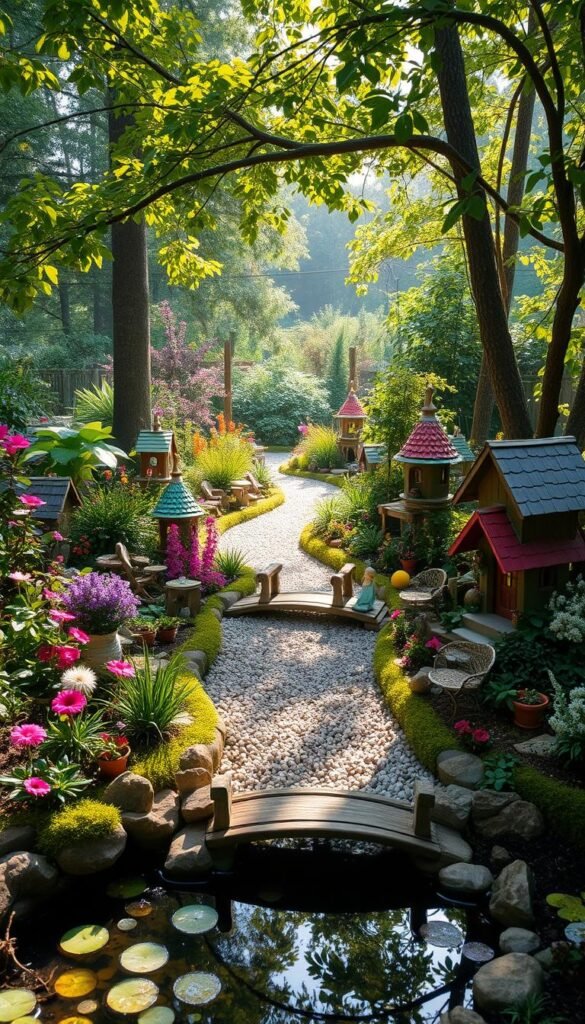
Transform your outdoor space into a storybook scene with miniature landscapes that blend nature and fantasy. These tiny worlds let you design charming settings where creativity thrives. Whether you’re crafting for relaxation or family fun, this hobby offers endless ways to express your style.
Start by choosing a spot—a shaded corner, patio planter, or even a windowsill. Add pint-sized structures like cottages or bridges to give your scene depth. Natural elements such as pebbles, moss, and small plants bring texture and life to your design.
Themes let your imagination soar. Build a woodland retreat with tiny mushrooms, or a beach-inspired setup with seashell accents. Use repurposed items like teacups or old dishes to keep costs low while adding personality. Even beginners can create magic with simple materials.
This guide will show you how to blend practicality with wonder. Learn to arrange pathways, scale decorations, and maintain your creation through seasons. Let’s dive into techniques that make every inch of your space feel enchanted.
Embracing the Magic: An Introduction to Fairy Gardens
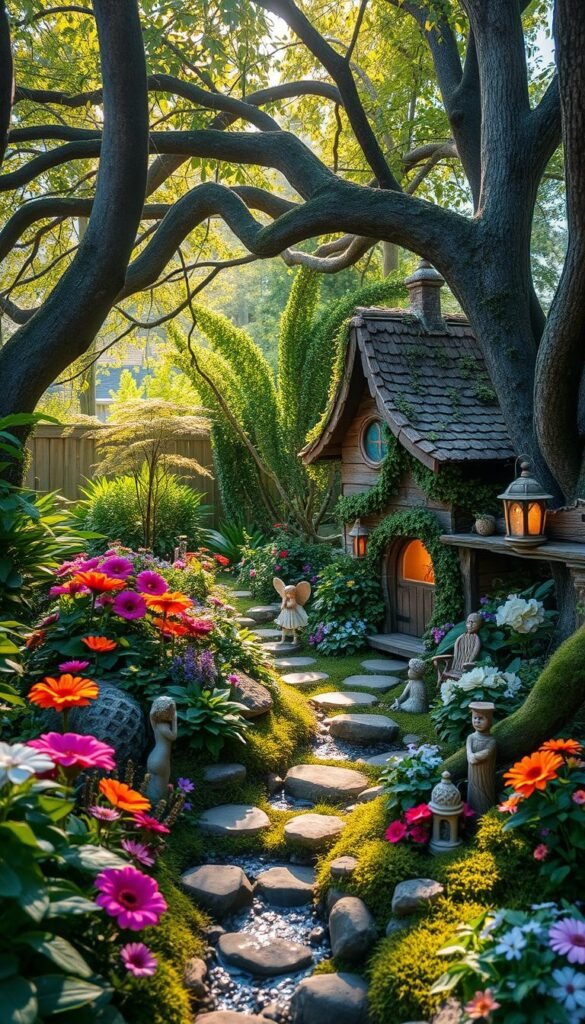
Step into a realm where imagination blooms and tiny wonders come alive. These captivating spaces combine living plants and artistic details to form scenes straight from folklore. Whether nestled in a flowerpot or sprawling across a patio, they invite you to explore stories hidden in every leaf and pebble.
What Makes a Fairy Garden Enchanting?
It’s the blend of whimsy and reality that casts a spell. Tiny cottages peek through moss, while flowers frame pebble paths just wide enough for mythical visitors. The magic grows when you add hand-painted signs or miniature lanterns—details that suggest a world beyond what’s visible.
Scale matters too. Miniature elements trick the eye, making ferns look like towering trees. This illusion transforms ordinary spaces into places where anything seems possible. Even a simple arrangement of stones can become a mystical gateway with the right perspective.
Benefits of Creating a Miniature Garden
Building these worlds isn’t just fun—it’s therapy. Digging in soil and arranging plants lowers stress, letting you focus on creativity rather than daily worries. Families bond while crafting tiny furniture, and kids learn patience as they watch succulents grow around their creations.
You’ll also connect with nature’s rhythms. Watering becomes a mindful ritual, and seasonal changes inspire new designs. Best of all? You’re building a living art piece that evolves, reminding you that magic exists in the smallest corners of life.
Planning Your Dream Fairy Garden Landscape
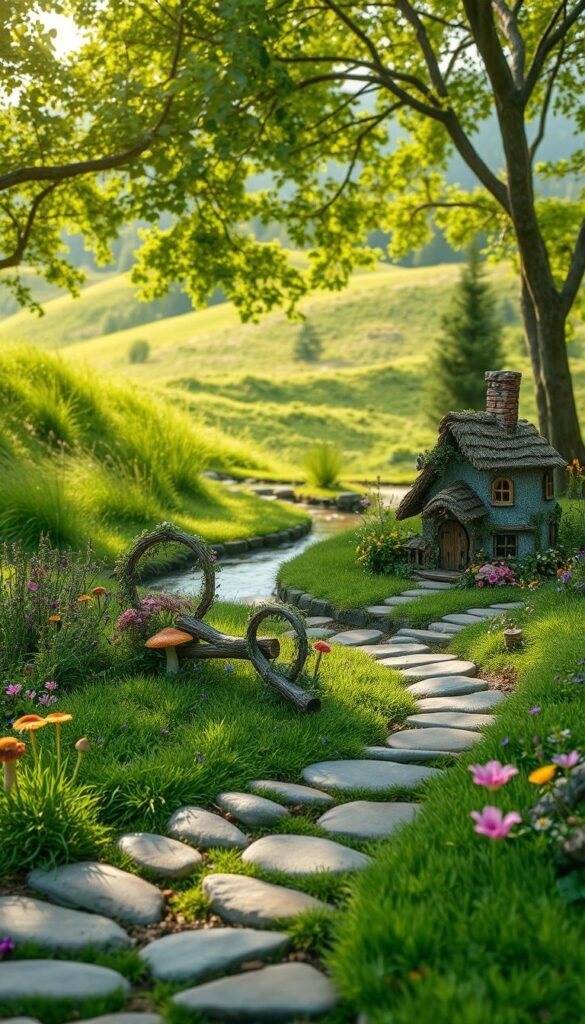
Crafting a magical space starts with a clear blueprint. Begin by visualizing your ideal fairy garden—its theme could range from a misty forest retreat to a sparkling seaside haven. This vision guides every choice, from plant picks to decorative accents.
Measure your available area, whether it’s a patio planter or a shaded nook. Small spaces thrive with vertical elements like tiered planters, while larger spots allow winding trails. Sketch rough layouts on paper, marking where cottages, benches, or tiny ponds might go.
Natural materials keep the garden grounded in charm. Mix pebbles for pathways, moss as carpeting, and dwarf plants for scale. Repurpose thrifted items like teacups or birdhouse fragments to add personality without breaking the bank.
Your landscape should tell a story. Maybe a weathered bridge hints at hidden realms, or a miniature campfire suggests recent fairy visitors. These details turn random objects into parts of a living, breathing world.
Finally, make a checklist. Include weather-resistant decor, soil suited to your plants, and tools for upkeep. With a solid plan, you’ll build a space where magic feels effortless—and entirely your own.
Choosing the Perfect Location and Setting the Scene
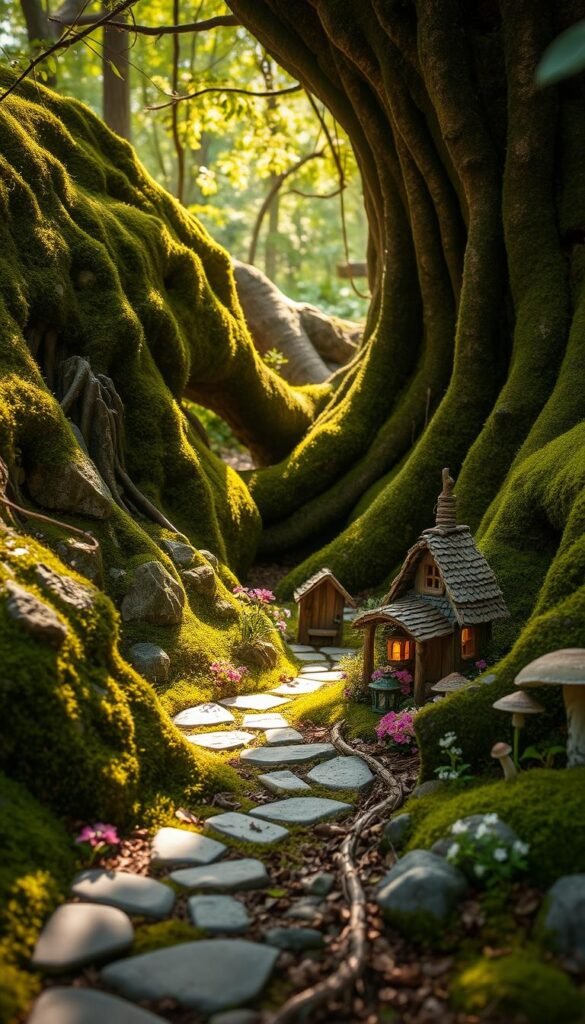
Finding the right home for your miniature wonderland starts with smart placement. A well-chosen spot ensures your tiny ecosystem thrives while blending seamlessly with your outdoor aesthetics. Let’s explore how to balance practicality with enchantment.
Sunlight and Soil Considerations
Partial sunlight works best—about 4-6 hours daily. Too much direct sun dries out delicate plants, while too little stunts growth. Look for areas near fences or trees that offer natural shade and wind protection.
Test your soil before planting. Mix in compost if it’s too sandy or dense. “Healthy earth means happy roots,” as seasoned gardeners say. Ensure proper drainage by avoiding low spots where water pools after rain.
Clear debris and check for hidden roots or utility lines. You want a clean slate to build your tiny world. For inspiration on harmonizing design with nature, explore how to elevate your space through thoughtful arrangements.
Finally, pick a visible area you’ll pass often. This way, you’ll enjoy daily magic while remembering to water and prune. With the right foundation, your creation becomes a living story that grows alongside your imagination.
Backyard Fairy Garden Ideas: Mini Houses, Pathways, and Creative Themes
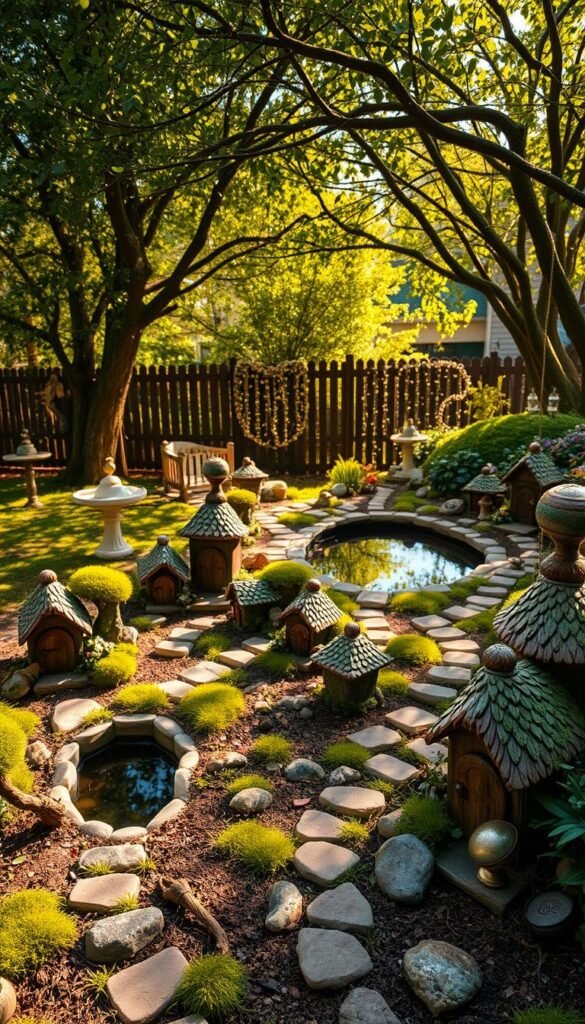
Unleash your inner storyteller by blending tiny architecture with nature’s artistry. These spaces thrive on playful contrasts—think weathered cottages beside sleek modern structures or pebble trails leading to hidden fairy gathering spots. Every choice whispers a tale waiting to be discovered.
Pathways anchor your design while guiding exploration. Compare materials to match your vision:
| Material | Effect | Best For |
|---|---|---|
| Flat Stones | Rustic, natural look | Woodland themes |
| Glow Pebbles | Nighttime magic | Modern or celestial designs |
| Wood Chips | Soft, earthy texture | Country-style spaces |
Rotate decorations with the seasons. Swap spring blossoms for autumn pumpkins or add cotton-ball “snow” in winter. “A dynamic space keeps the wonder alive year-round,” says master gardener Lila Torres.
Elevate your layout by stacking elements. Place taller plants behind medium-sized structures like houses, then scatter tiny accessories up front. This creates depth, making your scene feel expansive.
Add surprises—a tiny book under a bench or a movable door hinge. These details invite viewers to linger. For twilight charm, pair your design with fairy lights to enhance the magical evening atmosphere.
Your creation will grow with you. Start simple, then expand as inspiration strikes. The true magic lies in the journey, not just the destination.
Miniature Houses and Cottages: Crafting Tiny Fairy Homes
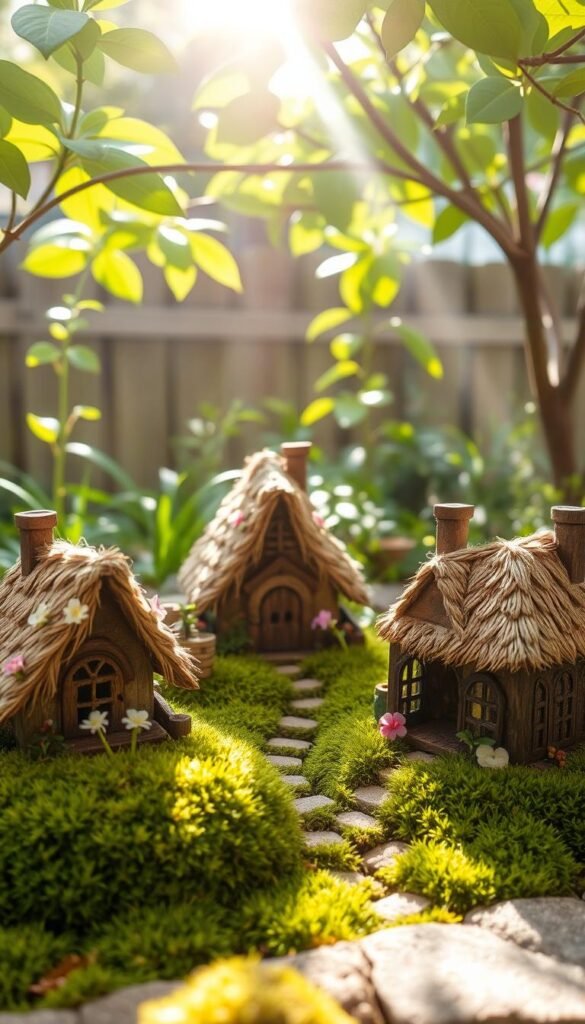
Building tiny dwellings lets you shape cozy nooks where imagination takes root. These structures become focal points in your design, blending artistry with nature’s textures. Let’s explore how materials and techniques bring personality to every cottage.
Smart Material Choices for Lasting Charm
Your materials determine both style and durability. Compare popular options:
| Material | Best Features | Weather Resistance |
|---|---|---|
| Wood | Rustic appeal | Requires sealing |
| Polymer Clay | Custom shapes | Waterproof when baked |
| Flat Stones | Natural look | Long-lasting |
| Recycled Items | Budget-friendly | Varies by item |
Transform craft-store birdhouses by painting weathered finishes. Add clay flowers around the door for pops of color. “Moss roofs make even simple designs feel lived-in,” notes DIY enthusiast Mara Simmons.
For stone houses, stack flat rocks like ancient masonry. Secure them with outdoor-safe glue. Bark shingles add roof texture, while tiny chimneys suggest cozy fires inside.
Polymer clay lets you mold unique shapes. Shape it over cans to create rounded walls, then bake for hardness. These pieces survive rain and sun, perfect for year-round displays.
Seal wooden pieces with clear varnish to prevent rot. For extra magic, glue glitter to window frames or embed LED tea lights. Your tiny homes will sparkle day and night.
Designing Whimsical Pathways and Garden Trails
Trails weave tales through your tiny landscape, guiding both eyes and imagination. These winding routes connect hidden nooks while adding structure to your scene. Let’s explore how materials and lighting turn simple walkways into storytelling tools.
Using Stones, Wood, and Accessories
Natural textures anchor your design. Flat stones create rustic stepping paths, while smooth pebbles form tidy borders. For warmth, slice fallen branches into circular “planks” or use bark strips as weathered bridges.
Mix materials for visual interest. Try this combination:
| Element | Effect | Pair With |
|---|---|---|
| Slate Chips | Modern crispness | Succulents |
| Pine Cones | Woodland vibe | Moss |
| Broken Pottery | Artistic flair | Herbs |
Add tiny signs or lanterns along curves to suggest fairy activity. “Paths feel alive when they hint at unseen journeys,” says landscape artist Gwen Patel.
Incorporating Glow-in-the-Dark Pebbles
Transform nightscapes with pebbles that store sunlight. Scatter them along edges or create starburst patterns under fairy cottages. They shine brightest when placed where day’s light reaches fully.
For maximum magic, combine with reflective elements. Moonlight bounces off mirrored tiles, while wood accents absorb glow for subtle contrast. Refresh their sparkle by wiping dust monthly.
These luminous touches make your garden a twilight destination. Watch fireflies gather near the soft radiance—nature’s own collaborators in your enchanted design.
Integrating Lush Plants and Natural Elements
The soul of your miniature oasis lies in the plants you choose—each leaf and petal shaping a living story. By blending textures and sizes, you create depth while supporting a thriving ecosystem. Let’s explore how to balance beauty with practicality in your tiny paradise.
Thriving Greens for Tiny Spaces
Succulents steal the spotlight with their sculptural forms and drought tolerance. Varieties like hens-and-chicks or echeveria add structure without overcrowding. Their slow growth means less pruning, letting you focus on design details.
Moss becomes nature’s velvet carpet, softening edges and retaining moisture. Press it between stones or let it spill over containers for a whimsical feel. Pair it with dwarf flowers like snapdragons or petunias for pops of color that stay scale-appropriate.
Miniature herbs like thyme or rosemary offer fragrance and function. Their tiny leaves mimic shrubs, perfect for framing pathways. For a cohesive look, incorporate the cottagecore charm by mixing soft greens with weathered decor.
Remember: overwatering is the main threat. Use well-draining soil and check moisture with a fingertip. With thoughtful choices, your living landscape becomes a low-maintenance retreat where magic takes root.