
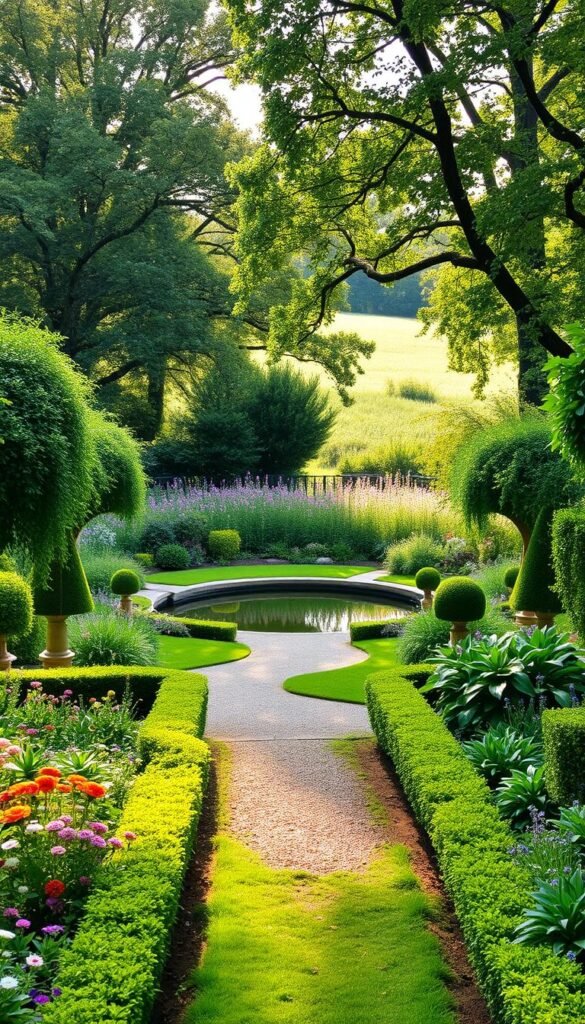
Your outdoor area tells a story – one where crisp symmetry meets wild beauty. For centuries, gardeners have shaped spaces that balance order with spontaneity, from Iran’s ancient patterned courtyards to France’s grand Renaissance landscapes. Today, these principles help you craft a personal retreat that feels both polished and inviting.
The secret lies in pairing geometric layouts with loose, natural plantings. Imagine boxwood hedges framing drifts of lavender, or stone pathways winding through free-growing perennials. This approach keeps your space visually engaging while maintaining a welcoming atmosphere.
You don’t need to choose between structured elegance and casual charm. By merging clean lines with flowing textures, your yard becomes a living canvas that shifts with the seasons. Think of clipped topiaries beside rambling roses, or rectangular raised beds overflowing with herbs.
We’ll show you how to layer these contrasting features seamlessly. Discover how strategic placement of focal points guides the eye without feeling rigid. Learn to use repetition and variation to create rhythm in your plant selections and hardscape choices.
Your journey begins by reimagining what a truly personalized outdoor space can be. Whether you’re enhancing a cozy backyard or redesigning an expansive property, the magic happens when precision meets playfulness.
Setting the Stage for Your Garden Makeover
Transforming your outdoor space starts with thoughtful preparation. Before grabbing your shovel, take time to observe how sunlight dances across your yard throughout the day. Notice where shadows linger and which areas bake in afternoon heat – these insights shape your plant choices.
Sketching a rough layout helps visualize your home garden’s potential. Start by marking existing trees, structures, and pathways. Then layer in new elements like geometric flower beds or curved seating nooks. This blueprint becomes your roadmap for blending structure with natural charm.
Consider your local climate when selecting plants. Drought-resistant succulents might anchor sunny formal sections, while shade-loving ferns could soften informal corners. Pair these choices with your soil type – acidic or alkaline – to ensure thriving greenery.
| Season | Formal Features | Informal Touches |
|---|---|---|
| Spring | Prune hedges | Plant wildflower seeds |
| Summer | Maintain pathways | Add flowering vines |
| Fall | Trim topiaries | Incorporate ornamental grasses |
| Winter | Clean stone features | Install evergreen shrubs |
Budget wisely by prioritizing permanent structures first. Allocate funds for durable materials like stone borders or raised beds, then fill in with cost-effective perennials. Remember: a mixed-style garden design needs both initial investment and ongoing care.
Divide your space into functional zones – perhaps a symmetrical herb garden near the kitchen and a relaxed wildflower meadow by the seating area. These distinct “rooms” create visual interest while maintaining harmony across your entire home garden.
Understanding the Core of Formal Garden Design
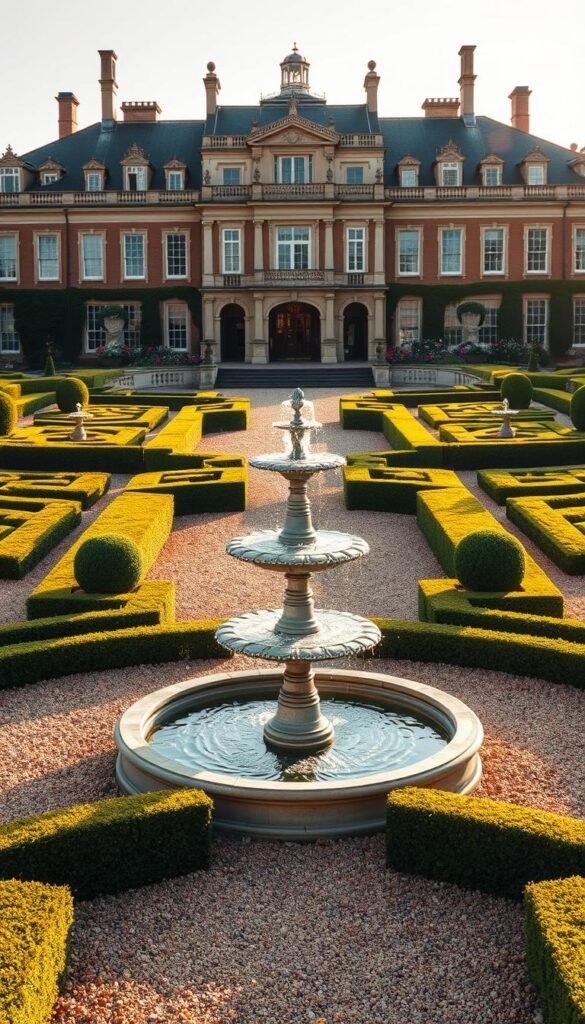
Formal gardens have captivated imaginations for centuries with their precise geometry and intentional layouts. These structured spaces thrive on balance, where every bush, path, and bed plays a specific role in the visual symphony. The magic begins with symmetry – that perfect mirroring effect that turns ordinary spaces into breathtaking landscapes.
Key Features of Structured Spaces
At the heart of every great formal garden lies careful planning. Geometric shapes dominate, from circular fountains to rectangular hedges. You’ll often find central focal points like statues or water features, with pathways radiating outward like spokes on a wheel.
| Classic Element | Modern Adaptation |
|---|---|
| Precisely clipped boxwood | Drought-tolerant lavender borders |
| Stone balustrades | Concrete planter boxes |
| Gravel walkways | Permeable pavers |
Repetition creates rhythm in these gardens. Matching plant pairs flank entrances, while identical topiaries guard pathways. This disciplined approach works beautifully in urban courtyards or sprawling estates alike.
Roots in Global Traditions
Many formal garden design ideas trace back to ancient Persia’s quadripartite layouts and France’s intricate parterre patterns. Renaissance architects elevated the style, creating living art meant to be admired from palace windows above.
Today’s homeowners can borrow these principles without maintaining castle grounds. Try framing your patio with symmetrical planters or using geometric pavers to define a dining area. The key is balancing historical inspiration with practical care – because even the grandest gardens need to fit modern lifestyles.
Embracing an Informal Garden Aesthetic
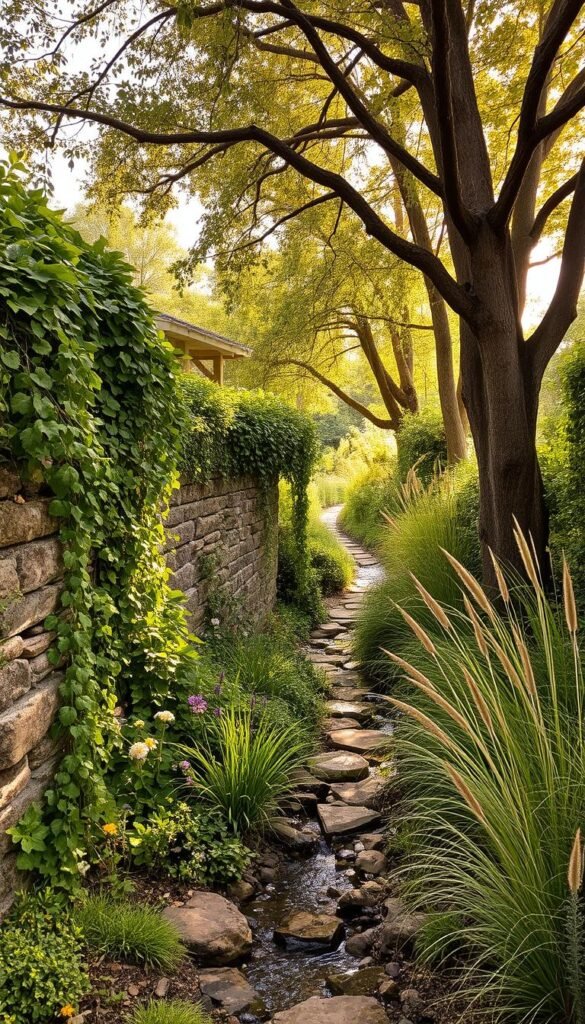
Nature’s artistry shines brightest when unrestrained. Informal gardens celebrate this truth, creating spaces where plants grow with joyful abandon and human touches feel gently weathered by time. These landscapes invite exploration, their winding paths revealing surprises at every turn.
Creating a Relaxed, Natural Feel
Let your greenery lead the dance. Allow roses to tumble over fences and herbs to spill onto walkways. Native species like purple coneflowers or black-eyed Susans thrive with minimal fuss, while self-seeding annuals add spontaneous bursts of color.
Curved beds soften edges, mimicking nature’s flowing lines. Cluster perennials in loose drifts rather than rigid rows – imagine lavender mingling with sage or ornamental grasses swaying beside stonecrop. This approach creates depth and movement that formal layouts can’t replicate.
| Informal Element | Design Impact | Material Pairing |
|---|---|---|
| Wildflower meadow | Attracts pollinators | Rustic wood benches |
| Meandering path | Encourages exploration | Irregular flagstones |
| Weathering structures | Adds character | Patina-coated metal |
Embrace materials that age gracefully. Weathered cedar arbors develop silvery hues over time, while moss creeping between stepping stones adds timeless charm. These elements harmonize with your plants’ natural cycles, as detailed in our guide to discovering your garden’s identity.
Your space evolves seasonally – spring’s tender shoots give way to summer’s lushness, then autumn’s golden hues. By working with nature’s rhythms rather than against them, you craft a living tapestry that feels effortlessly beautiful.
Blending Formal and Informal Elements in Garden Design for a Dynamic Look
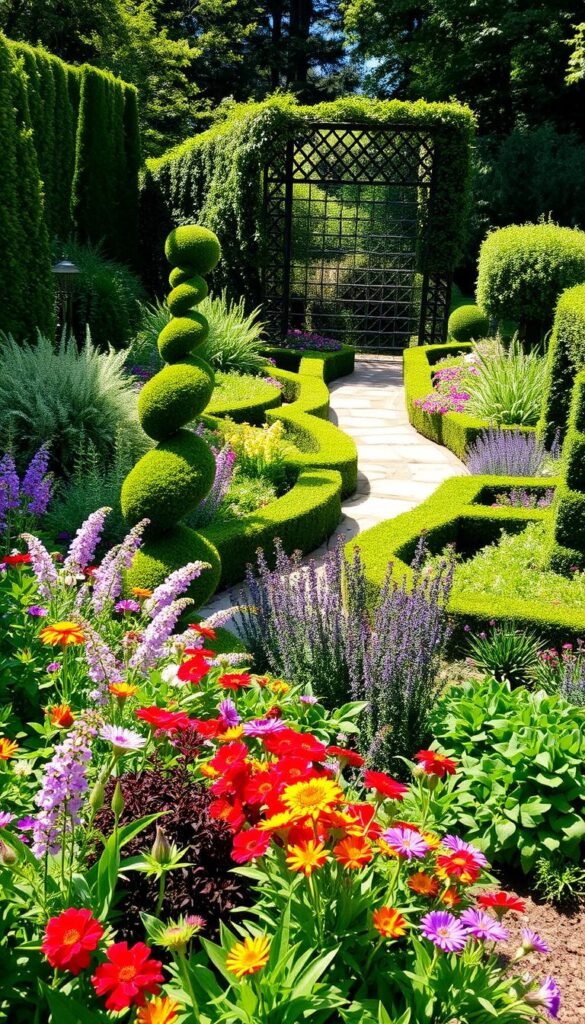
Crafting a garden that feels both intentional and effortless starts with smart juxtapositions. Picture crisp stone walkways dissolving into meadow-like plantings, or angular benches surrounded by billowing ornamental grasses. These thoughtful pairings create rhythm while preventing visual monotony.
Establish clear focal points to guide the eye through your landscape. A symmetrical water feature might anchor one area, while loose clusters of native flowers energize another. This hierarchy helps visitors navigate your space while appreciating its layered complexity.
Pathways offer perfect opportunities for style fusion. Straight gravel routes flanked by manicured shrubs can lead to circular seating areas ringed with casual perennials. Such transitions create natural stopping points that invite exploration.
Material consistency bridges contrasting elements beautifully. Repeating stone types or wood finishes across different areas builds cohesion. Try matching formal planter textures with informal trellis materials – they’ll feel related yet distinct.
Seasonal shifts highlight your garden’s dual personality. Spring reveals precise tulip formations, while summer lets lavender spill over geometric borders. Autumn brings structural evergreens into focus against fading grasses. This interplay keeps your outdoor areas engaging year-round.
Creative Garden Layouts and Flow
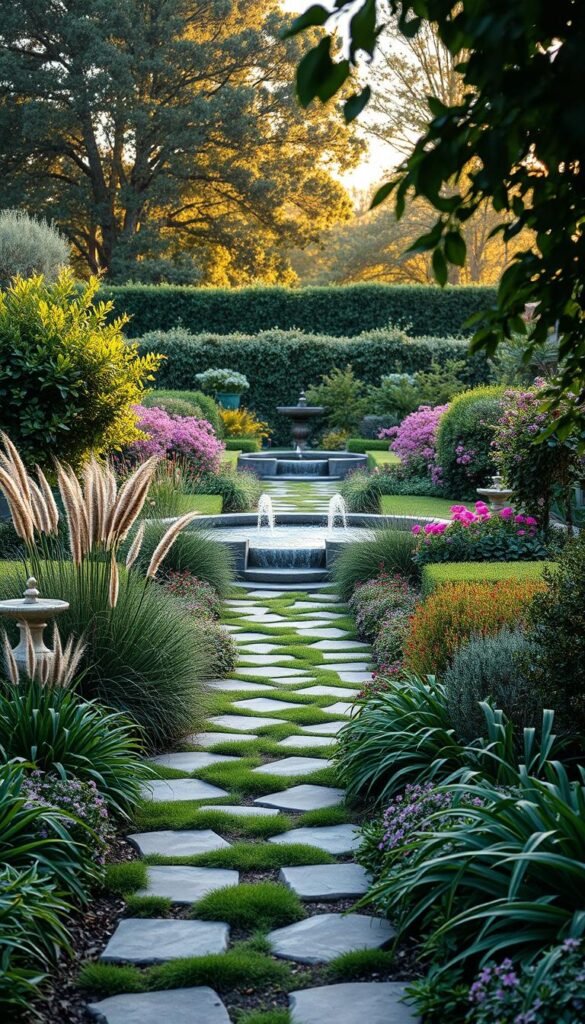
Great gardens feel both planned and spontaneous, guiding visitors through carefully orchestrated moments. Start by sketching your space from above – this bird’s-eye view reveals how geometric patterns and organic shapes can interact. Your sketch becomes a living document, helping balance structured areas with free-flowing plantings.
Mapping Out a Cohesive Design
Pathways act as your garden’s punctuation marks. Straight gravel walks create formal rhythm, while curved stone trails invite leisurely exploration. Connect these routes to key destinations – maybe a circular herb garden or a hidden bench surrounded by native flowers.
Consider sight lines from your home’s windows. A symmetrical patio might anchor the view, while wilder plantings frame the edges. This approach maintains visual interest across seasons, as designer Lauren Sullivan notes:
“The best layouts tell time through plants – spring’s tulip parterre becomes summer’s lavender maze, then autumn’s ornamental grass showcase.”
| Design Aspect | Formal Approach | Informal Solution |
|---|---|---|
| Pathways | Straight gravel lines | Meandering flagstones |
| Plant Arrangement | Mirrored shrubs | Drifting perennials |
| Focal Points | Central fountain | Natural stone grouping |
Repeat materials to unify different zones. Use matching stone for both geometric planters and casual seating walls. This creates harmony between structured and relaxed areas without monotony.
Plan for year-round appeal. Evergreen hedges maintain winter structure, while deciduous vines offer seasonal surprises. Your space evolves naturally, balancing crisp lines with joyful growth – a true testament to thoughtful garden design.
Incorporating Clean Lines and Geometric Shapes
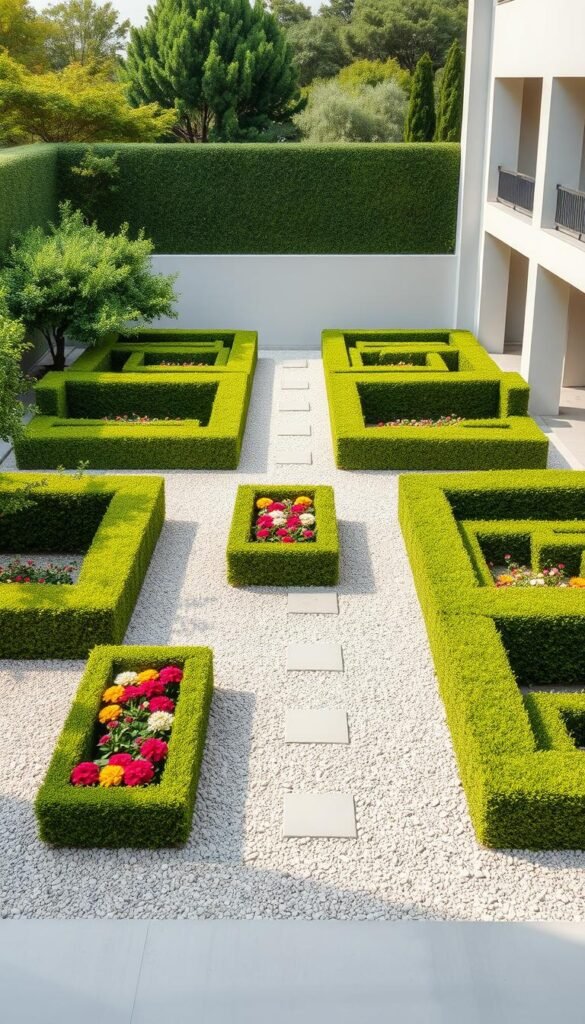
Geometry transforms outdoor spaces into intentional works of art. Crisp edges and deliberate patterns give your landscape a polished foundation. Boxwood hedges trimmed into sharp rectangles or circular stone patios create instant visual structure.
Evergreen shrubs like juniper and cypress maintain their sharp silhouettes year-round. These living sculptures frame softer plantings while requiring seasonal pruning. Pair them with loose ornamental grasses or cascading petunias for balanced contrast.
Hardscape materials anchor your geometric vision. Rectangular concrete pavers create walkways that pop against creeping thyme. Metal raised beds with 90-degree corners contrast beautifully with billowing lavender clusters. These combinations merge precision with natural charm.
| Shape Type | Material Pairing | Maintenance Tip |
|---|---|---|
| Squares | Stone edging + boxwood | Trim every 6 weeks |
| Circles | Metal planters + lavender | Edge monthly |
| Triangles | Wooden trellis + jasmine | Prune after flowering |
Keep geometric elements looking sharp with regular care. Use string trimmers for crisp bed edges and hedge shears for maintaining angular forms. A well-kept structure lets casual plantings shine without chaos.
Soften rigid lines by letting spillers like sweet alyssum overflow brick borders. Curved gravel paths can connect angular seating areas, creating natural transitions. This approach maintains order while inviting relaxed exploration.
Utilizing Focal Points: Centerpieces and Sculptural Accents
Every great outdoor space needs moments that make you pause and admire. Strategic focal points act like punctuation marks in your landscape’s story, guiding exploration while anchoring your design. These eye-catching elements work equally well in structured layouts and free-flowing areas.
Choosing a Captivating Centerpiece
Scale matters when selecting your garden’s star attraction. A six-foot fountain might overwhelm a cozy patio but perfect for an expansive lawn. Match materials to your home’s architecture – weathered stone complements rustic styles, while sleek metal suits contemporary spaces.
| Centerpiece Type | Material Options | Placement Tip |
|---|---|---|
| Water feature | Cast stone | Align with main pathway |
| Oversized planter | Glazed ceramic | Flank entryways |
| Specimen tree | Japanese maple | Frame with low shrubs |
Integrating Statues for Visual Drama
Sculptures add personality while creating conversation starters. Landscape designer Marcus Barnett suggests:
“Place statues where light plays across their surfaces – morning sun highlights textures, while dusk creates dramatic shadows.”
Classical figures enhance formal areas, while abstract pieces energize modern spaces. Bury bases slightly for an established look. Surround with airy plants like ornamental grasses to avoid overcrowding your artistic feature.
Enhancing Structure with Topiaries and Hedges
Living sculptures shape your outdoor space while adding year-round character. Trimmed greenery acts as both artwork and architecture, blending crisp lines with organic growth patterns. This approach lets you craft visual boundaries that feel intentional yet inviting.
Topiary Tips for a Playful Touch
Start with small-scale projects using fast-growing plants like ivy or rosemary. These respond well to shaping and recover quickly from pruning mistakes. For beginners, geometric forms like spheres or pyramids offer satisfying results without advanced skills.
Maintain your green sculptures with monthly trims during growing seasons. Sharp shears prevent ragged edges that attract pests. As designer Adam Frost advises:
“Let the plant’s natural form guide your cuts – work with its growth habits rather than against them.”
| Topiary Plant | Shape Complexity | Maintenance Frequency |
|---|---|---|
| Boxwood | Medium | Every 4 weeks |
| Yew | High | Every 6 weeks |
| Holly | Low | Seasonal |
Using Hedges to Define Spaces
Dense foliage walls create natural room dividers in your garden. Low hedges (under 2 feet) outline flower beds, while taller varieties screen seating areas. Evergreen options like arborvitae provide consistent structure through seasonal changes.
Mix hedge heights for layered effects. A 4-foot privet border might frame a dining patio, with shorter lavender hedges lining adjacent paths. This tiered approach adds depth while keeping sightlines open.
Regular maintenance ensures clean lines without overwhelming your schedule. Electric trimmers handle large surfaces efficiently, while hand pruners perfect corners. Always taper hedges slightly – wider at the base – to ensure sunlight reaches lower branches.
Designing Intimate Garden Rooms and Inviting Seating Areas
Transform your outdoor space into a series of welcoming escapes. Thoughtful arrangements turn broad landscapes into cherished retreats where every corner invites connection. Architectural elements like arched trellises or evergreen hedges craft natural dividers, shaping distinct zones for different moods.
Creating Cozy Garden Nooks
Strategic plant placement builds secluded spots perfect for morning coffee or evening reflection. Position benches where flowering vines frame views of your favorite garden features. A curved stone wall draped in creeping thyme creates instant privacy while blending with surrounding plantings.
Consider light patterns when positioning seating spaces. East-facing nooks catch sunrise warmth, while west-facing alcoves offer sunset vistas. Add weather-resistant cushions in earthy tones to complement your timeless garden look without competing with nature’s palette.
Outdoor Seating Ideas That Blend Style and Comfort
Your chairs and tables should feel like natural extensions of the landscape. Rustic wooden benches pair beautifully with wildflower meadows, while sleek metal bistro sets enhance contemporary patio design. Always leave walking room between furnishings – three feet minimum keeps movement flowing.
| Material | Formal Feature | Informal Pairing |
|---|---|---|
| Wrought iron | Geometric frames | Climbing roses |
| Recycled teak | Straight-back benches | Ornamental grasses |
| Concrete | Circular tables | Spilling succulents |
Elevate comfort with layered textures. Outdoor rugs define conversation areas, while throw pillows add pops of color. For home-like warmth, install low-voltage lighting under seat ledges – it creates ambiance without overwhelming fireflies’ evening dance.
These personalized retreats become your favorite garden destinations. By mixing enclosure types and seating styles, you craft spaces that feel both intentional and effortlessly inviting through every season.
Incorporating Water Features for Movement an
Water transforms outdoor spaces into living landscapes. A trickling fountain adds rhythm to structured areas, while a natural pond introduces organic shapes. These elements create soothing soundscapes that mask urban noise, letting birdsong take center stage.
Position reflective surfaces near seating areas to double visual interest. A stone basin catches sunlight by day and mirrors moonlight after dark. For smaller yards, wall-mounted spouts offer vertical movement without consuming ground space.
Curved streams blend beautifully with casual plantings. Let water weave through ferns and hostas, their leaves dancing with each ripple. This approach softens geometric hardscapes while supporting local ecosystems.
Consider maintenance when choosing materials. Recirculating pumps reduce water waste, while native water plants filter ponds naturally. Seasonal adjustments keep features functional – think ice-resistant basins in cold climates or shade-loving mosses for hot regions.
Your space gains depth through liquid textures and playful light effects. Whether bold or subtle, water elements bridge structured design with nature’s spontaneous beauty, completing your outdoor sanctuary.