
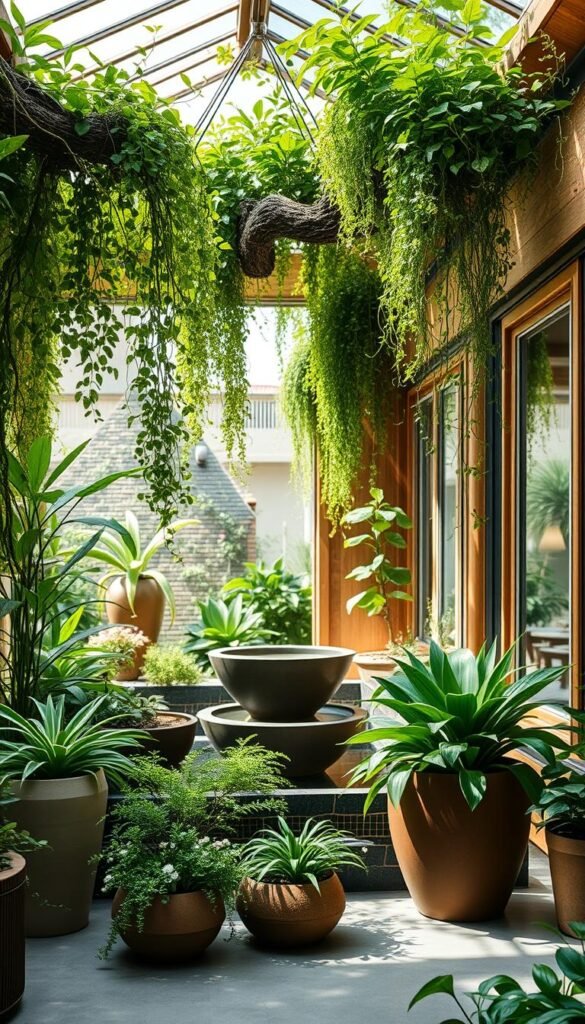
There’s a quiet joy in surrounding yourself with plants. Whether you live in a studio apartment or a suburban house, leafy companions like snake plants or trailing pothos add texture and warmth to every corner. Even better? You don’t need expert skills to make it work.
Blending fresh cuttings, dried botanicals, or realistic faux florals creates layers that boost air quality and lift your mood. This approach isn’t just about looks—it’s about crafting spaces that feel alive. Imagine walking into a room where sunlight filters through greenery, turning ordinary moments into something magical.
You’ll learn how to apply design principles that fit any room size. Tiny shelves with succulents, hanging planters in empty corners, or statement fiddle-leaf figs—each choice builds a connection to the outdoors. Even small tweaks, like swapping decor for potted herbs, can refresh your environment.
Curious how to start? Explore our guide to elevating your space with a gardening. We’ll show you how low-maintenance options and clever layouts turn walls, windowsills, and tables into living art.
Bring Nature Inside with Creative Interior Garden Design for Homes
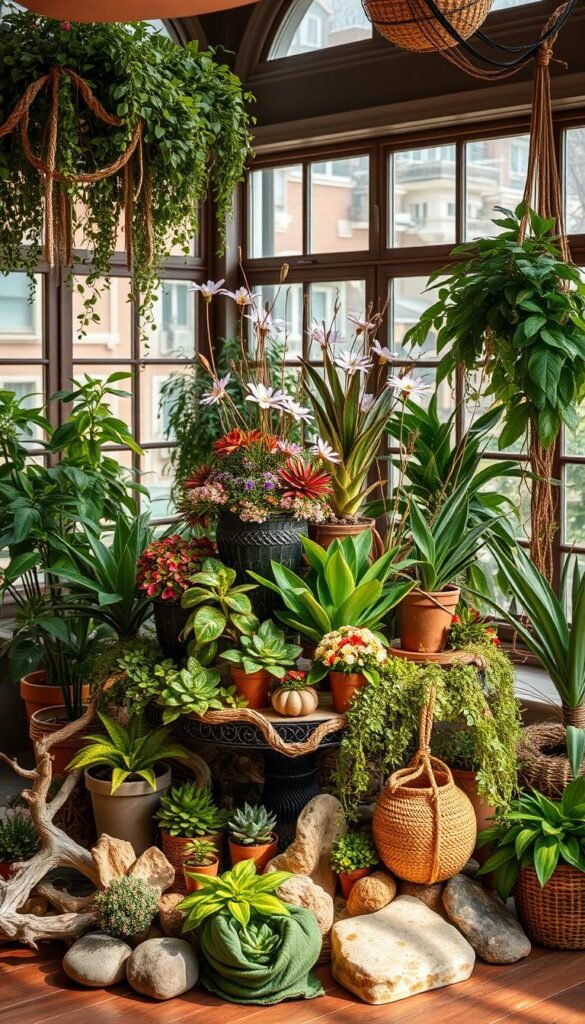
Transforming your home into a living sanctuary starts with blending organic elements into your daily surroundings. Fresh cuttings in oversized vases or thriving potted plants breathe life into corners, while branches like cherry blossoms add seasonal charm. These touches create layers of texture that feel both wild and intentional.
Rooms infused with greenery do more than look pretty—they improve well-being. Studies show spaces with natural elements reduce stress by 15% and boost creativity. A trailing pothos on a shelf or a monstera in a woven planter turns sterile areas into inviting retreats.
What makes this approach work? It’s about balance. Here’s how to apply key principles:
| Element | Purpose | Example |
|---|---|---|
| Scale | Harmonize room proportions | Tall fiddle-leaf fig in empty corners |
| Contrast | Add visual interest | Spiky succulents beside round peperomia |
| Repetition | Create rhythm | Groupings of snake plants along windowsills |
Whether your style leans modern or embraces a cottagecore aesthetic, garden-inspired spaces adapt effortlessly. Strategic design choices—like placing prayer plants in filtered light—blend raw beauty with function. The result? A sense of calm that makes every room feel like home.
Creative Indoor Garden Ideas for Every Space
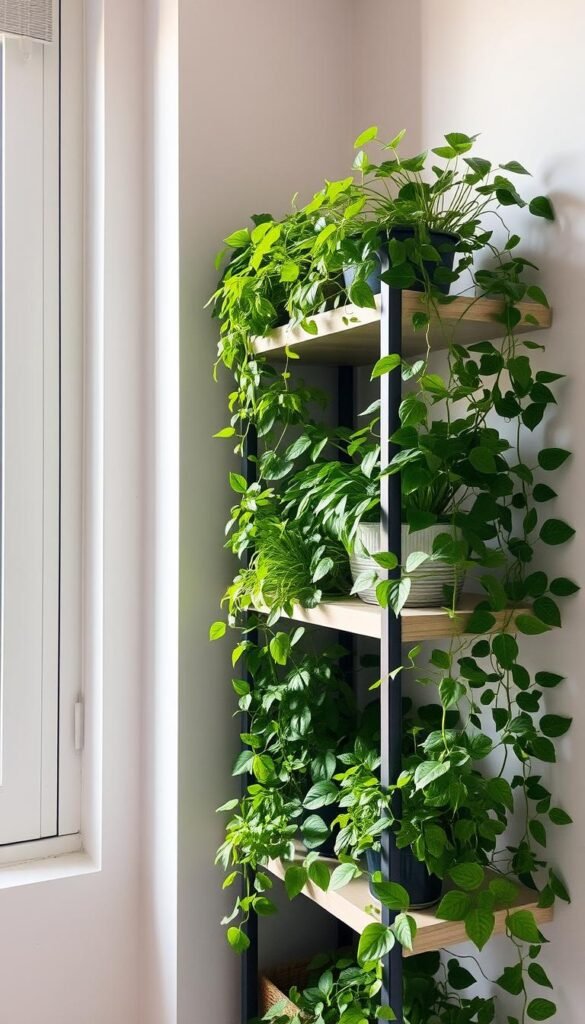
Maximizing greenery in compact areas requires smart strategies that balance beauty and practicality. Even small rooms can thrive with clever layouts that prioritize vertical growth and multi-functional displays. Let’s explore how to transform overlooked nooks into vibrant, plant-filled zones.
Innovative Arrangements for Small Areas
Vertical gardening solves space challenges while adding drama. Try hanging macramé planters for trailing ivy or wall-mounted shelves for petite succulents. Forced branches in tall vases bring early spring blooms indoors, creating instant focal points without floor space.
Repurposed items like old teacups or metal buckets add personality. Check out our DIY garden art projects for crafting personalized planters. Tiered stands let you group herbs or air plants efficiently—perfect for sunny windowsills.
| Solution | Best For | Examples |
|---|---|---|
| Hanging Planters | High ceilings | Pothos, string-of-pearls |
| Wall Gardens | Narrow walls | Ferns, spider plants |
| Tiered Stands | Windowsills | Succulents, mini cacti |
Layering Natural Textures and Colors
Mix matte ceramic pots with rough jute baskets to create depth. Pair glossy philodendron leaves with dried eucalyptus stems for contrast. Arrange branches at varying heights—place dogwood stems in floor vases and shorter forsythia cuttings on side tables.
Trailing plants like creeping fig add motion to shelves, while chunky wood stands ground taller specimens. This approach turns ordinary corners into evolving displays that shift with seasons and light.
Incorporating Natural Elements and Organic Materials
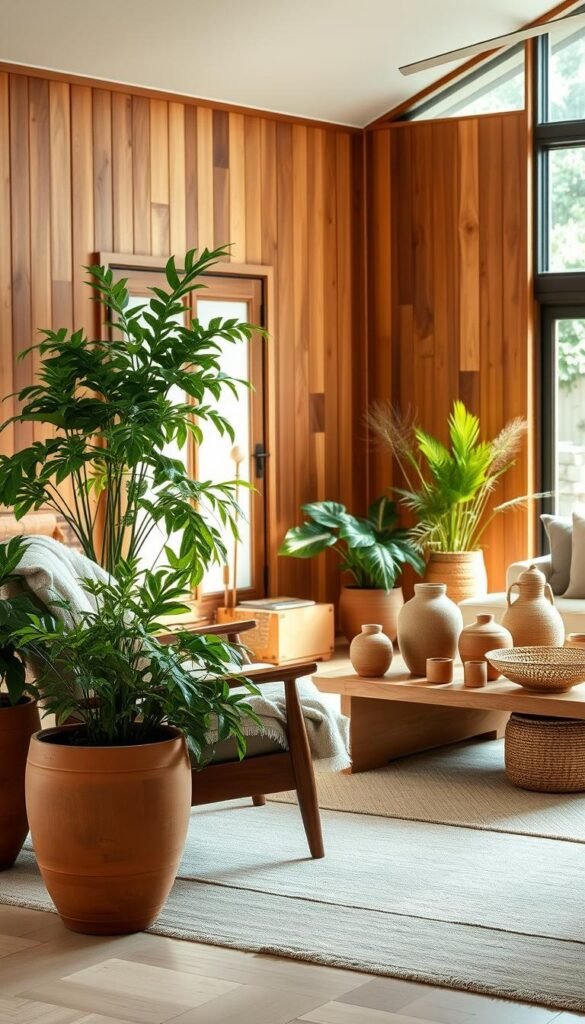
The foundation of a nature-inspired space lies in its raw materials. Wood, stone, and glass anchor rooms with warmth and timeless appeal. These natural materials create tactile contrasts that make spaces feel like home, blending rugged charm with modern simplicity.
Using Wood, Stone, and Glass for a Cozy Feel
Reclaimed wood adds character through weathered textures. Try floating shelves or repurposed wooden crates as plant stands. Natural stone, like slate or marble, introduces cool elegance—ideal for tabletops or accent walls.
Glass elements balance heaviness. Display air plants in geometric terrariums or use frosted dividers to separate zones without blocking light. Bamboo and cork offer sustainable alternatives for flooring, softening footsteps while complementing leafy greens.
| Material | Best Uses | Examples |
|---|---|---|
| Wood | Shelving, furniture | Live-edge console tables |
| Stone | Countertops, decor | Basalt bookends |
| Glass | Containers, partitions | Hanging propagation stations |
| Bamboo/Cork | Flooring, wall panels | Textured backsplashes |
Mix matte finishes with glossy surfaces for depth. Pair rough-hewn stone planters with smooth ceramic vases. This layering technique highlights your materials’ unique stories while letting greenery shine as the star.
Designing Your Indoor Garden with Invigorating Water Features
Water’s gentle presence transforms static greenery into a multisensory experience. A trickling fountain or bamboo cascade introduces motion and sound, elevating your space from pretty to peaceful. These water features work best when they blend seamlessly with your existing elements, adding depth without dominating the room.
Enhancing Ambiance with Subtle Fountains
Tabletop fountains or wall-mounted cascades offer soothing white noise that masks traffic sounds. The Japanese Shishi-odoshi—a bamboo water hammer—creates rhythmic taps as it fills and empties. These systems thrive in corners near ferns or orchids, where humidity benefits both plants and people.
Consider these options for different spaces:
| Type | Best Use | Key Benefit |
|---|---|---|
| Recirculating Tabletop | Desks/shelves | Low maintenance |
| Wall Cascade | Vertical gardens | Space-saving |
| Bamboo Systems | Zen-inspired areas | Natural aesthetics |
Weekly cleaning prevents algae buildup. Use distilled water to minimize mineral deposits. Pair small fountains with pothos or peace lilies—their roots help filter quality while boosting humidity.
For evening drama, position LED lights beneath cascades. The play of light on moving water turns functional design into art. Try DIY projects like converting thrifted bowls into self-contained fountains—budget-friendly ways to add a sense of flow.
Infusing Japanese Garden Elements into Your Home

Balance and tranquility define Japanese-inspired spaces, where every stone, plant, and texture serves a purpose. This approach centers on creating harmony through carefully chosen elements that invite reflection. Start by embracing essential principles from our Japanese Zen garden to avoid clutter and focus on intentionality.
Utilizing Bonsai Trees and Moss Gardens
Bonsai trees act as living sculptures, their twisted trunks telling stories of patience. Place these miniatures near east-facing windows where morning light highlights their beauty. Pair them with velvety moss gardens in shallow trays—their earthy green tones soften hard surfaces while requiring minimal care.
Key contrasts to try:
| Element | Role | Pairing Tip |
|---|---|---|
| Bonsai | Focal point | Use unglazed clay pots |
| Moss | Texture base | Add smooth river rocks |
| Sand | Negative space | Rake patterns weekly |
Integrating Shoji Screens and Tatami Mats
Shoji screens filter light through rice paper, casting soft shadows that change with the day. Use them to divide rooms without blocking airflow. Layer tatami mats under low tables to anchor seating areas—their woven texture complements bamboo branches in tall ceramic vases.
Keep arrangements asymmetrical. A single stone lantern beside a cluster of plants feels more authentic than perfect symmetry. Remember: empty space lets each element breathe, turning ordinary corners into mindful retreats.
Biophilic Interior Design: Connecting with Nature
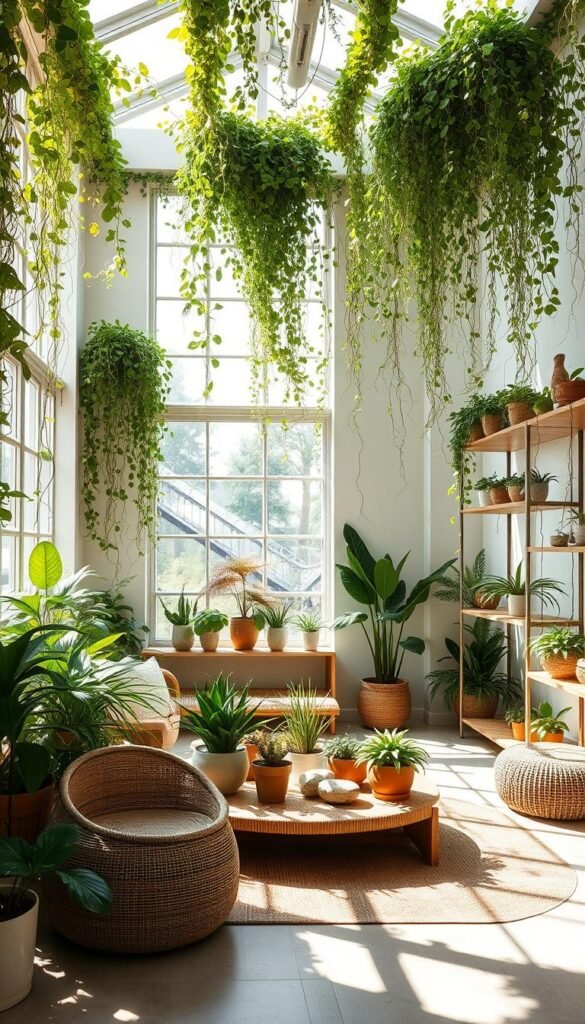
Imagine your home as a bridge between indoor comfort and outdoor vitality. Biophilic design goes beyond aesthetics—it rewires how spaces feel by integrating science-backed natural connections. Research shows environments rich in organic elements lower cortisol levels by 12% while enhancing focus and creativity.
Maximizing Natural Light and Views of the Outdoors
Sunlight transforms rooms. Position mirrors opposite windows to bounce light deeper into your space. Sheer curtains soften harsh rays while maintaining brightness. If direct views are limited, arrange tall plants like dracaena near glass doors to frame “borrowed” outdoor scenery.
Consider these light-enhancing strategies:
| Solution | Benefit | Best Placement |
|---|---|---|
| Prismatic window film | Diffuses light evenly | North-facing windows |
| Skylights | Adds overhead illumination | Hallways, kitchens |
| Reflective surfaces | Amplifies existing light | Dark corners |
Improving Air Quality with Indoor Plants
Your living room can double as an air filtration system. Snake plants remove benzene at night, while peace lilies tackle ammonia. Cluster three varieties together—their combined air-purifying power increases by 40% compared to solo specimens.
Rotate plants seasonally. Spider plants thrive in winter dryness, while areca palms boost summer humidity. Pair them with open-weave baskets for better airflow around roots. This approach turns your interior design into a living wellness toolkit.
Foraged, Dried, and Faux Inspirations for Natural Decor
Timeless decor thrives when nature’s leftovers become art. Dried hydrangeas, preserved eucalyptus, and sun-bleached branches hold stories in their textures—no watering required. These elements bridge seasons, letting you enjoy autumn’s amber hues in July or winter’s stark elegance year-round.
Embracing the Charm of Dried Florals and Branches
Turn forgotten corners into galleries with foraged finds. Pussy willow stems in floor vases add vertical drama, while pressed ferns in floating frames become botanical heirlooms. Want rustic charm? Try repurposing wine racks as vertical displays for dried blooms.
Preservation tips:
| Material | Best Use | Lifespan |
|---|---|---|
| Dried Lavender | Sachets, wreaths | 2-3 years |
| Birch Branches | Wall installations | Indefinite |
| Pressed Leaves | Shadowbox art | 5+ years |
Creative DIY Projects for Faux Botanicals
Modern faux stems rival real plants in realism. Pair silk magnolias with dried moss balls for depth, or arrange polyester eucalyptus in concrete planters. The trick? Mix matte and glossy finishes—velvet leaves beside waxy berries keep eyes guessing.
For quick updates, swap arrangements seasonally. Spring cherry blossoms transition to summer wheat stalks effortlessly. Store pieces in acid-free tissue to prevent dust buildup, ensuring they stay gallery-ready.
Optimizing Small Spaces with Efficient
Every inch counts when cultivating green havens in tight quarters. Vertical setups shine here—think floating shelves stacked with herbs or cascading ivy in hanging baskets. These choices maximize airflow and light exposure, keeping plants healthy without cluttering surfaces.
Studies show well-planned layouts reduce stress by up to 60% while boosting room functionality. Try pallet gardens for herbs—cedar wood resists rot, and shallow-rooted varieties thrive in vertical slots. Need inspiration? Our guide to unique outdoor decor offers clever tricks adaptable to indoor nooks.
Mix real and faux botanicals for texture that lasts. A preserved eucalyptus wreath adds rustic charm, while a faux fern in a macramé hanger saves watering time. Rotate pieces seasonally—spring blooms in March, dried wheat by September—to keep displays fresh.
Remember: smart design isn’t about size. It’s crafting pockets of calm where life grows effortlessly around you.