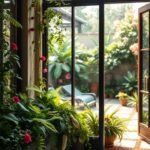

Imagine stepping into your own leafy retreat, where vibrant foliage sways gently and bold textures create a sense of adventure. You don’t need a sprawling yard to craft an exotic oasis—even cozy patios or compact balconies can burst with life. As horticulture expert Andrew Bunting notes, modern plant availability lets anyone cultivate lush greenery, no matter their square footage.
Local nurseries now stock showstopping varieties like elephant ears and palms, perfect for tight corners. Pair these with cascading vines or colorful bromeliads in creative containers to build depth. The secret? Layering plants at different heights creates that coveted jungle vibe without overcrowding.
Smart layouts turn limitations into advantages. For example, vertical gardens maximize walls, while multi-tiered planters add drama. Want more inspiration? Explore our guide to elevating your space with clever arrangements that feel both cozy and expansive.
With thoughtful choices, your petite outdoor area becomes a daily escape. Picture sipping morning coffee surrounded by rustling leaves or unwinding after work amid tropical blooms. Ready to transform your slice of concrete into a living paradise? Let’s dive in.
Embracing the Tropical Vibe in Compact Areas
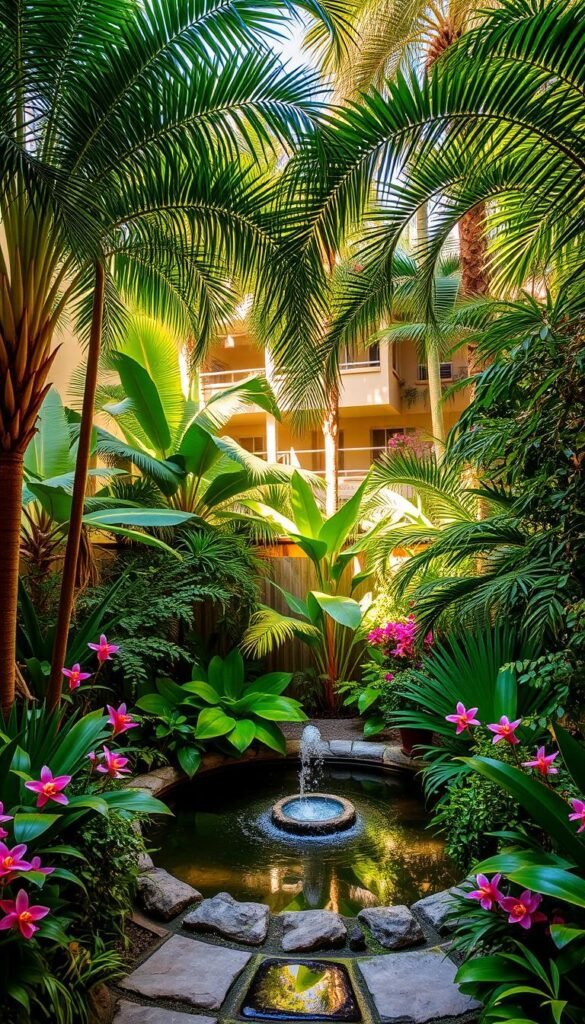
Even the tiniest balcony can become a slice of tropical heaven. Limited square footage works in your favor here—every plant becomes a star player in your personal paradise. Think of it like designing a gallery: curated greenery creates instant visual interest without overwhelming the area.
Why This Look Works for Cozy Corners
Jungle-like density feels more achievable in snug spaces. You’ll need fewer plants to create that layered, immersive tropical feel compared to larger yards. Container gardening lets you adjust light and moisture for each species, ensuring vibrant colors stay bold and leaves stay lush.
Urban Jungle Tricks to Steal
City dwellers have mastered maximizing vertical real estate. Try hanging staghorn ferns or mounting philodendrons on walls. Pair tall palms with cascading pothos to draw the eye upward. These clever arrangements make every inch contribute to your creating tropical escape—no sprawling lawns required.
Best part? You can swap plants seasonally or rearrange pots as they grow. This flexibility keeps your mini-jungle fresh while maintaining that vacation-ready look year-round.
Understanding Your Space and Planning Smartly
Transform your compact outdoor zone into a thriving paradise by starting with smart preparation. Every inch counts when working with limited room, so strategic planning becomes your secret weapon. Let’s explore how to make your garden design work harder without sacrificing style.
Assessing Your Available Garden Area
Begin by mapping your space like a pro. Measure dimensions and note where shadows fall during the day—this reveals prime spots for sun-loving palms or shade-tolerant ferns. Check wind patterns too; tall buildings might create gusty corridors that could topple lightweight pots.
Don’t forget structural limits. Balcony railings can support hanging planters, while brick walls become vertical gardens. If you’re using existing flower beds, test your soil pH first. Tropical plants often thrive in slightly acidic conditions.
Utilizing Containers and Beds Effectively
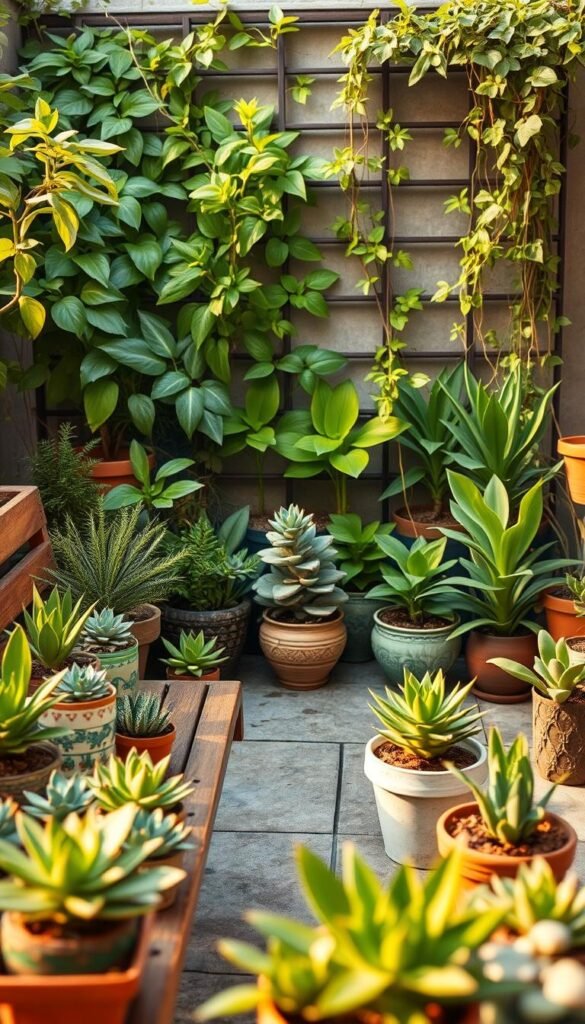
Mix permanent in-ground plantings with movable containers for dynamic flexibility. Large pots become anchor points for showstoppers like bird-of-paradise, while smaller vessels let you experiment with colorful blooms that change with the seasons.
Choose containers wisely: wider bases prevent tipping, and drainage holes keep roots healthy. Group pots at varying heights using stands or stacked stones to create depth. This approach turns even a tiny backyard corner into a layered jungle retreat.
Bring the Tropics to Small Spaces with Tropical Garden Design Ideas
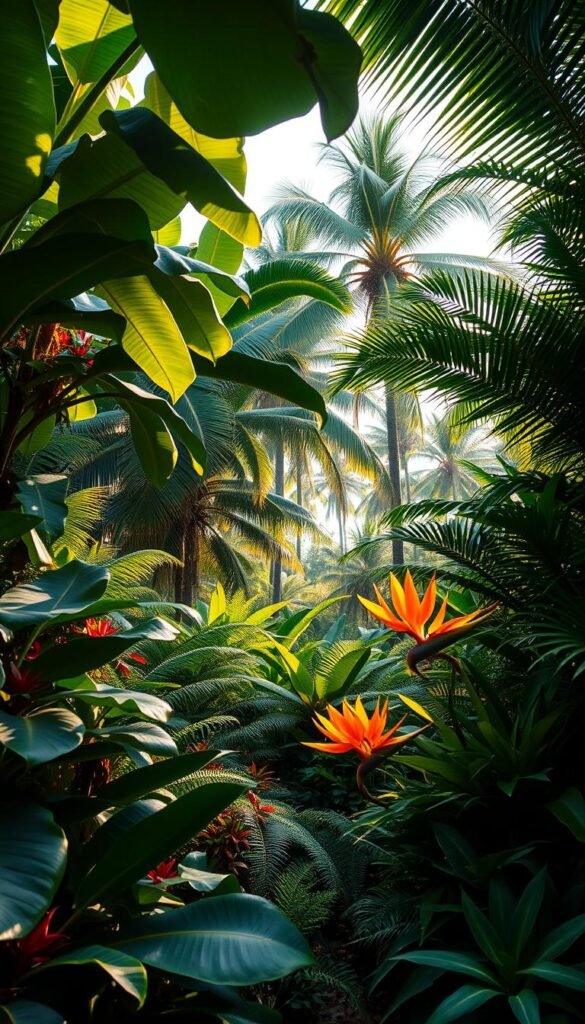
Visual depth transforms cramped corners into vibrant escapes. By stacking plants at different levels, you create an immersive experience that tricks the eye into seeing more space. This approach works magic in areas where square footage comes at a premium.
Layering Techniques for Visual Interest
Start with a bold statement piece – maybe a focal point palm stretching toward the sky. Surround its base with mid-height showstoppers like elephant ears, their plate-sized leaves adding instant jungle credibility. Pro tip: Angle pots slightly outward to showcase each plant’s best features.
Ground-level players complete the picture. Trailing philodendrons soften container edges, while coleus adds splashes of color. For inspiration on arranging these elements, explore small tropical garden ideas that maximize vertical space.
Mixing Focal Plants with Accent Greens
Balance is key. Pair architectural specimens like banana plants with delicate ferns or air plants. The contrast between broad leaves and feathery fronds creates visual interest that keeps your gaze moving through the space.
Remember texture variety – glossy bromeliads against matte calatheas, spiky dracaenas beside flowing vines. This mix mimics natural rainforest layers while fitting perfectly on your patio. Rotate flowering specimens seasonally to maintain year-round appeal without overcrowding.
Essential Tropical Plants for a Lush Backyard
Your backyard deserves showstopping greenery that thrives in limited spaces. Focus on species with bold leaves and rapid growth to create instant impact. Bananas, palms, and cannas steal the spotlight, while elephant ears and flowering varieties add texture.
Bold Choices: Bananas, Palms, and Cannas
The red Abyssinian banana becomes a living sculpture. Starting at two feet tall, it rockets to ten feet with wine-red leaves perfect for container growth. Pair it with feathery Areca palms or bold Bismarck specimens boasting blue-gray fronds.
| Plant | Key Feature | Size | Color |
|---|---|---|---|
| Red Abyssinian Banana | Burgundy undersides | 10 ft tall | Maroon/green |
| Bismarck Palm | Windmill-shaped fronds | 15-20 ft spread | Glaucous blue |
| Canna ‘Pretoria’ | Tiger-striped foliage | 6 ft height | Yellow/green |
Striking Options: Elephant Ears and Vibrant Flowers
Colocasia ‘Thai Giant’ lives up to its name with six-foot leaves. For smaller areas, try ‘Black Magic’ with jet-black foliage. Mix these with orange hibiscus or red ginger flowers for contrast.
| Variety | Leaf Size | Container Friendly |
|---|---|---|
| Thai Giant | 5-6 ft | Yes (large pots) |
| Illustris | 2-3 ft | Perfect for balconies |
| Lime Zinger | 18-24″ | Ideal for tabletops |
Pro tip: Use dwarf palms like pygmy date varieties to maintain scale. Their lacy leaves create movement without overwhelming your setup. Rotate flowering plants seasonally for continuous color bursts.
Container Creativity and Layered Planting Strategies
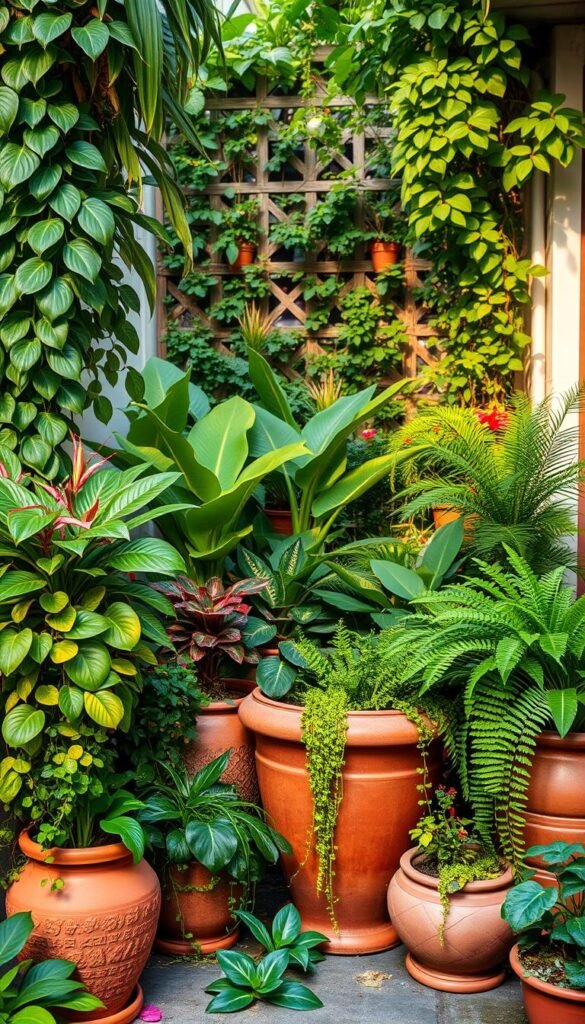
Think of containers as the foundation of your mini-jungle’s success. The right pots do more than hold soil—they become design elements that elevate your entire setup. Start by mapping your space with empty vessels to test layouts before committing to arrangements.
Choosing the Right Pots and Vessels
Size matters most for tropical plants. A banana tree needs a 24-inch container minimum, while dwarf palms thrive in 18-inch pots. Heavy concrete or ceramic containers prevent tipping during summer storms. Always prioritize drainage—three holes per pot keeps roots healthy.
Material choices boost style:
- Glazed ceramics reflect light beautifully
- Textured concrete mimics rainforest stones
- Recycled metal adds industrial edge
Mix shapes for visual rhythm—tall cylinders behind squat bowls create dynamic tiers.
Smart Layering for Height and Depth
Build your container combination like a cocktail:
- Start with a tall centerpiece (tree fern or bird of paradise)
- Add mid-height thrillers (croton or calathea)
- Finish with spillers (golden pothos or sweet potato vine)
This formula ensures every plant shines while creating lush density. Rotate pots seasonally to refresh yourgardeningaesthetic without overcrowding.
Pro tip: Group three containers of varying heights near seating areas. The layered effect makes compact spaces feel richly textured yet perfectly balanced.
Designing a Relaxing Retreat with Water Elements
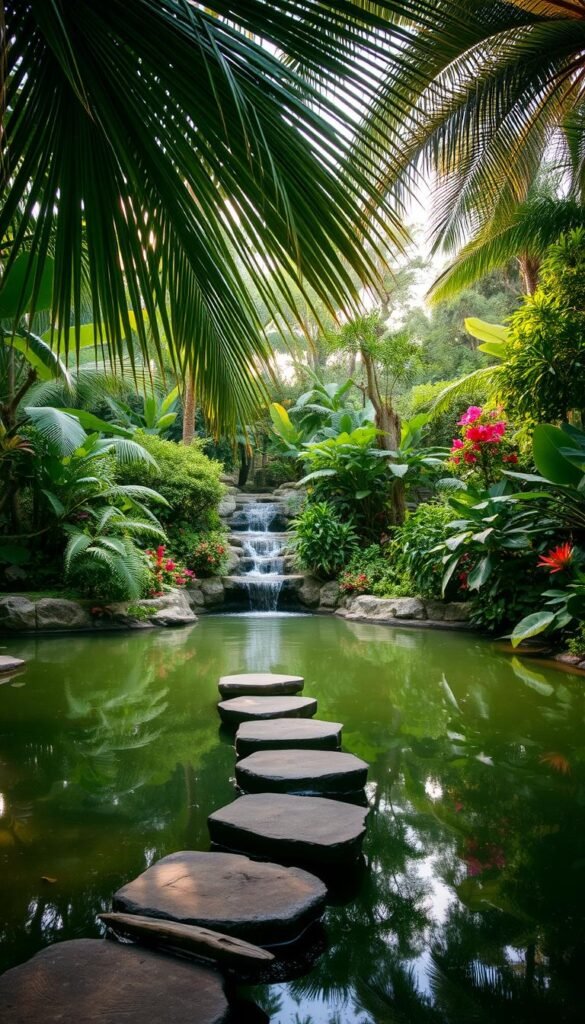
Nothing completes a lush oasis like the gentle murmur of flowing water. These elements transform ordinary spaces into sensory experiences, blending sight and sound for instant calm. Whether you’re working with a balcony or patio, water adds that vacation-like magic to your personal retreat.
Selecting the Perfect Water Feature
Size doesn’t dictate impact. A self-contained tabletop fountain fits snugly between potted palms, while wall-mounted cascades save floor space. Consider these options:
- Solar-powered bubble rocks for eco-friendly operation
- Stacked stone urns with recirculating pumps
- Shallow pools for aquatic plants like water lilies
Prioritize low-maintenance designs. Modern systems often need just monthly top-offs and occasional pump cleaning.
Integrating Fountains and Ponds Gracefully
Place your water feature where it’ll shine. Position a small pond beneath ferns to catch dappled light, or nestle a fountain behind seating for ambient sound. The trick? Let water interact with your landscape:
- Reflect bold foliage in still surfaces
- Use ripples to animate shaded corners
- Pair cascades with moisture-loving bromeliads
Even a petite basin creates humidity for tropical plants. You’ll craft microclimates while masking street noise – doubling your retreat’s peaceful vibe.
Enhancing Ambiance with Colors, Patterns, and Decor
Your outdoor sanctuary becomes unforgettable when colors and textures dance together. Strategic accents transform functional spaces into immersive escapes, blending nature’s palette with personal flair. Let’s explore how to amplify your oasis’s character through intentional styling.
Using Vibrant Accents and Outdoor Textiles
Throw pillows in citrus hues or azure blues inject instant energy. Choose weather-resistant fabrics like Sunbrella for longevity—their UV-resistant materials stay vibrant through summer storms. Layer patterned outdoor rugs under seating areas to define zones while softening hard surfaces.
Don’t overlook vertical surfaces. Hang macramé plant holders with trailing ivy, or mount painted rocks as DIY wall art. These touches add personality without consuming floor space. For more craft inspiration, discover DIY garden art projects that turn everyday items into showpieces.
Coordinating Colors to Elevate Your Oasis
Anchor your scheme with 2-3 base tones—deep greens or terracottas work beautifully. Then, introduce pops of contrast through flowering plants or ceramic pots. A crimson hibiscus beside sage-green ferns creates drama, while golden coleus complements charcoal planters.
Repeat colors across multiple elements for cohesion. Match cushion tones to blooming bromeliads, or echo mural patterns in tableware. This intentional repetition makes compact areas feel curated rather than cluttered, proving that smart design choices trump square footage every time.