
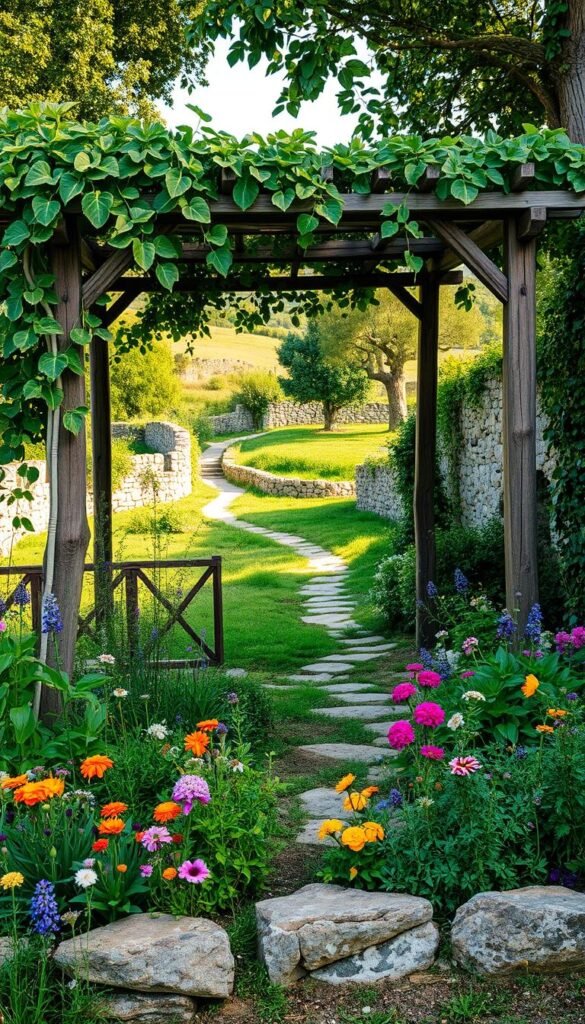
Imagine stepping into a space where weathered wood meets blooming flowers, and every corner whispers stories of simpler days. Transforming your yard into a relaxing retreat doesn’t require grand gestures—just thoughtful touches that celebrate nature’s imperfect beauty.
This guide walks you through blending timeworn treasures with practical features. Think climbing roses on wrought-iron arches or repurposed farm tools as plant markers. These elements add visual interest without overwhelming your space.
You’ll find smart ways to mix textures and materials. Aged terracotta pots pair beautifully with gravel pathways, while salvaged benches invite moments of quiet reflection. The goal? Create areas that feel lived-in yet intentional.
We focus on easy updates that make big impacts. Local flea markets become goldmines for unique accents—think chipped watering cans or vintage lanterns. Even modern furniture gains character when surrounded by heirloom plants like lavender and peonies.
By the end, you’ll know how to craft an environment that bridges past and present. Your outdoor area becomes more than just a plot—it evolves into a natural extension of your home’s personality, perfect for making memories under open skies.
Introduction to Rustic Country Garden Design
Picture an outdoor sanctuary where history and nature intertwine effortlessly. This garden style thrives on simplicity, using weathered materials and loose plant arrangements to create spaces that feel both curated and carefree.
Discovering the Allure of a Timeless Outdoor Retreat
French-inspired gardens master the art of relaxed elegance. They combine climbing roses with stone fountains, creating lived-in beauty that improves with age. Unlike formal landscapes, these spaces invite you to linger over morning coffee or sunset conversations.
Understanding the Blend of Vintage and French Inspirations
The magic happens when vintage finds meet practical design. An iron gate salvaged from a farmhouse pairs perfectly with lavender borders. Repurposed terra cotta pots overflow with herbs, blending function with nostalgic appeal.
| Feature | French Influence | Vintage Touch |
|---|---|---|
| Pathways | Crushed limestone | Reclaimed bricks |
| Seating | Wrought-iron bistro sets | Weathered wooden benches |
| Decor | Symmetrical topiaries | Antique watering cans |
For more ideas on blending whimsical elements into your space, explore our guide on cottagecore aesthetics. These approaches work beautifully together, creating outdoor rooms that tell your unique story through every chipped planter and wildflower cluster.
Selecting Vintage and Antique Garden Elements
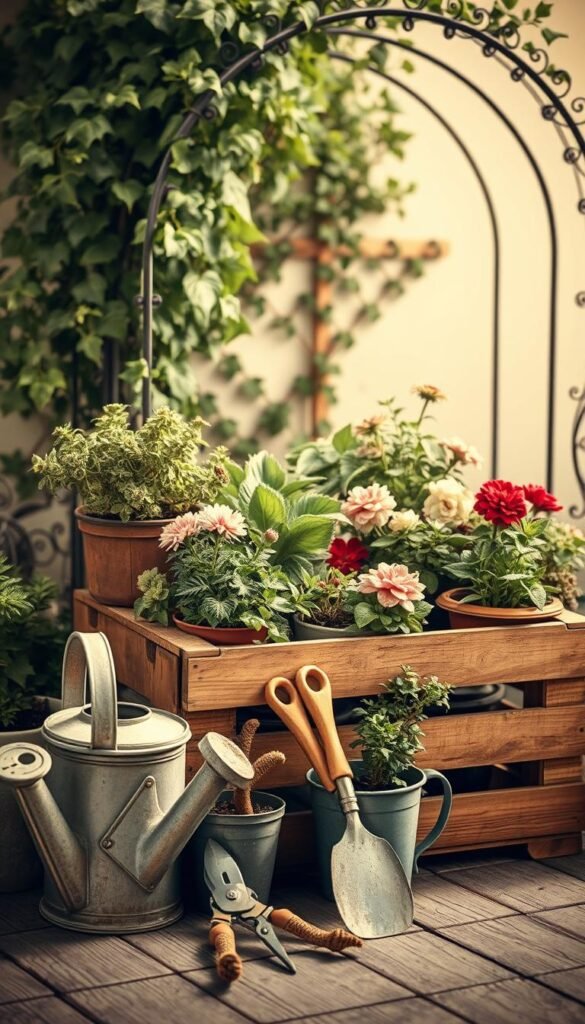
Unearth the beauty of time-worn materials that add soul to your outdoor space. Authentic vintage pieces bring stories to life through their imperfections, creating layers of visual intrigue. The trick lies in balancing textures while ensuring each item serves a purpose.
Embracing Weathered Wood, Stone, and Metal Accents
Mix materials like aged cedar planks with iron brackets for planters. Stone troughs make excellent water features, while galvanized buckets add industrial flair. Look for natural wear patterns – flaking paint on shutters or moss-covered stepping stones add instant character.
Finding One-of-a-Kind Antique Treasures
Hit weekend flea markets early for the best picks. Check hinges on old gates and test the sturdiness of wrought-iron chairs. Online auctions often hide gems like enamelware basins perfect for mixing vintage and modern elements in creative ways.
| Material | Characteristic | Best Use |
|---|---|---|
| Reclaimed Wood | Natural weathering | Raised beds, arbors |
| Cast Stone | Moss-friendly surface | Path edging, statues |
| Wrought Iron | Ornate details | Trellises, lanterns |
Focus on pieces that enhance your greenery without stealing the show. A rusted wheelbarrow overflowing with petunias creates focal points. Always clean finds gently – harsh scrubbing removes desirable patina.
Planters and Containers to Enhance Your Outdoor Space
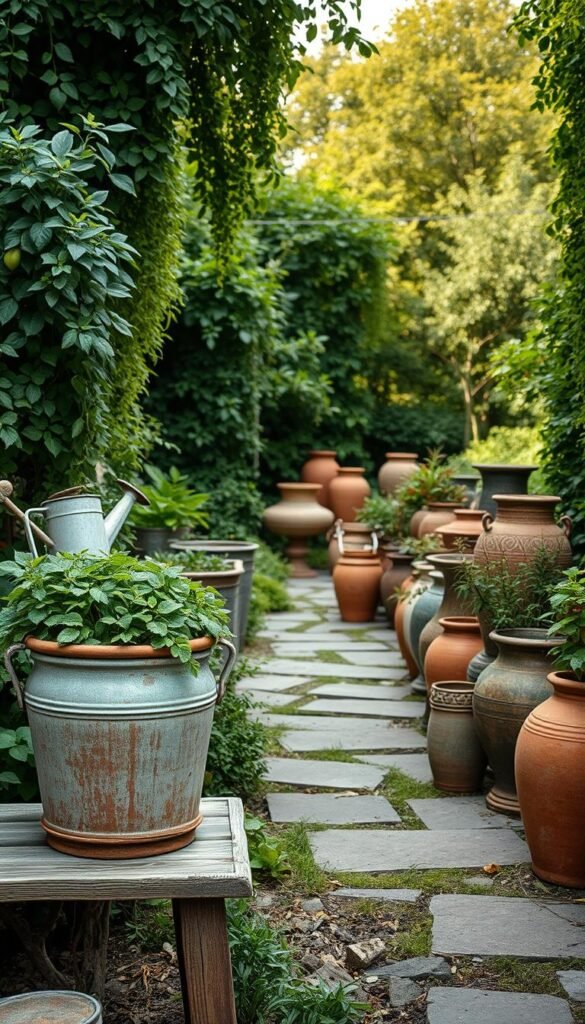
Transform ordinary corners into nostalgic displays with curated planters. These pieces do more than hold plants—they become sculptural elements that anchor your outdoor space with warmth and history. From chipped ceramic pots to enamel basins, each container adds layers of texture and personality.
Utilizing Classic Ceramic, Enamel, and Rustic Buckets
Start by mixing materials for visual contrast. Aged terracotta pots pair beautifully with galvanized troughs, while rustic buckets overflow with trailing ivy. For small areas, try stacking mismatched repurposed wooden barrels as tiered herb gardens.
Consider these standout options:
- Enamel basins: Chip-resistant and ideal for vibrant annuals
- Iron window boxes: Perfect for vertical color bursts
- Whiskey barrels: Natural wood tones that age gracefully
French-inspired designs like cast iron Medici urns bring grandeur to entryways. Place larger containers near seating areas to frame views. Always check drainage holes—drill extras in metal buckets to prevent soggy roots.
For quirky charm, convert chicken feeders into succulent displays or prop old ladders with hanging planters. The key? Let each piece’s patina shine rather than restoring it to perfection.
Creative Use of Climbing Plants and Floral Accents
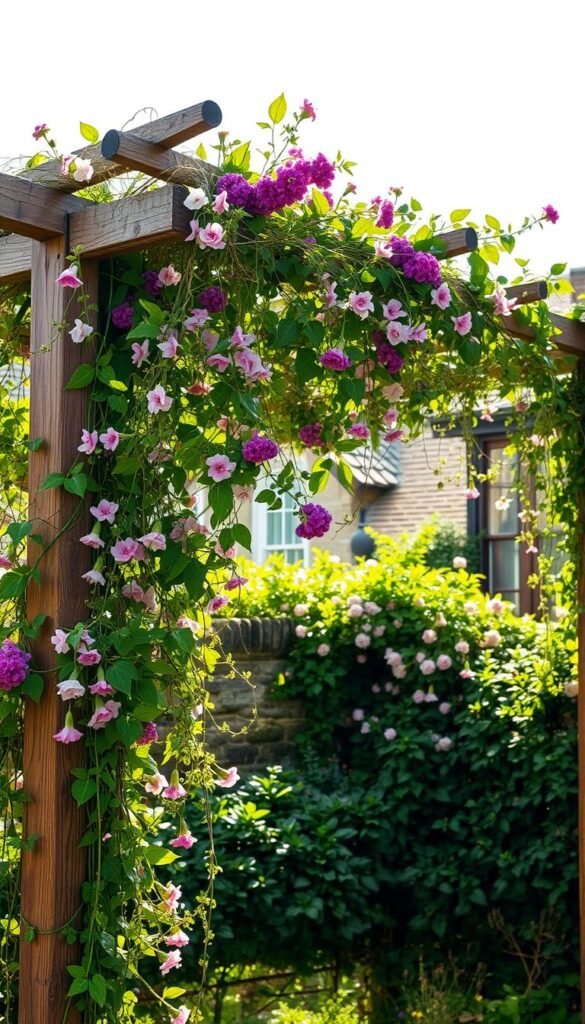
Elevate your outdoor space by turning blank walls into living art. Climbing plants add vertical drama while softening hard surfaces. With smart placement, they create natural privacy screens and frame scenic views.
Supporting Structures for Vines and Blossoms
Choose structures that match your garden’s personality. Wrought-iron arbors draped with wisteria become fragrant gateways. Wooden trellises support clematis, while pergolas offer shade with grapevines. These features guide growth and add visual interest year-round.
| Structure | Best Plants | Design Impact |
|---|---|---|
| Arbor | Star jasmine, roses | Entryway focal point |
| Trellis | Sweet peas, bougainvillea | Wall transformation |
| Pergola | Muscat grapevines | Overhead greenery |
| Obelisk | Climbing hydrangea | Container centerpiece |
Pair early bloomers like clematis with late-season flowers such as trumpet vine. This ensures cascading color from spring through fall. Train tendrils gently using jute ties – aggressive pruning reduces blooms.
In warmer zones, bougainvillea thrives on sunny walls. Cooler areas benefit from hardy ivy or climbing hydrangea. Always match plants to your light conditions and structure’s load capacity.
Infusing French Garden Design Ideas into Your Space

Envision a landscape where geometry dances with greenery, creating order amidst nature’s wildness. French-inspired spaces thrive on balanced compositions, blending crisp lines with organic growth. This approach turns ordinary yards into elegant extensions of your home.
Integrating Symmetry, Iron Accents, and Timeless Elegance
Start by framing pathways with boxwood hedges trimmed to uniform heights. These living borders guide the eye while adding architectural structure. For vertical interest, place matching topiaries in weathered urns at entry points.
Wrought iron shines in this design style. A bistro set with scrollwork legs becomes a charming breakfast nook. Pair it with a marble-top table for contrast between rugged and refined elements.
| Design Principle | Key Features | DIY Tip |
|---|---|---|
| Symmetry | Mirrored plantings | Use potted herbs in identical containers |
| Iron Accents | Arched gates, lanterns | Spray paint vintage finds matte black |
| Geometry | Circular herb knots | Outline with reclaimed bricks |
Even small spaces benefit from these ideas. Try flanking your front door with lavender-lined gravel paths. Add an iron bench beneath a window for instant Parisian appeal without grand renovations.
Remember: “A garden should combine the precision of architecture with the spontaneity of nature.” This balance creates areas that feel both intentional and inviting. Mix structured hedges with loose climbing roses to soften edges and enhance beauty.
Capture Rustic Charm with Timeless Country Garden Design Inspirations
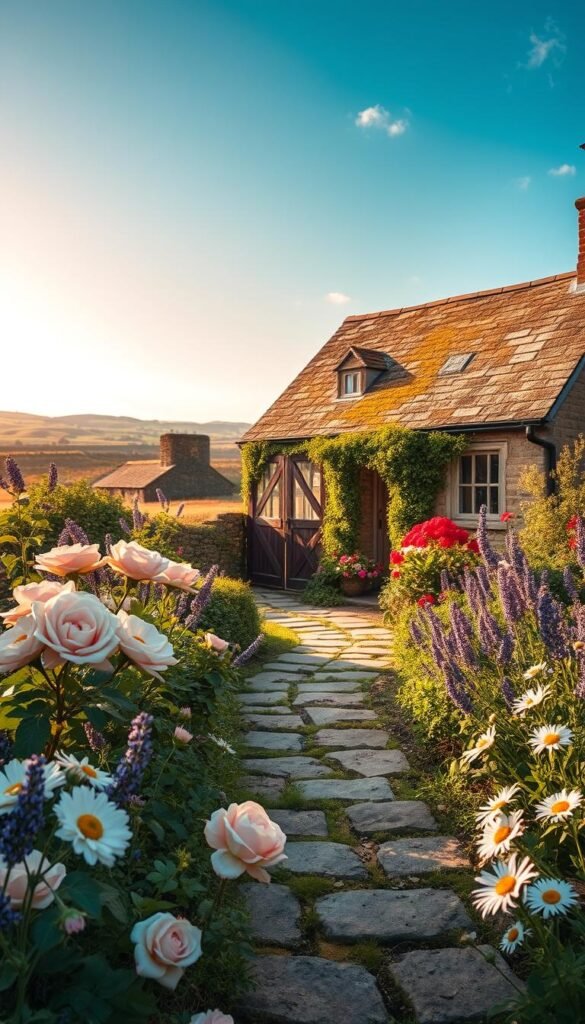
What transforms a simple backyard into a nostalgic haven? It’s the art of layering vintage character with nature’s spontaneity. Start by selecting materials that show their age gracefully—think chipped terracotta pots or iron gates softened by decades of patina.
Color plays a quiet yet powerful role. Soft sage greens, buttery yellows, and faded whites mirror the French countryside at dawn. These hues let your garden’s textures take center stage. Cluster lavender near a weathered bench, or let cream-colored roses spill over a rusted arbor.
Whimsy thrives in subtle details. An antique birdbath becomes a focal point when surrounded by creeping thyme. Hang vintage lanterns from tree branches for evening ambiance. Remember: “A garden should feel like a collection of cherished memories, not a showroom.”
Repurposed furniture adds both function and story. Try these ideas:
- Convert an old ladder into a vertical herb display
- Use a wooden crate as a side table for your outdoor space
- Pair a wrought-iron chair with modern cushions for contrast
For more creative gardening ideas, focus on pieces that invite interaction. A rocking chair beside a peony bed encourages lingering. The goal? Create corners that feel discovered, not designed—where every element whispers tales of seasons past.
Incorporating Functional Vintage Furniture and Accessories
Your garden becomes a living scrapbook when furnished with pieces that balance history and utility. French-crafted iron furniture stands out for its curved legs and intricate scrollwork, designed to withstand decades of use. Look for tables with marble tops paired with sturdy bases – they bring sophistication to casual outdoor space gatherings.
Outdoor Seating, Tables, and Practical Decor
Arrange vintage chairs around a weathered iron table to create intimate dining spots. A bench salvaged from an old church pew adds length for group seating, while metal stools offer flexible perching spots near flower beds. Always prioritize comfort – add thick cushions in earthy tones to wooden seats.
| Furniture Type | Key Features | Best Use |
|---|---|---|
| Wrought Iron Bistro Set | Scrollwork details, weather-resistant | Small breakfast nooks |
| Cast Iron Garden Bench | Ornate armrests, heavyweight | Pathway resting points |
| Enamel Top Table | Chip-resistant surface | Herb garden workstations |
Mix eras thoughtfully: pair 1920s iron chairs with a modern glass-top table for contrast. Restoration tips? Use rust converter spray on metal pieces, and re-oil teak annually. “Good design lasts,” as Parisian gardeners say – maintain original finishes when possible to preserve patina.
Cluster smaller items like vintage tool caddies or iron plant stands near garden entries. They provide function without crowding spaces. For durability, choose thick-gauge metals over thin alloys – their weight prevents tipping in windy areas.
Establishing Natural Pathways and Defined Borders
Guide visitors through your green oasis with pathways that feel discovered, not designed. Gentle curves invite exploration, making even compact spaces seem expansive. Choose materials that complement your home’s architecture while blending into the landscape.
Curated Materials Like Gravel, Stone, and Wood
Crushed gravel offers a soft crunch underfoot and pairs beautifully with stone edging. For a cohesive look, match pathway materials to existing features—think slate stepping stones near a gray-toned patio. Natural stones set irregularly create rhythm, while reclaimed wood slices add warmth as border accents.
Define planting areas with low borders of fieldstone or cedar planks. These subtle barriers keep mulch in place without overpowering flowers. Add whimsy by tucking painted rock markers along edges—they’re practical and playful.
Remember: paths should serve your garden’s flow. Wider walkways accommodate strolling couples, while narrow trails lead to hidden benches. Use varying textures to signal transitions—smooth flagstone near seating areas, rugged bark chips in wildflower zones. This approach balances structure with organic charm, crafting a space that feels both intentional and effortlessly inviting.