
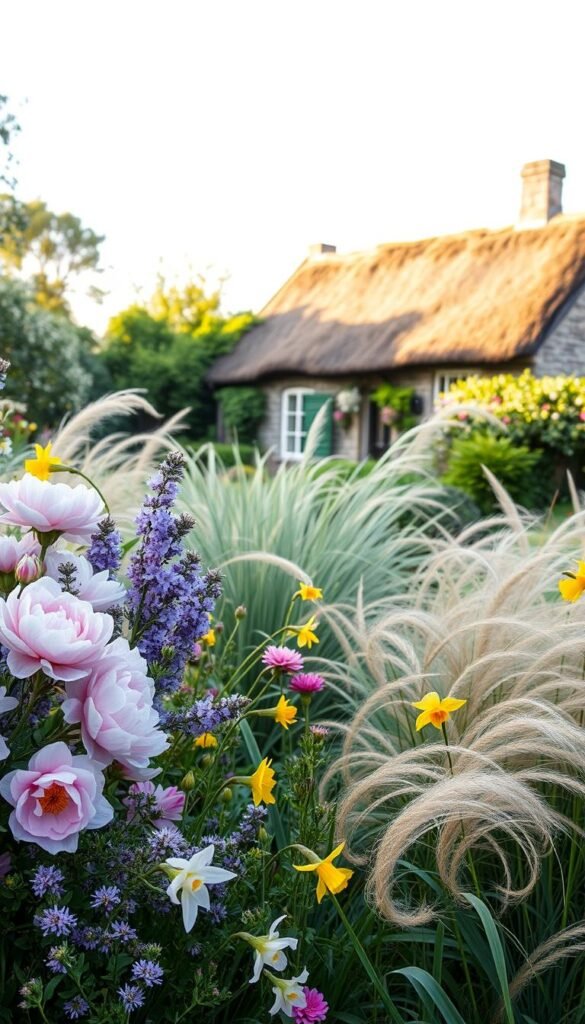
Imagine stepping into a living painting where delicate flowers sway beside wispy grasses, crafting scenes straight from storybook landscapes. This enchanting style blends old-world elegance with nature’s free-spirited beauty – a hallmark of today’s most sought-after outdoor designs.
James Farmer’s iconic Georgia garden proves structured layouts and relaxed plantings aren’t opposites. His walled parterre at Farmdale features four symmetrical beds hugging a circular centerpiece. Inside these frames, billowing peonies mingle with feathery miscanthus, showing how planned spaces can feel both intentional and wild.
The 2024 Garden of Romance trend builds on this balance. Modern updates include drought-tolerant species and low-maintenance blooms bred for busy lifestyles. You’ll enjoy vibrant colors from spring through fall without constant pruning – perfect for creating sanctuary spaces that evolve with the seasons.
This approach works in small yards and sprawling properties alike. Airy grasses add movement while softening bold flower shapes, crafting borders that whisper rather than shout. Discover how layered textures and thoughtful plant pairings turn ordinary corners into personal retreats where memories blossom.
Understanding the Essence of Airy, Romantic Borders
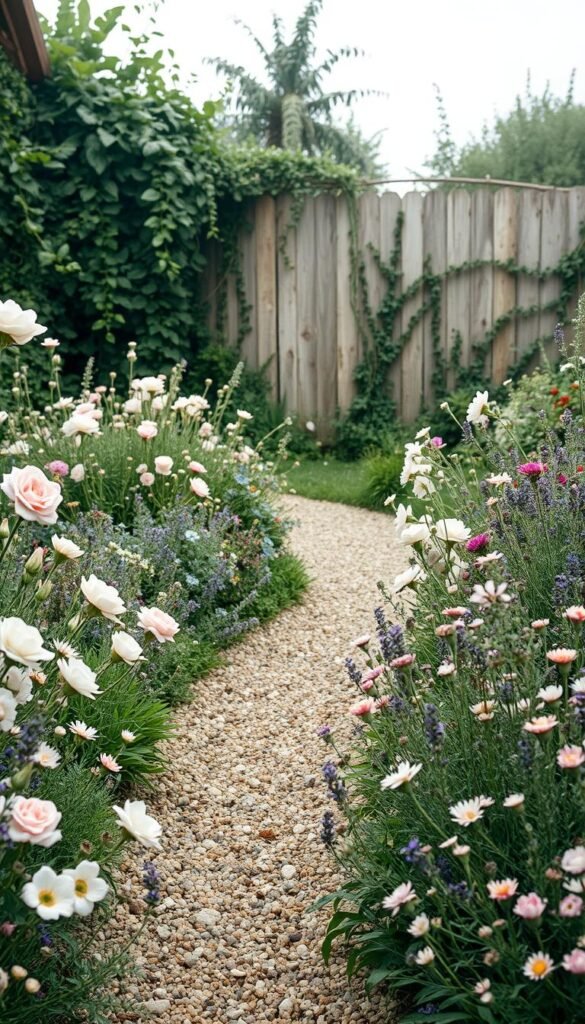
Picture a garden where every corner whispers stories through textures and scents. This timeless appeal comes from balancing wild beauty with thoughtful design – a secret behind spaces that feel both curated and carefree.
Defining the Cottage Garden Charm
Traditional cottage gardens thrived on chaos, mixing perennials in joyful disarray. Today’s versions keep that free-spirited style but use hardier plants. Think lavender instead of fussy roses, or ornamental sage replacing delicate foxgloves.
Landscape designer James Farmer explains:
“Romance blooms when opposites unite – crisp edges soften with billowing blooms, and sturdy evergreens frame airy grasses.”
This contrast creates visual tension that pulls you deeper into the space.
Identifying Key Romantic Elements
True magic happens when gardens engage all senses. Try these elements to craft your sanctuary:
| Feature | Traditional Approach | Modern Twist |
|---|---|---|
| Scent | Heirloom roses | Drought-tolerant lavender |
| Texture | Overgrown ivy | Ornamental grasses |
| Structure | Wooden arbors | Steel edging |
Notice how modern gardens maintain romance through clever substitutions. Fragrant Sweet Osmanthus replaces high-maintenance jasmine, while native grasses offer movement without invasive spreading. These updates let you enjoy the look without constant upkeep.
Essential Garden Planning and Preparation
Great gardens grow from the ground up – literally. Before choosing your favorite plants, understanding your space’s natural rhythms sets the stage for success. Professional growers swear by this rule: 90% of thriving borders comes from smart prep work.
Assessing Sunlight and Soil Conditions
Start by tracking how sunlight dances across your space. Use a free app or simple notebook to record patterns over three days. Sun-loving varieties need full sun – at least six golden hours daily. Miss this step, and you might wonder why those peonies never bloomed.
Next, get hands-on with your soil. Squeeze a moist handful:
- Clay sticks like putty? Improves with compost
- Sandy grit slips through fingers? Holds less water
- Crumbly loam? Jackpot texture
Test kits from garden centers reveal pH secrets in minutes. Acidic soil (below 7) loves hydrangeas, while alkaline earth (above 7) suits lavender. Drainage matters too – dig a 12” hole and time how fast water disappears.
Incorporating Organic Matter for Healthy Growth
Top gardeners use a no-dig magic trick: spread 2” of compost like chocolate frosting over your bed. This living blanket feeds worms, blocks weeds, and keeps moisture where roots need it. As landscape expert Marie Chieppo notes:
“Think of organic matter as a slow-release vitamin pack. It builds resilience against droughts and downpours – nature’s perfect insurance policy.”
Renew this layer each spring. You’ll spend less time on maintenance and more moments savoring your floral sanctuary.
Selecting Cottage Blooms That Enhance Your Garden Style
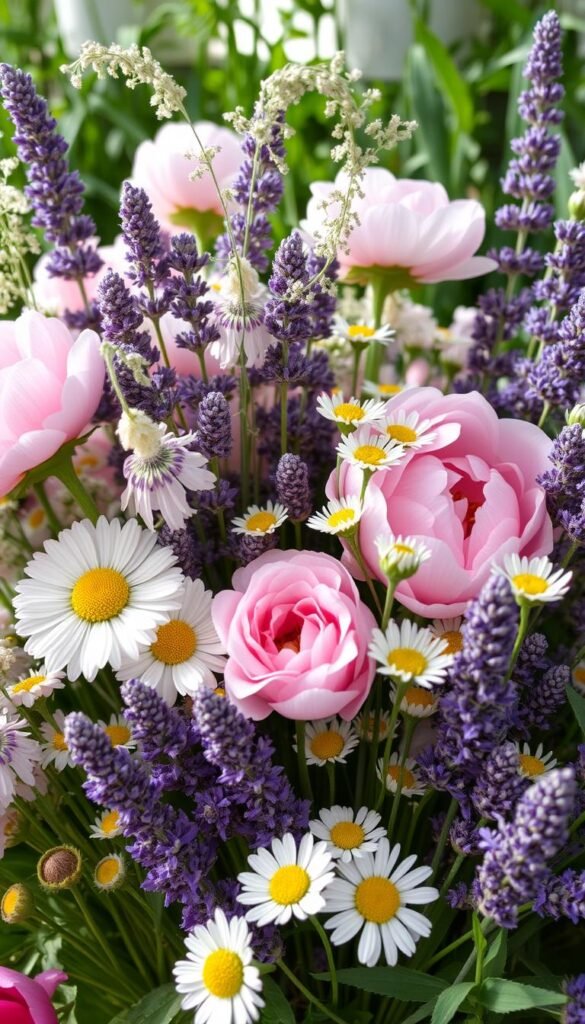
Transform your outdoor space with plants that tell stories through scent and color. The right flowers create focal points while supporting your landscape’s natural rhythm.
Choosing Fragrant and Colorful Varieties
James Farmer’s golden rule? “Plant what stirs your soul – then repeat it.” His Georgia sanctuary features drifts of Nitty Gritty™ White Roses mingling with Sweet Osmanthus. This approach creates rhythm while reducing maintenance.
Modern cottage garden style thrives on contrast. Pair bold coneflowers with airy grasses like Stipa tenuissima. Try these showstoppers:
| Feature | Classic Pick | Updated Choice |
|---|---|---|
| Color Impact | Hollyhocks | Grace N’ Grit™ Pink Rose |
| Fragrance | Old Garden Roses | Fragrant Star Azalea |
| Foliage Interest | Hostas | Ice N’ Roses® Hellebore |
Seaside Serenade® Hydrangea offers months of blooms with minimal fuss. Rheinland Astilbe brings feathery texture to shady corners. For sensory magic, layer mint near seating areas – its scent releases when brushed.
Remember: interesting foliage carries borders between flowers‘ peak shows. Silver-leaved Artemisia or burgundy Heuchera add depth. As cottagecore aesthetic enthusiasts know, texture matters as much as color in crafting nostalgic charm.
Choosing Grasses that Bring Movement and Texture
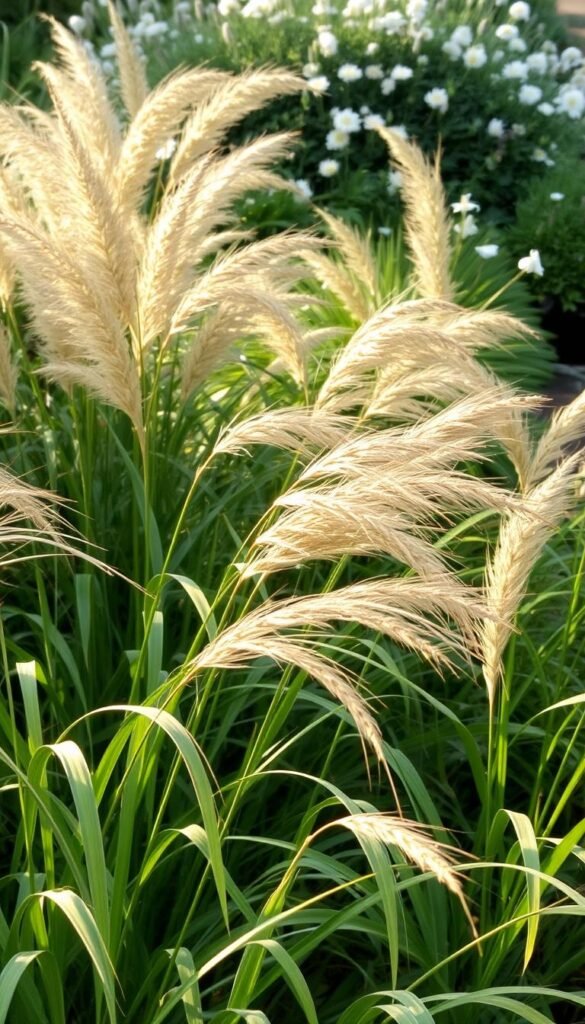
Transform static flower beds into dynamic landscapes with the right grass selections. These versatile plants act as nature’s choreographers, guiding the eye through ever-shifting patterns while adding depth to your outdoor space.
Ground-Level Grace
Start with low-growing varieties like Blue Fescue. Their mounded forms create crisp edges along pathways or nestle between bolder blooms. Landscape designer Lauren Dunec Hoang notes:
“Small grasses anchor compositions without competing for attention – think of them as the punctuation marks in your garden’s story.”
Mid-Sized Magic
Hakonechloa shines in partial shade, its arching blades dancing around hydrangeas or hostas. These medium-height options:
- Softens harsh lines between shrubs and flowers
- Catches sunlight like living sequins
- Requires minimal pruning
Sky-High Drama
Lemongrass and maiden grass soar to 6 feet, creating living screens that sway dramatically. Pair them with coneflowers or black-eyed Susans for contrast. Their feathery seed heads glow in autumn light, extending visual interest into colder months.
Mixing grass heights and textures prevents flat designs. Fine blades of Mexican feather grass flutter beside broad switchgrass leaves, crafting rhythm that keeps borders engaging year-round. Even winter frost transforms dried plumes into crystalline sculptures.
Combining cottage blooms and grasses for airy, romantic borders
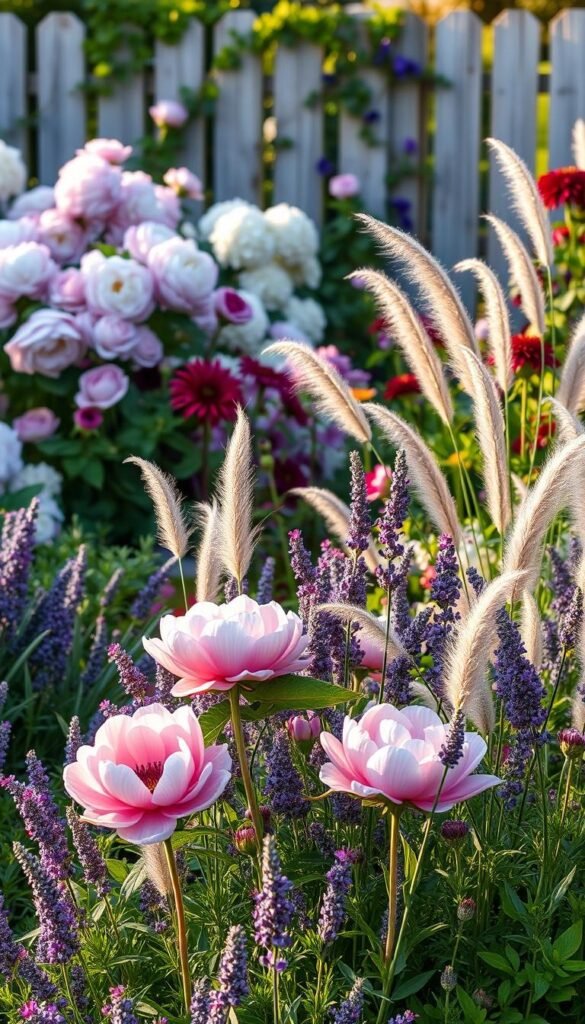
Visualize your garden as a living tapestry where textures converse through every breeze. The secret lies in matching bold floral statements with whisper-soft grass companions. Landscape designer Lauren Dunec Hoang advises:
“Let your plant pairings tell stories – contrast becomes poetry when petals play against flowing blades.”
| Grass Type | Flower Partner | Visual Effect |
|---|---|---|
| Bunny Tail Grass | Coneflowers | Soft clouds meet bold daisies |
| Blue Fescue | Coreopsis | Steel-blue tufts frame golden stars |
| Feather Reed Grass | Foxgloves | Vertical spikes dance with airy plumes |
For year-round appeal, layer early bloomers with late-season performers. Plant lupines among maiden grass – their spring spires fade just as the grass’s feathery panicles emerge. This handoff keeps borders lively from April frosts to November’s first snow.
Three rules for seamless pairings:
- Match foliage colors – silver grasses enhance purple salvias
- Vary heights – low mounds behind tall blooms create depth
- Time bloom cycles – ensure something’s always peaking
These partnerships thrive when given room to mingle. Allow grasses to brush against petals, creating natural movement that feels unforced. You’ll craft spaces where every glance reveals new interactions between plants, making your outdoor area feel alive with possibility.
Creating a Dynamic Layout with Intermingled Plantings
Weave your garden into a living tapestry where every plant plays neighbor and performer. Modern borders thrive when plants mingle freely, creating depth through strategic layering rather than strict height rules.
Layering Techniques for Depth
Forget the “back row chorus line” approach. Place dense bloomers like phlox behind transparent stars like Verbascum – their wispy stems let you see through to plants behind them. This creates visual layers that make borders feel deeper than they physically are.
| Plant Type | Placement | Visual Effect |
|---|---|---|
| Dense (Phlox) | Back/middle | Solid color blocks |
| Airy (Verbascum) | Front/middle | Transparent screens |
| Grasses (Stipa) | Throughout | Movement connectors |
Spacing and Grouping for Visual Harmony
Give plants elbow room to shine. If a variety spreads 30cm wide, leave 15cm clearance on each side. Landscape designer Claudia De Yong suggests:
“Cluster plants in odd-numbered groups – three or five of the same variety – then let grasses stitch them together like green thread.”
Try these spacing strategies:
- Place taller specimens slightly off-center
- Let spillers cascade over edges
- Allow 20% empty space for growth
This approach helps your border look established immediately while leaving room for natural expansion. You’ll create rhythm without rigidity, letting each plant contribute to the overall effect while keeping its unique character.
Incorporating Seasonal Blooms and Grasses
Your garden becomes a living calendar when seasonal stars take turns in the spotlight. Strategic plant choices ensure year-round interest, with each season revealing new textures and hues that harmonize with ornamental grasses.
Spring and Summer Highlights
Early risers like tulips and daffodils push through dormant grasses in March, creating polka-dot color before green blades dominate. Pair these bulbs with late-emerging varieties like switchgrass – their delayed growth avoids competition for sunlight.
| Season | Blooms | Grasses |
|---|---|---|
| Spring | Alliums, Ranunculus | Feather Reed Grass (dormant) |
| Summer | Oriental Lilies, Gladiolus | Fountain Grass (peak height) |
| Fall/Winter | Lycoris, Sedum | Maiden Grass (seed heads) |
Summer’s heat brings vertical drama. Gladiolus spikes rise through cloud-like Muhlenbergia capillaris, while daylilies nestle against blue oat grass. Horticulturist Lisa Eldred Steinkopf advises:
“Let summer bulbs lean into grass clumps – their partnership reduces staking needs while creating wind-resistant displays.”
Fall Interest and Winter Structure
As chrysanthemums fade, plants like Autumn Joy sedum take center stage. Their rust-colored blooms complement golden grass plumes. Leave ornamental varieties standing through winter – frosted seed heads create sculptural shadows against snow.
Time your clean-up for late February:
- Cut grasses to 6” before new growth
- Divide overcrowded bulbs every 3 years
- Mulch spring bloomers after first frost
This seasonal choreography keeps your outdoor space engaged through nature’s cycles, offering fresh discoveries with each passing month.
Embracing Texture and Color Contrasts
Think of your outdoor space as a canvas where bold strokes meet delicate whispers. Michael McCoy, renowned garden designer, reveals the secret: “Contrast in foliage shapes and colors lets flower hues shine without rules.” This approach turns predictable plantings into captivating scenes.
Where Drama Meets Delicacy
James Farmer’s signature grey-and-red brick walls prove subtle backdrops elevate plants. Pair spiky red celosia with frothy maiden grass for instant tension. Silver-leafed Artemisia makes purple salvias pop, while velvety Lady’s Mantle leaves catch raindrops like jewels.
For year-round magic, blend structural evergreens with airy grasses. Try these combos:
• Boxwood spheres beside feathery miscanthus
• Burgundy heuchera under golden hakonechloa
• Dark-leaved dahlias dancing with blue fescue
Discover how colorful gardens use texture to amplify hues. Earthy terracotta pots or sleek steel edging – as seen in timeless garden looks – frame your contrasts beautifully. Remember: your garden thrives when flowers and foliage tell a layered story.
Pro tip: Run fingers through ornamental grasses when designing. Their movement shows where bold color accents will sing loudest. Let nature’s contrasts write your garden’s next chapter.