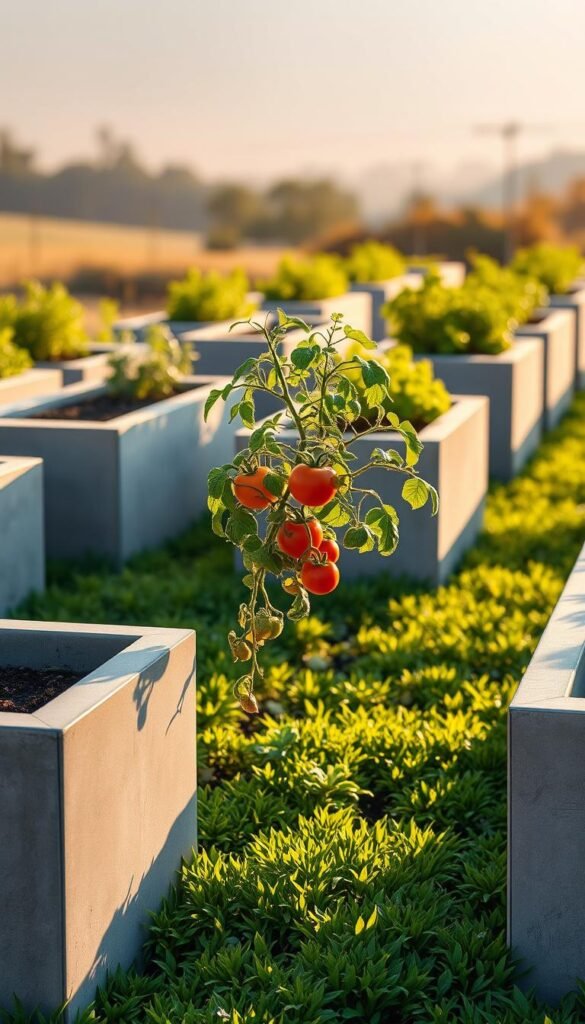
Looking for a stylish way to grow plants that lasts for decades? Modern outdoor spaces thrive with designs that blend form and function. Enter durable, elevated planting solutions made from poured materials—ideal for creating organized growing areas that resist rot, pests, and weather damage.
Unlike wooden or metal alternatives, these structures offer a clean, minimalist look that fits seamlessly into urban backyards or suburban landscapes. Their solid construction prevents soil erosion and provides excellent insulation for plant roots. You’ll spend less time repairing or replacing them year after year.
This guide walks you through everything from choosing the right size to pairing plants with your design. Discover how these beds simplify weed control and improve drainage compared to ground-level plots. We’ll also share tips for maintaining their polished appearance with minimal effort.
Whether you’re growing herbs, flowers, or vegetables, this approach combines practicality with curb appeal. Let’s explore how to create a thriving outdoor oasis that matches your home’s aesthetic while standing up to the elements.
Why Raised Garden Beds Enhance Your Home Landscape
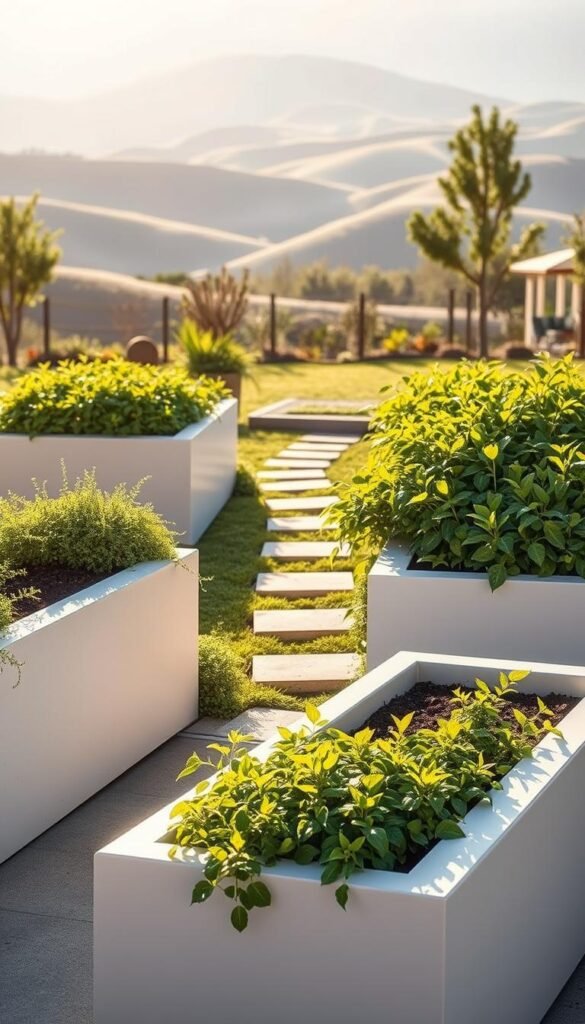
Discover how elevated planting areas can redefine your landscape. These structures do more than organize your greenery—they create a bridge between functional growing spaces and intentional design. Let’s explore how they elevate both comfort and visual harmony.
Ergonomic and Maintenance Benefits
Say goodbye to backaches from constant bending. The elevated height puts plants at waist level, making watering and harvesting easier. This design works well for gardeners with mobility challenges or those who prefer standing tasks.
Soil quality becomes your superpower. Fill your beds with nutrient-rich mixes tailored to specific crops. Better drainage prevents waterlogging, while defined edges keep weeds from creeping in. Maintenance shrinks to quick checks instead of hours of labor.
Integrating Aesthetics with Your Home’s Style
Match your beds to your home’s architecture for a cohesive look. A modern farmhouse? Try clean lines with neutral tones. Mediterranean vibe? Earthy textures and curved edges blend seamlessly.
Use materials that echo your exterior finishes. Stone accents complement rustic themes, while smooth surfaces suit contemporary spaces. Your outdoor area becomes an extension of your living room—inviting and purposefully designed.
Benefits of Using Concrete for Raised Garden Beds
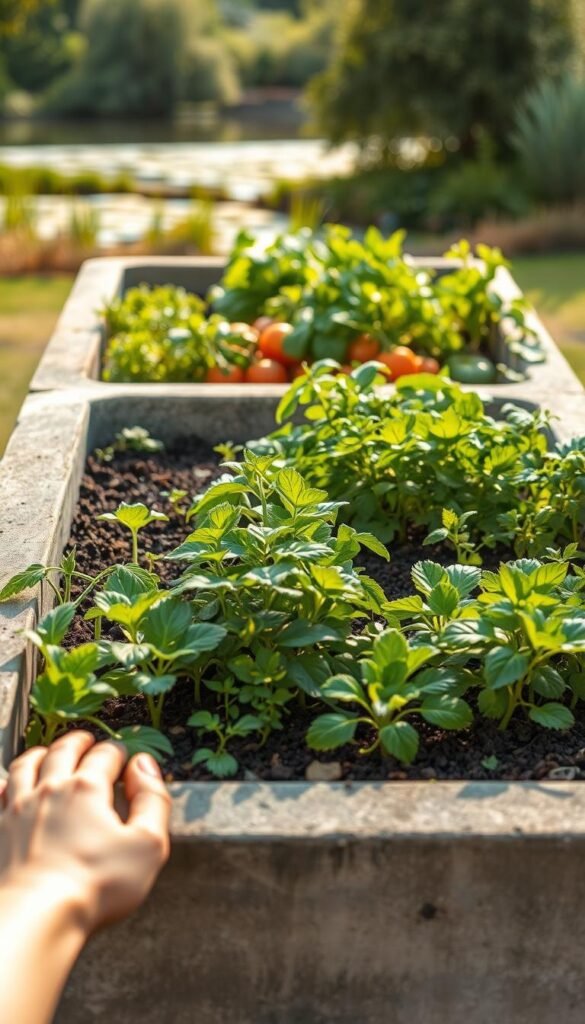
Ever wonder what makes poured structures ideal for long-term growing spaces? Unlike temporary solutions, these planters become permanent fixtures in your landscape. Their rugged composition handles everything from hailstorms to summer droughts without cracking or warping.
Built to Last Through Seasons
Stability meets simplicity with poured materials. Once set, they won’t shift during heavy rains or frost heaves. Fire resistance adds peace of mind in dry regions, while thermal mass protects roots from sudden temperature swings.
“The thermal properties of concrete create a stable environment for roots—no more worrying about overnight frosts ruining tender plants.”
Effortless Upkeep, Maximum Enjoyment
Forget annual staining or rust treatments. A quick rinse with a hose keeps surfaces looking fresh. Mold and pests can’t penetrate the non-porous finish, so you’ll spend weekends harvesting tomatoes instead of repairing walls.
| Feature | Concrete | Wood | Metal |
|---|---|---|---|
| Lifespan | 30+ years | 5-7 years | 10-15 years |
| Maintenance | None | Seasonal sealing | Rust prevention |
| Customization | Paint/stencil ready | Limited | Prone to scratches |
Local hardware stores stock standard blocks, but custom molds let you match your patio’s curves or angles. Personalize with outdoor-safe paints for a pop of color that lasts through UV exposure.
Key Features of Raised Garden Beds
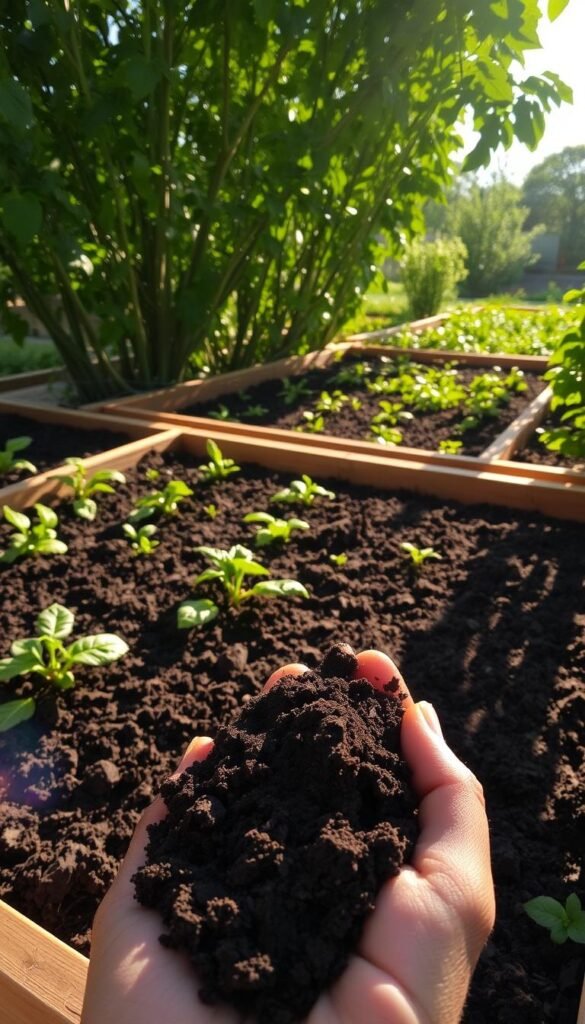
Transform your gardening results by mastering the built-in advantages of elevated planters. These structures give you full control over growing conditions, turning challenging spaces into productive green zones.
Optimizing Soil Quality for Plant Growth
Start fresh with custom soil blends tailored to your crops. Mix compost, peat moss, and perlite to create fluffy, nutrient-rich earth that lets roots spread freely. Unlike compacted ground soil, your plants grow stronger with better access to oxygen and moisture.
Hardware cloth lining the base stops burrowing pests while letting excess water drain. No more swampy roots after heavy rains! The contained space also simplifies adding organic fertilizers or pH adjusters right where needed.
- Block weeds using landscape fabric under fresh soil layers
- Warm soil in spring lets you sow seeds 2-3 weeks earlier
- Rotate crops yearly to prevent nutrient depletion
Pair basil with tomatoes or marigolds with veggies to naturally deter insects. Your garden becomes a self-sustaining ecosystem, reducing the need for chemical treatments. Test different companion planting combos each season for vibrant, healthy beds.
Choosing the Perfect Location for Your Raised Beds
Where you place your planting zones can make or break your harvest. Sunlight patterns and layout decisions determine whether your greens thrive or struggle. Let’s break down how to position your setup for peak productivity.
Maximizing Sunlight and Seasonal Exposure
Aim for 6-8 hours of direct sunlight daily—critical for tomatoes, peppers, and leafy greens. Watch for shadows from fences or trees during morning and afternoon hours. Track seasonal shifts: spots sunny in summer might get shaded in winter.
Face long sides north-south so tall plants like corn won’t block shorter ones. This orientation ensures even light distribution across rows. Leave 36-48 inches between structures for easy access with tools or carts.
“South-facing placements capture the most consistent light year-round, especially valuable for fall crops.”
| Spacing | Purpose | Ideal For |
|---|---|---|
| 28 inches | Compact layouts | Small herbs/flowers |
| 36 inches | Standard access | Vegetable plots |
| 48 inches | Equipment mobility | Large-scale growing |
Position near water sources to simplify irrigation. Avoid low areas where puddles form after rain—excess moisture drowns roots. Test different zones with sun-loving basil; if it flourishes, your spot works!
Concrete Raised Garden Beds: A Sleek, Low-Maintenance Option
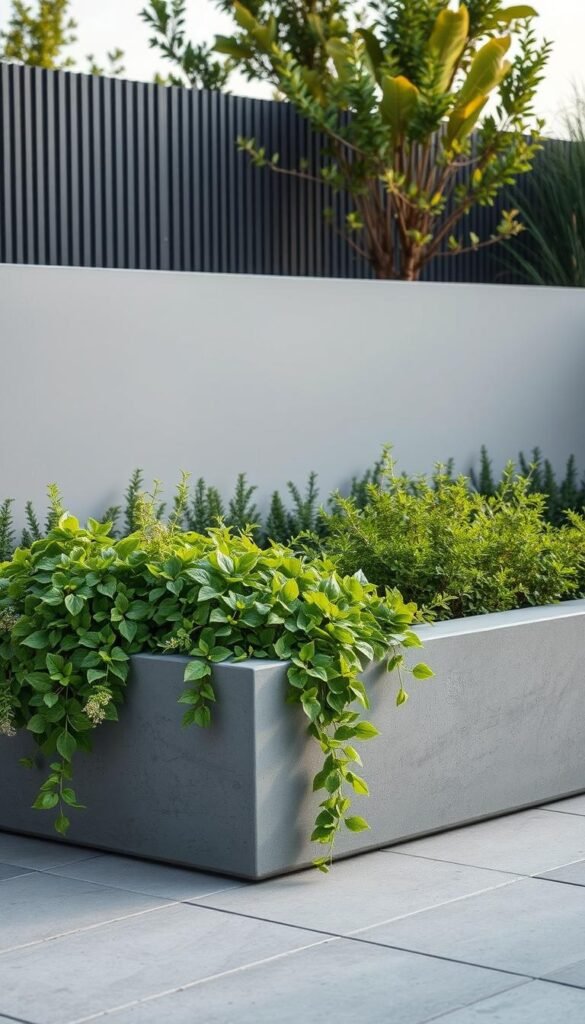
What if your outdoor space could marry cutting-edge style with unshakable practicality? Today’s planting solutions balance bold aesthetics with features that simplify your routine. Let’s dive into how these structures redefine what a functional growing space can achieve.
Where Form Fuels Function
Sturdy construction keeps everything in place, even during heavy storms or soil expansion. Precast blocks or poured forms lock together seamlessly, creating crisp edges that frame your plants like living art. No more leaning walls or uneven surfaces after years of use.
Local hardware stores stock standard units, but custom molds let you craft curves or angular designs. “The ability to stain or paint surfaces transforms basic structures into focal points,” notes landscape designer Elena Torres. Your beds become extensions of your home’s personality—think geometric patterns or earthy tones that mirror your exterior.
| Feature | Concrete | Wood | Metal |
|---|---|---|---|
| Design Flexibility | High (custom molds) | Moderate | Low |
| Finish Options | Paint/stain ready | Limited to stains | Powder coating only |
| Structural Integrity | No warping | Prone to rot | Rust risk |
Thermal mass acts like a buffer for roots, smoothing out temperature spikes. Cooler soil in summer heat and warmer earth during frosty nights mean happier plants. Pair this with built-in drainage channels, and you’ve got a system that works smarter, not harder.
Whether you choose interlocking blocks or smooth poured walls, these setups prove that practicality doesn’t demand compromises. Your greens thrive in a space that looks as intentional as your indoor decor.
Comparing Materials: Concrete, Wood, and Galvanized Steel
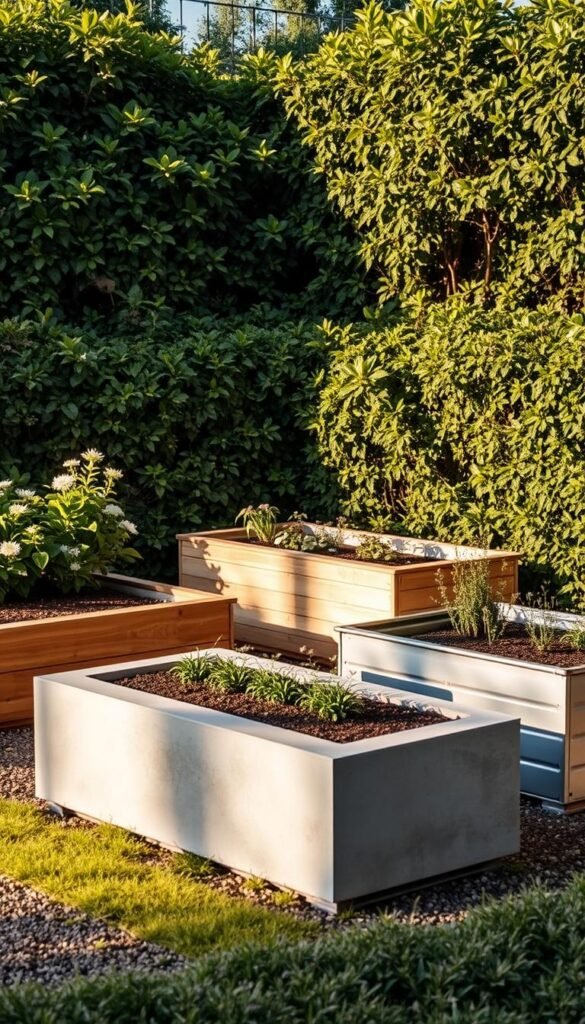
Selecting the right material for your planting setup impacts both aesthetics and plant health. Each option brings unique strengths and trade-offs, from weather resistance to design flexibility. Let’s break down what works best for your climate, budget, and style.
Pros and Cons of Different Materials
Galvanized steel stands out for its toughness. It resists rust and handles heavy rain or snow without warping. However, steel beds cost more upfront and offer limited insulation—roots might feel temperature swings more sharply.
Natural wood like cedar or redwood brings warmth to outdoor spaces. These rot-resistant options last 10–20 years with proper care. But expect yearly sealing to fight moisture damage. Termites and fungi can still pose risks in humid areas.
| Material | Durability | Maintenance | Cost |
|---|---|---|---|
| Galvanized Steel | 20+ years | None | $$$ |
| Cedar Wood | 10–15 years | Annual sealing | $$ |
| Poured Structures | 30+ years | None | $$$$ |
Design preferences matter too. Steel suits modern homes with angular lines, while wood complements rustic or cottage themes. Poured options allow custom shapes but require professional installation in most cases.
“Choose materials that align with your local climate—steel excels in wet regions, while cedar thrives in drier zones.”
Budget-conscious gardeners often start with wood, upgrading later. For a permanent solution, steel or poured structures save long-term effort. Match your pick to how hands-on you want to be with upkeep.
Budgeting and Material Sourcing for Concrete Beds
Smart planning turns your vision into reality without draining your wallet. Let’s explore how to balance quality and affordability when building long-lasting planting spaces.
Cost Considerations and Local Availability
Start by comparing material prices at nearby suppliers. Many hardware stores offer bulk discounts on blocks or mortar mixes. Check local lumber yards for reclaimed wood molds if you’re pouring custom shapes—this cuts costs while adding character.
Precast units save time but limit design flexibility. For unique layouts, consider renting reusable forms. A detailed materials checklist helps avoid last-minute store runs. Prices vary by region, so call suppliers before finalizing your budget.
Factor in soil delivery and drainage gravel. These extras often cost more than the bed structure itself. Partner with neighbors for group discounts on bulk orders. With smart sourcing, you’ll create a thriving garden that fits your financial plan.