
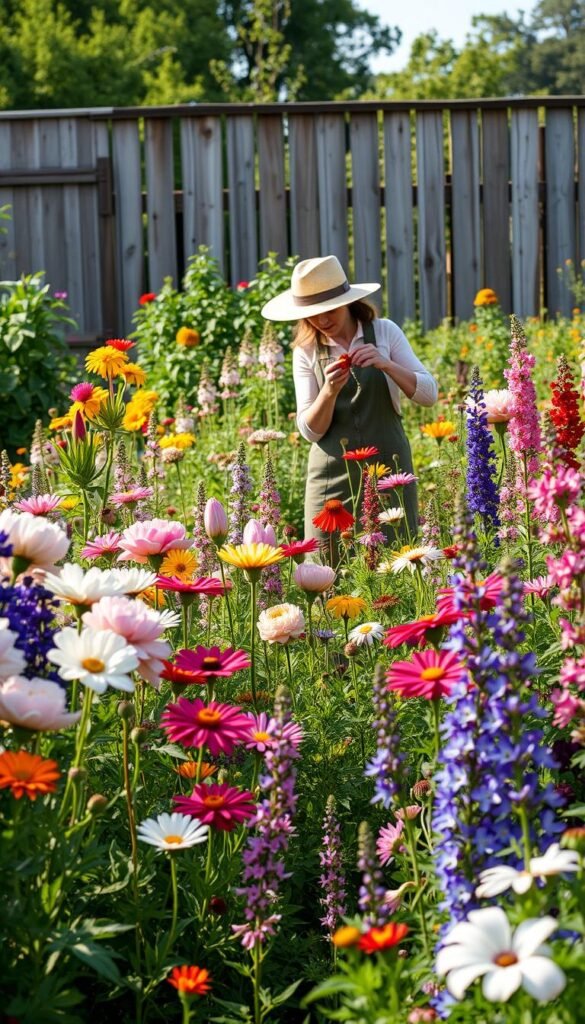
Picture a lush, colorful space where plants mingle freely, creating a tapestry of textures and hues. This informal gardening style blends ornamental blooms with practical herbs and vegetables, celebrating nature’s spontaneity. Unlike rigid landscapes, these spaces thrive on controlled chaos—but they still need thoughtful attention to stay healthy and vibrant.
You’ll find that caring for this style of planting requires a unique approach. It’s about guiding growth without stifling its wild charm. Strategic trimming, feeding, and timing help your space look effortlessly abundant while supporting plant health.
Why does this matter? Proper care ensures your mix of tall spires, delicate petals, and trailing vines continues to delight year after year. Techniques like removing spent blooms or nourishing soil at key moments keep plants thriving without sacrificing that carefree aesthetic. Even low-effort varieties, like those in raised bed setups, benefit from these methods.
By working with natural rhythms, you create a sustainable sanctuary where beauty and function coexist. Let’s explore how simple routines can help your plot flourish as a living work of art.
Understanding the Cottage Garden Aesthetic and Its Unique Needs
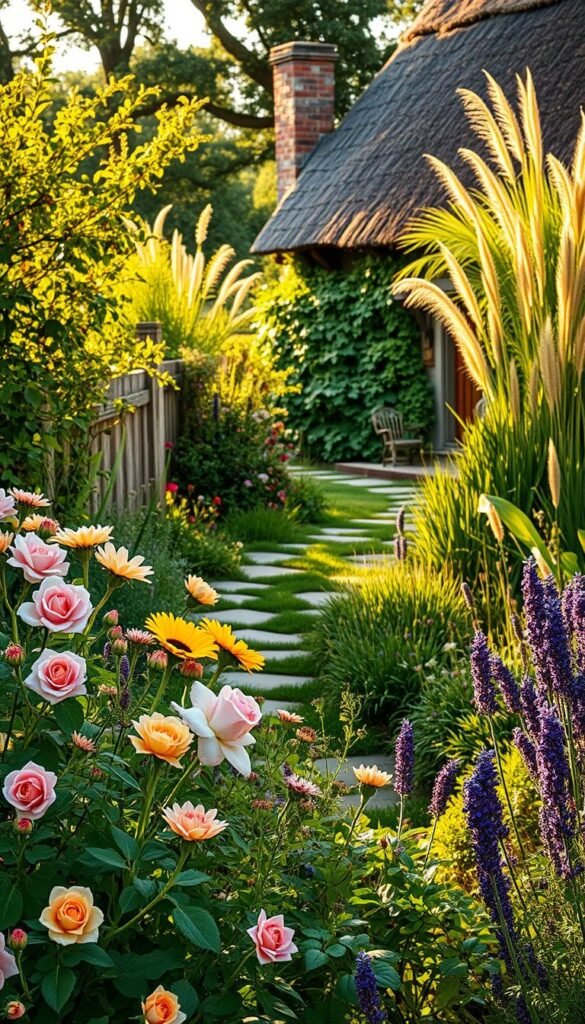
Imagine stepping into a vibrant space where every plant tells a story, weaving together beauty and bounty. This approach celebrates spontaneity, blending blooms with herbs in a way that feels both intentional and wild. Unlike formal landscapes, these spaces balance freedom with structure—a dance between nature’s whims and your guiding hand.
Curating Controlled Chaos
The magic lies in layered textures and heights. Tall foxgloves might sway behind bushy lavender, while creeping thyme spills over stone paths. This mix creates depth and invites exploration. You’re not just growing plants—you’re crafting an ever-changing tapestry.
Design Principles That Breathe
Informal layouts thrive on curves and unexpected pairings. Let roses climb a weathered trellis near your tomato patch. Allow mint to edge walkways, releasing fragrance when brushed. These touches make the space feel lived-in and loved.
| Feature | Traditional Garden | Cottage Style |
|---|---|---|
| Layout | Symmetrical rows | Meandering paths |
| Plant Selection | Single-species beds | Mixed ornamental/edible |
| Maintenance | High structure | Guided natural growth |
Your role? Nurture relationships between plants. Some might compete—others support each other. A bit of observation helps you spot which partnerships work. Over time, this living mosaic becomes self-sustaining, needing less fuss than you’d expect.
Preparing Your Garden: Soil, Sunlight, and Plant Selection
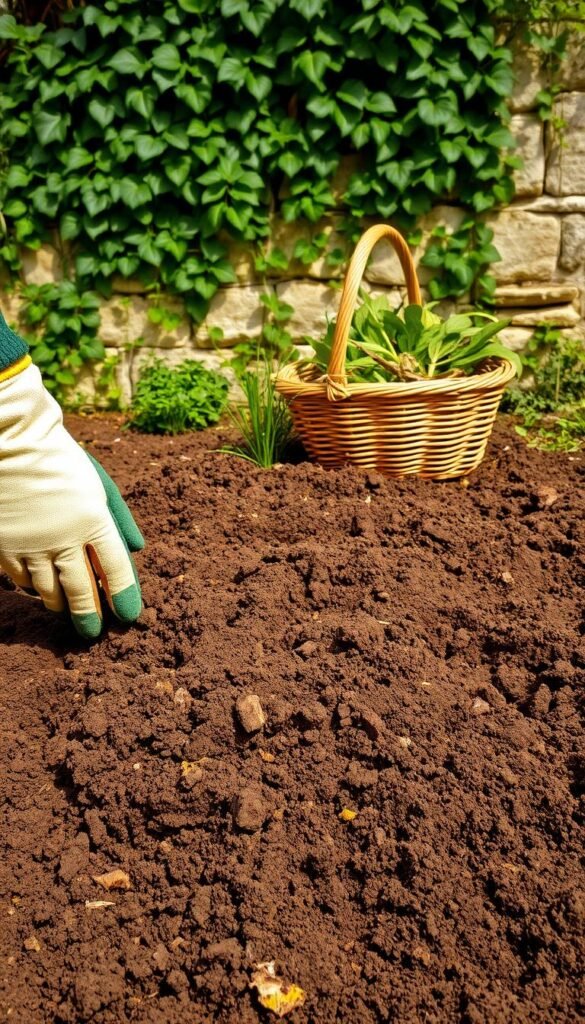
Creating a thriving planting space begins with understanding three key elements: what’s beneath your feet, how light dances across your plot, and which species will flourish there. These factors shape your garden’s personality and productivity.
Building Fertile Foundations
Start by testing your soil’s pH—most plants prefer slightly acidic to neutral conditions. Mix in compost to boost nutrients and improve drainage. Well-drained earth prevents root rot while giving plants room to stretch.
If your soil feels heavy, add sand or perlite. For sandy spots, blend in peat moss to retain moisture. This balance creates a welcoming home for roots to grow deep and strong.
Sunlight Partners & Shade Friends
Map areas that get 6+ hours of daily sun—ideal for roses, lavender, and delphiniums. In dimmer corners, try foxgloves or columbines. Mixing light needs lets you maximize every inch while creating natural-looking layers.
- Full sun champions: Coneflowers, sage, peonies
- Partial shade stars: Bleeding hearts, hostas, ferns
Arrange taller varieties behind medium-height blooms, letting trailers spill over edges. This layered approach mimics nature’s randomness while ensuring each plant gets its needed light.
Cottage Flower Garden Maintenance: Deadheading, Fertilizing, and Seasonal Care
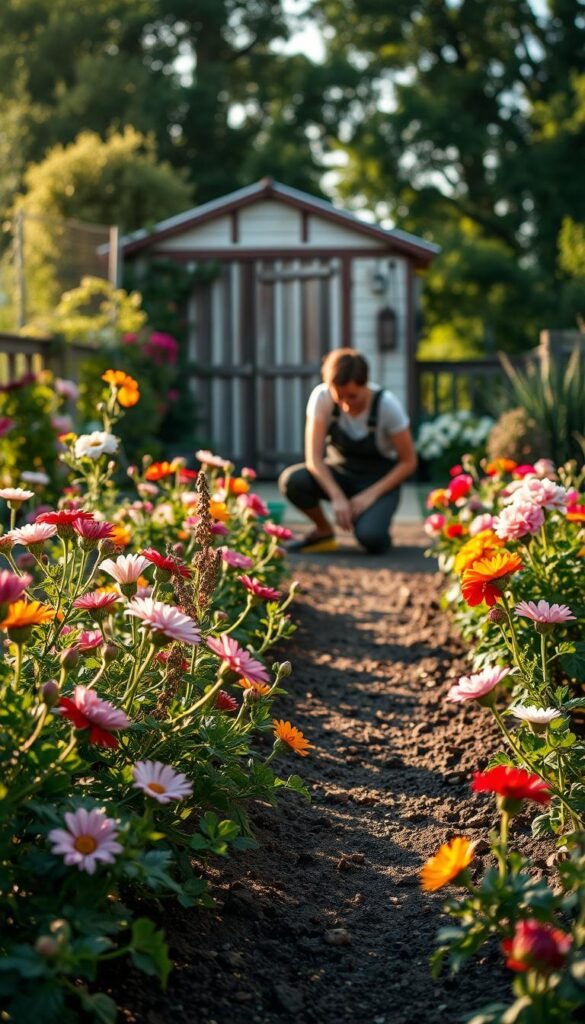
Nurturing a thriving planting space means working smarter, not harder. Two simple practices—trimming faded blossoms and feeding your soil—keep plants vigorous while preserving their wild elegance.
Effective Deadheading Techniques for Continuous Blooms
Snip spent flowers just above the first healthy leaf node using clean shears. This redirects energy into new growth instead of seed production. For multi-stemmed plants like zinnias or cosmos, pinch stems between your thumb and forefinger.
Focus on varieties that reward consistent care:
- Sweet peas: Remove wilted blooms daily
- Delphiniums: Cut entire flower spikes after fading
- Bee balm: Trim clusters to encourage bushier growth
Fertilizing Tips to Boost Plant Health
Feed your plot every 4-6 weeks during active growth periods. Mix compost into topsoil for slow-release nutrition. For quick results, try diluted seaweed solution—it’s packed with micronutrients.
Heavy feeders like hollyhocks benefit from monthly liquid fertilizer. Always water thoroughly before applying to prevent root burn. Remember: healthy soil grows resilient plants that resist pests naturally.
Seasonal Care and Adjusting to Weather Changes
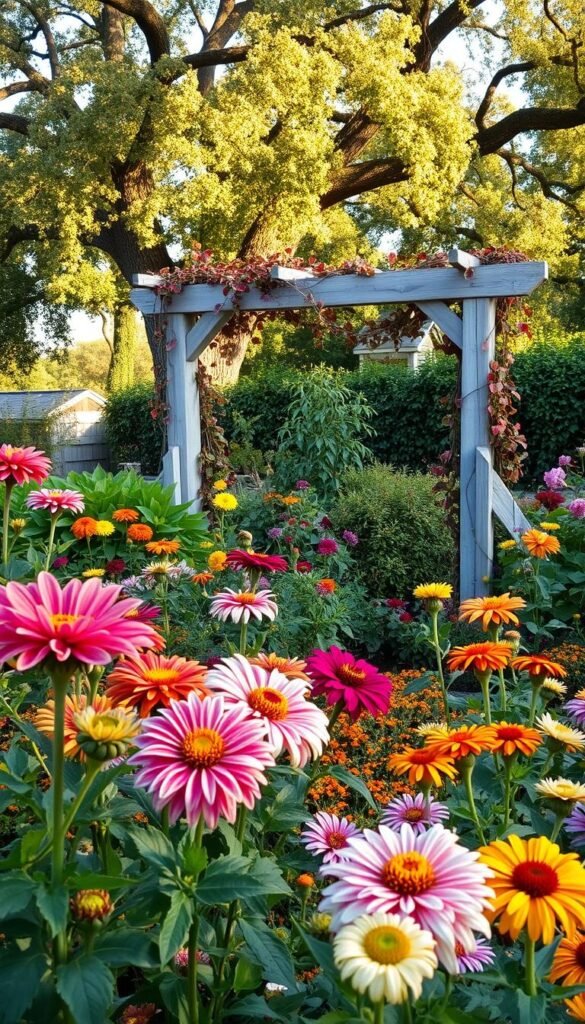
Your plot transforms with the calendar’s turn—each month bringing fresh opportunities to nurture growth. Smart timing helps your space adapt while preserving its wild charm. Let’s explore how to partner with nature’s rhythms for year-round vitality.
Spring Planting, Dividing Perennials, and Climbing Success
Early spring energizes your soil. This is prime time to split crowded perennials like phlox and coral bells. Use a sharp spade to divide root balls, replanting sections in well-drained soil enriched with compost. New divisions establish quickly in cool, moist earth.
Train climbing roses or clematis onto trellises as shoots emerge. Position sun-loving annuals near paths where they’ll bask in warmth. For shaded corners under shrubs, try bleeding hearts—they flourish in partial shade while adding delicate texture.
Autumn and Winter Strategies to Protect Your Garden
As temperatures drop, clear spent foliage to discourage pests. Blanket flower beds with 3 inches of shredded leaves—this natural mulch insulates roots while decomposing into nutrients. Potted herbs? Move them to a sunny windowsill before frost arrives.
Wrap vulnerable shrubs in breathable burlap, securing it loosely. This shields them from harsh winds without trapping moisture. Remember: many perennials need winter chill to return year after year stronger than ever.
Watering Best Practices and Mulching Benefits
A thriving planting space balances moisture and protection through thoughtful practices. When done right, you’ll nurture strong roots while keeping foliage healthy—key for that lush, natural look. Let’s dive into methods that conserve resources and support growth.
Root-First Hydration Strategies
Water deeply but less often to encourage roots to reach downward. Early morning sessions let moisture soak into well-drained soil before heat speeds evaporation. For best results, use drip systems or soaker hoses—they deliver water directly to the base, cutting waste by up to 70% compared to sprinklers.
Pair these smart watering techniques with a 2–3 inch mulch layer. Organic options like shredded bark retain 35% more moisture while suppressing weeds. This combo keeps soil consistently damp, even in full sun areas where blooms thrive.
New to this? Avoid overwatering by checking soil moisture with the finger test: push your finger two knuckles deep. If it feels dry, it’s time to hydrate. Remember—consistent care prevents common beginner mistakes like uneven hydration or fungal issues from wet leaves.