
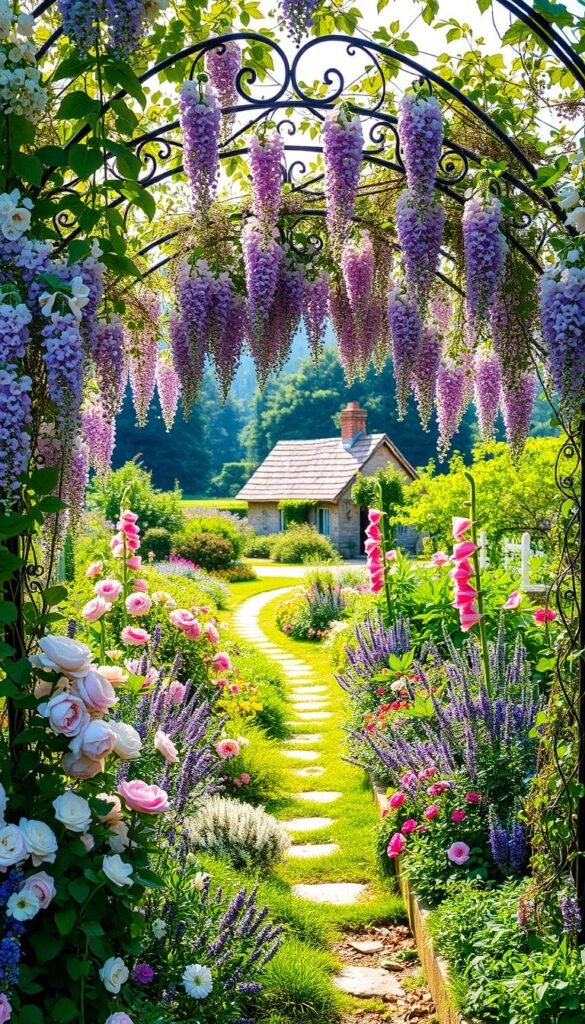
Picture an outdoor retreat where vibrant blooms frame relaxed gathering spots, blending history with natural beauty. This style traces its roots to 10th-century England, where practical flowering plants like roses and lavender grew alongside herbs in informal layouts. Today, this approach offers a refreshing escape from overly structured landscapes.
What makes these spaces special? They use soft edges instead of sharp lines to define areas. Lush growth surrounds sitting areas, creating privacy without walls. Elements like weathered stone or vintage fences add character while supporting climbing plants.
The magic lies in balancing abundance with intention. As you explore gardening aesthetics, you’ll discover how organized chaos becomes art. Let flowers spill onto pathways. Allow greenery to weave through wooden structures. These details make every corner feel discovered rather than designed.
Traditional accents serve dual purposes – bird baths attract wildlife while acting as focal points. Loose plant groupings provide seasonal color from spring daisies to summer foxgloves. This layered approach ensures visual interest year-round, inviting you to slow down and enjoy nature’s rhythm.
Welcome to Your Cozy Cottage Garden Escape
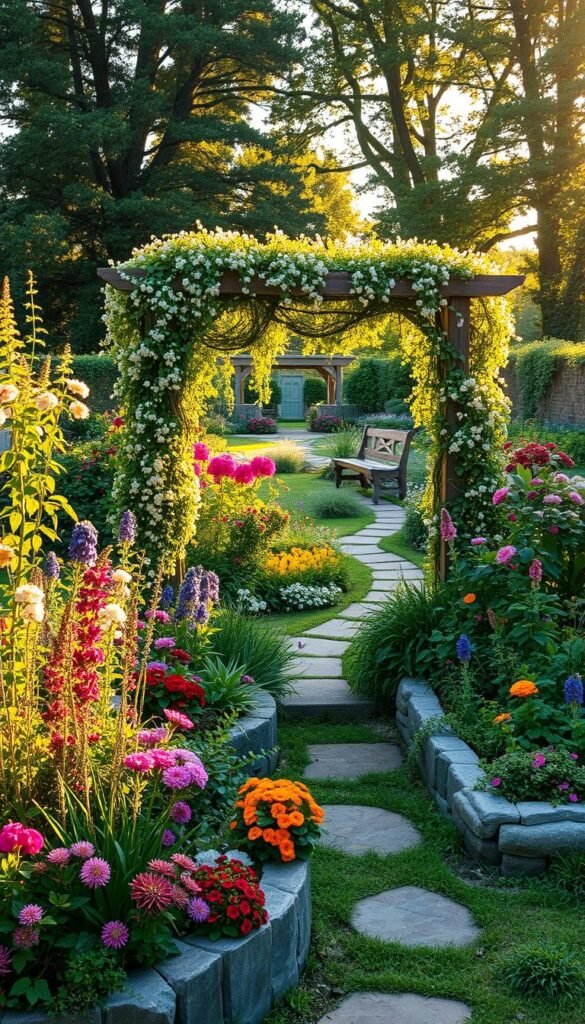
Your outdoor space becomes a sanctuary where nature’s spontaneity meets personal flair. Unlike formal gardens, these designs thrive on joyful imperfection. Let plants mingle freely—tall foxgloves might lean into daisies, while herbs peek through creeping thyme. This “organized chaos” isn’t messy—it’s artful abundance that feels alive.
Why does this style captivate so many? It celebrates growth over control. You can scatter seeds where they fall or divide perennials to fill gaps. Over time, self-sowing flowers create surprise color combinations. This approach saves money and effort while building a landscape that’s uniquely yours.
The charm lies in layered textures and seasonal shifts. Spring might bring tulips dancing with forget-me-nots, while summer explodes with roses and lavender. Edible nasturtiums add pops of orange beside ornamental grasses. Birds flutter between berry bushes, and bees buzz through clover-filled lawns.
Forget rigid rules—your garden should mirror your personality. A crooked stone path? Quirky. A vintage teapot as a planter? Whimsical. These touches make spaces feel lived-in and loved. Every corner invites exploration, promising new discoveries after rain showers or morning light.
The Charm of Cottage Garden Design
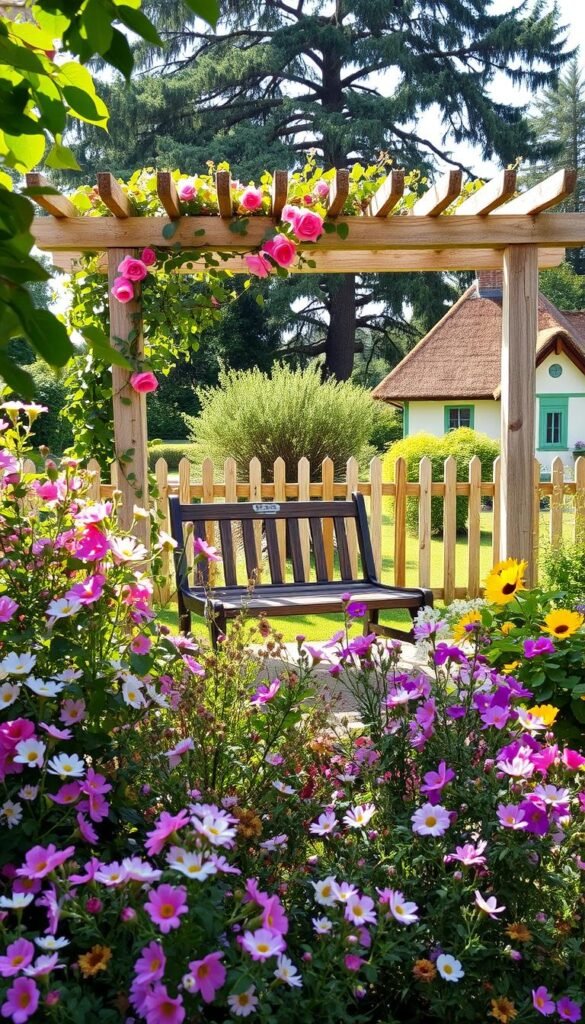
Imagine a living canvas where every season paints a new masterpiece. This style thrives on plants growing freely, creating a space that feels both wild and intentional. Unlike formal gardens, it evolves yearly, surprising you with unexpected color combinations and textures.
Embracing Organized Chaos
Let nature take the lead. Allow foxgloves to tower over thyme or poppies to spill onto walkways. This “controlled wildness” supports pollinators like bees and butterflies while giving your space a dynamic charm. Self-seeding flowers like cosmos or calendula add spontaneity, ensuring no two growing seasons look alike.
Personalizing Your Outdoor Space
Your plot becomes a reflection of your personality. Mix edible veggies with fragrant herbs and ornamental grasses. Maybe add a salvaged gate as a trellis or paint a bench your favorite hue. This way of gardening prioritizes what makes you smile over rigid rules.
These spaces also nurture local ecosystems. Birds nest in dense shrubs, while ladybugs patrol your kale. You’ll feel connected to nature’s rhythms as your garden becomes a habitat as much as a retreat.
Exploring Inviting Outdoor Spaces
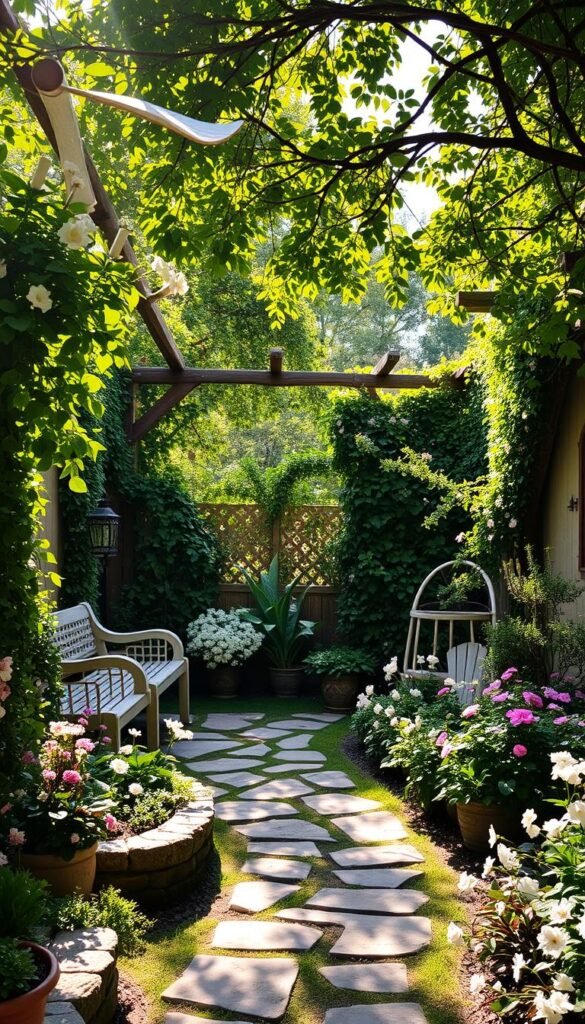
Your backyard holds untapped potential for creating serene escapes. Whether working with sprawling lawns or compact patios, clever design turns overlooked areas into outdoor space sanctuaries. A simple bench beneath a flowering dogwood becomes a meditation spot, while hanging chairs transform narrow side yards into whimsical retreats.
Maximize vertical real estate to elevate small spaces. Install wall-mounted planters bursting with trailing ivy or strawberries. Repurpose old ladders as tiered herb displays. These solutions add depth without crowding walkways, blending beauty with practicality.
| Space Type | Key Features | Seating Ideas |
|---|---|---|
| Small Patio | Vertical gardens, foldable furniture | Bistro set with hanging ferns |
| Medium Yard | Curved pathways, clustered planters | Built-in bench with storage |
| Large Garden | Multiple “rooms”, water features | Swing seat under mature trees |
Strategic plant placement guides visitors naturally through your landscape. Tall grasses mark transition zones, while low-growing thyme cushions outline sitting areas. This way of designing encourages exploration, with each turn revealing new textures and scents.
Discover how cottagecore aesthetic principles help harmonize functional elements. Mix edible pansies with ornamental sage near seating zones. Let morning glory vines climb umbrella stands for living shade. Your garden becomes both playground and sanctuary.
Even urban balconies can channel this charm. Use weather-resistant cushions and dwarf fruit trees in containers. The secret lies in layering – combine textures, heights, and purposes to create depth. Your personalized oasis awaits, ready to refresh body and mind.
Designing Lush Garden Borders for Seclusion
Transform your landscape into a living tapestry that whispers “stay awhile” through strategic plant arrangements. Thoughtful borders do more than frame spaces—they craft intimate retreats where foliage dances with sunlight and shadows play hide-and-seek.
Mixing Colorful Flowers and Perennials
Build depth by layering plants like nature’s own paintbox. Start with towering foxgloves (5-6 ft) as backdrops, then mid-height phlox (2-3 ft) for midsummer fireworks. Ground your design with creeping thyme or sedum—these low-growers soften edges while suppressing weeds.
| Plant Type | Height Range | Bloom Season | Color Palette |
|---|---|---|---|
| Foxgloves | 4-6 ft | Late Spring | Pink/White |
| Dahlias | 1-4 ft | Summer-Fall | Rainbow |
| Hydrangeas | 3-5 ft | Summer | Blue/Pink |
| Coneflowers | 2-4 ft | Summer | Purple/Yellow |
Repeat key flowers every 8-10 feet to create rhythm. Try this combo: purple salvias + white Shasta daisies + crimson roses. The repetition guides the eye while making small spaces feel intentional.
“A border’s magic lives in its layers—tall spires, mounding perennials, and ground-hugging textures working in concert.”
For year-round structure, lean on perennials like irises and daylilies. Tuck annual zinnias between them for pops of color that change yearly. This approach keeps your garden looking full while allowing creative experimentation.
Fragrant stars like sweet peas and roses pull double duty—their scent enchants humans while their nectar feeds pollinators. Cluster these near seating areas where you’ll enjoy them most, creating natural screens that bloom with purpose.
Creating Comfortable Seating Nooks
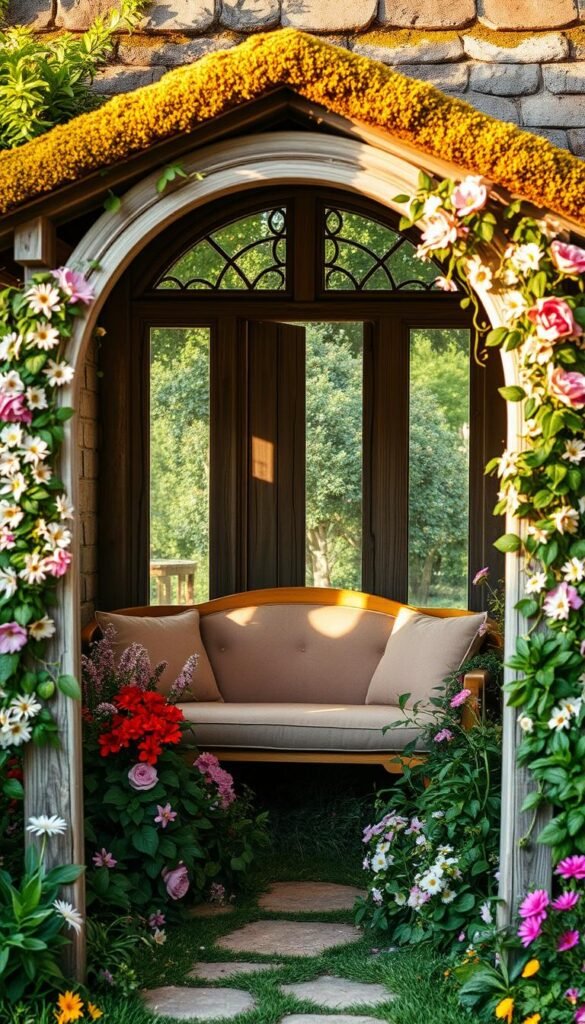
What transforms ordinary corners into cherished retreats? Strategic placement turns any outdoor space into an invitation to linger. Start by anchoring your seating area with natural architecture—flowering arches create living ceilings that shift with the seasons.
Surround benches with airy hydrangeas or feathery astilbes. These plants frame views without blocking breezes. For pathways, crushed stone offers crunch underfoot while guiding visitors toward your hidden oasis. Curved designs feel more welcoming than straight lines.
Choose furnishings that blend comfort with character. A weathered teak bench withstands rain, while wrought-iron chairs gain charm as patina develops. Add weather-resistant cushions in earthy tones to harmonize with greenery. Pro tip: Position seats to face west for golden hour glow or east for morning coffee rituals.
Consider these elements when planning:
- Overhead canopy plants (clematis, climbing roses)
- Breathable windbreaks (ornamental grasses, low hedges)
- Surface materials (flagstones, gravel, moss)
Your garden becomes a series of discovery moments when seating areas emerge naturally. Tuck a swing between two crabapple trees or nestle chairs where lavender scents the air. These intentional choices make every visit feel like uncovering a secret.
Building Arbors and Pergolas for Privacy
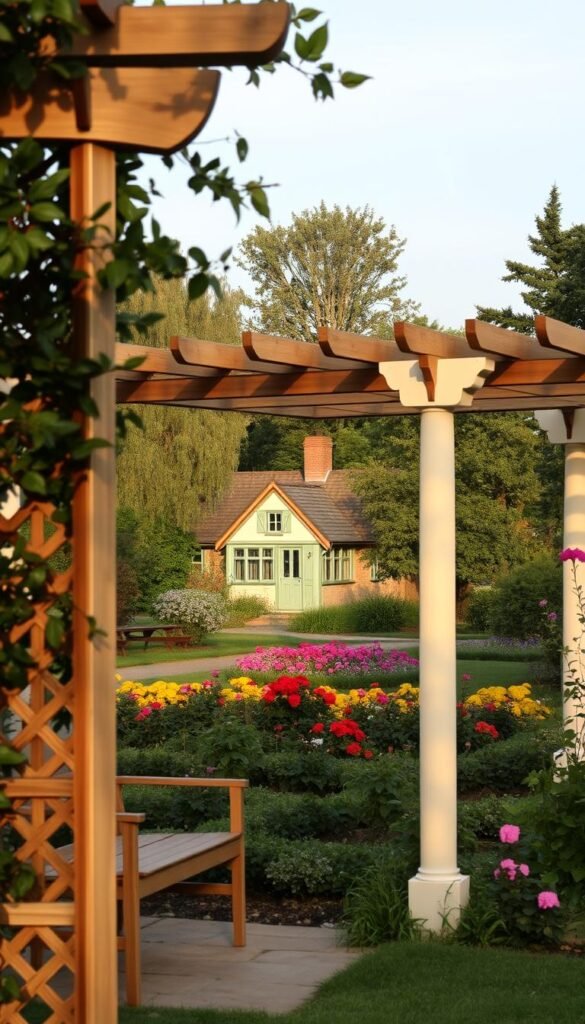
Need a leafy hideaway that combines beauty with seclusion? Choosing between arbors and pergolas shapes how you experience your outdoor sanctuary. Both structures frame seating areas while offering unique approaches to privacy and style.
Arbors vs. Pergolas: What’s Best?
Arbors act as nature’s doorways. Their curved tops and side trellises create instant charm, perfect for marking transitions between garden zones. Picture climbing roses spilling over an arched entrance—this compact design excels in tight spaces or as focal points along pathways.
Pergolas bring open-air elegance to larger areas. Four sturdy posts support crossbeams that filter sunlight, crafting dappled shade for dining or lounging. Their airy framework invites wisteria or grapevines to weave overhead, blending coverage with visibility.
| Feature | Arbor | Pergola |
|---|---|---|
| Structure | Arched with trellis sides | Square/Rectangular with open roof |
| Size | 4-8 ft wide | 8-20 ft wide |
| Best Use | Entryways, intimate benches | Dining sets, group seating |
| Plants | Clematis, sweet peas | Trumpet vine, climbing hydrangea |
Positioning matters. Place arbors where you want to invite exploration—near hidden benches or garden gates. Install pergolas over frequently used seating options, angling them to block neighboring views while maintaining breezy airflow.
- Arbors: Ideal for creating “moments” along paths
- Pergolas: Perfect for defining activity zones
- Both: Improve with age as plants mature
These living frameworks evolve yearly. Start with fast-growing annual vines like morning glory for quick coverage, then add perennial climbers for lasting structure. Your garden gains depth while staying connected to its surroundings.
Incorporating Climbing Vines and Roses
Elevate your outdoor sanctuary by weaving vertical layers of foliage and blooms. Pergolas and arbors become living architecture when dressed in climbing plants, blending structure with nature’s spontaneity. These frameworks support everything from delicate sweet peas to vigorous wisteria, transforming bare wood into cascading tapestries.
For fragrance that lingers, consider repeat-blooming roses like ‘New Dawn’ or ‘Zephirine Drouhin’. Their velvety petals frame seating areas while scenting the breeze. Pair them with early-blooming clematis varieties to extend your garden show from spring through frost.
| Plant | Bloom Period | Key Feature |
|---|---|---|
| Clematis | Spring-Fall | Diverse colors |
| Wisteria | Late Spring | Dramatic clusters |
| Climbing Roses | Summer-Fall | Fragrant blooms |
| Honeysuckle | Summer | Wildlife favorite |
These vines offer more than beauty. Their dense growth creates natural privacy screens and reduces afternoon heat by up to 10°F. Train stems gently along supports using soft ties—this prevents damage while encouraging lush coverage.
Mix fast-growing annuals like morning glory with perennials for instant impact and lasting structure. Remember: proper spacing prevents overcrowding. Most plants need 12-18 inches between stems for air circulation and sunlight penetration.
As your green walls mature, they’ll become the garden’s backbone—offering shade, sheltering birds, and turning functional structures into flowering landmarks. The key lies in choosing varieties that thrive in your light conditions while matching your vision of leafy elegance.
Enhancing Atmosphere with Garden Walls and Hedges
Shape your outdoor sanctuary using living boundaries that balance openness with privacy. Hedges and walls frame your space while blending seamlessly into the landscape. This approach creates a sense of enclosure without sacrificing natural charm.
Choosing the Right Materials and Colors
Select plants that match your goals. Low boxwood hedges define pathways, keeping sightlines open. Medium holly varieties partition spaces while allowing light through. Tall arborvitae forms green walls for full seclusion.
Mix textures for visual depth. Pair flowering hedges like hydrangeas with stone retaining walls. Soften hardscapes using creeping fig or ivy. For small areas, light-colored materials like pale gravel or white birch trees keep the space airy.
Your choices shape how you experience the garden. A layered approach with varied heights and hues guides movement while nurturing local wildlife. This way of designing turns functional elements into artistic statements that evolve with the seasons.