
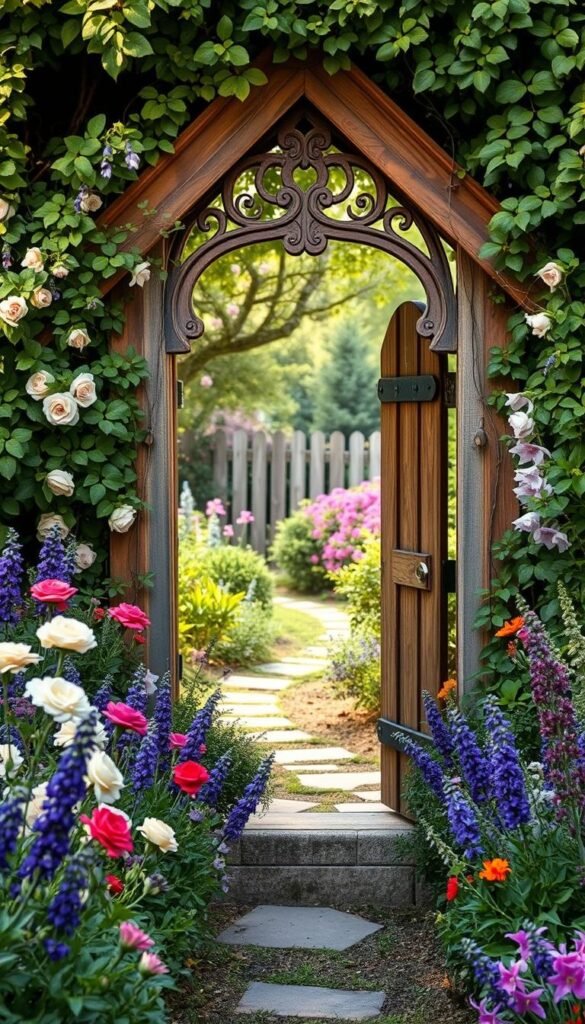
A welcoming wooden entryway does more than mark property lines—it sets the tone for your entire landscape. These charming structures blend practicality with personality, offering protection for delicate blooms while creating visual harmony between your home and garden.
Picture a gate that whispers “secret garden” rather than shouting “keep out.” The right design transforms ordinary yards into enchanted spaces, framing flower beds like living artwork. You’ll discover how simple materials can establish clear boundaries without sacrificing warmth or curb appeal.
This guide reveals why these features have become essential elements in modern landscaping. Beyond deterring curious deer or neighborhood pets, they anchor raised planting areas that might otherwise feel disconnected. The result? A cohesive outdoor environment that flows naturally from your doorstep.
We’ll walk through selecting weather-resistant woods, choosing hardware that complements your home’s architecture, and mastering basic construction techniques. Whether you’re crafting a rustic split-rail style or curved arbor entrance, you’ll gain skills to create lasting beauty through hands-on woodworking.
By project’s end, your property will boast a focal point that marries function with fairytale charm. Let’s begin shaping the garden entrance you’ve always imagined—one that invites exploration while safeguarding your botanical treasures.
Embracing the Cottage Garden Aesthetic
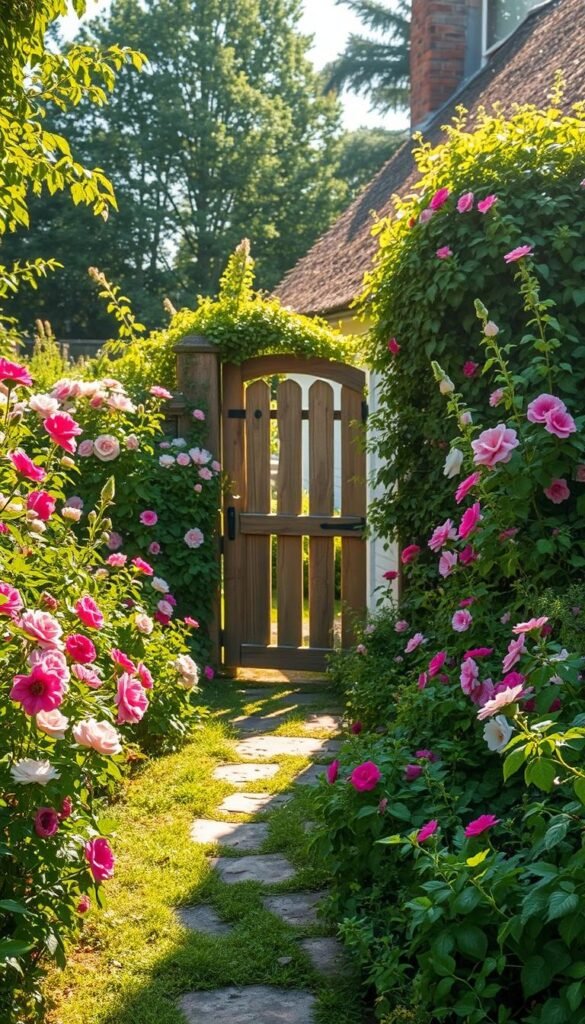
True cottage style isn’t about perfection—it’s about crafting spaces that feel lovingly worn and inviting. This approach celebrates crooked fences, mismatched blooms, and gates that tell stories through their weathered surfaces. Nature leads the design here, with plants spilling over paths and softening edges.
Setting a Charming Tone for Your Garden
Mix bold peonies with wispy ornamental grasses to create dynamic layers. Let climbing roses frame your entryway, their petals brushing against timeworn wood. These gardens thrive on organized chaos, where hostas nestle beside shrubs and annuals self-seed freely.
Rustic gates with silvered finishes blend seamlessly into this landscape. They act as quiet companions to vibrant flowers rather than competing for attention. Consider these elements when planning:
| Formal Garden | Cottage Style |
|---|---|
| Symmetrical layouts | Asymmetrical plant groupings |
| Manicured hedges | Billowing shrubs |
| Polished metal accents | Weathered wooden details |
Lilacs and clematis naturally drape over arbors, creating living arches that change with seasons. This style welcomes DIY adjustments—maybe add lattice panels for sweet peas to climb. Your gate becomes part of the garden’s rhythm, not just a boundary marker.
Embrace imperfections like slightly warped boards or uneven paint. These quirks add character, making your space feel lived-in and authentic. Remember, the goal is harmony between handcrafted elements and nature’s wild beauty.
Planning Your DIY Garden Gate Project
Clear objectives create gates that blend seamlessly with your landscape. Start by asking what role your new feature will play—is it safeguarding tomato plants from hungry critters or adding character to your front yard? This clarity shapes every decision, from materials to measurements.
Defining Your Space and Objectives
Walk your property with fresh eyes. Note where foot traffic naturally flows and how existing flower beds frame potential entry points. A gate near vegetable patches might need chicken wire panels, while one bordering your patio could showcase decorative ironwork.
Consider these practical elements:
- Width for wheelbarrow access
- Locking mechanisms for tool storage areas
- Height matching adjacent fencing
If you’re working with older structures, measure twice—weather-warped posts might require creative solutions. New installations offer flexibility but demand precise post-hole digging. Either way, honest skill assessments prevent frustration. Basic carpentry skills suffice for most designs, though curved tops need extra patience.
Budget for 20% more materials than calculations suggest. Warped boards and measurement errors happen, especially when repurposing reclaimed wood. Time your project around dry weather if staining untreated timber. With thoughtful preparation, your garden entrance will function flawlessly while looking like it’s always belonged.
Creating a Garden Cottage Gate: DIY Tutorials for Quaint Entrances
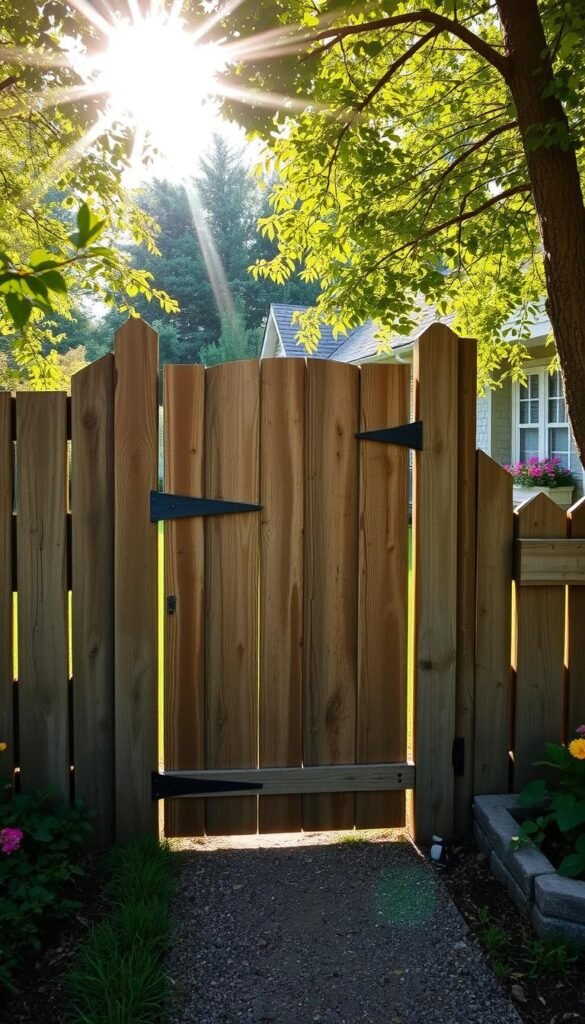
Your gateway project begins with four essential phases: shaping materials, assembling components, securing structure, and adding finishing details. Cedar takes center stage here—its natural resistance to rot makes it ideal for outdoor use, while its warm grain patterns enhance rustic appeal.
Start by cutting boards to create a 3-foot-wide frame. A supportive crossbar adds stability, while chicken wire provides subtle protection without blocking sunlight. This wooden framework balances airy visibility with sturdy borders, perfect for containing curious pets while showcasing flower beds.
The magic lies in progression. First, precise measurements ensure smooth operation between posts. Next, construction screws create durable joints that withstand seasonal shifts. Finally, hinges and latches transform static pieces into functional art. Our step-by-step construction guide simplifies these technical aspects.
Embrace slight variations in board alignment or minor tool marks—these handcrafted quirks become conversation starters. Modern DIYers appreciate how power tools accelerate traditional joinery methods, making this project achievable over a weekend.
By phase three, you’ll see how each decision impacts both form and function. The mesh placement height affects visibility, while post depth determines wind resistance. Every choice weaves practicality into your garden’s story, resulting in an entryway that feels both timeless and uniquely yours.
Gathering Your Garden Gate Tools and Materials
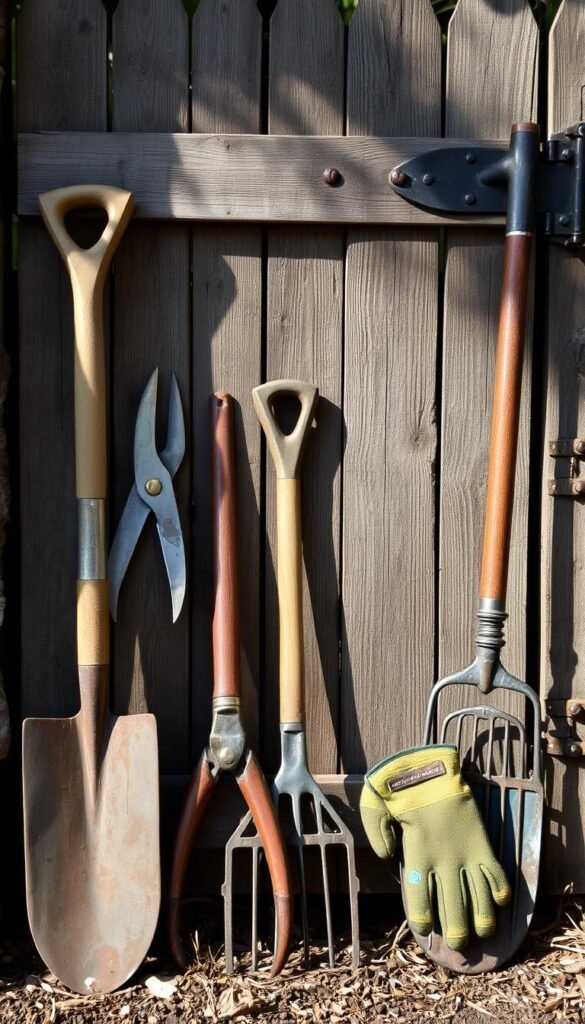
Successful projects begin with smart preparation. Having the right supplies prevents mid-build dashes to the hardware store and ensures your garden gate stands strong for years. Let’s break down what you’ll need and why each item matters.
Essential Tools for the Project
The Arrow-PowerShot Staple Gun secures chicken wire without bending delicate mesh. Pair it with a Black & Decker Power Drill for swift screw insertion through cedar’s dense grain. A miter box ensures clean 45-degree cuts if you’re hand-sawing boards—though an electric saw saves time for larger projects.
Selecting the Right Wood and Hardware
Cedar’s natural oils repel insects and resist warping, aging to a silvery-gray patina that complements flowering plants. For budget-conscious builders, pressure-treated pine offers similar durability at lower cost. Your post needs extra stability—use all-purpose sand to create drainage around its base, preventing wood rot.
Stainless steel hinges withstand seasonal moisture swings better than standard hardware. Match your latch style to the gate’s purpose: decorative hooks suit front garden entries, while keyed locks protect vegetable plots. The Everbilt chicken wire’s green coating blends with foliage, offering discreet protection for square-foot gardening projects.
Pro tip: Check local lumber yards for discounted “seconds”—boards with minor flaws that work perfectly for rustic designs. With materials prepped, you’re ready to transform raw components into a functional work of art.
Measuring, Marking, and Designing Your Gate
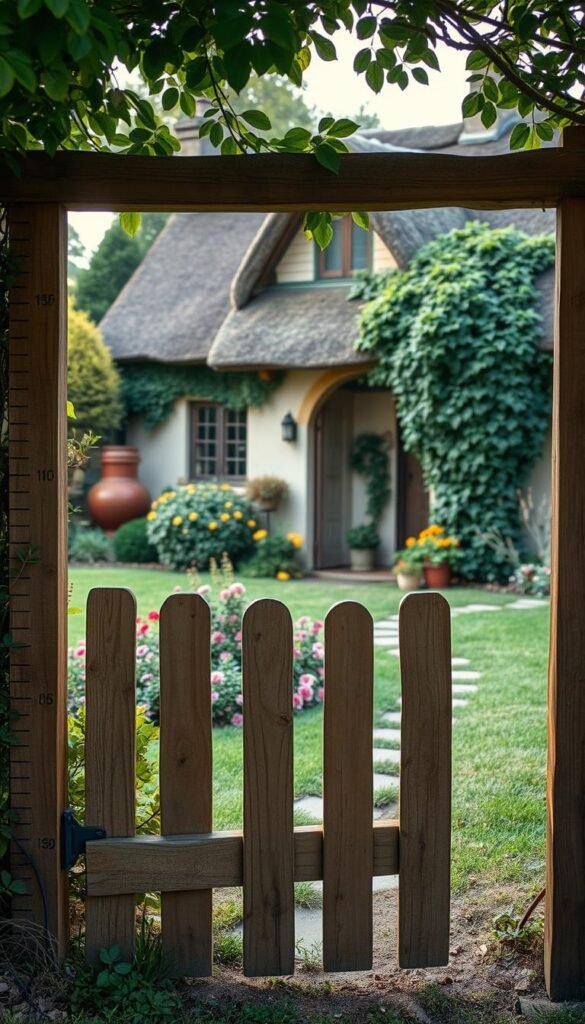
Accuracy separates wobbly barriers from smooth-swinging entries. Your garden gate needs precise planning to avoid gaps and alignment issues. Start by measuring your opening’s width and height, then subtract ½ inch for hardware clearance.
Precision Measurements and Layout
Cut four 3-foot cedar boards with 45-degree angles for corner joints. These mitered edges create tight seals that repel rainwater. For the crossbar, measure diagonally between corners—your 4’2.5″ piece should fit snugly without forcing.
| Component | Measurement | Purpose |
|---|---|---|
| Vertical Boards | 3ft (x4) | Frame sides |
| Crossbar | 4’2.5″ | Diagonal support |
| Hardware Clearance | ½” reduction | Smooth operation |
Mark cuts with painter’s tape for visibility. Double-check numbers against your sketch before slicing—a ⅛-inch error here becomes ¼-inch at assembly. Use this formula for different sizes: Gate width + (2 x board thickness) – clearance = frame dimensions.
Sketching Your Design Plan
Graph paper helps visualize proportions. Draw your frame first, then add hardware placement. Note which side gets hinges and whether the latch sits left or right. Include measurements for:
- Post spacing
- Wire mesh coverage
- Decorative elements
This blueprint becomes your roadmap, preventing mid-build confusion. Keep it handy to reference angles and joint placements. With careful planning, your garden entrance will operate like fine cabinetry—silent and sure.
Step-by-Step Gate Construction Process
Building your entryway piece by piece transforms raw materials into functional art. This phase demands careful execution—every angled cut and secured screw determines your structure’s longevity. Let’s break down the process into manageable stages for flawless results.
Cutting and Assembling the Frame
Begin by dry-fitting mitered boards to verify 45-degree angles align perfectly. Position construction screws at opposing angles through each corner joint—this crossed fastening technique prevents seasonal warping. Check for square using the 3-4-5 triangle method: measure 3 feet up one side, 4 feet across the base, and confirm the diagonal spans exactly 5 feet.
| Traditional Method | Modern Approach |
|---|---|
| Hand-driven nails | Impact driver screws |
| Wood glue reinforcement | Pocket hole joinery |
| Manual squaring checks | Laser level alignment |
Leave screws slightly loose until all joints connect. This allows micro-adjustments before final tightening. Run your palm along the frame edges—any protruding screw heads need immediate countersinking.
Installing the Crossbar and Chicken Wire
Unroll galvanized wire wearing heavy gloves to prevent finger cuts. Stretch the mesh taut across your frame using spring clamps as temporary holders. Start stapling at the center, working outward in alternating patterns to eliminate wrinkles.
Secure the diagonal crossbar over the wire using two screws per end. This sandwiching technique locks the mesh in place while adding structural rigidity. Test the assembly by gently pushing against various points—proper installation prevents future sagging.
Remember to:
- Overlap wire edges by 1 inch at seams
- Space staples every 4 inches
- Trim excess mesh with aviation snips
Your completed framework now stands ready for hanging—a testament to patient craftsmanship that balances security with delicate visual appeal.
Ensuring Stability: Setting Posts and Aligning Your Gate
The foundation of any lasting structure begins below the surface. Your entryway’s strength depends on how well you anchor its vertical supports. Let’s explore techniques that keep your creation standing straight through seasons of use.
Proper Post Installation Techniques
Dig holes 1 foot deep with flat bottoms—this prevents uneven settling. For standard 4-foot posts, leave 3 feet above ground. Fill the bottom 4 inches with coarse sand, creating a drainage layer that outlasts concrete in damp climates.
Pack sand tightly with a rubber mallet after each 2-inch layer. This method allows future adjustments—simply dig out and reposition if needed. Check alignment using a 4-foot level on two adjacent sides. “Measure thrice, set once” becomes your mantra here.
| Sand Base Benefits | Concrete Drawbacks |
|---|---|
| Natural drainage | Traps moisture |
| Adjustable positioning | Permanent installation |
| Lower material cost | Curing time required |
Space posts ¼ inch wider than your gate width. This clearance prevents binding as wood expands in humidity. Before backfilling with native soil, perform these final checks:
- Top edges level across both supports
- Vertical plumb in all directions
- Diagonal measurements matching exactly
Common mistakes like shallow holes or rushed packing lead to sagging within months. Take extra time here—stable posts mean your garden entrance swings smoothly for years. Next, we’ll secure those hinges that bring motion to your masterpiece.
Incorporating Finishing Touches with Hardware
The right hardware acts like jewelry for your entryway—functional yet decorative. Position hinges ¼ inch below the post top to prevent weather damage while maintaining clean lines. This strategic placement keeps moving parts protected from rain runoff and debris.
Attaching Hinges and Latches Securely
Mark screw holes with a nail before drilling—this prevents wood splitting in cedar posts. Use shims to hold your gate level during installation. “Hardware should disappear into the design,” notes master carpenter Eli Thompson. “If you notice the hinges first, they’re too prominent.”
Install latches at elbow height for natural operation. The locking mechanism should engage smoothly without forcing components. Check these clearances:
| Area | Measurement |
|---|---|
| Bottom gap | ½ inch |
| Post spacing | ¼ inch wider than gate |
| Latch height | 42 inches from ground |
Test swing direction three times before tightening screws completely. A second pair of hands proves invaluable here—ask a helper to watch for scraping sounds or uneven movement. Make micro-adjustments using washers behind hinges if needed.
For cottage charm, choose black iron hardware over shiny finishes. These develop a rustic patina that complements weathered wood. Remember to oil moving parts annually—a 30-second task that prevents squeaks and prolongs your garden gate’s lifespan.
Common Challenges and Quick Fixes
Even seasoned builders encounter unexpected hiccups when installing outdoor structures. Don’t let minor setbacks derail your progress—most issues have straightforward solutions once you know where to look.
Avoiding Installation Pitfalls
Sagging gates often stem from inadequate diagonal bracing. Add a second crossbar or replace standard hinges with heavy-duty versions. If your entryway scrapes the ground, raise it using washers under the bottom hinge.
Misaligned posts cause binding during temperature changes. Check vertical alignment weekly for the first month using a 4-foot level. For stubborn leans, loosen mounting bolts and insert cedar shims until plumb.
Weather damage creeps in through untreated cut ends. Seal fresh lumber edges with exterior-grade primer before assembly. Reapply protective finish every two years—mark your calendar when installing hardware.
Quick fixes save time and frustration:
- Sticking latch? Rub paraffin wax on the mechanism
- Loose screws? Dip toothpicks in wood glue before reinserting
- Rusty hinges? Soak overnight in white vinegar
These adjustments maintain your structure’s charm while ensuring smooth operation. With practical troubleshooting, your handcrafted entrance becomes a lasting testament to thoughtful craftsmanship.