
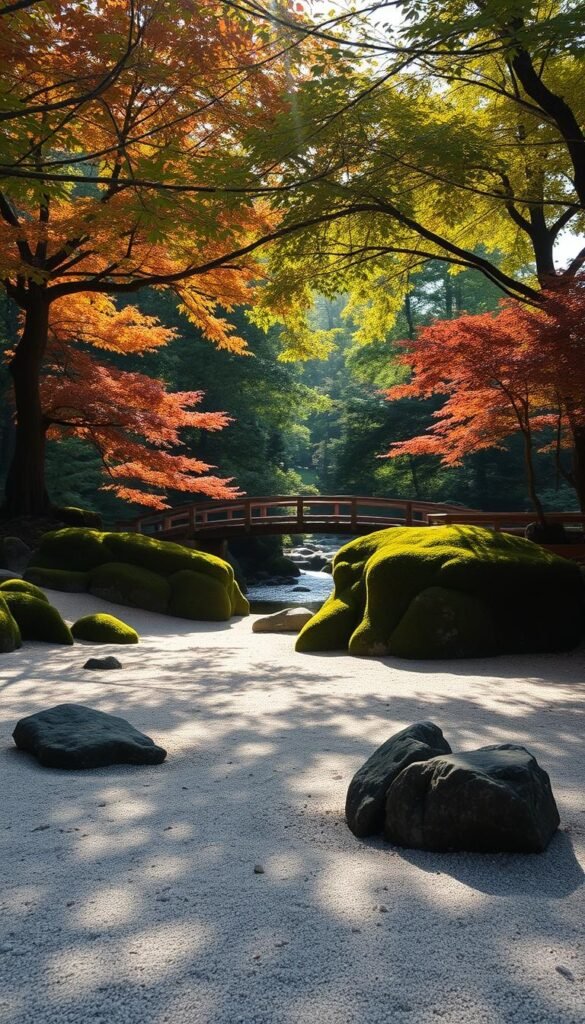
Imagine stepping into your backyard and feeling daily stress melt away. For centuries, Buddhist monks used carefully arranged spaces to deepen their meditation practice. Today, you can bring that same sense of serenity home by blending ancient wisdom with modern gardening aesthetic principles.
These minimalist landscapes began as sixth-century teaching tools. Monks crafted them to mirror nature’s imperfections, showing how beauty thrives in simplicity. Unlike traditional flower beds, every rock and raked pattern carries meaning—inviting quiet reflection rather than demanding attention.
What makes these spaces timeless? They work with the environment instead of fighting it. You’ll discover how flowing water features or strategically placed stones can anchor your focus during mindfulness exercises. Even small patios or balcony corners can become retreats when designed intentionally.
Maintaining your personal haven offers its own rewards. Pruning shrubs or smoothing gravel becomes a moving meditation—a chance to slow down and reconnect. As seasons shift, so does your living artwork, reminding you that growth often happens in unexpected ways.
Introduction to Zen Gardens and Meditation Spaces
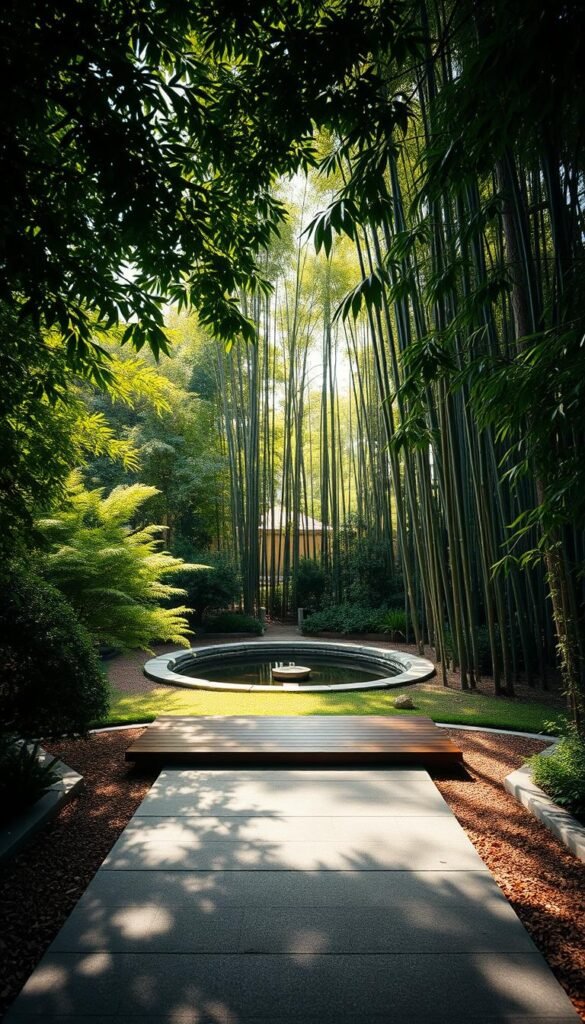
Your breath slows as you enter a realm where every pebble tells a story. Zen gardens, called Karesansui in Japanese, use rocks, sand, and sparse greenery to mirror nature’s quiet wisdom. Unlike flower-filled yards, these dry landscapes invite you to observe subtle patterns rather than chase distractions.
Traditional Western gardens dazzle with color, but zen designs prioritize stillness. Raked gravel mimics water ripples, while jagged stones symbolize mountains—elements that anchor your mind during reflection. This space becomes a bridge between hectic routines and nature’s rhythms.
What makes these areas so calming? They follow three principles: simplicity, balance, and imperfection. A single twisted pine might offset smooth stones, showing beauty in asymmetry. Over time, you’ll notice how wind reshapes sand or moss creeps over rocks—a reminder that growth thrives in simplicity.
Even small meditation corners can ease stress. Whether it’s a balcony nook or a backyard retreat, intentional design matters most. Each element works with your environment, not against it, fostering mindfulness through purposeful arrangement.
As seasons change, so does your garden’s story. Fallen leaves contrast with raked lines, while winter frost highlights textures. This living artwork becomes a sanctuary where your thoughts settle like settling sand.
History and Philosophy of Zen Gardens
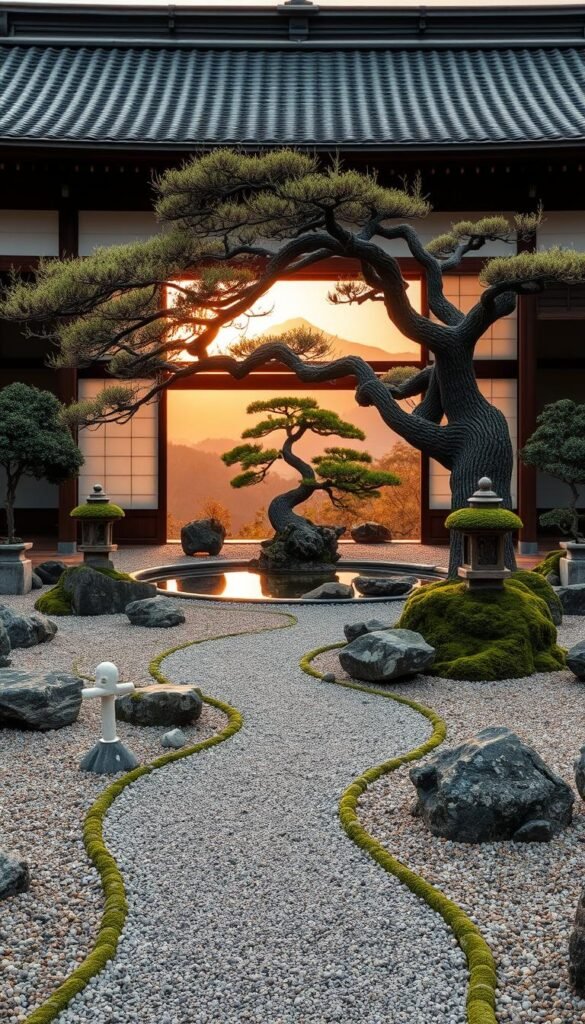
Centuries before smartphones disrupted our focus, monks shaped landscapes to mirror cosmic truths. What began as vibrant paradise gardens evolved into contemplative spaces where raked gravel whispers ancient secrets.
Paradise Origins and Spiritual Meaning
Early zen gardens burst with color, designed as portals to Buddhist rebirth realms. Imagine walking through eighth-century Japan—blossoms framed ponds symbolizing purity, while islands mirrored mythical Mount Penglai. These spaces weren’t just pretty; they offered living maps to enlightenment.
Perspective gardens later taught mindfulness through shifting views. Each winding path revealed new elements—a boulder becoming a mountain, sand swirls mimicking rivers. You’d literally see life’s complexity simplify with every step.
The Evolution From Rock to Tea Gardens
Medieval designers revolutionized gardens by replacing water with gravel. Dry landscapes let monks “hear” streams through raking patterns—a clever hack for urban temples. This shift emphasized imagination over ornamentation.
Tea masters then crafted guided pathways with irregular stepping stones. Unlike showy rock arrangements, these routes slowed your pace, syncing movement with breath. Moss replaced flowers, proving nature thrives in quiet moderation.
Today’s zen spaces blend these traditions. You might spot raked circles echoing waves beside pruned azaleas—a testament to balance between human intention and wild beauty.
Key Elements of a Zen Garden
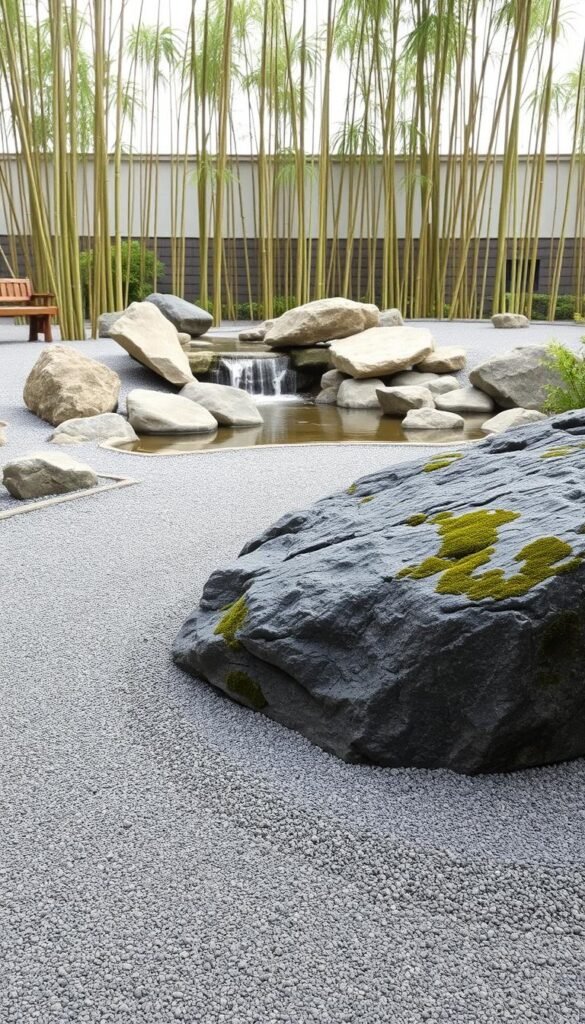
Your personal sanctuary takes shape through intentional combinations of natural materials. Each component works in harmony, transforming ordinary spaces into vessels for mindful reflection.
Rocks, Gravel, and Sand Patterns
Stones act as your garden’s backbone. Larger specimens symbolize mountains—place them near entryways as grounding focal points. Smaller rocks create winding paths that guide movement through your space.
Raked gravel becomes liquid art. Try swirling “samon” patterns representing streams or concentric circles mimicking pond ripples. This practice doubles as moving meditation—your rake becomes a brush painting temporary masterpieces.
Water Features and Dry Landscaping Techniques
Actual water features bring cleansing energy through gentle sounds. For dry alternatives, arrange gravel in wave-like formations around larger stones. This yin-yang balance lets you “hear” imaginary streams during quiet moments.
Selective Plant Life and Minimal Greenery
Moss serves as nature’s velvet carpet beneath your rocks. Its slow growth mirrors personal development—lush yet restrained. If using other plants, choose single specimens like bonsai trees that command attention through simplicity.
Every element here has purpose. When arranged thoughtfully, these materials create environments where stress dissolves like morning mist on stone.
Understanding Zen Design Principles

True peace begins when clutter disappears. Zen design turns empty spaces into invitations for reflection, using seven core ideas to shape environments that calm your mind. Let’s explore how two foundational concepts—simplicity and asymmetry—create spaces where your thoughts can breathe.
Kanso (Simplicity) and Naturalness
Kanso teaches that less noise means more meaning. Instead of filling every corner, leave room for your eyes to rest. A single weathered stone or unvarnished wooden bench often speaks louder than crowded decorations.
Pair this with Shinzen—nature’s influence—by choosing materials that weather gracefully. Let moss soften stone edges or allow sunlight to highlight gravel textures. Your garden becomes a collaboration with the elements, not a battle against them.
Fukinsei (Asymmetry) and the Beauty of Imperfection
Perfect symmetry feels sterile in natural settings. Fukinsei celebrates crooked branches and uneven rock groupings. Try placing three stones in a triangular pattern—none matching in size—to create dynamic balance.
This principle mirrors life’s irregularities. A winding path with irregular stepping stones slows your pace, helping you notice subtle shapes and shadows. Imperfect arrangements feel alive, changing with each viewing angle.
| Principle | Focus | Application Tip |
|---|---|---|
| Kanso | Essential elements only | Remove one item before adding another |
| Fukinsei | Organic asymmetry | Use odd-numbered groupings (3,5,7) |
| Shinzen | Natural materials | Choose local stones over polished imports |
These ideas work together to craft an atmosphere where stillness feels natural. When you embrace emptiness and irregularity, your space becomes a mirror for inner quiet—a sense of harmony that grows deeper with time.
Creating a Meditation Garden: Elements of a Zen Garden Design
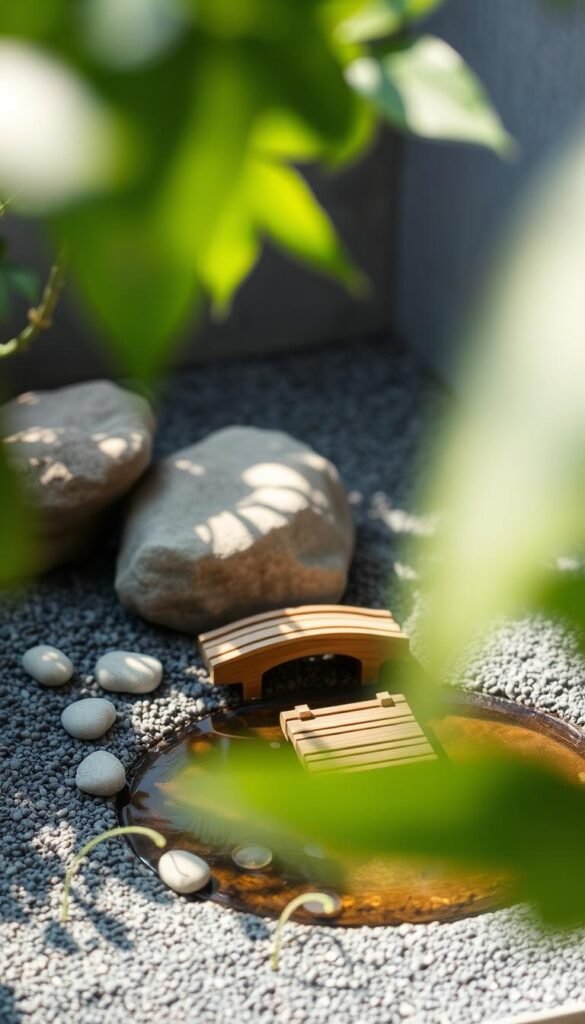
Your journey to inner peace begins where you least expect—a forgotten corner, a sunlit windowsill, or even your desk. Zen gardens thrive in unexpected places when designed with intention. Whether you’re working with a sprawling backyard or a city balcony, your sanctuary awaits.
Start by claiming your space. Office nooks become stress-relief zones with miniature gravel trays. Porch corners transform into airy retreats using bamboo screens. Listen for natural sounds like rustling leaves or distant traffic—even urban white noise can anchor your meditation practice.
Three essentials guide your setup:
- Functionality: Can you reach this area daily? A closet-sized garden behind the sofa beats an unused patio
- Light balance: Morning sun spots work best for moss gardens; shaded spots suit stone arrangements
- Privacy layers: Slatted screens or hanging plants create intimate boundaries without closing you off
Your home’s existing features become allies. A brick wall adds texture behind raked sand. Window reflections double your zen garden’s visual depth. Remember—perfection isn’t the goal. That uneven floor tile? It echoes nature’s irregular beauty.
As you arrange stones or position ferns, notice how the process stills your mind. This tactile creativity becomes your meditation. Your hands shape the space, while the garden shapes your peace.
Planning Your Garden Layout and Space Considerations
Designing your sanctuary starts with smart spatial choices. Whether you’re transforming a sunlit balcony or a quiet office nook, thoughtful arrangements turn any area into a retreat. Let’s explore how to match your environment with zen principles.
Indoor Versus Outdoor Zen Spaces
Indoor setups thrive where control matters most. A desktop sand tray brings calm to hectic workdays, while screened porch corners blend fresh air with privacy. These spaces let you adjust lighting and sound—key for consistent stress relief.
Outdoor gardens connect you with nature’s rhythms. Morning light dances across raked gravel in yard corners, while evening breezes sway bamboo screens. Even urban balconies become serene when layered with textured stones and compact plants.
Solutions for Limited Space and Balancing Elements
Tiny areas demand clever scaling. Vertical moss walls add depth without floor space. Miniature rock groupings on shelves create focal points—perfect for apartments. Pair these with container-friendly plants that thrive in partial sun.
Prioritize pathways you’ll actually use. A winding gravel trail beside your sofa invites daily pauses. Remember: Your most-used space holds the greatest potential. Let simplicity guide each choice, and watch peace bloom where you least expect.