
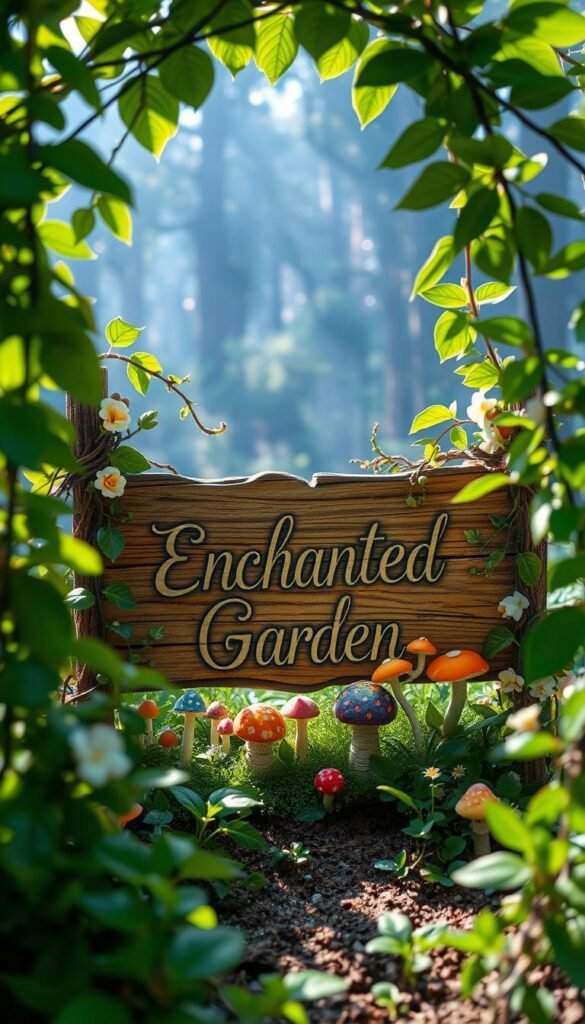
Step into a world where tiny wonders spark big smiles. Miniature landscapes filled with lush greenery, winding paths, and playful accents let you craft stories in palm-sized spaces. These pint-sized scenes aren’t just decorations—they’re invitations to imagine.
Your miniature haven deserves a marker that reflects its magic. Think of your sign as the welcoming heartbeat of your tiny realm. It could whisper secrets to visitors or shout joy through bold colors. Either way, it sets the mood before anyone spots the first mushroom house or pebble path.
Materials matter as much as the message. Weatherworn wood suggests ancient tales, while polished metal feels modern and crisp. Hand-painted lettering adds warmth, laser-cut designs bring precision. The right choice ties everything together like a ribbon on a gift.
This isn’t about slapping words on a plank. It’s about creating moments. A clever phrase might make guests chuckle. A swirling font could mirror nearby vines. Your sign becomes the bridge between reality and the little world you’ve built—one that says, “Come closer, something special lives here.”
Discover the Magic of Fairy Garden Signs

Unlock a realm where miniature marvels ignite joy. Tiny pathways and mossy nooks become gateways to adventure, blending nature with playful storytelling. These pint-sized landscapes invite you to reimagine ordinary corners as portals to wonder.
Experience the whimsy in your outdoor space
Your sign acts like a secret handshake between worlds. It might say “Tread softly—magic at work” or point toward hidden treasures. These markers don’t just label—they whisper promises of discovery to anyone who pauses to look.
Positioning matters. Place one by a flowerpot to announce a tiny village or nestle it among pebbles to mark a fairy crossroads. Each placement sparks curiosity, urging viewers to lean in and explore further.
Materials tell stories too. Weathered slate suggests age-old mysteries, while bright ceramic tiles pop with modern cheer. Hand-carved wood adds rustic charm, perfect for woodland themes. Your choices shape the narrative before a single fairy door appears.
These creations aren’t just for kids. Adults find joy in crafting layered scenes where signs guide imaginary travelers. It’s gardening meets theater design—where your outdoor space becomes a stage for endless possibilities.
What Exactly Is a Fairy Garden?

Picture a living diorama where moss becomes meadows and pebbles turn into mountains. These tiny ecosystems mix living greenery with artistic touches, creating worlds that fit on tabletops or nestle between shrubs. At its core, it’s about scale—every element shrinks to maintain illusion.
Understanding the miniature landscape
Start with small-leaved plants like baby tears or dwarf herbs. Add paths using gravel or bark chips. Mini furniture and weather-resistant decor complete the scene. The goal? Make viewers forget they’re looking at a potted arrangement.
Containers work best for control. Use shallow pots or old wheelbarrows for depth. Layer soil to create hills, then position accessories to tell a story. A tiny bench under a bonsai tree suggests a quiet resting spot.
The folklore behind fairy gardens
Ancient Celtic traditions believed hidden folk guarded wild places. Farmers left offerings near springs to earn their favor. This evolved into creating inviting spaces for magical beings—a practice that crossed oceans with immigrants.
| Traditional Features | Modern Adaptations | Key Purpose |
|---|---|---|
| Natural stone circles | Resin fairy doors | Portal symbolism |
| Wildflower patches | Succulent gardens | Low maintenance |
| Hand-carved wood | Laser-cut signs | Personalized messaging |
By the 1920s, dime stores sold miniature cottages for backyard displays. Today’s versions blend this nostalgia with sustainable gardening practices. Your creation becomes a bridge between earth care and daydreaming.
Exploring the Charm of Whimsical Garden Designs

Transform ordinary spaces into storybook scenes using playful arrangements. Think beyond basic planters—these pocket-sized worlds thrive on unexpected combinations that spark delight. At Myers Plants and Pottery, artists prove even coffee mugs can become micro landscapes bursting with personality.
Iconic elements and design inspirations
Start with miniature structures that anchor your theme. A crooked bridge over crushed quartz “water” invites exploration. Tiny benches under bonsai trees suggest secret meeting spots. These elements work like punctuation marks—they give your scene rhythm and purpose.
Color choices shape the mood. Dusty blues and seafoam greens create coastal vibes, while pumpkin oranges signal autumn adventures. One customer at Myers paired turquoise pebbles with coral fragments to mimic tropical shallows. “It’s like snorkeling without getting wet,” they joked.
| Theme | Key Materials | Mood |
|---|---|---|
| Seaside Escape | Shells, blue glass, driftwood | Relaxed |
| Halloween Spooktacular | Candy corn accents, mini tombstones | Playful |
| Countryside Charm | Mini windmills, farm animal figurines | Nostalgic |
Seasonal shifts keep things fresh. Swap pastel eggs for spring to skeleton gnomes in October. The best part? You control the narrative. That tiny bicycle by the fence? Maybe it’s how fairies commute to their mushroom offices.
Balance realism with fantasy for maximum impact. Real moss makes fake ponds believable. Miniature solar lights add functional magic. Your creation becomes a conversation starter that grows more detailed with each retelling.
Creative Inspiration Behind Garden Signs

Discover how real-world gardens become canvases for magical narratives through thoughtful signage. The best markers emerge from lived experiences rather than generic templates, blending personal flair with universal charm.
Real-life fairy garden stories
Take the oval tin marker in a beehive-themed space. Its honeycomb patterns and buzzing motifs suggest a thriving community of winged workers. Nearby, a blue-striped mailbox stands guard beside ceramic snails—a setup that sparks questions about who sends letters and what secrets they might hold.
One gardener transformed childhood memories into a red horseshoe display. Its “LOL” sign pairs with yellow doors and crimson lampposts, creating a playful contrast between modern slang and classic cottage vibes. “It reminds me of summer nights laughing with siblings,” they shared.
These examples prove three things:
- Details matter (like matching snail shells to mailbox hues)
- Humor bridges generations (a giggle-inducing “LOL” sign)
- Color stories unify scenes (red accents repeating through posts and horseshoes)
For fresh garden sign ideas, visit thriving displays at local nurseries. Notice how weathered materials suggest age, while glossy finishes feel contemporary. Your space deserves markers that mirror its soul—whether that means rustic charm or neon whimsy.
Finding the Perfect Materials and Supplies
Build your miniature masterpiece with the right toolkit. Quality materials transform basic projects into weather-ready showpieces that charm through seasons. Let’s explore what makes your creation both sturdy and spellbinding.
Wood, paint, and decor essentials
Start with untreated wood slats or pre-cut shapes. These blank canvases accept stains, carvings, or colorful designs. Rough-cut edges add rustic appeal, while smooth surfaces work for modern styles. Seal raw wood before painting to prevent warping.
Acrylics outlast other paints outdoors. Their bold hues stay vibrant under sunlight. For vintage looks, chalk paint creates worn textures. Pair both types for layered effects—bright bases with distressed topcoats.
- Must-have tools: Fine brushes for lettering, sponges for backgrounds
- Durable finishes: Mod Podge seals without yellowing
- Clever accents: Mini clothespins hold tiny notes
Gorilla Glue bonds materials that expand in humidity. Use it for attaching metal charms or resin decorations. Jute rope adds earthy texture when wrapped around sign edges.
Shop craft stores for themed supplies like mushroom-shaped hooks. Online retailers stock unique finds like laser-cut phrases. Local garden centers offer weatherproof bases perfect for outdoor displays.
Creative Fairy Garden Sign Inspiration: Whimsical Words and Designs Deep Dive

Your tiny landscape deserves markers that spark curiosity while blending seamlessly into its surroundings. Let’s explore how thoughtful details transform simple plaques into portals of wonder.
Key features that bring magic to your sign
Texture tells the first chapter of your story. Distressed wood grain suggests centuries-old secrets, while smooth stones feel like polished relics. Scale matters most—oversized markers overwhelm delicate scenes, but palm-sized pieces invite closer inspection.
Typography acts as your sign’s voice. Flowing scripts whisper elegance, while block letters announce adventures. Pair fonts with your theme: jagged type for pirate coves, bubbly text for candyland realms.
| Style | Material Pairing | Best For |
|---|---|---|
| Rustic | Reclaimed wood + moss | Woodland themes |
| Modern | Acrylic + metallic paint | Urban fairy spaces |
| Vintage | Tin + crackle finish | Steampunk gardens |
Incorporating enchanting words and phrases
Choose messages that hint at hidden narratives. “Beware of dragon deliveries” sparks more imagination than generic welcomes. Layer dimensional letters over painted backgrounds using craft glue—this creates shadows that make text pop.
Color harmony ties your scene together. Match sign hues to nearby blossoms or pebble paths. A cerulean marker beside blue forget-me-nots feels intentional, like the flowers grew around the signpost.
Add miniature ivy vines climbing the edges or tiny mushrooms at the base. These organic touches bridge your creation with living elements. Remember: clarity matters. Fancy fonts shouldn’t sacrifice readability—viewers should grasp your message at first glance.
Unique Elements to Enhance Your Outdoor Space
Transform your corner of nature into a living storybook with thoughtful details. Small touches turn ordinary areas into places where imagination takes root. The secret lies in balancing decorative flair with natural harmony.
Integrating tiny accessories and plants
Miniature metal chairs and cobalt umbrellas create instant outdoor “rooms” in your arrangement. These elements work best when they suggest activity—a tiny bicycle leaning against a pebble wall hints at unseen riders. Scale matters most: match decor size to your plants for believable scenes.
Choose greenery that stays proportional. Moss varieties make lush carpets, while dwarf herbs resemble full-sized shrubs. For coastal themes, cluster pink coral fragments with sea thrift flowers. Rotate seasonal blooms to keep your cottagecore aesthetic fresh year-round.
| Season | Plant Pairings | Accessory Matches |
|---|---|---|
| Spring | Mini daffodils | Pastel egg clusters |
| Summer | Creeping thyme | Seashell bunting |
| Fall | Maple seedlings | Acorn cap lanterns |
Vertical layers add depth. Hang tiny wind chimes from your signpost or train ivy up a miniature trellis. These touches make spaces feel lived-in rather than staged. Remember: odd numbers of objects look most natural—group three mushrooms, five pebbles.
Let elements age naturally. Allow copper accents to develop patina or let moss creep over sign edges. This gradual transformation makes your creation feel discovered, not manufactured. The best scenes whisper, “Look what’s been hiding here all along.”
DIY Techniques for Painting and Decorating Your Sign
Turn raw materials into storytelling tools with simple yet effective methods. Proper preparation transforms basic wood into a canvas ready for color. Start by clearing your workspace—flat surfaces prevent drips, while good lighting reveals texture details.
Step-by-step painting methods
Sand surfaces first to remove splinters. A damp cloth swipe removes dust before priming. Apply thin white base coats—they dry faster and make colors pop. Match shades to existing garden elements like ceramic pots or fabric accents.
Use angled brushes for crisp edges. Layer light then dark tones for 3D effects. Let each coat dry completely. Mix craft paint with water for translucent stains that highlight wood grain.
Tips for a weather-resistant finish
Seal your work with outdoor-grade Mod Podge. Apply two thin layers, drying between coats. Focus on edges where moisture seeps in. Gorilla Glue secures embellishments better than hot glue in humidity.
For more budget-friendly outdoor projects, explore our guide to home gardening ideas that won’t break the. Test finishes on scrap wood first—sun exposure affects different paints. Reapply sealant every spring to maintain vibrancy.