
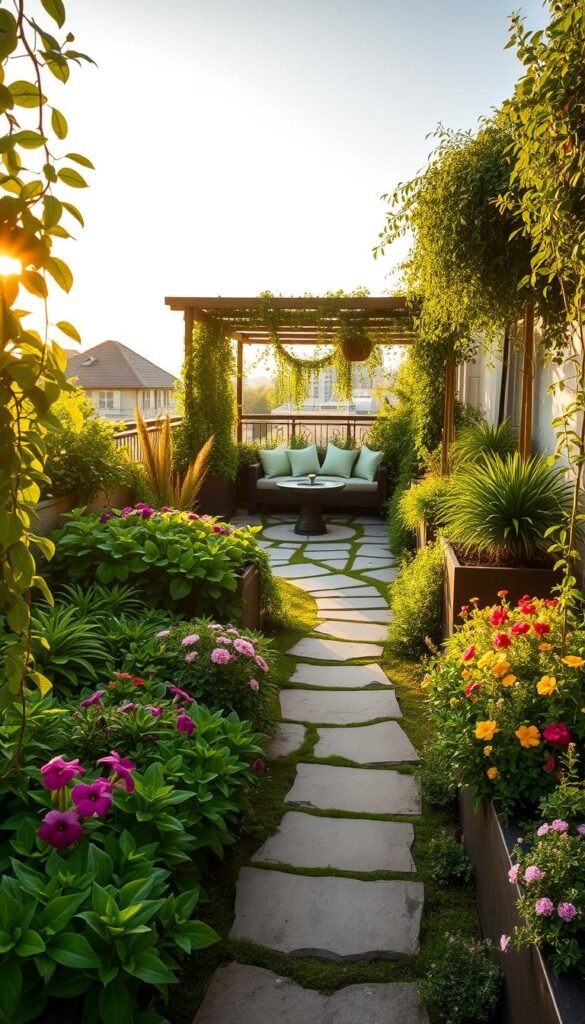
Your unused rooftop holds surprising potential to become a personal sanctuary blending urban convenience with natural beauty. Imagine sipping coffee surrounded by flowering plants while city life buzzes gently below. This multi-functional area can serve as an outdoor living room, entertaining zone, and gardening haven—all while maximizing your property’s square footage.
Top landscape professionals like Curtis Steiner prove even compact spaces flourish with creativity. His Pacific Northwest masterpiece shows how strategic design creates intimate moments under century-old trees. Cities from Paris to San Francisco offer inspiration too, using vertical gardens and curved screens to soften harsh lines.
Smart planning balances beauty with practicality. Always start by checking structural integrity and weight limits—lightweight containers and proper soil mixes prevent stress on buildings. Wind-resistant shrubs and dwarf trees thrive in elevated conditions, while modular furniture adapts to your space’s unique shape.
Don’t forget comfort essentials! The National Association of Landscape Professionals recommends treating rooftops as outdoor living spaces with weather-resistant art and layered lighting. For gardening success, explore container strategies that work at any height—wall-mounted planters save floor area, while fabric grow bags promote root health.
Your elevated oasis will evolve through seasons, offering changing colors and textures. With thoughtful design, that underused roof becomes a cherished extension of your home—a green refuge where city views meet tranquil nature.
Embracing Your Rooftop as an Outdoor Living Space

Your rooftop isn’t just empty real estate—it’s a blank canvas waiting to become an extension of your home. Picture arranging plush seating beside flowering plants under string lights, blending indoor comfort with open-air freedom. This approach turns concrete into a personal retreat where you’ll host dinners, read books, or watch sunsets.
Visualizing a Room Under the Sky
Treat your rooftop like an interior designer would approach a living space. Parisian terraces show how weather-resistant rugs and modular sofas create cozy zones. Add personality with wall-mounted art and potted shrubs that frame city views. Strategic layouts using screens or tall containers establish separate areas for dining and relaxation.
Ambient light transforms the area after dark. Layer solar-powered lanterns with LED strips under railings for drama. A retractable awning provides shade while letting you stargaze on clear nights.
Benefits of an Elevated Outdoor Environment
High-up gardens offer perks ground-level spaces can’t match. You’ll enjoy cleaner air flow and reduced street noise—ideal for unwinding. Built-in storage benches keep cushions dry while doubling as seating.
Panoramic vistas become part of your design, whether you’re growing herbs in vertical planters or arranging lounge chairs around a fire table. The right soil mixes and wind-resistant trees ensure your green elements thrive year-round.
Creative Solutions for Designing a Rooftop Garden Oasis

Transform your rooftop into a living canvas where green elements and artistic flair coexist. Landscape artist Curtis Steiner proves elevated spaces can become immersive experiences, stating:
“A garden should feel like walking through a painting – every leaf and curve tells part of the story.”
Incorporating Green Elements and Artful Touches
Adopt a foliage-first strategy using plants with dramatic textures. Sword-like New Zealand flax pairs beautifully with velvety lamb’s ear, creating tactile contrasts. Curved planter beds soften angular rooftops, while flowing water features add soothing sounds.
Artistic accents elevate your space beyond basic greenery. Try these ideas:
- Hang geometric metal sculptures that cast shadow patterns
- Use colorful mosaic tiles on vertical planters
- Install backlit resin panels that glow at night
Balancing Functionality with Unique Design
Smart storage solutions keep your oasis clutter-free. Built-in bench seats with lift-up lids store gardening tools, while vertical trellises double as privacy screens. For weather-resistant style, try concrete planters with drainage holes that look like modern art.
Create visual rhythm by repeating key elements. Cluster matching shrubs in different zones, or use the same container style for herbs and flowers. As you develop your garden’s aesthetic, remember: functional pieces can be beautiful when chosen with intention.
Maximizing Plant Growth and Light Exposure
Your rooftop garden thrives when you work with its unique conditions. Tall buildings create “urban canyon” light patterns—some spots bake in full sun while others sit in deep shade. Observe how sunlight moves across your space through the day. This helps you place plants strategically or add shade solutions like semi-transparent sails that soften harsh rays.
Choosing Plants Built for Heights
Focus on tough species that handle wind, heat, and shifting light. Sedums store water in their leaves, making them drought-resistant champs. Ornamental grasses like feather reed add motion without needing much floor area. For color bursts, try black-eyed Susans or purple coneflowers—their deep roots handle rooftop stress.
Nurturing Your Garden’s Foundation
Use lightweight potting mixes enriched with compost to feed plants without overloading structures. Water deeply but less often to encourage strong roots. Rotate potted plants seasonally to chase sunlight, and group containers to create microclimates. A layer of mulch keeps soil moist and shields roots from temperature swings.
With smart plant picks and attentive care, your elevated garden becomes a lush retreat. Even compact spaces flourish when you match greenery to your rooftop’s personality—proof that sky-high gardens can thrive against the odds.