Transforming your property into a welcoming retreat starts with smart planning. Christie Dustman, a landscape expert with two decades of experience, notes that great spaces prioritize how people move and interact with their environment. Her philosophy? “Hardscaping forms the bones of your yard just as much as plants shape its personality.”
You’ll learn how to divide your area into purposeful zones without sacrificing beauty. Even compact urban plots can feel spacious when you establish clear pathways and focal points. Think of your yard as a series of connected rooms – each serving unique needs while contributing to the whole.
Balance is key. Stone patios or decorative walkways should complement your flower beds, not overwhelm them. This approach creates low-maintenance spaces that stay attractive through seasonal changes. For inspiration on blending practicality with beauty, explore these gardening aesthetic tips that professionals swear by.
We’ll guide you through essential principles – from initial sketches to selecting durable materials. Discover how strategic plant placement and thoughtful spatial arrangements can turn any size property into your personal oasis. Let’s build an environment where memories grow as freely as your favorite blooms.
Introduction to Your Outdoor Oasis
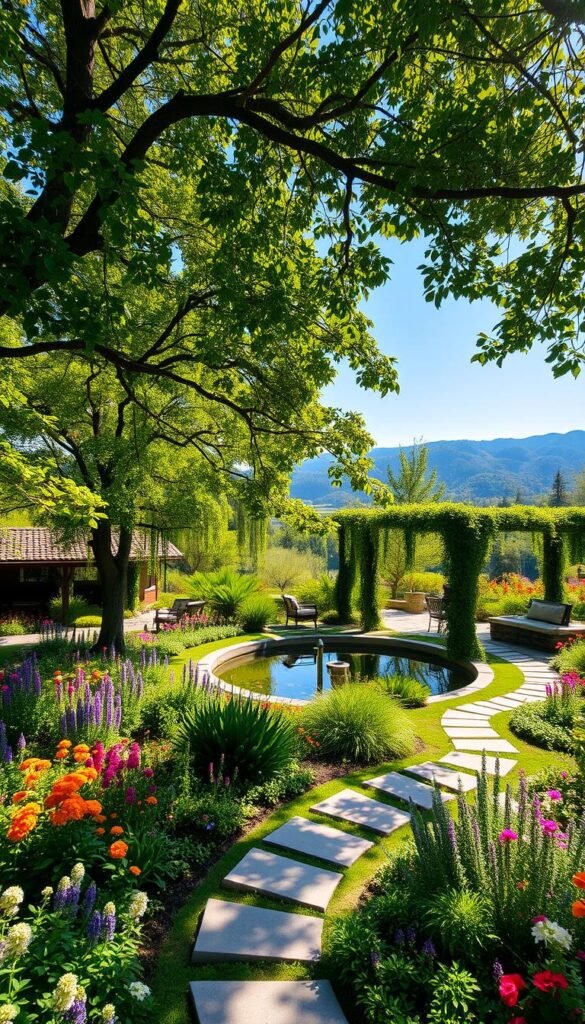
Imagine stepping into a lush, vibrant sanctuary right outside your door—a place where every path invites exploration and every corner sparks joy. This isn’t just about planting flowers or adding a bench. Professional designers emphasize that successful spaces begin with intentional blueprints rather than random arrangements.
Your backyard holds untapped potential to become a multi-functional retreat. Start by mapping sunlight patterns and noting drainage areas. These insights help you choose plants that thrive naturally in your environment while avoiding costly mistakes.
Think beyond basic flower beds. Create zones for dining under string lights, reading nooks shaded by trees, or play areas for kids. Landscape architect Mia Miller suggests:
“Treat your garden like a home’s floorplan—each ‘room’ should serve a purpose while contributing to the overall flow.”
Three elements make this work:
- Functionality: Smooth transitions between activity areas
- Balance: Mixing greenery with seating or art
- Growth: Leaving space for future additions
By approaching your gardening project holistically, you’ll craft a space that evolves with your needs. Soon, your morning coffee ritual could happen beside blooming hydrangeas, and evening gatherings might extend into starlit conversations. Let’s turn these possibilities into your new reality.
Understanding the Foundations of Garden Design
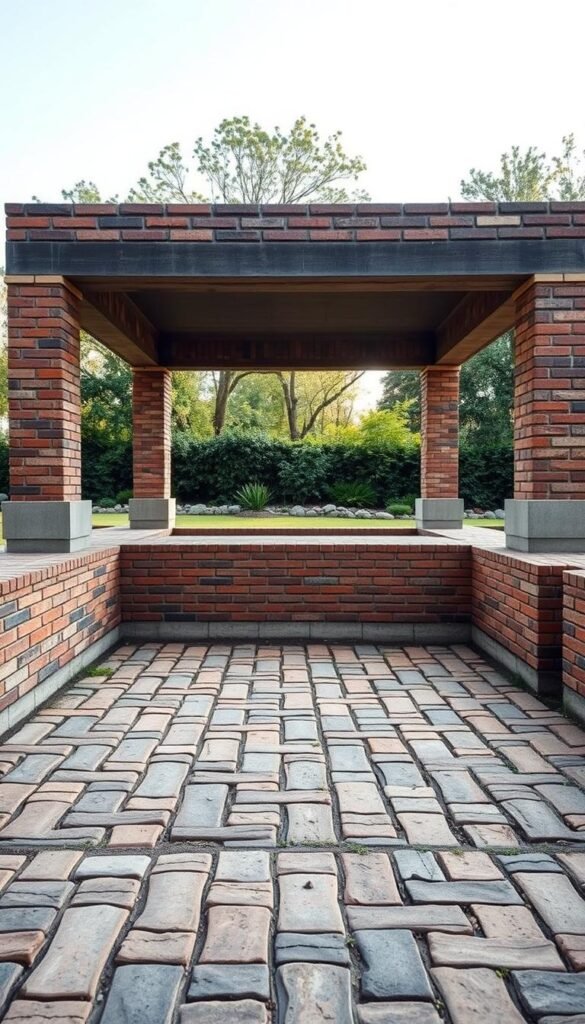
Great gardens grow from smart blueprints, not chance. Take Christie Dustman and Patti Ryan’s 2006 project: they sketched their entire space first, mapping zones for hardscaping and greenery. This method prevents overcrowding while guiding how people explore your yard.
Visualizing Space and Functionality
Think of your garden as a storybook with chapters. Divide your area into smaller “rooms”—like a dining patio or quiet reading spot—connected by pathways. Dustman’s team found this creates natural pauses, letting visitors enjoy each structure without feeling rushed.
Curved walkways work wonders. They slow movement, encouraging people to notice blooming plants or decorative stones. Keep sightlines clear but intriguing—place a bench or fountain where paths bend to spark curiosity.
The Role of Hardscaping and Natural Elements
Stone walls or gravel paths aren’t just practical—they frame your garden’s personality. Landscape pro Mia Miller advises:
“Hardscapes act like punctuation marks, giving rhythm to nature’s sentences.”
Balance is everything. Pair wooden pergolas with airy grasses, or match brick patios to bold hydrangea colors. This blend makes elements feel intentional yet harmonious, whether you’re hosting friends or enjoying solitude.
Design Expansive, Balanced Outdoors with Large Garden Design Layout Ideas
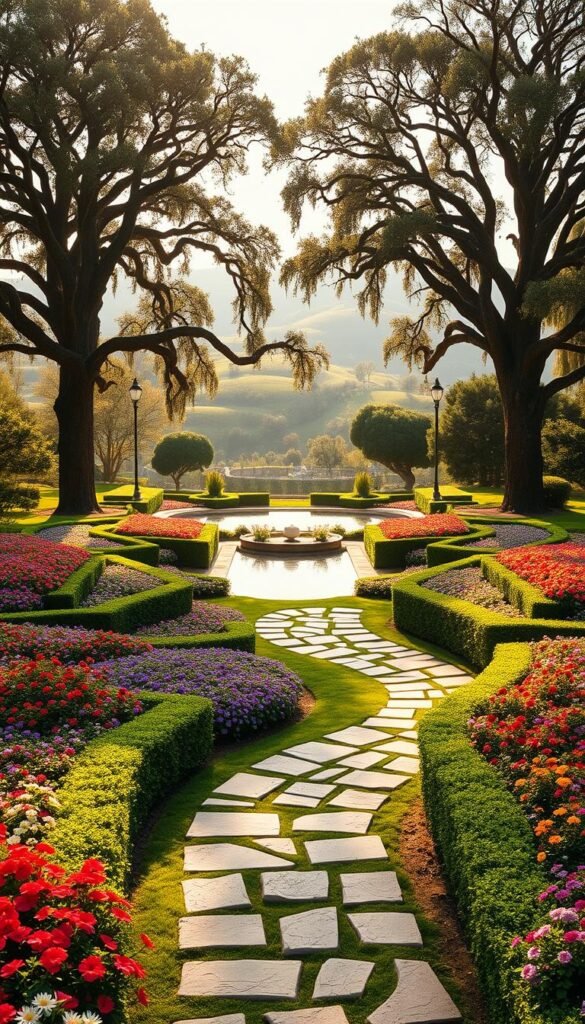
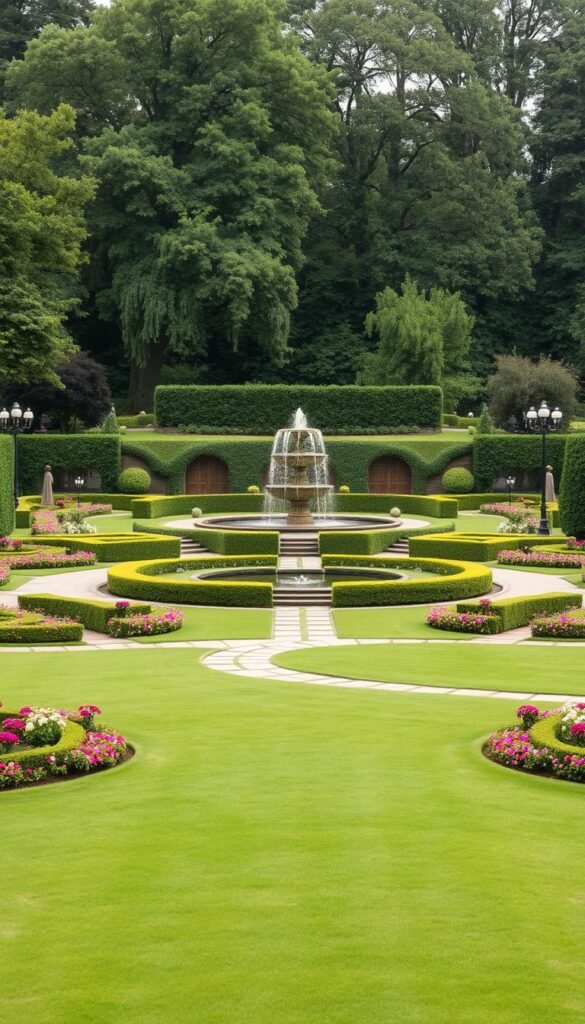
Crafting a spacious backyard paradise begins with honest evaluation. Before planting your first shrub, calculate how much time you’ll realistically spend maintaining it. Research shows every 30 square feet of greenery needs at least 30 minutes weekly—a crucial factor often overlooked by enthusiastic gardeners.
Divide your property into purposeful zones. A dining patio surrounded by fragrant lavender creates contrast against wildflower meadows needing minimal care. Landscape architect Tara Woods advises:
“Let high-maintenance plants shine in focal areas while using hardy perennials as supporting actors.”
Consider this maintenance comparison for different garden types:
| Zone Type | Recommended Plants | Weekly Time |
|---|---|---|
| Showcase Beds | Roses, Hydrangeas | 45 mins |
| Structural Areas | Boxwood, Ornamental Grass | 15 mins |
| Path Borders | Sedum, Thyme | 5 mins |
Fill expansive spaces smartly. Clustering evergreens near seating areas provides year-round structure. For vegetable patches, try affordable raised beds that simplify weeding and harvesting. They’re perfect for defining sections without permanent walls.
Connect your garden rooms with winding gravel paths. These natural guides lead visitors through evolving scenes—from vibrant annuals to tranquil water features. Leave room for future additions like fire pits or sculpture installations as your vision grows.
Remember: successful large gardens balance showstopping moments with easy-care foundations. Your backyard should inspire joy, not become a chore-filled burden.
Integrating Hardscaping and Planting for Functional Flow
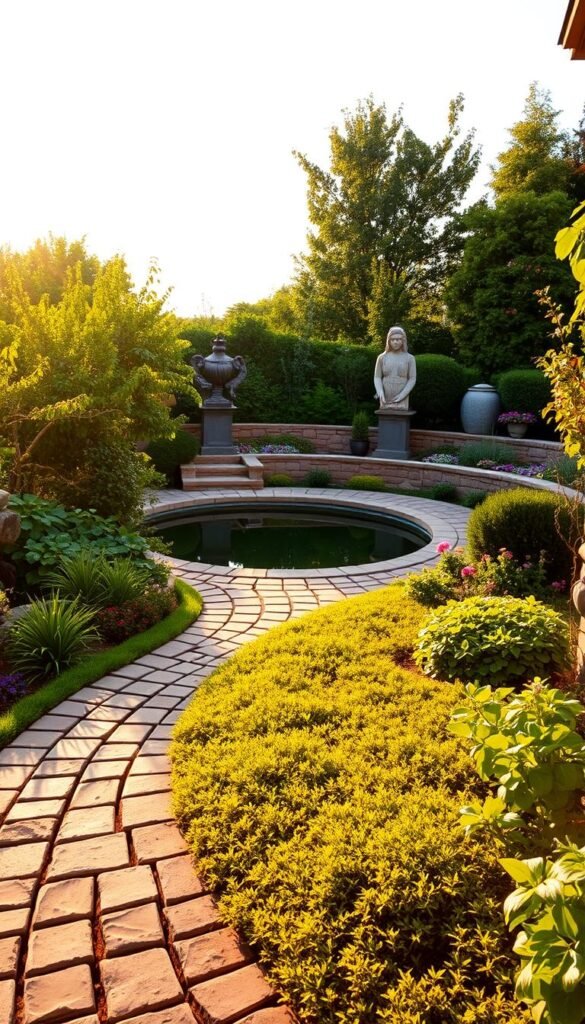
Your outdoor space becomes truly special when stone pathways meet thriving greenery. Christie Dustman’s approach shows how mixing materials creates rhythm. She combines reclaimed granite with bluestone pavers, letting rusted metal accents tie everything together through color repetition.
Materials That Work Hard and Look Great
Choose surfaces that match your home’s style and local weather. A concrete base with bluestone caps handles heavy foot traffic while adding textural contrast. For colder climates, frost-resistant stone prevents cracking. See how different options compare:
| Material | Best For | Durability |
|---|---|---|
| Reclaimed Granite | Pathways | 50+ years |
| Cut Bluestone | Patio Borders | 30 years |
| Rusted Metal | Art Panels | 25 years |
Plants as Natural Partners
Position spiky yucca near smooth stone walls to highlight both. Dustman suggests:
“Let foliage shapes echo hardscape lines—round shrubs mirror curved benches.”
Use purple salvias beside silver-toned metal for color harmony. This creates visual links between your garden’s zones without matching everything perfectly.
Add personality with handmade pottery or wind chimes. These touches make the space yours while keeping that polished look. Remember: great gardens balance structure and spontaneity.
Choosing Focal Points and Statement Elements
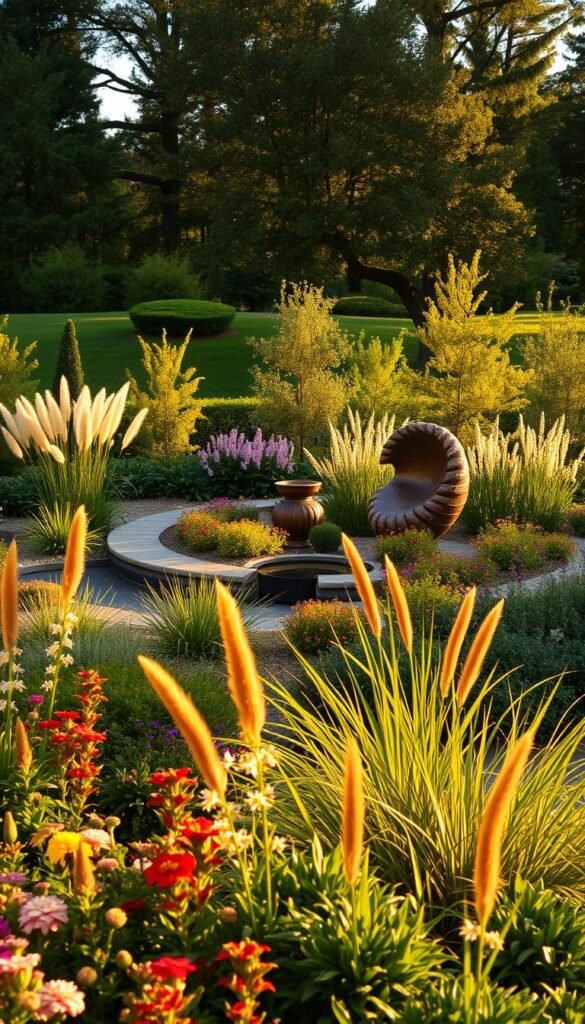
Your garden tells a story through its focal points – those eye-catching features that guide exploration. Professional designers often place these elements slightly off-center to spark curiosity. This technique creates natural movement patterns, inviting visitors to discover hidden corners.
Mastering Asymmetrical Placement
Try positioning a stone fountain ⅓ of the way along a path rather than dead center. This creates dynamic sightlines while leaving room for complementary plants. Landscape artist Marco Garcia explains:
“An angled bench or tilted arbor makes spaces feel lived-in rather than staged. It’s about finding balance through imbalance.”
Consider these focal point options and their effects:
| Element Type | Placement Tip | Visual Impact | Maintenance |
|---|---|---|---|
| Japanese Gate | Offset from main path | Creates framed views | Low |
| Sculptural Tree | Near seating areas | Adds vertical interest | Moderate |
| Water Feature | Behind partial screen | Enhances soundscape | Medium |
| Ornamental Grass | Path intersections | Softens edges | Low |
Multi-functional pieces work best. A trellis covered in edible vines serves as both privacy screen and snack station. Use flowering shrubs near seating to merge beauty with practical shade.
Create anticipation by letting pathways reveal features gradually. A curved walkway hiding part of a statue makes visitors want to see more. This approach keeps your space feeling expansive yet intimate.
Adding Privacy and Creating an Intimate Retreat
Your backyard should feel like a personal escape, not a fishbowl. Rebecca Sweet, a landscape design expert, emphasizes that enclosures transform ordinary yards into peaceful sanctuaries. By blending natural barriers and structured features, you craft spaces that whisper “stay awhile” without cutting off your connection to nature.
Establishing Natural Barriers with Hedges and Trees
Hedges act as living walls that adapt to your needs. Choose different heights to control visibility:
| Hedge Type | Height Range | Best For |
|---|---|---|
| Low Borders | 1-3 ft | Defining paths |
| Medium Screens | 4-6 ft | Partial privacy |
| Tall Barriers | 7+ ft | Full seclusion |
Position trees like maple or dogwood near seating areas. Their canopies create dappled shade—nature’s ceiling that shelters without closing you in. Sweet notes:
“Tree placement should frame views, not block them entirely.”
Enhancing Seclusion with Pergolas and Garden Nooks
Open-air structures add structure to your retreat. A pergola’s vertical posts and lattice roof filter sunlight while supporting climbing roses or grapes. Tuck a bench beneath it with weather-resistant cushions for hidden relaxation spots.
Create micro-zones using potted plants and low walls. A circular stone bench surrounded by lavender becomes a fragrant hideaway. Keep sightlines partially open between zones so spaces feel connected yet cozy.
Incorporating Multi-Dimensional Garden Features
Turn your garden into a living gallery where every element tells a story. Christie Dustman and Patti Ryan prove that art isn’t just for museums—it thrives outdoors when paired with nature. Their projects transform farm discs into bubbling fountains and bike parts into whimsical sculptures, showing how creativity elevates everyday spaces.
Layering Hardscape with Upcycled Art and Sculptures
Upcycled pieces add personality while serving practical roles. A disc harrow becomes a water feature, its rusted blades catching sunlight as water dances across the surface. Dustman explains:
“Found objects ground abstract ideas—they make art feel discovered, not forced.”
Try these approaches:
- Mount vintage lanterns on posts as glowing path markers
- Use shovel heads as wind chimes near seating areas
- Stack old bricks into pedestals for potted succulents
Creating Visual Journeys and Pathways
Paths should tease the senses. Curve walkways around salvaged metal flowers that “bloom” taller as you walk. Place a bench where the view shifts—maybe near a dry creek bed that mimics water flow during rains. This builds anticipation while keeping maintenance low.
| Path Material | Art Pairing | Effect |
|---|---|---|
| Crushed Shell | Sea Glass Mosaics | Coastal Vibe |
| Stepping Stones | Bronze Leaf Imprints | Organic Texture |
| Bark Mulch | Wooden Totems | Forest Feel |
Your garden features become conversation starters when they’re unexpected yet intentional. Let pathways frame these discoveries, turning a simple stroll into an experience that sparks inspiration at every turn.
Efficient Maintenance for a Flourishing Large Garden
Maintaining a vibrant garden doesn’t have to consume your weekends. Start by calculating your available time using the 30:30 rule—30 minutes weekly per 30 square feet. This helps match your gardening goals with reality, especially when juggling work or family life.
Smart Strategies for Lasting Beauty
Choose self-sufficient plants like coneflowers or ornamental grasses. They thrive with minimal care while adding texture. Pair them with drip irrigation systems that deliver water precisely where needed—no wasted effort or resources.
Seasonal planning saves hours. Tackle pruning in early spring before growth surges, and mulch in fall to protect roots. Landscape designer Ryan Parker advises:
“Treat your garden like a clock—each task has its perfect moment.”
Compare these popular options for time savings:
| Plant Type | Weekly Care | Bloom Period |
|---|---|---|
| Native Perennials | 10 mins | May-Oct |
| Annual Flowers | 25 mins | Jun-Sep |
| Evergreen Shrubs | 8 mins | Year-round |
Create wide pathways between beds for easy access. This lets you weed without trampling delicate blooms. Boost soil health with compost tea—it strengthens plants naturally, reducing pest control needs.
Remember: your garden should adapt to your schedule, not the other way around. With these tips, you’ll spend less time working and more time enjoying your lush retreat.
Your Final Steps to Crafting a Unique Outdoor Sanctuary
Your journey to a personalized retreat culminates here. Start by mapping your timeline—phase hardscaping first, then add perennials during their ideal planting windows. Snap monthly photos of flower beds to track growth patterns and spot areas needing tweaks.
Build a maintenance rhythm that syncs with your family’s calendar. Schedule spring pruning after frost threats pass, and refresh mulch before summer heat. Evening watering sessions become moments to admire your backyard’s progress while keeping foliage thriving.
Final touches make magic. String lights above the patio create ambiance, while drip irrigation ensures raised beds stay hydrated. Rotate seasonal decor—pumpkins in fall, evergreens in winter—to keep the space feeling fresh.
Remember: Your garden grows wiser each year. Shift that tree blocking afternoon light, or expand seating near blooming peonies. Professional designers call this “editing with purpose”—small changes that deepen your connection to the landscape.
Now step back. Your outdoor space isn’t just planted—it’s alive, breathing, and ready for memories. What story will your garden tell next season?