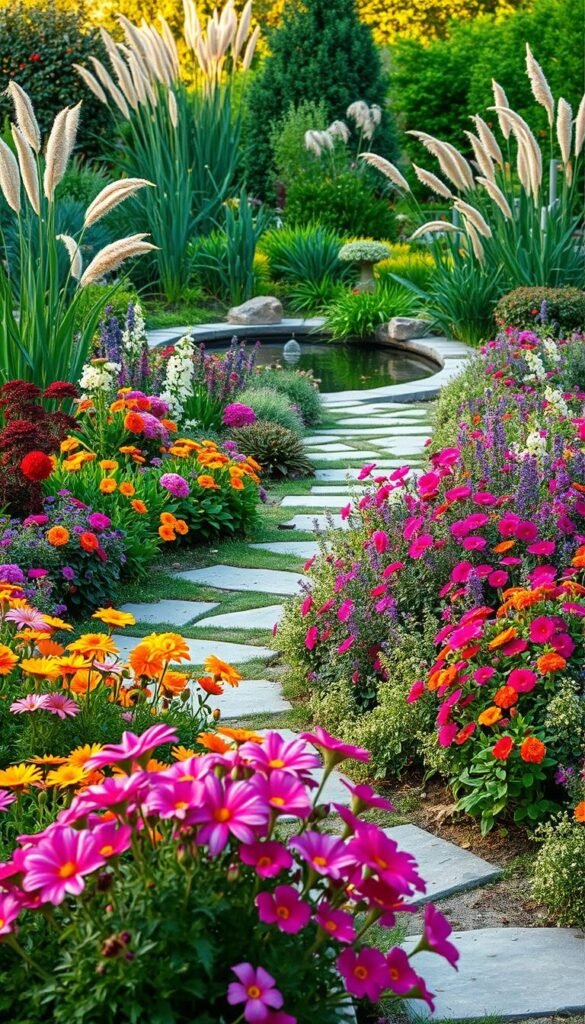
Transforming empty spaces into vibrant floral displays takes more than good intentions – it demands smart strategies. While vegetable plots reward straightforward effort, crafting beds that bloom season after season requires deeper understanding of plant behavior and design principles.
Many enthusiasts struggle with cluttered arrangements that peak briefly then fade. The secret lies in curation rather than accumulation. This guide reveals how to combine plants like puzzle pieces, ensuring your landscape remains engaging from spring frost to autumn’s first chill.
You’ll discover how to analyze sunlight patterns, match bloom cycles, and create visual rhythm through repetition. We’ll explore techniques professionals use to maintain interest even when flowers aren’t blooming, using foliage textures and strategic evergreen placements.
Successful designs evolve through observation and adjustment. Expect to learn from early experiments as your space matures. With thoughtful plant selection and spacing, you’ll create living art that deepens in character each year while requiring less maintenance.
Ready to move beyond haphazard planting? Let’s explore how intentional arrangements can turn your outdoor area into a dynamic showcase that neighbors will admire and pollinators will cherish.
Introduction to Perennial Garden Design
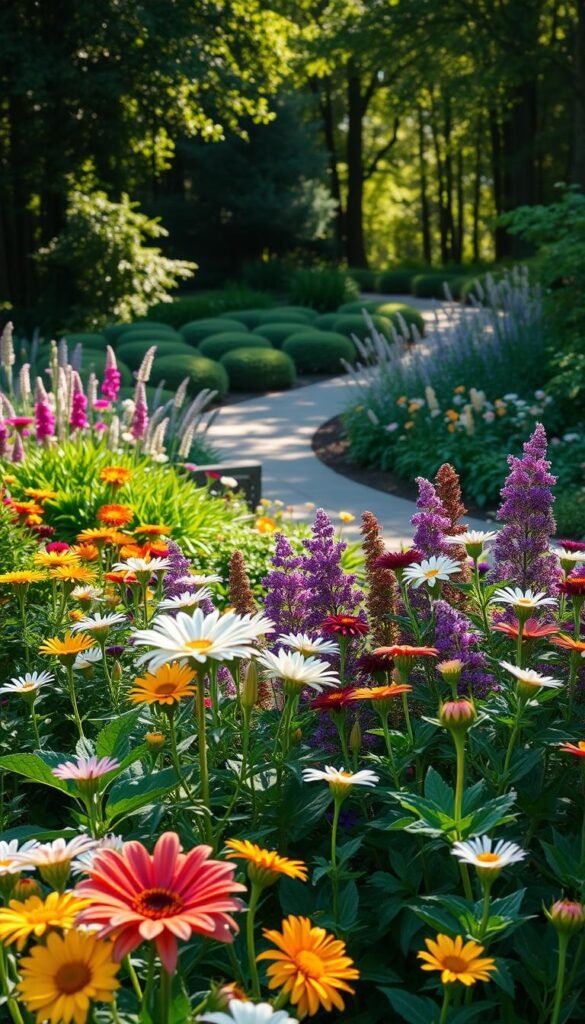
Unlike quick-growing vegetables, flower beds with returning blooms demand patience and strategic planning. While tomatoes offer instant gratification, plants that reappear yearly require understanding their growth patterns and visual relationships. This approach transforms your space into a living canvas that shifts with the seasons.
Three elements separate ordinary plots from extraordinary displays: color sequencing, layered textures, and intentional spacing. Unlike vegetable patches focused on harvests, these gardens prioritize staggered bloom times. Early spring bulbs must pass the baton to summer lilies, which then yield to autumn sedums.
Many gardeners find maintaining interest tougher than growing zucchini or carrots. Why? Perennials work like theater actors – each needs specific cues and timing to shine. You’ll assess existing layouts by asking: “Does this scene captivate in July? What about October?”
Great designs grow smarter each year. You might move that overeager bee balm or add burgundy heuchera for foliage contrast. It’s this blend of science and artistry that turns dirt and roots into magic that outlasts any single season.
Understanding Your Garden Space and Conditions
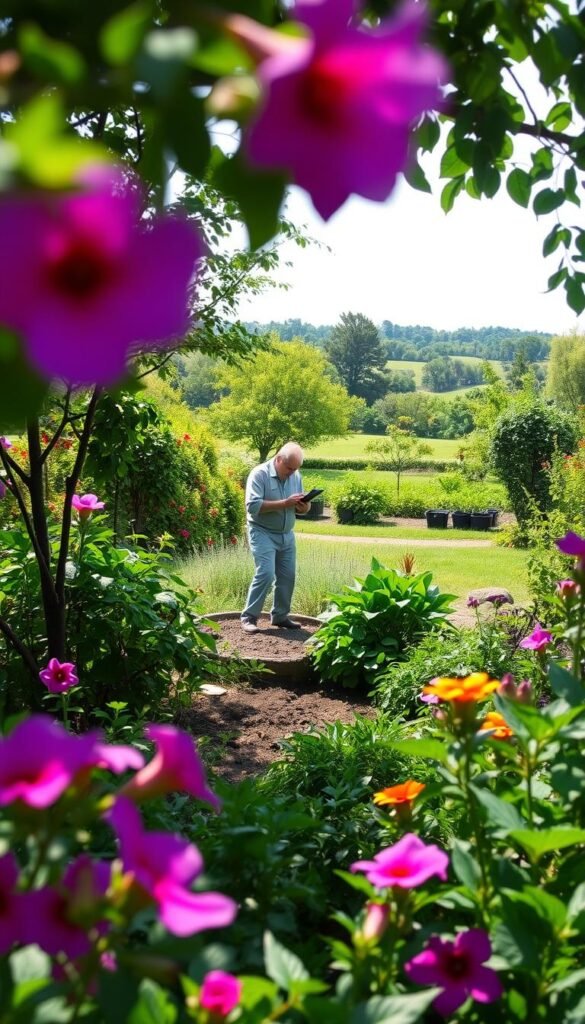
Great gardens grow from understanding your land’s natural gifts. Before choosing plants, become a detective in your own yard. Observe how sunlight dances across your space and where puddles linger after rain.
Assessing Sunlight, Water, and Soil Quality
Track light patterns for 3 days. Note areas with:
- 6+ hours direct sun (full sun zones)
- 3-6 hours filtered light (partial shade)
- Less than 3 hours (full shade)
Test soil drainage with this simple trick: Dig a 12″ hole, fill with water. If it drains in 1 hour, you’ve got sandy soil. Takes 12 hours? Clay-heavy. Most gardens need loamy soil that drains in 4-6 hours.
| Soil Type | Drainage Time | Best Plant Matches |
|---|---|---|
| Sandy | Under 2 hours | Lavender, Sedum |
| Loamy | 4-6 hours | Daylilies, Coneflowers |
| Clay | 12+ hours | Swamp Milkweed, Irises |
Identifying Microclimates in Your Yard
Your garden contains hidden neighborhoods. South-facing walls bake like ovens, while north sides stay cool. Slopes drain faster than valleys. Use these variations to your advantage:
- Plant heat-loving sage near west-facing stone walls
- Grow ferns in damp corners under mature trees
- Use raised beds in poorly draining areas
Remember: Work with your space, not against it. Matching plants to existing conditions saves time and money while creating healthier gardens.
Planning for Year-Round Bloom Show
Crafting a garden that dazzles year-round requires thinking like a conductor – each plant plays its part at the right time. Start by mapping bloom sequences from early crocuses to late-blooming asters. This ensures your space never goes silent, even when individual flowers take breaks.
Build your plant lineup like a sports team draft. Mix early risers (hellebores), summer stars (shasta daisies), and autumn showstoppers (goldrod). Pro tip: Many nurseries only stock what’s blooming now. Visit monthly to catch later-season performers.
| Season | Flower Examples | Foliage Stars |
|---|---|---|
| Spring | Bleeding Heart | Heuchera |
| Summer | Bee Balm | Hostas |
| Fall | Sedum | Ornamental Grasses |
| Winter | – | Red Twig Dogwood |
Don’t forget the supporting cast! Berry-filled winterberry holly adds December color, while ninebark shrubs offer peeling bark texture. Track bloom times in a notebook or spreadsheet – you’ll spot gaps to fill next year.
Place early and late bloomers side by side. When tulips fade, daylilies’ green spears hide dying leaves. As summer phlox wilts, purple asters burst open. This handoff keeps every bed looking lively.
Remember: Snow-covered seed heads and evergreen ferns maintain winter charm. Your garden’s beauty evolves but never sleeps when you plan this symphony of growth.
Essential Elements of a Stunning Flower Garden
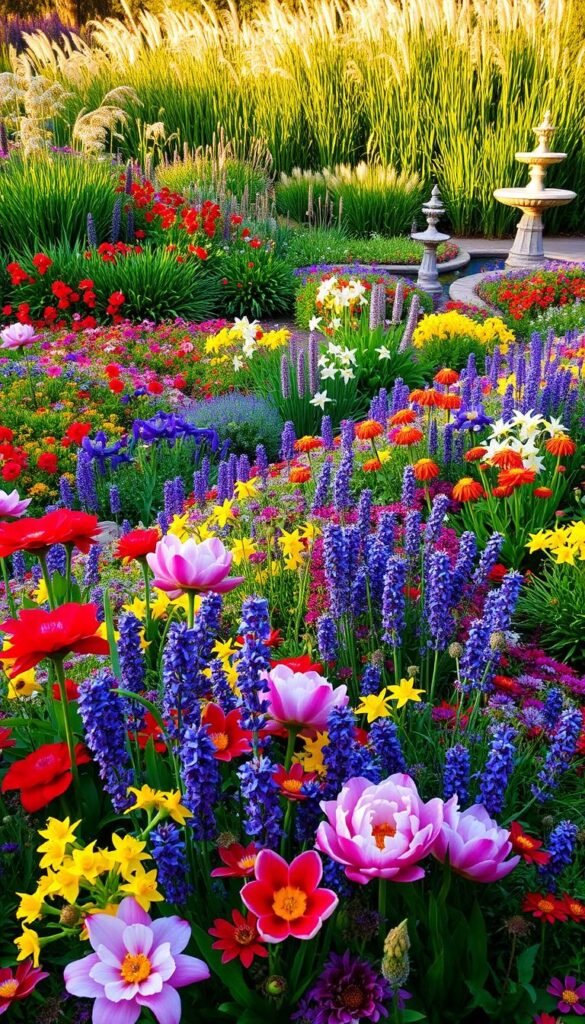
Creating a living masterpiece in your yard involves more than pretty petals. While flowers grab attention, the true magic happens when you layer colors, textures, and leaves. These elements work together to craft spaces that captivate across seasons.
The Impact of Color, Texture, and Foliage
Think of your space as an artist’s palette. Complementary colors like purple salvia against yellow coreopsis create fireworks, while monochromatic schemes using varied shades of green soothe the eye. Try grouping plants with similar hues but different bloom times for seamless transitions.
Leaves work overtime when blossoms fade. Coral bells’ burgundy foliage pairs beautifully with silvery Artemisia, while caladium’s heart-shaped leaves brighten shady corners. These leafy stars ensure your beds never look bare.
| Color Scheme | Effect | Plant Pairing |
|---|---|---|
| Complementary | High contrast | Purple coneflower + Black-eyed Susan |
| Analogous | Harmonious flow | Pink phlox + Red bee balm |
| Monochromatic | Calming unity | Silver lamb’s ear + Blue hosta |
Mix textures for depth. Pair feathery ferns with bold hosta leaves, or spiky yucca beside mounding sedum. Darker foliage plants like smokebush act as anchors, making brighter colors pop.
Remember: Aim for 60% foliage plants to 40% bloomers. This balance keeps your garden looking full even when flowers take breaks. Ninebark’s chocolate leaves and weigela’s variegated patterns prove leaves can outshine petals.
Designing a Perennial Garden That Delivers Continuous Blooms
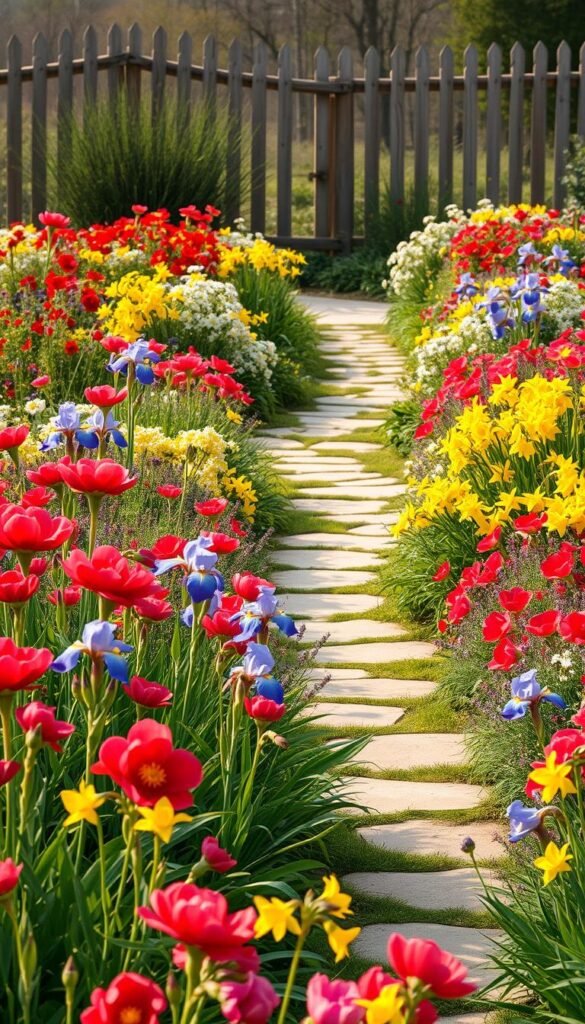
Building a dynamic floral display requires orchestrating bloom cycles like musical notes in a never-ending symphony. The secret? Overlapping performers rather than solo acts. Choose varieties that peak at staggered intervals, ensuring when one flower bows out, another takes center stage.
Start by grouping early risers with late bloomers. Pair bleeding hearts (spring) with daylilies (summer) and asters (fall). This creates living curtains where fading foliage gets hidden by emerging growth. Pro tip: Taller plants work best behind compact varieties for seamless transitions.
Your existing garden holds expansion potential through division. Mature clumps of hostas or coneflowers can be split every 3-4 years. Follow this simple timing guide:
| Bloom Season | Division Time | Examples |
|---|---|---|
| Spring | After flowering | Peonies, Irises |
| Fall | Early spring | Sedum, Goldenrod |
“Divide fall bloomers when new growth appears in spring – their energy focuses on roots rather than flowers during this window.”
Watch for crowded centers or reduced blooming – these signal division time. Split plants on cloudy days to reduce stress, replanting divisions where gaps appear. This free propagation method lets you support local pollinators while expanding your display.
Succession planting completes the puzzle. Tuck spring bulbs between late-emerging perennials like black-eyed Susans. As bulb leaves yellow, the Susans’ foliage camouflages them. Record bloom times each year – you’ll spot patterns to refine for flawless transitions.
Creating a Cohesive Plant Palette for Continuous Impact
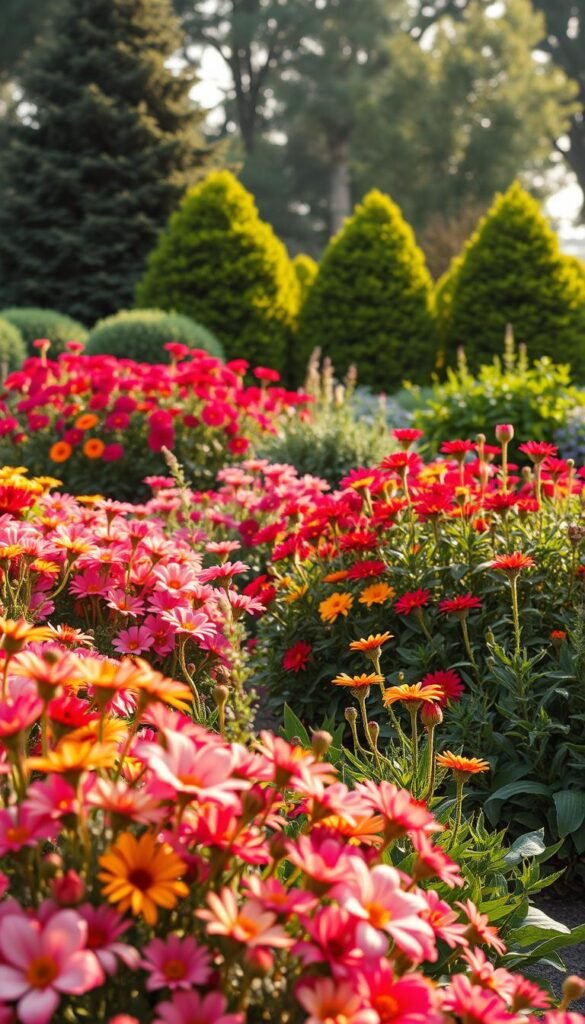
Less becomes more when you master plant selection. One gardener’s transformation story proves the power of restraint – after years of chaotic beds, they limited choices to 15 key varieties. The result? A unified display that wowed neighbors and required 40% less upkeep.
Adopt this golden rule: “Only buy plants already thriving in your space.” This approach builds depth through repetition rather than variety. For example, Russian Sage fans might add ‘Denim ‘n Lace’ or ‘Blue Spire’ cultivars – different forms of the same resilient plant family.
| Core Plant | Cultivar Options | Seasonal Impact |
|---|---|---|
| Coneflower | Purple, White Swan, Green Jewel | Summer-Fall |
| Hosta | Patriot, June, Blue Angel | Spring-Fall |
| Sedum | Autumn Joy, Dragon’s Blood, Frosty Morn | Late Summer-Winter |
Identify your garden’s all-stars by tracking which plants thrive with minimal care. These become your palette’s foundation. Focus on 5-7 species that perform well in your soil and light conditions, then expand their presence.
“Resist nursery temptations by remembering: Three identical plants make a statement. One lonely specimen creates clutter.”
Working with fewer varieties lets you perfect their care while creating visual rhythm. Mass plantings of core species flow through your space like repeating musical notes. This strategy reduces weeding time and simplifies pest management since you’ll know your plants’ needs intimately.
Your garden gains professional polish when colors and textures echo across beds. That swath of lavender isn’t just pretty – it guides the eye and frames focal points. Start small: Choose two anchor plants and build around them for maximum impact without overwhelm.
Grouping Plants Strategically for Visual Harmony
Odd-numbered groupings unlock your yard’s hidden potential. Three black-eyed Susans create a bold statement, while single plants vanish into the background. Professionals use this rule to craft beds that feel intentional yet natural.
Mass plantings in fives or sevens make colors pop. Imagine purple salvia flowing through your space like a river, flanked by golden coreopsis banks. This approach blends textures and heights while hiding fading leaves.
Drifts of identical plants work magic. They guide the eye and simplify maintenance. For inspiration, see how colorful container arrangements use repetition effectively in small spaces.
Start small: cluster three matching perennials near entryways. Add foliage partners like heuchera for contrast. As your confidence grows, expand these groupings across beds for unified impact.
Remember: Odd numbers mimic nature’s patterns. Your garden gains rhythm without rigidity, creating scenes that feel both planned and effortlessly wild.