Imagine stepping outside to a yard that dazzles the eyes and fills your kitchen. Foodscaping blends tasty crops with decorative plants, turning ordinary lawns into vibrant spaces. This approach lets you grow herbs, fruits, and veggies while keeping your home’s exterior inviting.
Why choose between pretty and practical? Many edible varieties thrive alongside flowers and shrubs. Think purple kale framing roses or strawberry plants spilling over walkways. Your landscape becomes a living pantry that neighbors will admire.
This method works smarter, not harder. You’ll maximize every square foot by pairing productivity with beauty. For example, rosemary’s silvery leaves complement peonies, while thyme softens stone borders. Even climbing beans can add vertical interest on trellises.
Want a touch of whimsy? Try mixing edible flowers like nasturtiums with classic blooms. It’s a perfect way to embrace the cottagecore aesthetic while keeping things functional. Your garden becomes a conversation starter about sustainable, creative living.
Balance is key. Aim for 60% ornamentals and 40% edibles to maintain visual harmony. With smart plant choices, you’ll enjoy fresh harvests without sacrificing curb appeal. Ready to rethink what a “pretty yard” can do?
Understanding the Benefits of an Edible and Ornamental Garden
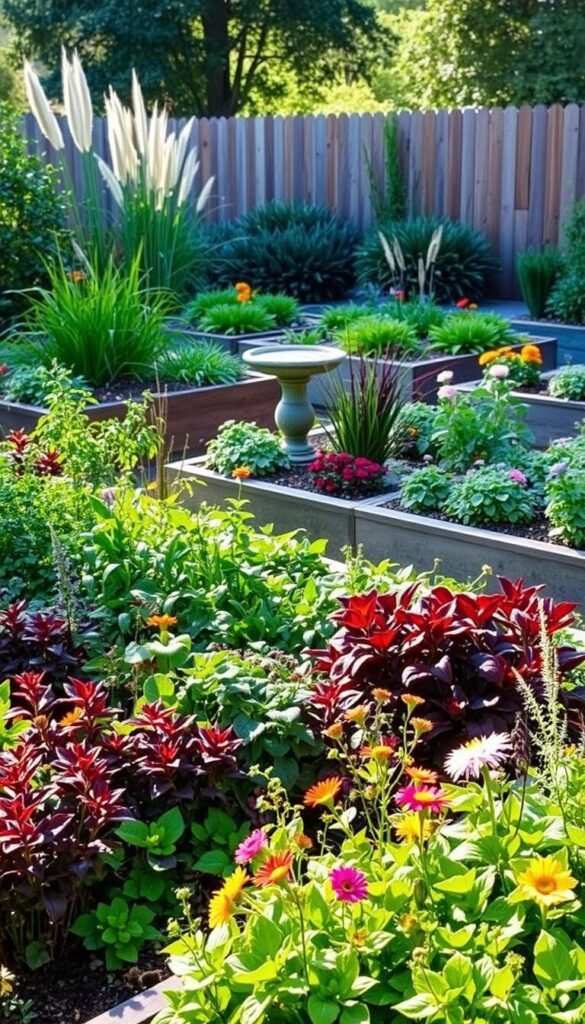
Your landscape can offer both visual charm and homegrown flavors. By blending food-producing plants with decorative varieties, you create spaces that nourish your family while impressing visitors. This approach lets you enjoy fresh ingredients steps from your kitchen while maintaining neighborhood charm.
Beauty That Feeds You
Dual-purpose plants deliver year-round value. Blueberry bushes provide spring blossoms and summer fruit, while rainbow chard adds colorful foliage from spring through frost. These choices let you harvest snacks during routine garden care – no need for separate veggie patches.
Smart Solutions for Modern Living
Growing your own food means fewer grocery trips and less plastic waste. You control what goes into your soil, ensuring healthier meals for your family. Pairing edibles with flowers also supports pollinators – try basil near marigolds using companion planting strategies.
| Feature | Ornamental Plants | Edible Plants |
|---|---|---|
| Seasonal Interest | 3-4 months blooms | Harvests + foliage changes |
| Maintenance Needs | Weekly watering | Harvest-based care |
| Environmental Impact | Supports pollinators | Reduces food miles |
These mixed gardens become living classrooms for kids and relaxing retreats for adults. You’ll discover satisfaction in growing heirloom tomatoes that taste better than store-bought versions. Plus, sharing extra produce builds community connections naturally.
Laying the Foundation: Garden Planning and Site Assessment
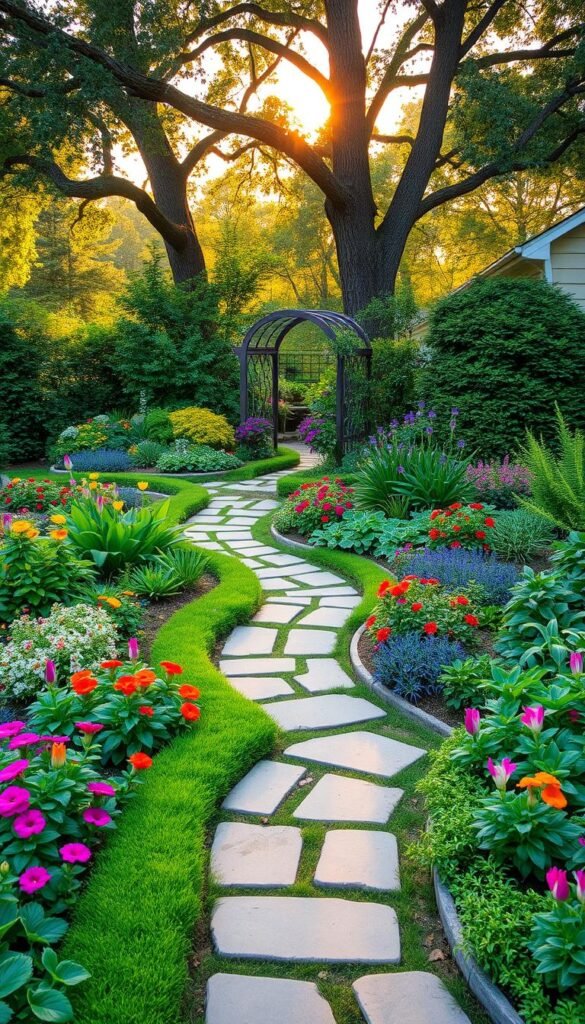
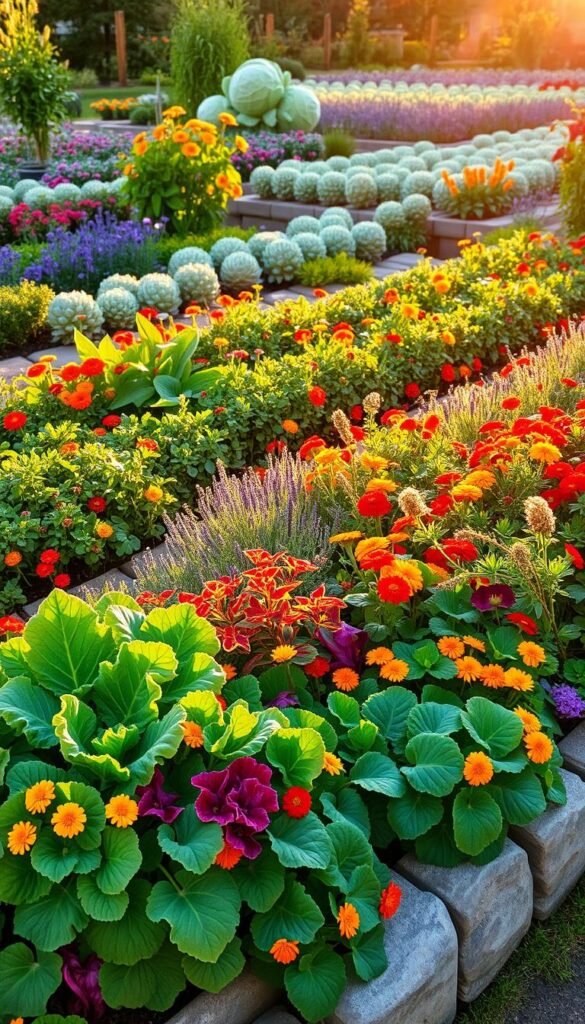
Creating a thriving mixed garden begins with smart groundwork. Your landscape must balance aesthetics and productivity, starting with a clear understanding of your property’s unique features. Let’s explore how to set up your yard for success.
Analyzing Your Curb Appeal Needs
Start by walking your front yard like a visitor would. Note existing features that enhance or clash with your vision. Edible plants should complement your home’s architecture – think artichokes as striking focal points or berry bushes as natural borders.
Sun exposure dictates your layout. Use a free app to track light patterns over three days. Most edibles need six to eight hours of direct sun, while ornamentals might tolerate partial shade. Mark full-sun zones for tomatoes and peppers, saving shadier spots for leafy greens.
Considering Climate and Regional Characteristics
Your USDA hardiness zone shapes plant choices dramatically. Northern gardeners might pair cold-hardy kale with panicle hydrangeas, while southern growers could combine okra with crape myrtles. Always check local frost dates and rainfall averages.
- Test soil drainage by digging a 12-inch hole – if water remains after an hour, consider raised beds
- Group moisture-loving plants near downspouts and drought-tolerant herbs on slopes
- Use windbreak shrubs like elderberry to protect delicate strawberries from strong gusts
Don’t overlook awkward space! That narrow side yard could host vertical bean trellises, while container gardening elevates your outdoor style. With thoughtful planning, your edible landscape becomes both practical and picturesque.
Selecting Dual-Purpose Plants for Beauty and Bounty
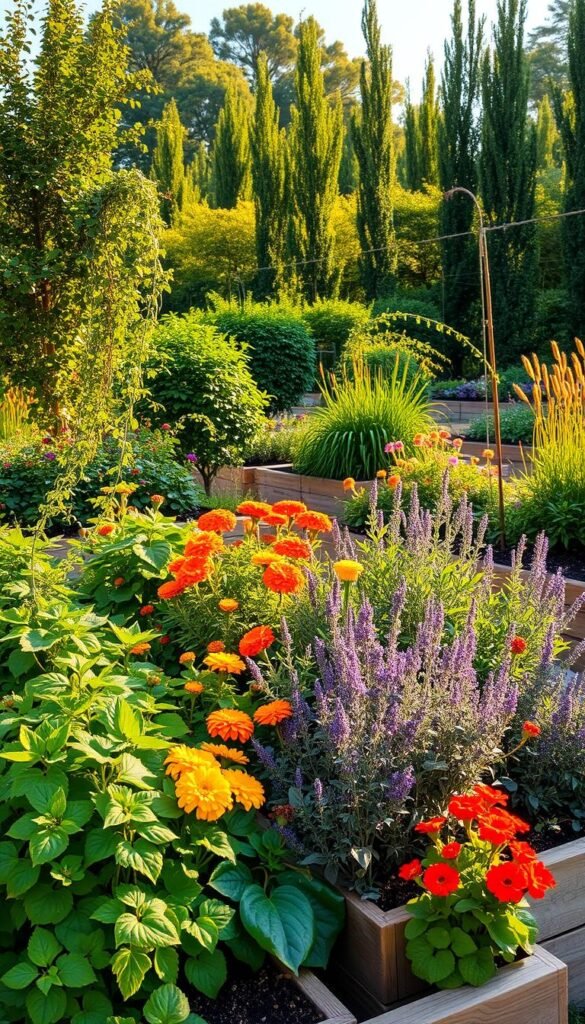
Transform your outdoor space into a living masterpiece that delights your senses and your taste buds. The right plant combinations turn functional crops into artistic statements. Let’s explore options that deliver stunning visuals and kitchen-ready harvests.
Edible Varieties for Flavor and Nutrition
Nasturtiums steal the show with fiery blooms you can toss into salads. Their peppery leaves add zing to sandwiches, while trailing stems soften walkway edges. Pair them with rainbow chard – its neon stems pop against green foliage, and tender leaves work in stir-fries.
Dinosaur kale brings drama with crinkled blue-green leaves that sweeten after frost. You’ll love how it stands out among flowers while providing vitamin-packed greens. For winter interest, ornamental cabbages unfurl ruffled purple-and-white leaves that handle chilly nights.
Ornamental Choices to Amplify Visual Interest
Rosemary does double duty as a fragrant border plant and seasoning source. Its delicate blue flowers attract pollinators in spring. Try purple basil varieties near yellow marigolds – the contrast makes both plants shine brighter.
| Plant | Ornamental Features | Edible Uses | Season |
|---|---|---|---|
| Nasturtium | Cascading blooms | Leaves & flowers | Spring-Frost |
| Rainbow Chard | Colorful stems | Leafy greens | Year-round* |
| Ornamental Kale | Textured foliage | Salad garnish | Fall-Winter |
*In mild climates. Heirloom varieties offer unique flavors – try ‘Bright Lights’ chard for neon stems or ‘Black Magic’ kale for dark, velvety leaves. These vegetables prove practical plantings can be jaw-droppingly beautiful.
Designing an Edible Garden with Ornamentals for Curb Appeal
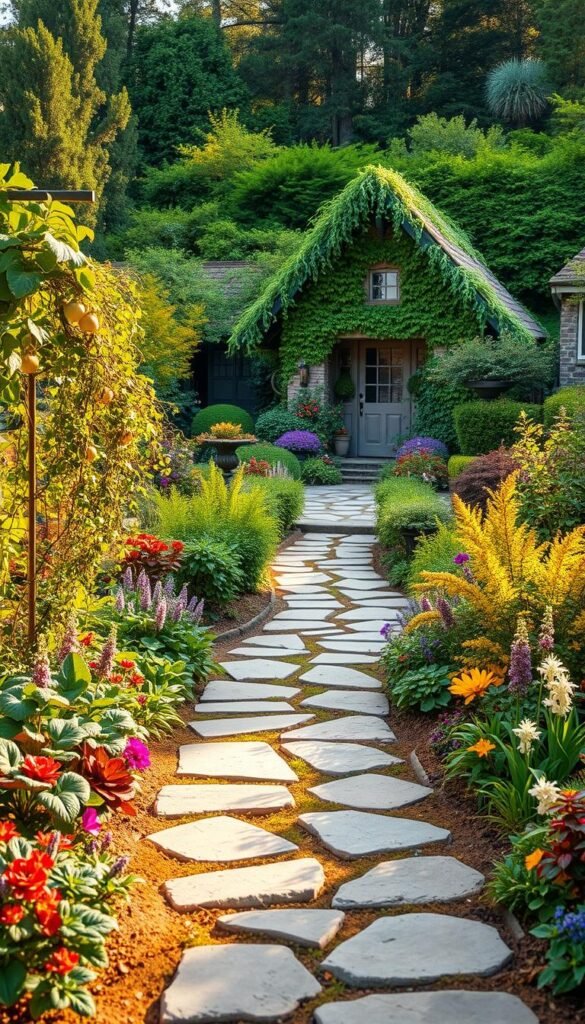
Blend flavor and flair by integrating food plants into your decorative spaces. The secret lies in choosing varieties that perform double duty – offering both visual charm and kitchen-ready harvests. Forget traditional rows of vegetables; instead, let edibles become natural extensions of your existing plantings.
Strategic Plant Selection
Focus on shrubs and trees that deliver multi-season interest. Blueberry bushes dazzle with spring blossoms, summer berries, and fiery fall foliage. Dwarf fruit trees like columnar apples make striking focal points while saving space. These choices ensure your front yard stays photo-ready through every season.
Pair textural edibles with complementary ornamentals. Try ruby-hued lettuces beside silver sage, or feathery dill towering over marigolds. This approach creates depth while masking less attractive phases of growth. You’ll maintain curb appeal even when harvesting leafy greens.
Artful Design Enhancements
Elevate practical elements into design features. A curved permaculture-inspired bed doubles as a living border, while arched bean trellises frame entryways. Use decorative containers for compact herbs – their varied heights add dimension to patios and steps.
Remember: successful edible landscapes balance productivity with polish. Start small by replacing one ornamental shrub with a fruiting variety. Over time, you’ll create edible vignettes that nourish both body and soul – no sacrifice to beauty required.
Step-by-Step Layout and Planting Strategies
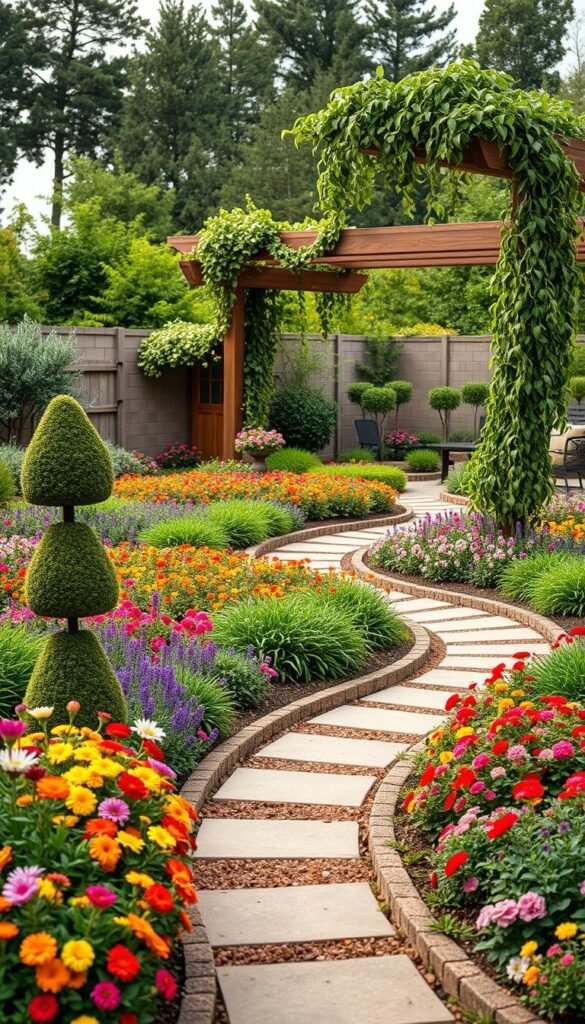
Ready to turn your yard into a living masterpiece that works as hard as it shines? Smart planning ensures every plant thrives while keeping your space organized and eye-catching. Let’s break down the process into actionable steps.
Sketching Your Garden Blueprint
Start by mapping sun patterns using free apps like Sun Seeker. Mark areas with 6+ hours of direct light for tomatoes and peppers. Shady spots? Perfect for leafy greens or alpine strawberries. This prevents shade conflicts later.
Plot water sources and walking paths first. Keep beds within 4 feet wide for easy reaching. Leave 18-inch pathways between planting zones – wide enough for wheelbarrows but narrow enough to feel intimate.
Implementing Hardscape Elements and Raised Beds
Install raised beds in high-visibility areas using cedar or stone. Their height reduces bending and adds structure. For slopes, try terraced beds with edible flowers cascading over edges.
| Layout Strategy | Key Benefit | Plant Example |
|---|---|---|
| Vertical Trellises | Saves space + adds height | Pole beans, passionfruit |
| North-South Rows | Optimal sun exposure | Tomatoes, peppers |
| Water Zones | Efficient irrigation | Lettuce, celery |
Group thirsty plants near rain barrels using edible landscape transformation techniques. Place dwarf evergreens along north boundaries as windbreaks. Deciduous vines on arbors? They’ll filter summer sun but let winter light through.
Keep herbs in containers by the kitchen door – you’ll snip thyme while dinner simmers. For more tips, explore our guide to patio container gardening. Your garden becomes both productive and picturesque when every element serves multiple purposes.
Seasonal Considerations for a Productive and Attractive Garden
Your garden becomes a year-round showstopper when you align plant choices with nature’s rhythms. Smart timing keeps your space vibrant while delivering fresh fruit and vegetables across three growing phases. Let’s explore how to make every season work harder for beauty and bounty.
Planning for Spring, Summer, and Fall Dynamics
Start with early bloomers that kick off the growing cycle. Forsythia bursts with yellow flowers in March, while strawberry plants produce sweet berries by May. These early performers give way to summer stars like blackberry canes draped in juicy fruit.
Heat-loving veggies thrive when temperatures rise. Eggplants and peppers add glossy foliage to flower beds, while nasturtiums spill over borders with edible blooms. Come autumn, swap fading annuals for ornamental kale – its ruffled leaves gain color as nights cool.
| Season | Top Performers | Key Features | Harvest Window |
|---|---|---|---|
| Spring | Blueberries, Chives | Blossoms + early fruit | April-June |
| Summer | Basil, Tomatoes | Heat tolerance + color | June-September |
| Fall | Kale, Apples | Frost-hardy + foliage | September-November |
Extending Your Growing Season in Cooler Months
Protect tender plants while keeping your yard photo-ready. Hoop houses draped over rosemary shrubs let you harvest herbs through light snows. Cloches made from recycled glass jars shield lettuce while adding vintage charm.
Perennials like thyme and sage offer structure when annuals fade. Shape them into geometric forms that catch frost patterns. For winter color, plant crimson-stemmed Swiss chard – its leaves sweeten after first frost, proving beauty and flavor coexist in every season.
Best Practices for Garden Maintenance and Edible Harvest Tips
Keep your dual-purpose paradise thriving with smart care habits. A little attention goes far in preserving both beauty and productivity. Start by grouping plants with similar needs – this simplifies watering and prevents nutrient competition.
Water Wisdom & Soil Nutrition
Most edible plants need one inch of water weekly. Use a rain gauge to track nature’s contributions. For container gardening, check soil moisture daily – pots dry faster than ground beds.
When feeding your garden, Alaska Fish Fertilizer 5-1-1 works wonders. Its gentle formula nourishes roots without chemical burns. Apply every 3 weeks during growth spurts for plump tomatoes and vibrant marigolds.
Smart Pest Solutions & Ongoing Care
Spot aphids? Blast them off with hose spray before reaching for sprays. Plant mint near roses to deter beetles naturally. Regular harvesting keeps herbs bushy and prevents bolting in leafy greens.
Schedule weekly walkthroughs for deadheading flowers and pruning overgrowth. This maintains curb appeal while encouraging new growth. With these tips, your soil stays rich, and your landscape remains magazine-ready through every season.