Imagine stepping into a vibrant outdoor space that dazzles with color from spring through fall. A well-crafted perennial border does just that—transforming your garden into a living tapestry of textures and hues. These timeless features, inspired by Victorian-era estates, blend practicality with beauty to create spaces that evolve gracefully with each season.
Why do these plant arrangements remain so popular? They offer more than just visual charm. Thoughtful design supports local pollinators, ensures staggered flowering times, and maintains structure even when plants aren’t in bloom. Unlike random groupings, strategic layouts consider height variations and complementary colors to keep your landscape engaging year-round.
You’ll find that successful borders balance aesthetics with ecology. By selecting plants that thrive in your climate and soil, you create a low-maintenance flower garden that rewards effort with lasting beauty. Whether you’re working with a sprawling yard or a cozy corner, the principles of layering and seasonal planning apply to all spaces.
Ready to unlock the secrets of a border that never sleeps? Let’s explore how to combine practicality and artistry for a dynamic outdoor sanctuary that grows lovelier with time.
Assessing Your Garden’s Conditions

Your garden’s success starts with understanding its unique environment. Soil quality and sunlight patterns shape what plants thrive in your space. Let’s break down these factors to create a flourishing landscape.
Understanding Your Soil and Drainage
Start by grabbing a handful of soil. Does it feel gritty, sticky, or crumbly? These textures reveal whether you’re working with sand, clay, or loam. Each type affects drainage differently—sandy soils dry fast, while clay holds moisture longer.
Test your soil’s pH using a $10 kit from garden centers. Most plants prefer slightly acidic to neutral soil (6.0–7.0). If your results show extremes, consider amendments or choose species suited to your conditions.
| Soil Type | Drainage Speed | Best Plant Choices |
|---|---|---|
| Clay | Slow | Daylilies, Hostas |
| Sandy | Fast | Lavender, Sedum |
| Loam | Moderate | Coneflowers, Peonies |
Evaluating Sunlight and Microclimates
Track sunlight in your garden throughout the day. South-facing areas get 6+ hours of direct sun—ideal for roses and sage. North-facing spots work better for ferns and coral bells that love shade.
Watch how trees and structures cast shadows. A wall might create a warm microclimate for early bloomers, while evergreen trees could block winter sun. Remember: summer light differs from winter patterns—successful perennial borders adapt to these shifts.
Planning a Balanced Garden Layout

A well-planned garden layout brings harmony between plants and space. Start by mapping your border’s shape—whether it’s a winding curve or straight edge. Simple tools like a tape measure or even your footsteps help determine exact length and width.
Measuring Your Border Dimensions
Multiply your border’s length by its width to calculate square footage. This number guides plant purchases—aim for five perennials or three shrubs per square meter. Overcrowding stifles growth, while too few plants leave gaps.
Consider mature plant sizes when spacing. A 6-foot-wide border allows taller plants at the back without shadowing shorter varieties. Curved edges soften rigid landscapes, creating natural flow.
Selecting a Garden Style That Fits Your Space
Match your design to your home’s architecture and local climate. Cottage gardens burst with colorful mixes, while Japanese themes favor minimalist greenery. Sunny spots suit Mediterranean lavender; shady areas host lush ferns.
Browse gardening inspiration to blend styles creatively. Prairie grasses work in dry regions, while tropical plants thrive in humid zones. Your border should reflect both practicality and personal taste.
Designing Perennial Borders for Continuous Blooms in Your Garden

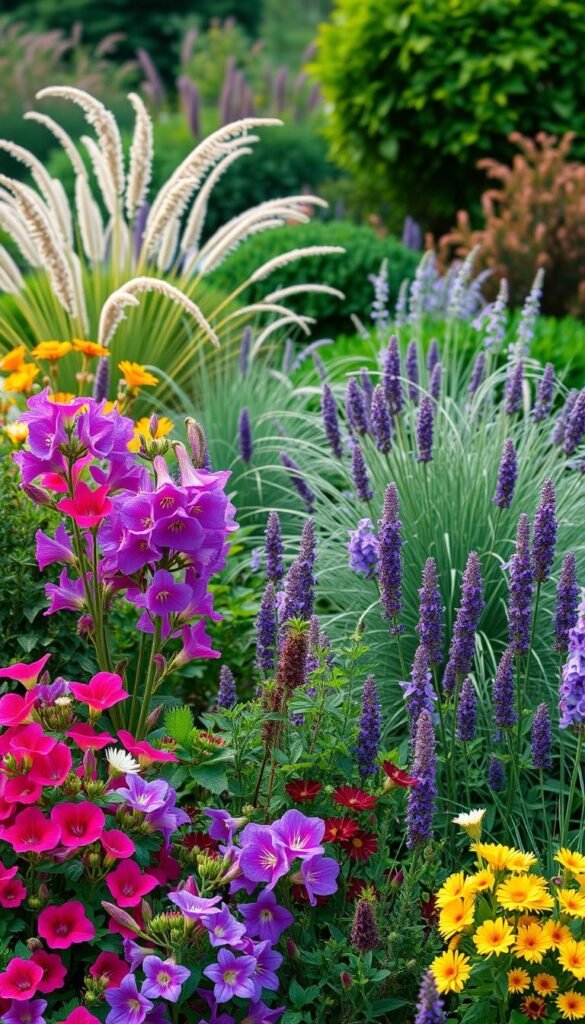
Color coordination transforms random flowers into intentional art. Start by picking three main hues from the color wheel. Neighboring shades like purple, blue, and pink create soft transitions. Contrasting pairs like orange and blue make bold statements that catch the eye.
Choosing the Right Color Palettes and Textures
Limit bright colors in small spaces—too many hues compete for attention. Silver-leafed plants like lamb’s ear balance vivid blooms. Mix feathery grasses with broad hosta leaves for exciting texture combinations.
Green foliage acts as nature’s neutral backdrop. Variegated leaves add subtle patterns between flowering periods. Try pairing spiky yucca with rounded heuchera for dynamic form contrasts.
Grouping Plants for Seasonal Impact
Plan for year-round appeal using this approach:
- Spring: Bleeding heart (April-May) with daffodils
- Summer: Daylilies (June-August) beside catmint
- Fall: Sedum ‘Autumn Joy’ (September-October) near ornamental grasses
Some stars perform multiple seasons. Coral bells bloom in summer but keep colorful leaves through frost. For winter interest, cold-hardy plants like hellebores offer January flowers.
Layer plants in waves—early bloomers behind late-season growers. Leave space for mature sizes while maintaining fullness. This strategy ensures something always shines, keeping your border lively through every season.
Sourcing and Strategically Positioning Your Border Plants

Smart plant placement begins long before you dig the first hole. Ordering from trusted nurseries during their dormant season (November-March) secures healthier specimens and better prices. This timing lets you grab bareroot plants—eco-friendly options that grow just as vigorously as potted varieties.
Finding Quality Plants from Reputable Nurseries
Bareroot options shine for three reasons:
- Cost 30-50% less than container-grown plants
- Arrive without plastic packaging
- Establish quickly when planted in early spring
Look for nurseries with phytosanitary certifications to avoid pests. Local growers often stock plants adapted to your region’s climate.
Positioning Evergreen and Structural Species
Start with woody shrubs and evergreens as your border’s backbone. Boxwoods or holly bushes create winter structure. Place these first, spacing them to accommodate mature height.
Group flowering perennials in odd numbers—three or five of the same species. This prevents a scattered look while creating bold color blocks.
Adjusting Plant Placement for Year-Round Blooms
Tall plants like delphiniums belong at the back, but airy varieties work up front. Try Russian sage near the front—its wispy stems won’t block views. Intersperse evergreen groups with seasonal bloomers for continuous visual interest.
Rotate focal points annually. A striking red-twig dogwood grabs attention in winter, while summer-blooming hydrangeas take center stage July-September.
Editing and Refining Your Flower Garden Design

Seasoned gardeners often discover their lush flower garden becomes crowded over years. What began as careful planning can turn into a patchwork of mismatched plants. The solution? Treat your outdoor space like a living canvas that needs occasional revisions.
Identifying Plants That Need a Change
Walk through your garden with fresh eyes each season. Remove specimens that:
- Clash with your color scheme
- Demand excessive watering or pruning
- Fail to bloom reliably
If a plant doesn’t spark joy or match your vision, it’s time to say goodbye. Offer extras to neighbors or try colorful container gardening for displaced favorites.
Techniques for Dividing and Replanting
Mature perennials often outgrow their space. Use a sharp spade to split:
- Spring bloomers (peonies, iris) in late summer
- Fall flowers (sedum, asters) in early spring
Replant divisions in groups of three or five for natural-looking displays. This approach fills gaps while maintaining your garden’s cohesive look.
Wrapping Up Your Garden Masterpiece
As your landscape matures, it tells a story of colors and textures that shift with the months. Paying attention to seasonal rhythms ensures your perennial border remains lively from spring’s first buds to winter’s frost-kissed grasses. Blend ornamental grasses with late-blooming flowers for structure that lasts beyond summer’s peak.
Keep your garden fresh by rotating focal plants each year. A well-placed shrub or bold flower variety can reignite interest without overhauling your entire design. Remember: successful spaces evolve through observation and small tweaks rather than drastic changes.
For added inspiration, explore creative garden ideas that complement your border’s aesthetic. Whether adding decorative stones or vertical accents, these touches enhance your outdoor space while supporting plant health. Your journey to a four-season paradise starts with patience—and grows richer with time.