
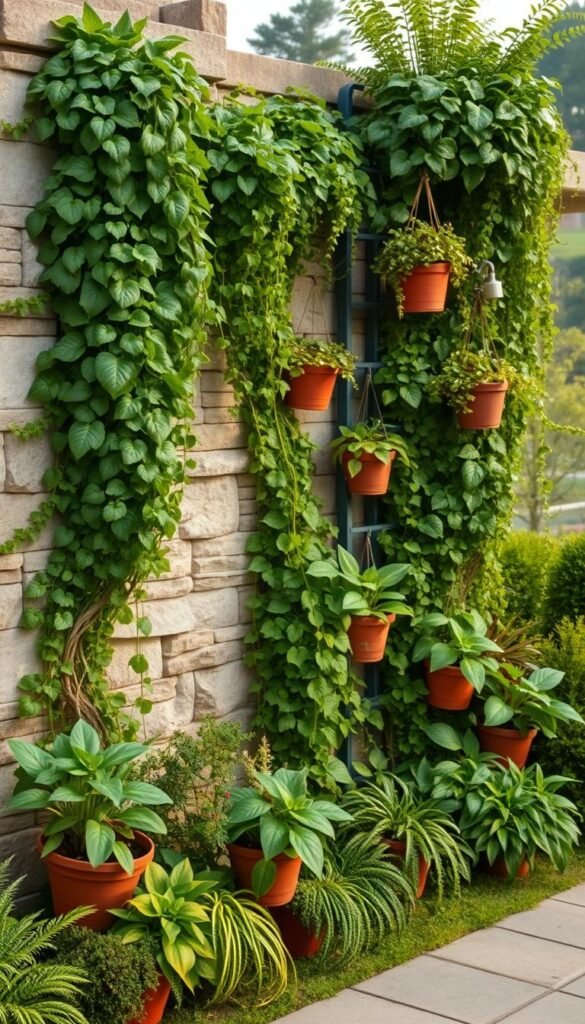
Have you ever walked past a vibrant flower bed that felt more like a flat painting than a living landscape? Sydney Edison, a seasoned gardener, calls these “colorful but flimsy” displays—common when spaces rely solely on low-growing blooms. The secret to transforming that two-dimensional look lies in one word: height.
Imagine your planting area shifting from a straight-line snooze to a dynamic mix of spires and mounds. Dwarf evergreens like Alberta spruce add crisp structure, while feathery grasses create movement. These elements work like nature’s skyscrapers, drawing the eye upward without overwhelming tight spaces. Even beds as narrow as 30 inches can feel immersive when layered correctly.
Professional landscapers achieve this magic through plant geometry—pairing upright forms with cascading textures. Want to try this at home? Start by exploring space-saving vertical structures that add instant dimension. You’ll discover how strategic placement creates depth that lasts beyond spring blooms, offering winter interest through seed heads and evergreen silhouettes.
The best part? You don’t need acres to create drama. By balancing vertical accents with ground-hugging plants, your outdoor area becomes a multi-level retreat that feels intentionally designed rather than accidentally pretty. Ready to turn that flat patch into a living sculpture? Let’s dig deeper.
Understanding the Importance of Vertical Elements in Garden Borders
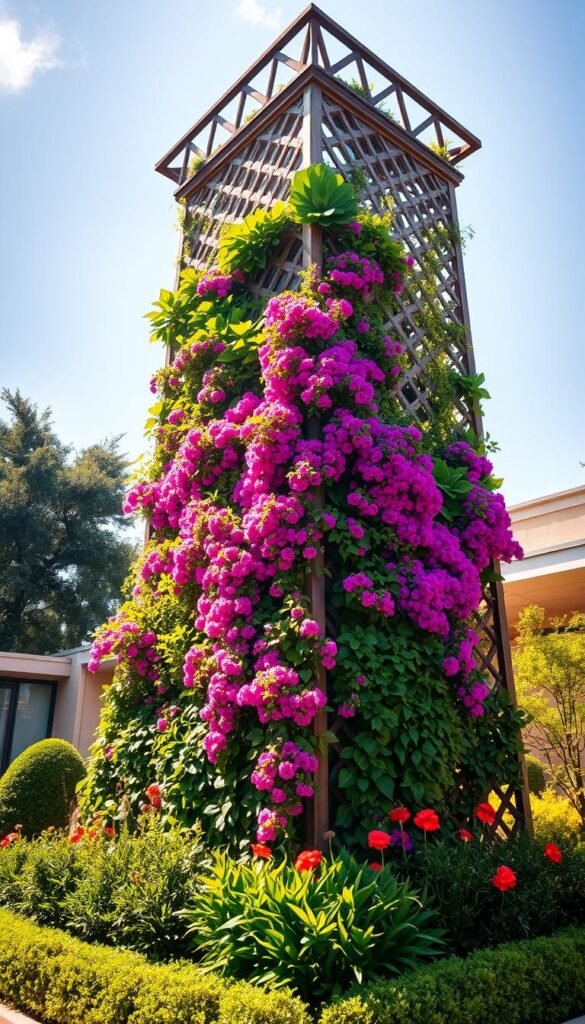
What makes some outdoor spaces feel alive while others fall flat? It’s all about creating depth through strategic layering. Vertical components work like nature’s exclamation points, adding punctuation to your landscape that guides the eye upward.
Elevate your outdoor space
Think of structural plants as your green architecture. Peter Wooster, a landscape expert, puts it simply:
“When everything’s the same size, you need anchors. Evergreens or shrubs in the middle give beds their backbone.”
These living pillars create stability, letting delicate blooms shine without chaos.
Visual impact and structure
Lynden Miller’s design secret? “Combine vertical evergreens with rounded shapes – that geometry does half the work.” This approach builds rhythm, making narrow areas feel expansive. Your eyes dance between spiky alliums and mounded hostas instead of getting stuck.
| Element Type | Role | Examples |
|---|---|---|
| Structural | Creates framework | Dwarf spruce, columnar juniper |
| Transitional | Connects layers | Feather reed grass, foxgloves |
| Accent | Adds movement | Fountain grass, trailing ivy |
This layered effect works magic in tight spaces. A single upright shrub can make 3-foot border feel like a lush retreat. Remember: good design starts with bones, then adds the blush of seasonal color.
Gathering Inspiration from Professional Garden Designs
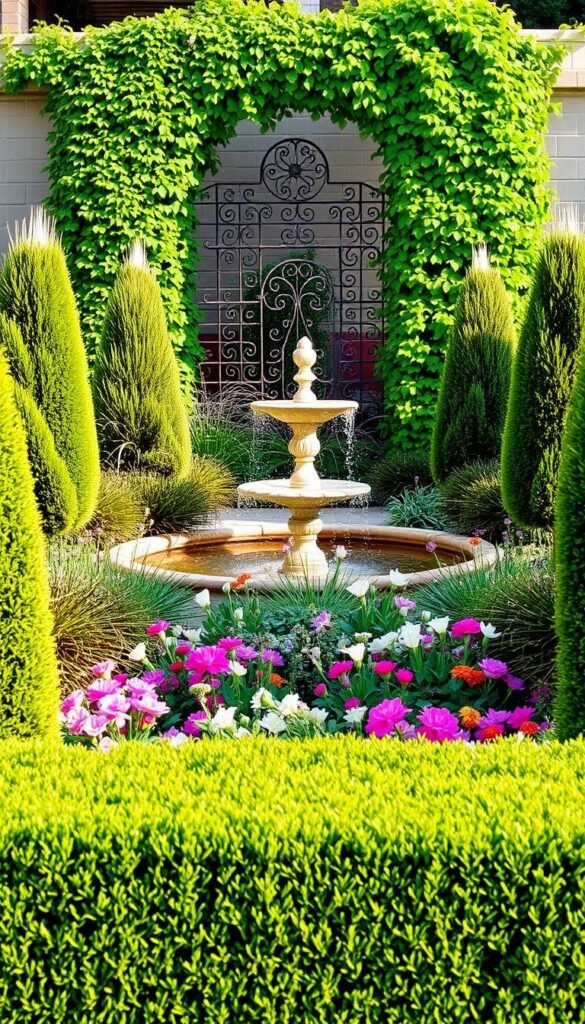
Professional landscapes often hold hidden lessons you can borrow for your own space. Studying famous public gardens reveals patterns even beginners can replicate. Let’s explore how experts build captivating displays that balance form and function.
What the experts say
West Dean Gardens’ head gardener Tom Brown shares a golden rule: “Start with your theme, then sort plants by height first, color second.” This approach ensures structural plants anchor the design before adding seasonal flair. His team organizes greenery into three tiers:
| Height Category | Purpose | Example Plants |
|---|---|---|
| Backbone (Tallest) | Creates vertical lines | Foxgloves, delphiniums |
| Mid-level | Adds texture | Peonies, salvias |
| Ground cover | Softens edges | Thyme, sedum |
Learning from real-life examples
New York’s Conservatory Garden proves big ideas work in tight spaces. Designer Lynden B. Miller uses 10-foot False Hemp plants to arch over walkways, making paths feel intimate yet grand. Notice how she pairs bold verticals with low-growing heucheras—a trick you can try in raised beds or narrow strips.
These public gardens show that successful designs rely on repetition. Try grouping three matching spiky plants, then surround them with flowing grasses. This balance creates rhythm without clutter, perfect for urban settings.
Pro gardeners often share this tip: visit local botanical spaces during different seasons. You’ll see how evergreen shrubs maintain winter interest while annuals fade. Bring a notebook—sketch layouts that catch your eye, then adapt their scale to your plot.
Key Principles of Effective Garden Border Design
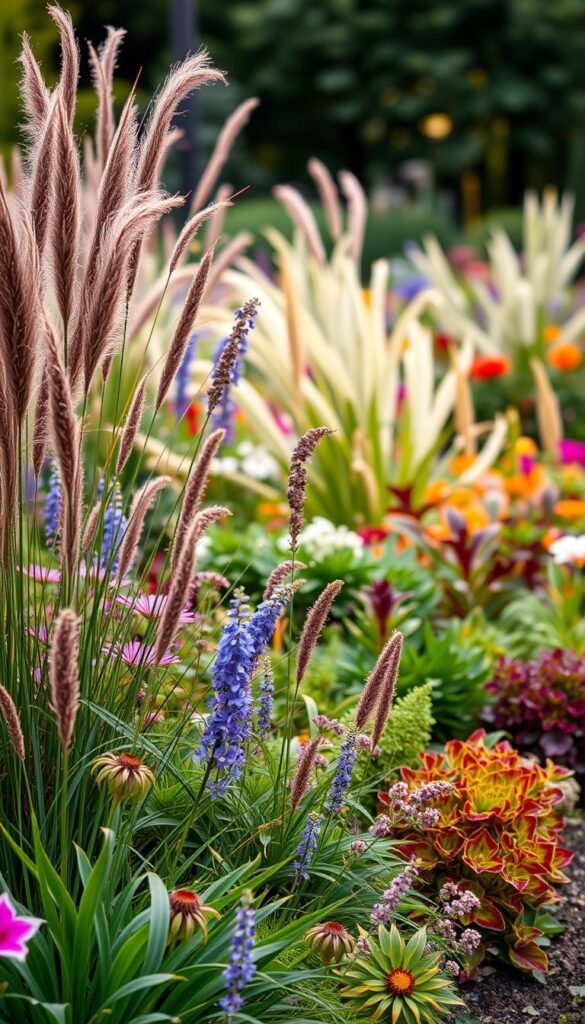
Ever wonder why some garden borders look effortlessly stunning while others feel chaotic? Tom Brown, head gardener at West Dean Gardens, reveals the secret: “Great design starts with ruthless editing.” His four-category system organizes greenery by height—tall, medium, short, and accent—creating clarity in every planting scheme.
Brown’s less is more philosophy transforms overcrowded beds into intentional displays.
“End up with fewer varieties than you’re comfortable with—every plant must earn its spot,”
he advises. This selective approach prevents visual noise while letting key specimens shine.
| Plant Category | Design Role | Examples |
|---|---|---|
| Tall | Vertical anchors | Foxgloves, hollyhocks |
| Medium | Texture builders | Salvia, echinacea |
| Short | Edge definers | Thyme, sedum |
| Accent | Focal points | Japanese maple, ornamental grass |
Repetition creates rhythm in your border. Three matching alliums spaced evenly? That’s design magic. Five different flowering shrubs crammed together? That’s a yard sale of plants.
Contrast keeps eyes moving. Pair spiky yucca leaves with round hosta mounds. Mix feathery astilbes beside bold bergenia. This interplay stops your border from becoming a green blob.
Remember: every plant should justify its space. If it doesn’t add structure, color, or texture, it’s stealing sunlight from stars that do. Your border isn’t a plant collection—it’s a living composition.
Designing small garden borders with vertical elements for added height
Why do some planting areas captivate while others fade into the background? The answer lies in defying expectations. Landscape designer Piet Oudolf revolutionized modern planting by declaring: “Nature doesn’t line up soldiers—it creates communities.” This philosophy transforms cramped spaces into dynamic scenes.
Traditional border layouts often fail in tight areas. Instead of hiding tall specimens at the back, position them as focal points. A single clump of feather reed grass at the front edge adds mystery, making viewers wonder what lies beyond.
| Position | Strategy | Plant Examples |
|---|---|---|
| Front | See-through verticals | Verbena bonariensis, Gaura |
| Middle | Bold textures | Snakeroot, Joe-Pye weed |
| Back | Evergreen structure | Dwarf pine, Sky Pencil holly |
Airy plants work magic in narrow beds. Their transparent stems create layered views without blocking light. Try pairing Mexican feather grass with low-growing sedum—the contrast adds depth where flatness once ruled.
Spacing becomes crucial when mixing heights. Allow 18-24 inches between tall specimens and shorter companions. This breathing room prevents overcrowding while maintaining lushness. Remember: staggered planting creates natural movement better than straight rows.
Your space gains dimension when you embrace vertical surprises. A well-placed obelisk with climbing nasturtiums draws eyes upward, while ground-level succulents anchor the scene. Together, they craft an immersive experience that belies limited square footage.
Selecting Tall Plants and Ornamental Grasses
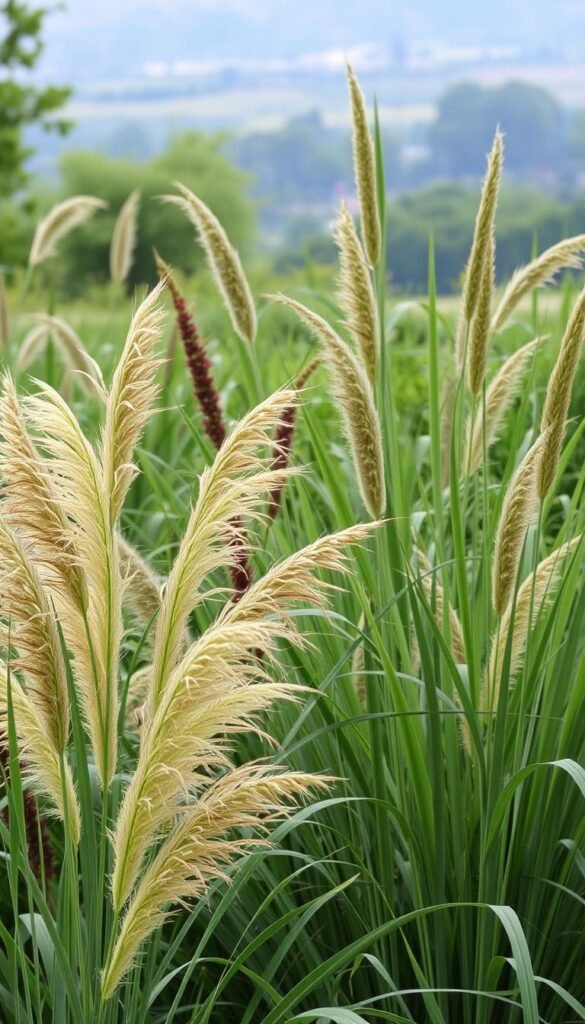
Some of nature’s best vertical performers grow taller than your mailbox while keeping roots compact. Landscape designer Lauren Springer calls grasses “the ultimate multitaskers” for tight spaces. Their slender profiles deliver sky-high drama without stealing precious ground room.
Choosing plants with natural height
Calamagrostis ‘Karl Foerster’ proves height isn’t about bulk. This feather reed grass starts as a 2-foot mound in spring, then rockets to 5 feet by August. Its golden plumes stand rigid through snowstorms, making it a four-season star.
| Grass Variety | Max Height | Key Feature |
|---|---|---|
| Pennisetum ‘Fairy Tales’ | 7 feet | Drought-resistant fountain shape |
| Miscanthus ‘Morning Light’ | 6 feet | Silver-striped winter blades |
| Calamagrostis ‘Karl Foerster’ | 5 feet | Wind-resistant seed heads |
Benefits of ornamental grasses
These swaying beauties work harder than most perennials. Their vertical lines guide the eye upward, while airy stems let light filter through to shorter companions. As Springer notes:
“Grasses are the connective tissue of good design—they make disparate elements feel intentional.”
Consider texture when pairing varieties. Fine fescue grasses create mist-like effects beside bold hostas. For winter structure, Miscanthus sinensis varieties hold their form even under ice. Their dried seed heads become natural bird feeders too!
Want to elevate your outdoor aesthetic? Start with three grass clumps staggered along your border. Their rhythmic movement and seasonal transformations will make your space feel alive year-round.
Using Shrubs, Evergreens, and Perennials to Create Structure
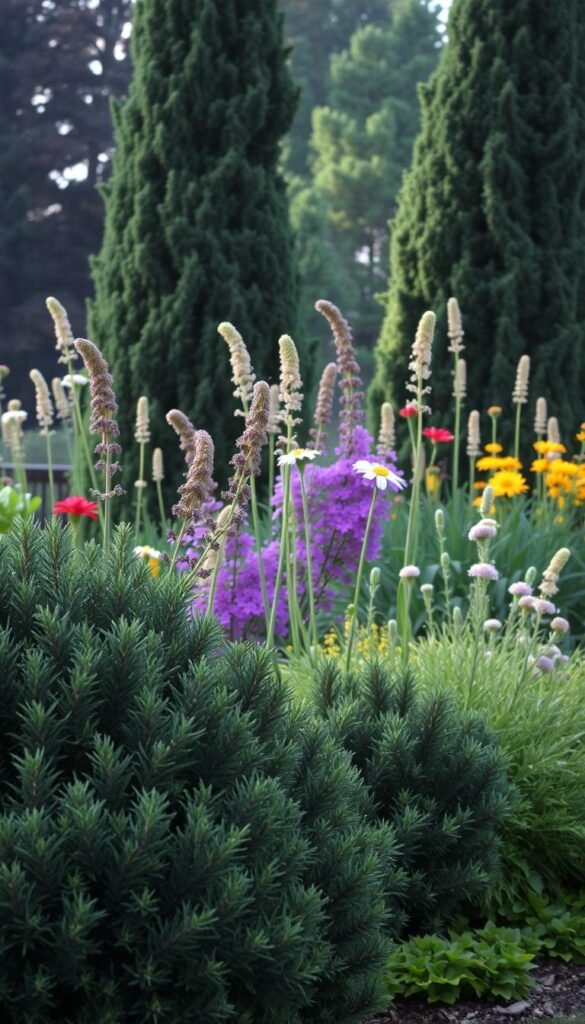
What’s the secret to a border that looks polished in every season? It’s all about building with plants that work like nature’s scaffolding. These green skeletons keep your display standing tall—even when flowers fade or snow falls.
Establishing a solid framework
Tom Brown’s 80/20 rule changes the game: “Fill 80% of your space with permanent anchors—shrubs, evergreens, and reliable perennials. Use the remaining 20% for seasonal pops.” This mix ensures your design never looks naked. Dwarf Alberta spruce serves as a perfect example—its cone shape stays crisp even in January blizzards.
| Plant Type | Structure Role | Examples |
|---|---|---|
| Evergreen shrubs | Year-round silhouette | Arborvitae, boxwood |
| Deciduous shrubs | Seasonal texture | Hydrangea, spirea |
| Perennials | Reliable form | Hosta, sedum |
Mixing textures and shapes
Pair spiky junipers with mounded azaleas. Contrast glossy camellia leaves with feathery fern foliage. This textural dance makes every inch interesting. Evergreens like sky pencil holly add vertical lines, while lamb’s ear softens edges with velvety leaves.
Remember scale when choosing shrubs. A 4-foot blue star juniper won’t outgrow tight spaces. For winter drama, try red-twig dogwood—its crimson branches glow against snow. These choices ensure your framework stays proportional through the years.
Smart gardeners plant structural perennials in early spring. This gives roots time to establish before summer heat. By fall, your living architecture will support autumn mums and ornamental kale—proving good bones make every season shine.
Contrasting Foliage and Bloom Shapes for Visual Interest
What transforms a good planting scheme into a showstopper? It’s the unexpected dance between sharp angles and soft curves. Landscape artist Sydney Edison reveals: “Every great composition balances structural spikes with billowy forms.” This tension creates energy that keeps eyes roaming your display.
Think of your border as a living sculpture. Spiky yucca leaves cutting through airy gaura blooms. Rigid iris spears rising above mounded catmint. These combinations work because they engage multiple senses—texture becomes as vital as color.
The geometry of engagement
Tom Brown’s favorite pairing? Foxgloves and peonies. He explains:
“The vertical rockets of digitalis punch through those fluffy spheres—it’s fireworks meeting cotton candy.”
This contrast adds drama while maintaining harmony.
| Plant Type | Spiky Examples | Rounded Examples |
|---|---|---|
| Foliage | Iris, yucca | Hosta, heuchera |
| Blooms | Liatris, salvia | Peony, hydrangea |
| Structure | Upright sedum | Mounding boxwood |
Don’t forget flower shapes. Trumpet-shaped daylilies gain intrigue near flat-faced coneflowers. The key? Place contrasting elements side-by-side but give them breathing room. Three feet between a spiky phormium and rounded bergenia lets each shine.
For winter interest, pair structural seed heads like coneflower cones with soft ornamental grasses. This interplay keeps your border compelling even when flowers fade. Remember: contrast isn’t clash—it’s conversation.
Creating Depth with Front, Middle, and Back Planting Layers
Front borders often get stuck in predictable patterns – short plants up front, tall ones in back. Tom Brown flips this script with see-through plants like Verbena bonariensis. Their transparent stems let you place these airy giants at the front without hiding shorter specimens behind.
Irises prove front placement isn’t just about height. Their sculptural leaves and sun-loving rhizomes thrive in prime border positions. Pair them with plume thistles in the middle layer – their spiky blooms add vertical drama while maintaining visibility.
Want to trick the eye into seeing more depth? Stagger plants like living chess pieces. A feathery grass at the front, bold hosta in the middle, and compact evergreen at the back create three distinct layers. This approach transforms flat spaces into immersive green rooms.
Forget rigid height tiers. Plants with architectural forms belong wherever they shine brightest. Try ornamental onions bobbing above low-growing sedum, or prairie drops swaying behind compact shrubs. Your border becomes a living tapestry where every layer contributes to the whole.