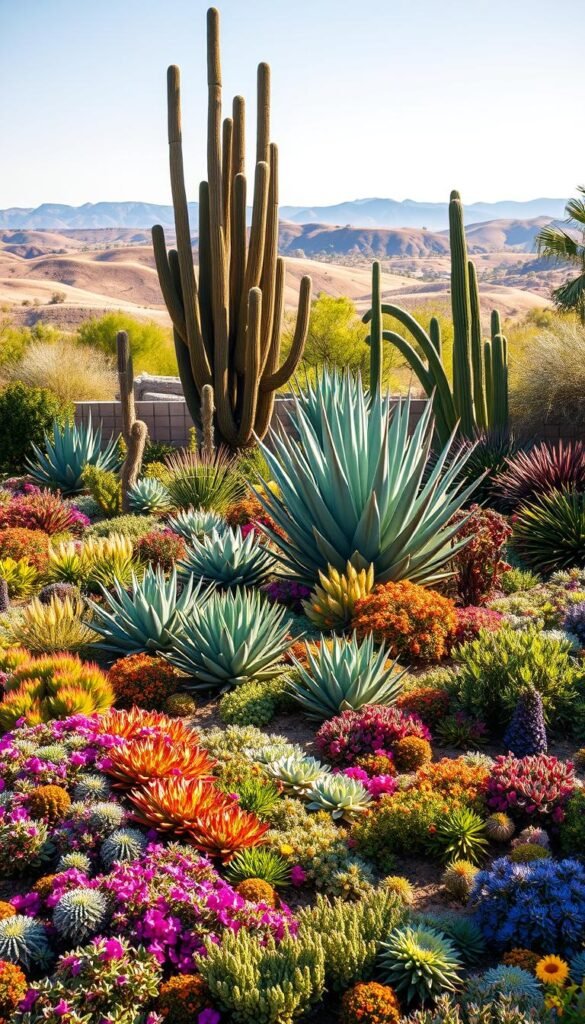
Your yard could become a vibrant oasis while cutting water use by up to 60%. As climate patterns shift and utility bills rise, homeowners across the U.S. are rethinking their approach to landscape design. What started as a solution for desert regions now offers practical benefits from California to New England.
Modern water conservation strategies go beyond simply planting cacti. You’ll find two main approaches: plants that evolved to survive dry conditions (like agave), and varieties that adapt to temporary shortages (like lavender). Knowing this difference helps you build resilient gardens that match your local weather patterns.
Many neighborhoods now encourage xeriscaping through rebate programs or plant restrictions. This isn’t about sacrificing beauty – it’s about smart planning. By grouping plants with similar water needs and using strategic layouts, you create eye-catching displays that flourish naturally.
This guide shows how to balance aesthetics with practicality. You’ll learn to select low-maintenance plants, improve soil health, and design layouts that maximize rainwater use. Whether you’re starting fresh or updating existing beds, these techniques help you save resources while supporting local ecosystems.
Getting Started with Drought-Tolerant Gardening
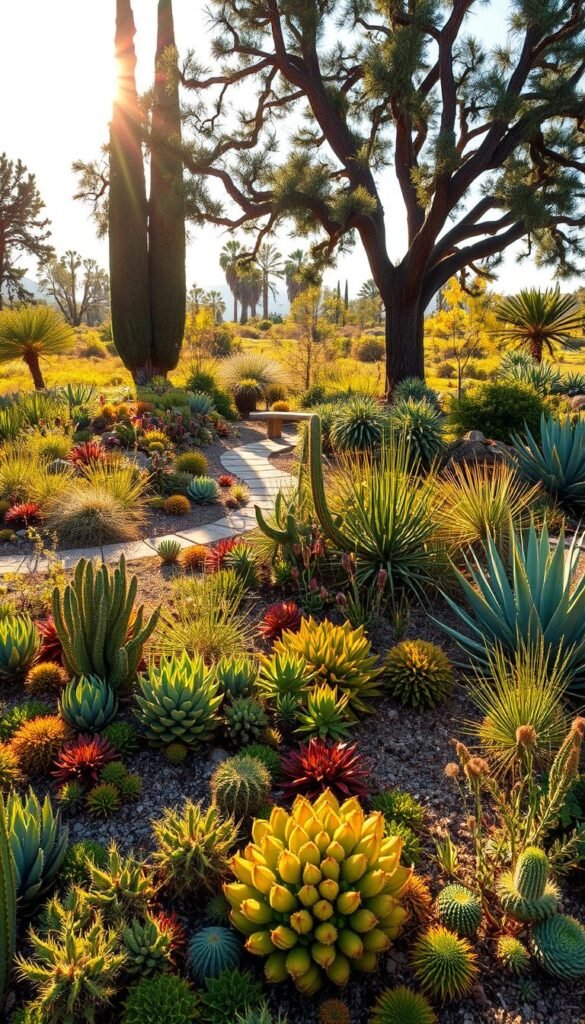
Switching to a drought-tolerant garden doesn’t mean sacrificing color or texture—it’s about working smarter with nature’s patterns. The secret lies in matching your space to plants that thrive in your local conditions. Start by observing how sunlight, wind, and soil shape your yard’s microclimate.
What Makes These Gardens Tick?
Successful designs rely on three pillars: plant adaptability, soil health, and smart grouping. Species like sage or yucca store moisture in their leaves, while deep-rooted plants tap into underground reserves. Healthy soil acts like a sponge—mix in compost to improve its water-holding power.
| Feature | Traditional Approach | Water-Wise Approach |
|---|---|---|
| Water Use | Daily sprinklers | Targeted drip systems |
| Plant Selection | Thirsty turfgrass | Native perennials |
| Maintenance | Weekly mowing | Seasonal pruning |
Savings That Grow Over Time
Beyond environmental benefits, these gardens slash costs. A study by the EPA found water-wise landscapes use 50% less water than traditional lawns. Pair this with low maintenance needs, and you’ll save both time and money.
“A well-planned drought-tolerant landscape cuts water use by half while increasing property value.”
Urban dwellers can apply these principles to small spaces too. Explore container gardening ideas that maximize limited areas while conserving resources. Remember: every plant choice matters in building a resilient, beautiful space.
Evaluating Your Garden’s Soil, Light, and Climate
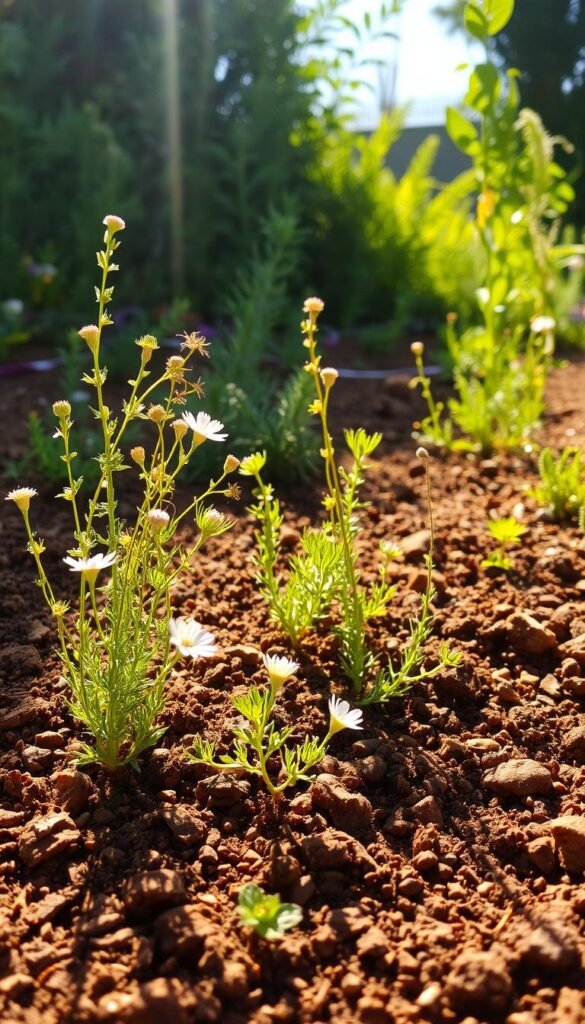
Every thriving landscape begins with understanding your unique environment. Your site holds clues about what will grow best—you just need to decode them. Start by examining three key factors: soil composition, sunlight patterns, and local climate quirks.
Identifying Your Soil Type and Conditions
Grab a handful of earth—its texture tells a story. Sandy soils drain quickly but need more moisture support. Clay holds water longer but can drown roots. Test your soil using this simple method:
- Mix soil and water in a clear jar
- Shake vigorously and let settle for 24 hours
- Measure layers to determine sand/silt/clay ratios
Rocky or loamy conditions require different strategies. Pair plants with your ground’s natural drainage habits for better results.
Observing Sunlight and Shade Patterns
Track how light moves across your yard through seasons. Full-sun areas lose moisture faster—ideal for lavender or sage. Shady spots stay cooler but may develop mold if overwatered. Use this guide:
| Light Exposure | Water Needs | Plant Examples |
|---|---|---|
| Full sun (6+ hours) | Low | Sedum, Russian sage |
| Partial shade | Moderate | Coral bells, Ferns |
| Full shade | High | Hostas, Astilbe |
Remember: Structures and slopes create microclimates. That north-facing wall might mimic cooler temperatures, while south-facing beds bake in afternoon sun.
Planning Your Water-Conserving Landscape Layout
Transform your outdoor space into a water-smart retreat by reimagining how every foot serves both beauty and purpose. Smart planning starts with dividing your property into three functional zones: dry areas needing minimal water, transitional spaces with moderate needs, and moist spots where rainwater collects naturally.
Mapping Dry, Transitional, and Moist Zones
Walk your landscape after heavy rain to spot patterns. Dry zones often appear near slopes or under eaves. Transitional areas might surround patios, while moist zones form near downspouts or low spots. Use this insight to match plants and features to each section’s water profile.
| Zone Type | Characteristics | Ideal Materials |
|---|---|---|
| Dry | Fast drainage, full sun | Decomposed granite, succulents |
| Transitional | Partial shade, mixed soil | Flagstone paths, drought-tolerant shrubs |
| Moist | Natural water collection | Rain gardens, ferns |
Replace thirsty lawns with creative design elements. Dry creek beds guide rainfall while adding visual interest. Entertaining spaces thrive on patios built with local stone or permeable pavers. These swaps cut maintenance and create inviting areas for gatherings.
Need ideas? Sketch rough plans using free online tools or consult local nurseries. For complex slopes or elaborate designs, consider professional help. As one Austin landscaper notes:
“Smart zoning turns water challenges into artistic opportunities.”
Balance hardscaping with strategic planting beds. A fire pit surrounded by gravel needs no watering, while native grasses nearby add movement. Start small—even one redesigned zone makes a measurable difference.
Efficient Watering Techniques: Irrigation & Rainwater Harvesting
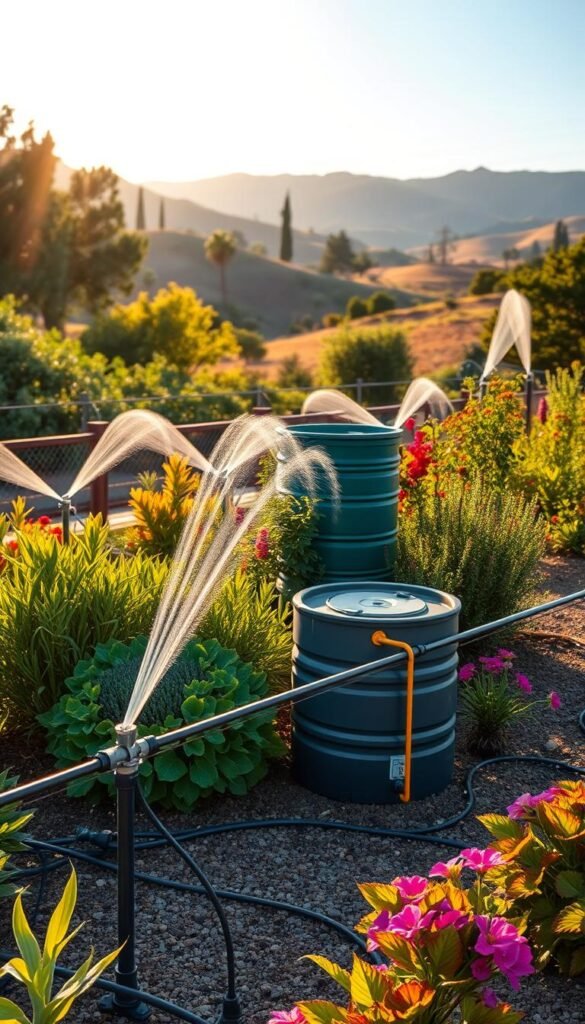
Smart watering practices can transform your garden’s health while slashing your water bill. The right systems deliver moisture where plants need it most—without waste or guesswork. Let’s explore methods that keep roots happy and your water meter calm.
Drip Irrigation vs. Traditional Sprinklers
Old-school sprinklers spray water high into the air—like hosting a pool party in a heatwave. Up to 50% evaporates before reaching roots. Drip irrigation solves this with targeted delivery:
| Feature | Sprinklers | Drip Systems |
|---|---|---|
| Water Loss | High (evaporation) | Low (direct soil contact) |
| Application | Broad coverage | Root-zone focus |
| Root Development | Shallow | Deep & strong |
| Maintenance | Minimal | Emitters need checking |
Water before sunrise to prevent leaf scorch. Deep soakings every 3-5 days beat daily sprinkles. For small spaces, try DIY irrigation solutions for raised beds using recycled materials.
Harvesting Rainwater for Sustainable Use
Why let free water escape your gutters? A single rain barrel captures ~650 gallons annually from a 1,000 sq ft roof. Use this water for thirsty plants during dry spells. Larger cisterns store enough for entire gardens.
- Position barrels under downspouts
- Screen tops prevent debris
- Elevate for gravity-fed watering
Match your system’s capacity to garden needs. A 50-gallon barrel covers about 100 sq ft weekly. Combine rainwater with drip lines for a self-sufficient setup that laughs at drought.
Designing Water-Wise Gardens: Drought-Tolerant Plants and Layouts
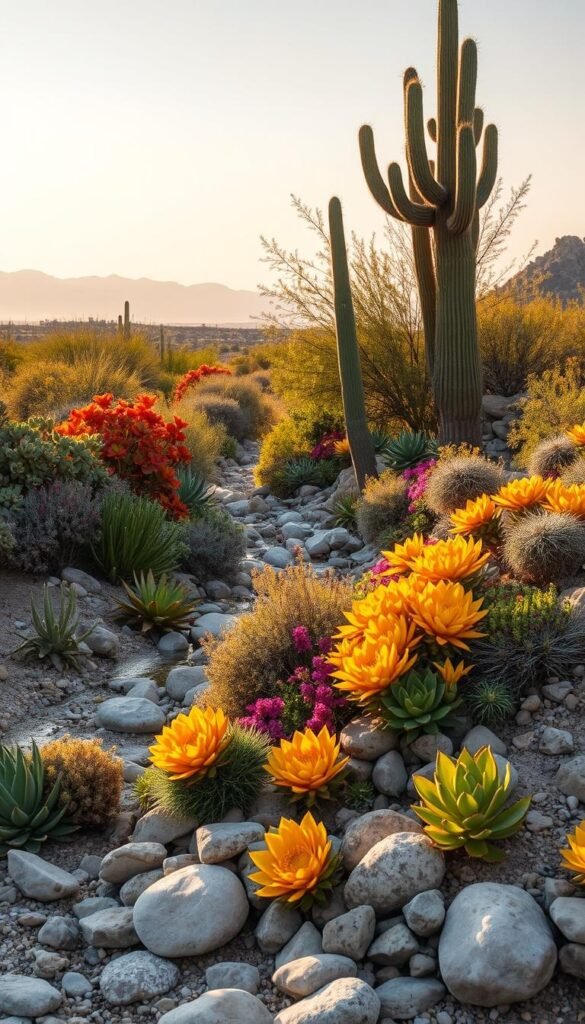
Choosing the right greenery transforms dry spaces into lively habitats. You’ll find endless options that thrive on minimal water while adding texture and color. The trick lies in pairing native species with ornamental varieties that share similar needs.
Selecting Native and Ornamental Varieties
Start with trees that anchor your space. Redbuds burst with pink blooms each spring, while Eastern Redcedars offer evergreen structure. Crape Myrtles deliver summer-long color with minimal care—perfect for creating natural shade.
Shrubs fill mid-level spaces beautifully. Ninebark stands out with purple-tinged leaves, and Yucca adds sculptural flair. For fragrance, try Abelia’s honey-scented flowers that hummingbirds adore.
| Category | Examples | Key Features |
|---|---|---|
| Trees | Redbud, Crape Myrtle | Seasonal color, shade provision |
| Shrubs | Ninebark, Yucca | Year-round interest, low upkeep |
| Perennials | Blanket Flower, Russian Sage | Pollinator magnets, aromatic foliage |
Look for natural adapters—silver-leafed Russian Sage stores moisture efficiently, while Sedum’s fleshy leaves retain water. These traits mean less watering once roots establish.
Mix local species with compatible non-natives for visual impact. A Southwest garden might blend Agave with Mediterranean Lavender, while Northeastern spaces could pair Coneflowers with ornamental grasses. As one Texas nursery owner notes:
“Diversity drives resilience—the more adapted your plant mix, the fewer resources it demands.”
Incorporating Hardscaping to Minimize Water Loss
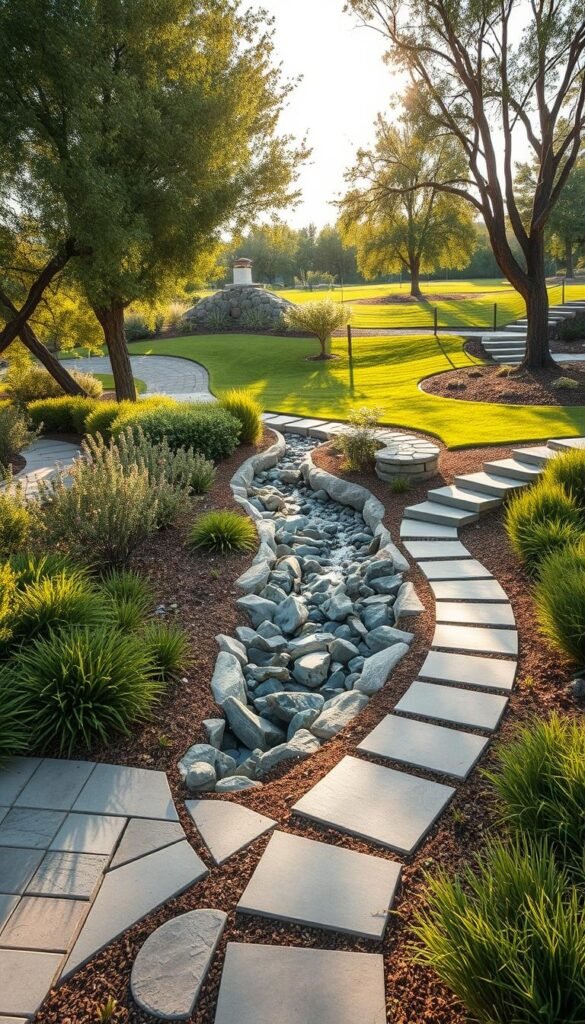
Permeable surfaces transform rainwater from runoff into a resource. By swapping traditional concrete for materials that let water seep through, you create landscapes that hydrate themselves naturally. This approach cuts irrigation needs while preventing erosion—a win for your yard and local watersheds.
Smart Surface Solutions
Gravel pathways offer both function and flair. For lasting results, layer 2 inches of compacted base rock topped with 1-2 inches of decorative gravel. This setup drains like a sieve while staying weed-resistant. Pair these paths with drought-tolerant borders for a polished look.
Patios and decks shrink thirsty planted areas without sacrificing style. A stone seating zone surrounded by gravel needs zero watering, yet hosts summer gatherings effortlessly. As one Maryland landscaper notes: “Hardscaping creates breathing room between plants, reducing competition for moisture.”
Rock features add texture while slashing maintenance. Try a dry creek bed lined with river stones—it channels rainfall during storms and looks artistic year-round. Balance these elements with clusters of native grasses for movement and contrast.
Soil Improvement and Mulching Strategies
Your garden’s success starts beneath the surface. Healthy soil acts like a savings account—it stores nutrients and moisture for lean times. Pair this foundation with smart mulching, and you’ll create a self-sustaining system that thrives in dry conditions.
Enhancing Soil Structure with Organic Matter
Think of compost as your soil’s multivitamin. Mixing decomposed leaves or aged manure into compacted earth improves drainage while boosting water retention. For cacti or succulents, blend in perlite or lava rock to aerate their root zones. Mound these plants slightly to prevent soggy roots during rare rains.
Choosing the Right Mulch for Water Retention
A 3-inch layer of shredded cedar or pine needles works like a thermostat. It keeps soil cooler in summer and reduces evaporation by up to 70%. Leave space around plant stems—mulch volcanoes invite pests and rot. For best results, refresh organic matter annually as part of your organic garden basics.
Remember: great gardens grow from the ground up. By feeding your soil and shielding it with proper mulch, you’ll build resilience that lasts through droughts and downpours alike.