Choosing the perfect border solution for your yard does more than define spaces—it elevates your entire landscape. Whether you’re aiming for crisp lines or natural curves, the right option blends durability with visual appeal. This guide walks you through popular choices and hidden gems to match your unique needs.
Your local climate plays a bigger role than you might think. Heavy rainfall areas demand water-resistant solutions, while rocky soil requires flexible installation methods. We’ll show you how to navigate these factors without compromising style.
Beyond looks, effective borders solve common yard headaches. They keep mulch where it belongs and stop grass from invading flower beds. Some materials even boost property value through polished, professional finishes.
Budget and maintenance matter too. You’ll learn which options work for quick weekend projects versus those needing professional installation. We break down lifetime costs—from initial price tags to seasonal upkeep—so there are no surprises later.
By the end, you’ll confidently select borders that work smarter, not harder. Transform your outdoor space into a cohesive, eye-catching retreat that thrives year after year.
Introduction to Edging Materials for Your Garden

Well-defined garden lines do double duty by boosting beauty and blocking weeds. These practical borders create order in your outdoor space while solving common yard challenges. Let’s explore how the right separation system protects your plants and simplifies maintenance.
Why Garden Edging Matters
Your flower beds stay protected with a physical barrier that stops grass roots from invading. No more wrestling with rogue blades stealing nutrients from your roses or hostas. Edging also acts like a bowl to contain mulch during storms, keeping your soil healthy and reducing cleanup.
Mowing becomes quicker when you have clear boundaries. Your wheels glide along the edge instead of chewing up delicate plants. Say goodbye to time-consuming trim work along delicate perennials.
The Benefits of a Defined Landscape
Crisp lines give your yard instant curb appeal—like adding picture frames to your outdoor rooms. Visitors notice the polished look, while aggressive grass varieties meet their match. Did you know? Proper edging can increase property value by making landscapes appear professionally designed.
These borders also help your plants thrive. By preventing soil mixing, they maintain ideal growing conditions for both turf and garden areas. You’ll spend less time fixing overlaps and more time enjoying your vibrant outdoor retreat.
Understanding the Role of Landscape Edging

Think of your yard as a blank canvas waiting for structure. Landscape edging acts like invisible paintbrushes that organize your property into purposeful sections. It transforms chaotic greenery into intentional outdoor space where every element has its place.
Clear boundaries do more than look neat—they guide how people interact with your yard. A crisp line between grass and flower beds keeps mulch contained during storms. Curved pathways framed with edging naturally direct foot traffic away from delicate plants.
Defining Your Outdoor Spaces
Strategic placement creates visual tricks that reshape your yard’s perception. Narrow properties feel wider when edging runs horizontally, while circular patterns make cozy nooks in large areas. Consistent materials like stone or brick tie together vegetable plots and decorative gardens, letting colorful blooms take center stage.
Your home’s architecture benefits too. Edging that mirrors roof angles or window lines strengthens curb appeal. For those building raised beds, matching edging materials create harmony between functional growing zones and ornamental features.
Well-planned landscape edging works quietly behind the scenes. It turns muddy overlaps into crisp transitions and random patches into intentional design elements. Your yard becomes easier to maintain while looking like you hired a professional designer.
Key Factors to Consider When Choosing Edging

Your landscape’s success starts with smart planning. Three elements determine whether your borders thrive or falter: environmental conditions, upkeep needs, and community rules. Let’s break down what matters most.
Climate and Soil Type
Temperature swings test durability. Plastic bends without cracking in frost-prone zones, while concrete handles summer heat better. Coastal homes? Skip metal—salt air speeds rust.
Your soil type decides installation effort. Sandy ground loves flexible strips that snap into place. For stubborn clay, stone or brick stays put without constant adjustments.
Maintenance and Local Regulations
Rainy areas demand water-resistant options like recycled rubber. Check HOA rules first—some ban certain colors or heights. Pro tip: Pressure-treated wood often meets code in fire-prone regions.
| Material | Best Climate | Soil Compatibility |
|---|---|---|
| Plastic | Extreme temps | Sandy/loamy |
| Concrete | Dry heat | Clay |
| Stone | All regions | Rocky |
Balance DIY skills with long-term goals. Quick-install vinyl saves time now, but steel lasts decades. Your perfect choice blends practicality with local climate realities.
Different edging materials for garden borders, from metal to plastic

Your outdoor space deserves borders that balance form and function. Modern solutions range from lightweight strips to heavy-duty barriers, each with unique strengths. Let’s explore what makes these products stand out—and how they’ll perform in your yard.
Overview of Options
Plastic varieties lead in affordability and ease of installation. Flexible strips bend around curves, while rigid panels create sharp lines. New composite blends resist UV damage better than older models, lasting 5-10 years with minimal upkeep.
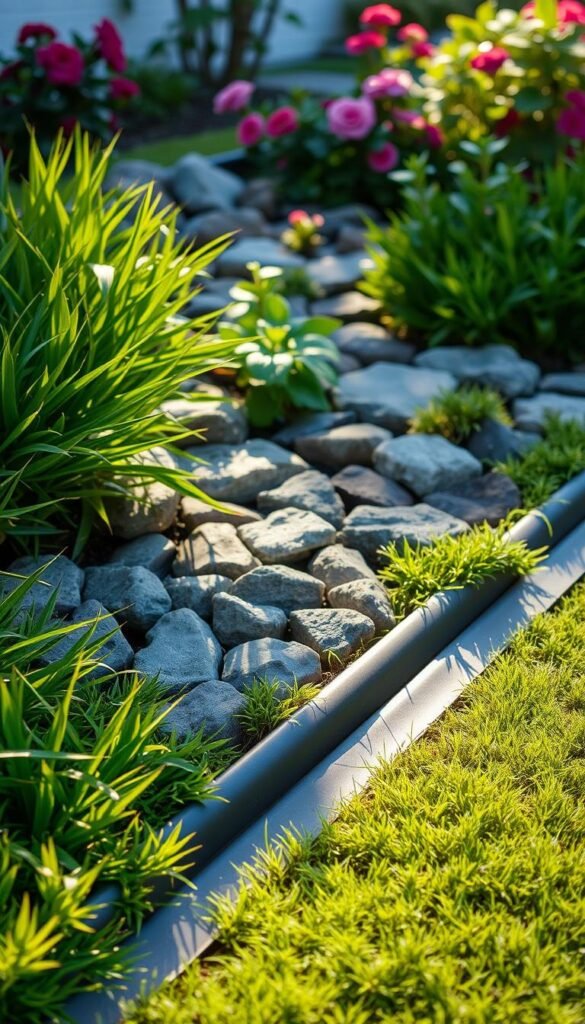
Metal choices like steel or aluminum offer sleek profiles for contemporary designs. Powder-coated finishes prevent rust and come in charcoal or bronze tones. These handle extreme weather but need occasional adjustments in shifting soil.
| Material Type | Cost Range | Durability |
|---|---|---|
| Plastic | $0.50-$3 per foot | Moderate |
| Metal | $4-$12 per foot | High |
| Hybrid | $2-$8 per foot | Varies |
Innovative hybrids combine materials for better performance. Recycled plastic-rubber blends cushion lawn equipment impacts, while metal-reinforced vinyl holds its shape in rocky ground. Choose the right landscape edging by matching these features to your soil type and design vision.
Formal gardens often use metal for crisp definition, while cottage styles lean toward weathered wood or stone lookalikes. Your budget and maintenance preferences will steer you toward the perfect match.
Exploring Plastic and Vinyl Edging Options
Transform your landscape with flexible solutions that balance affordability and functionality. Plastic and vinyl products offer quick upgrades for gardeners seeking clean lines without complex installations.
Installation Tips for a Smooth Finish
Sunlight becomes your ally when unrolling stiff plastic edging. Let it warm for 30 minutes to soften—this helps create gentle curves around tree bases. For straight borders, use landscape spikes every 18 inches to prevent shifting.
Heavy-duty resin versions need trenches. Cut a 2-inch groove with an edging tool, then tap the material into place with a rubber mallet. This method locks borders securely in clay or rocky soil.
Cost-Effective and Easy-to-Install Solutions
Standard plastic edging rolls cover 100 feet for under $50—ideal for large properties. The no-dig option uses built-in stakes that push through soft ground in minutes. Pro tip: Overlap roll ends by 6 inches to avoid gaps.
Vinyl rises above the competition with 10-inch tall barriers. These stop mulch migration in sloped beds while adding visual drama. High-density formulas resist cracking in freezing temps, outlasting basic plastic by years.
Metal Edging Solutions: Steel, Aluminum, and More

Metal borders bring industrial strength to your landscape while maintaining sleek aesthetics. These solutions create crisp boundaries that survive heavy equipment and harsh weather, blending practicality with modern design.
Strength Meets Longevity
Steel edging laughs at lawnmowers and shrugs off car tires. Its powder-coated finish resists rust, even in rainy climates. Unlike flimsier options, these strips stay perfectly aligned through freeze-thaw cycles and soil shifts.
Aluminum offers similar durability at half the weight. It bends smoothly around tree roots without cracking—ideal for curved garden beds. Both metals block invasive grass better than porous materials like wood.
Customizable Style for Every Yard
Choose from charcoal, bronze, or earth-toned finishes that disappear into your landscape. The slim profile creates invisible barriers that highlight plants instead of competing with them. Pre-formed corners let you build geometric patterns or organic shapes effortlessly.
Modern aluminum options come in metallic sheens for contemporary spaces. Pair them with gravel paths or minimalist shrubs for a polished look. Unlike plastic, metal maintains its color without fading—no annual touch-ups needed.
Natural Choices: Wood, Stone, and Brick Edging
Timeless materials blend seamlessly with nature while adding structure to your outdoor sanctuary. These organic options create borders that age gracefully, developing character as they interact with sunlight and seasons.
Enhancing Your Landscape’s Aesthetic
Wood brings warmth through cedar’s rich tones or redwood’s earthy hues. These insect-resistant varieties need no chemical treatments, staying beautiful for years. Flexible sections with pre-attached spikes make installation a breeze—perfect for curved paths around elevating your garden’s aesthetic.
Brick transforms boundaries into art with its classic red clay look. Mix sizes and laying patterns—herringbone for formality, staggered for cottage charm. The fired clay withstands moisture better than untreated wood, maintaining crisp lines between lawn and blooms.
Stone offers endless texture combinations. Smooth river rocks create soft borders, while jagged slate pieces add drama. For budget-friendly elegance, concrete pavers mimic weathered cobblestones or flagstone at half the cost.
Heavier materials need proper preparation. Dig a 4-inch trench filled with gravel for drainage, then tap stones into place with a rubber mallet. Consider professional help for intricate designs or sloped yards—their expertise prevents shifting over time.
Innovative Alternatives: Rubber and Concrete Edging
Redefine your yard’s boundaries with materials that turn sustainability into style. These modern solutions prove eco-conscious choices can deliver both practicality and visual impact—no compromises needed.
Earth-Friendly Performance Meets Design
Rubber edging transforms old tires into landscape heroes. Its flexibility lets you snake around tree roots and garden curves effortlessly. The included spikes make installation a breeze—just press them into soft soil without digging trenches.
Concrete options mimic natural textures while outlasting traditional materials. Choose from brick-like patterns or weathered stone finishes that fool the eye. These heavy-duty borders simplify mowing by creating crisp, permanent lines that resist shifting.
- Recycled rubber withstands freezing temps without cracking
- Concrete’s weight prevents movement in heavy rain
- Both materials require minimal yearly upkeep
High-traffic areas near driveways thrive with these options. Rubber’s shock absorption protects against accidental impacts, while concrete’s rugged surface handles foot traffic gracefully. Pro tip: Use rubber edging around play areas—its soft edges make falls less dangerous.
| Feature | Rubber | Concrete |
|---|---|---|
| Installation Time | 15 mins per 10ft | 1 hour per 10ft |
| Lifespan | 10-15 years | 25+ years |
| Custom Shapes | Yes | Limited |
Whether you’re crafting winding paths or geometric beds, these materials adapt to your vision. Rubber bends to your creative whims, while concrete provides timeless structure. Both options elevate your landscaping while keeping maintenance simple.
Easy Install and DIY Considerations for Your
Transform your yard’s edges from messy to masterful with projects that fit any skill level. Basic tools like a spade, mallet, and level handle most installations—no heavy machinery required. Flexible vinyl strips or lightweight aluminum snap together for curved designs, while stone and brick work best for straight lines if you’re new to landscaping.
Consider your soil’s personality before digging. Sandy ground holds spikes easily, but clay needs deeper trenches with gravel bases. Mark boundaries with spray paint first, adjusting curves until they feel natural underfoot. Pro tip: Install borders slightly above soil level to prevent tripping hazards and simplify mowing.
Weekend warriors love modular systems with pre-cut pieces that lock into place. These kits eliminate measuring mistakes and speed up the process. For permanent solutions, hire help when dealing with heavy concrete slabs or complex terrains—safety first!
Your finished borders will reward effort with years of crisp definition. Enjoy the satisfaction of stepping back from a project that blends practicality with personal creativity, all while keeping your outdoor spaces neatly contained.