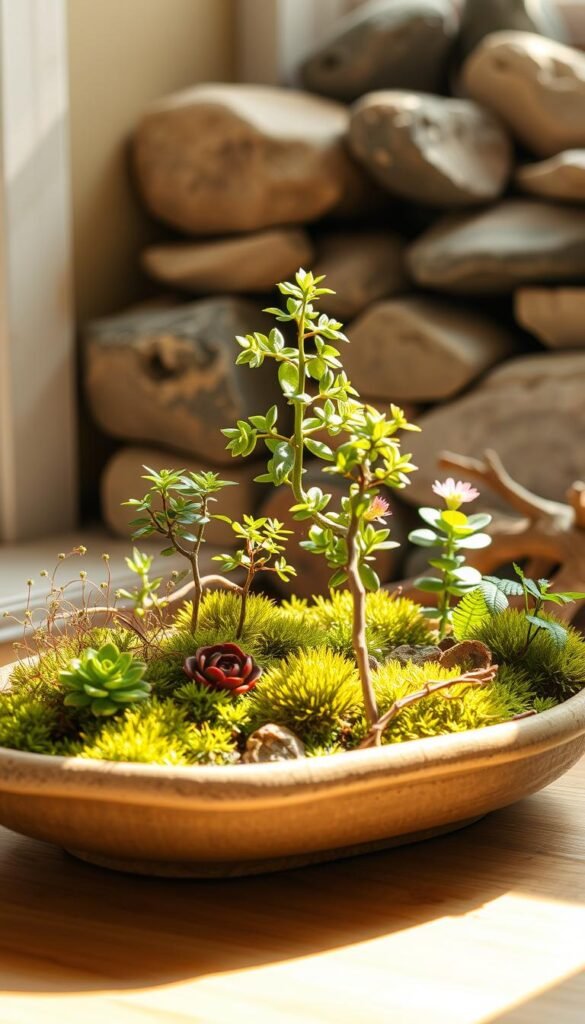
Imagine crafting a tiny, thriving world right on your coffee table. These pint-sized ecosystems let you design living art that brightens your home while satisfying your green thumb. Whether you’re short on space or crave a creative project, these arrangements turn everyday containers into captivating focal points.
They’re perfect for anyone new to plant care, offering a low-stakes way to experiment with textures and colors. You can mix succulents, moss, and flowering varieties to mimic full-scale natural scenes. Seasonal themes like winter wonderlands or autumn forests keep your decor fresh year-round.
What makes these projects special? They adapt to your lifestyle. Build a temporary centerpiece for holidays or nurture a long-term display that evolves over months. Even during chilly winters, you’ll enjoy nurturing growth without braving the cold.
Beyond personal joy, these compact designs make heartfelt gifts. Pair them with decorative stones or miniature figurines for added charm. Ready to dive in? We’ll walk through selecting plants, choosing containers, and maintaining your tiny paradise.
Understanding the Basics of Dish Gardens
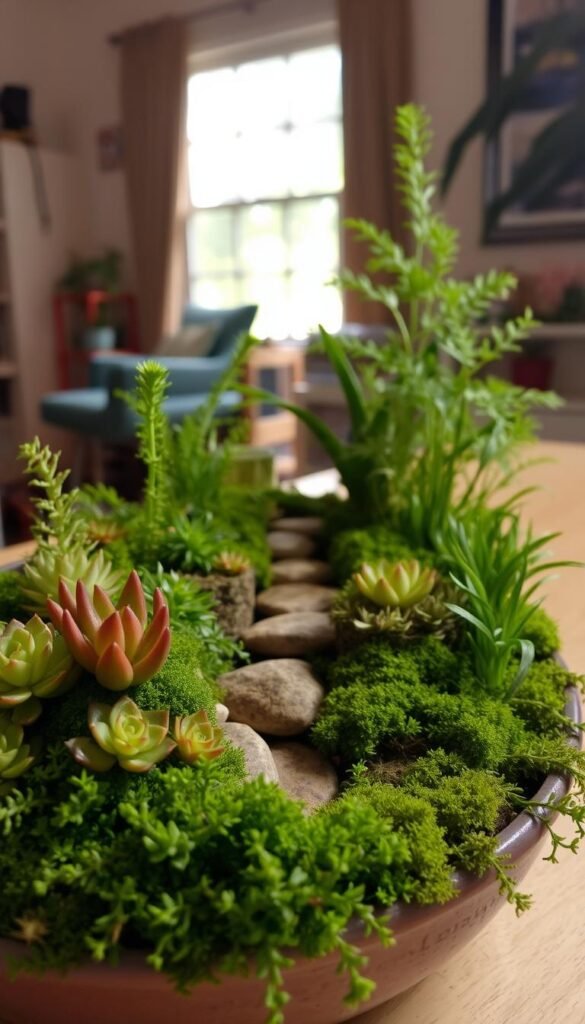
Create a miniature world where every plant plays a role in a harmonious indoor scene. These living arrangements transform ordinary containers into artistic displays that capture nature’s essence in compact form.
What Is a Dish Garden?
Think of it as a tiny ecosystem thriving in a shallow container. Unlike single houseplants, these gardens layer multiple species to mimic natural landscapes. You might combine spiky succulents with velvety moss or pair flowering plants with trailing vines for depth. The magic happens when varied textures and heights work together like puzzle pieces.
Key Features of Mini Indoor Landscapes
Successful designs rely on two rules: compatible care needs and visual storytelling. Choose plants that enjoy the same light and water—desert cacti won’t thrive beside tropical ferns. Scale matters too—small-leaved varieties trick the eye into seeing vast forests in a 12-inch space.
Try these design tricks:
- Use tall specimens as “trees” at the back
- Add mid-height plants as shrubs
- Place ground covers like moss up front
Whether crafting a zen rock garden or a whimsical fairy scene, your container becomes a stage for nature’s drama. Seasonal themes let you refresh displays without starting from scratch—swap poinsettias for spring blooms as months change.
Selecting the Perfect Container and Materials
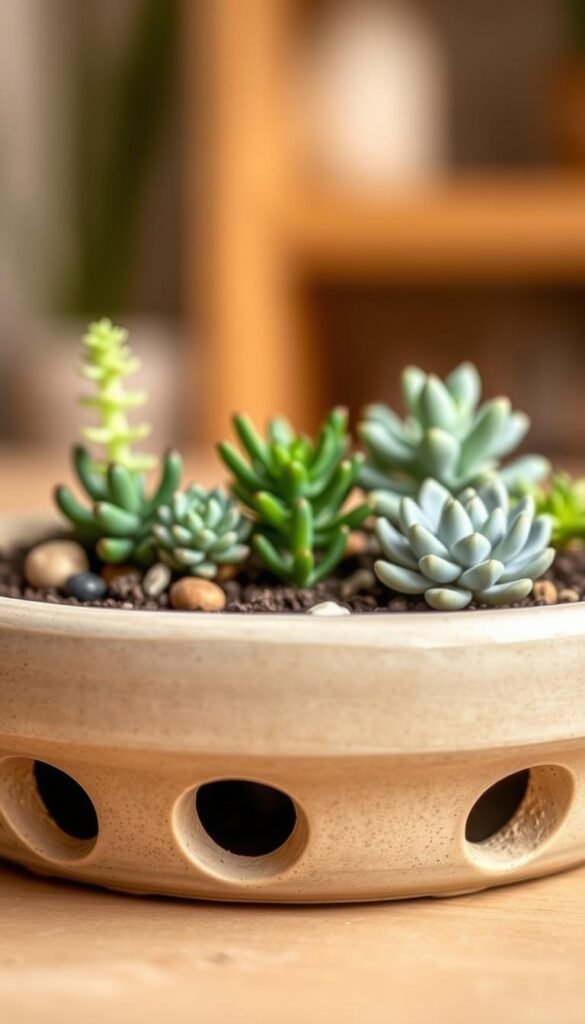
Your container choice sets the stage for your miniature ecosystem’s success. Whether repurposing vintage finds or using store-bought pots, every decision impacts your plants’ health and visual appeal.
Container Choices and Drainage Solutions
Shallow vessels work best—think ceramic bowls, resin trays, or metal basins. Waterproof containers without drainage holes need special care. Line them with pebbles or pumice stones before adding soil. This creates air pockets that prevent soggy roots.
Match your container’s size to plant needs. Small pots (4-6” wide) suit compact succulents, while 10” trays let you mix taller specimens. Hunt for unique pieces at flea markets—old cake stands or weathered toolboxes add character.
Creative Top Dressing and Adornments
Finish your design with texture-rich layers. Crushed glass mimics water features, while moss acts as natural carpeting. For desert themes, try red lava rocks or bleached seashells.
These toppings do more than look pretty. They slow evaporation and anchor delicate roots. Change them seasonally—swap holiday-themed crystals for spring wildflowers to keep displays fresh.
Dish Garden 101: A Beginner’s Guide to Creating Mini Indoor Landscapes
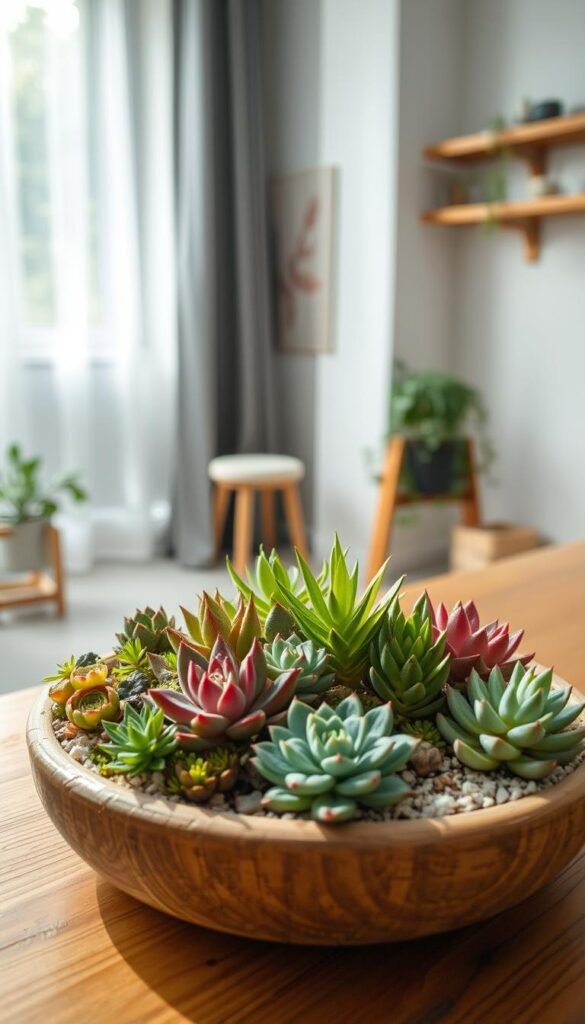
Transform your tabletop into a living masterpiece with these expert planting strategies. The right approach depends on whether you want a permanent display or seasonal flexibility.
Step-by-Step Planting Techniques
Start by hydrating your greenery 24 hours before planting. Gently squeeze nursery pots to release root balls without damaging delicate systems. For direct planting, create a well in your soil mix that’s 20% wider than the roots. This gives them space to spread naturally.
Using Grow Pots vs. Direct Planting
Nestling plants in their original containers offers surprising advantages. This method lets you rotate sun-loving specimens weekly and replace seasonal bloomers effortlessly. It’s ideal for:
- Temporary holiday displays
- Moisture-sensitive containers
- Experiments with plant pairings
For permanent arrangements, combine two parts potting soil with one part gritty succulent mix. Add a charcoal layer at the base to filter water naturally.
Arranging Your Plants for Maximum Impact
Think like a theater director when positioning your cast of plants. Place your tallest star slightly off-center for dynamic energy. Surround it with mid-height textures, then let trailing varieties spill over edges. Leave breathing room between species—crowded roots compete for resources.
Let your creation rest for 48 hours after planting before watering. This helps roots recover from transplant shock and adapt to their new soil environment.
Caring for Your Dish Garden: Watering, Light, and Fertilizing

Your miniature ecosystem thrives when its basic needs are met with precision. Mastering three elements—hydration, sunlight, and nutrients—keeps your arrangement vibrant through seasons.
Watering Methods and Scheduling Tips
Target root balls individually using a narrow-spout watering can. This prevents overwatering ferns while ensuring cacti get enough moisture. Check soil dryness by pressing your finger an inch deep—if it feels like a wrung-out sponge, wait another day.
Optimizing Light Conditions for Your Plants
Position sun-loving varieties like jade plants within 3 feet of south-facing windows. For shade-preferring peperomias, place them 10 feet from bright window areas. Rotate containers weekly to prevent lopsided growth—especially important for symmetrical designs.
Feed sparingly in early spring using half-strength liquid kelp. “Less is more with nutrients in shallow containers,” advises veteran horticulturist Mara Lin. Desert species often thrive without fertilizer, while tropical mixes benefit from annual boosts.
Design Ideas and Plant Choices for Your Indoor Landscape
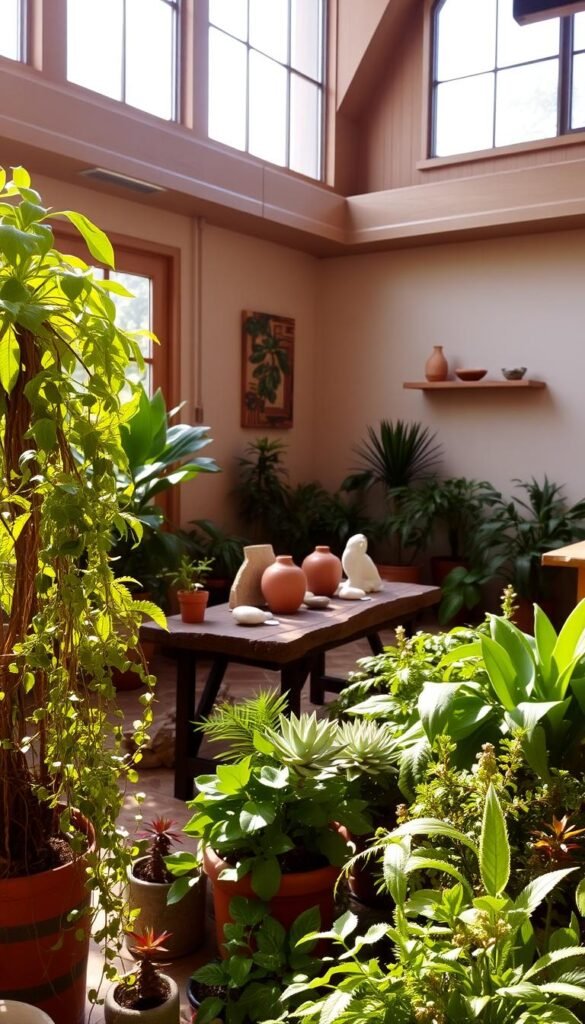
Turn your tabletop into a layered masterpiece using the “thriller, filler, spiller” approach. This design formula creates eye-catching arrangements by combining three plant types: vertical showstoppers, mid-sized supporters, and cascading accents.
Mixing Blooming, Trailing, and Upright Plants
Start with a bold centerpiece like a red bromeliad or snake plant. Surround it with compact choices like peperomia or button fern. Let ivy or pothos spill over the container’s edge for movement. Kalanchoes and cyclamen add pops of color that change with seasons.
Match care needs first. Pair African violets (needing humidity) with ferns, not desert succulents. Use this combo guide:
| Plant Type | Examples | Light Needs |
|---|---|---|
| Blooming | Mini roses, begonias | Bright indirect |
| Trailing | Philodendron, creeping fig | Low to medium |
| Upright | Jade plant, bird’s nest fern | Varies by species |
Exploring Different Garden Styles and Themes
Desert scenes shine with agave and red sand. Fairy gardens demand tiny bridges amid ivy and moss. For modern spaces, use geometric pots with snake plants and smooth stones.
Holiday themes thrive with poinsettias or Christmas cactus. Add cinnamon sticks or mini ornaments for festive flair. Rotate themes every 3-4 months to keep your display exciting.
Pro tip: Use aquarium gravel for water features in Japanese zen designs. It creates realistic dry riverbeds without moisture damage.
Wrapping Up Your Dish Gardening Journey
Your living masterpiece will keep evolving with simple care. Dish gardens thrive when you prune spent leaves monthly and rotate plants for even sun exposure. Watch for roots pushing through soil surfaces—this signals it’s time to replace overgrown specimens with compact varieties.
Position new additions slightly higher than surrounding soil. They’ll settle naturally over weeks. Make sure to use fast-draining mixes with perlite in humid spaces. Top dressings like pebbles reduce watering needs while keeping roots secure.
Seasonal shifts demand adjustments. Move sun-loving arrangements closer to windows in winter. Combat pests quickly with neem oil sprays—isolate affected plants first. Share your skills by crafting themed gardens as gifts, using cuttings from healthy originals.
As your dish garden becomes a thriving hub, apply these techniques to larger projects. The patience and creativity you’ve gained translate beautifully to balcony containers or backyard beds. Every snip and adjustment deepens your connection to nature’s rhythms.