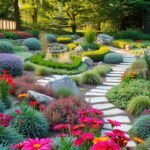

Imagine stepping into a backyard that feels like a vacation every day. Sun-warmed stone paths, fragrant herbs, and relaxed seating areas create a sanctuary inspired by coastal regions of Italy and Greece. This style thrives in dry climates but adapts beautifully to most environments, blending natural beauty with timeless elegance.
Drought-resistant plants like lavender and olive trees form the backbone of these spaces, needing minimal water while delivering maximum visual impact. Studies show well-planned landscapes can boost property value by 5-15% while creating personal retreats that reduce stress. For smaller yards, vertical planters or compact citrus trees maintain the aesthetic without overcrowding.
Your design journey starts by mixing textures—rough terracotta pots against smooth stucco walls, or gravel pathways beside bubbling fountains. Creative gardening ideas help merge functionality with artistry, whether adding mosaic accents or building shaded pergolas for afternoon lounging.
This approach isn’t just about looks. It’s a lifestyle shift toward savoring meals outdoors and connecting with nature. Even simple additions like wrought-iron lanterns or ceramic urns can transform ordinary spaces into Mediterranean-inspired havens that feel both luxurious and lived-in.
Understanding Mediterranean Garden Aesthetics
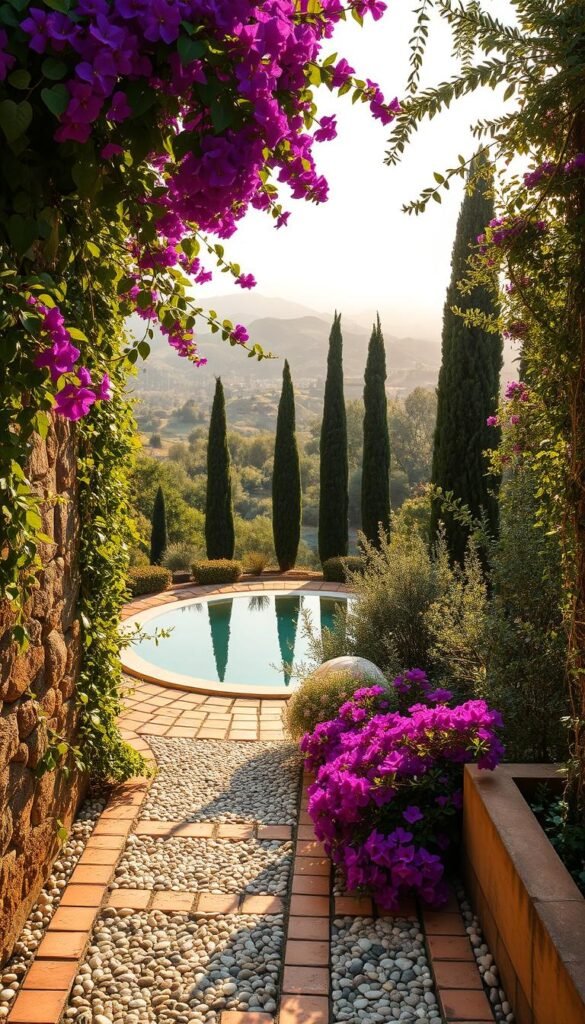
Discover how centuries of cultural exchange shaped outdoor spaces that feel both ancient and fresh. These designs borrow from Greek courtyards, Roman villas, and Moorish tilework, creating a look that’s rooted in history yet endlessly adaptable.
Origins and Inspirations
Coastal regions where Europe meets Africa and the Middle East sparked a fusion of styles. Think arched doorways from Italy, geometric patterns from Morocco, and olive groves straight out of Greece. This blend gives your space a sense of timeless wanderlust without needing a passport.
Color, Texture, and Materials
Sun-baked landscapes inspire bold choices. White walls make cobalt planters pop, while terracotta pots echo clay-roofed villages. Rough stone paths contrast with sleek stucco, mimicking cliffs meeting the sea. For durability, choose materials like iron gates or natural stone pavers that weather beautifully.
Bright hues work magic under strong sunlight—mustard yellows glow at dusk, and lavender blooms stand out against gravel. Balance rustic charm with refined touches, like a mosaic table beside a weathered bench. Mixing eras and textures creates depth while keeping maintenance low.
Tuscan Garden Traditions and Design Elements
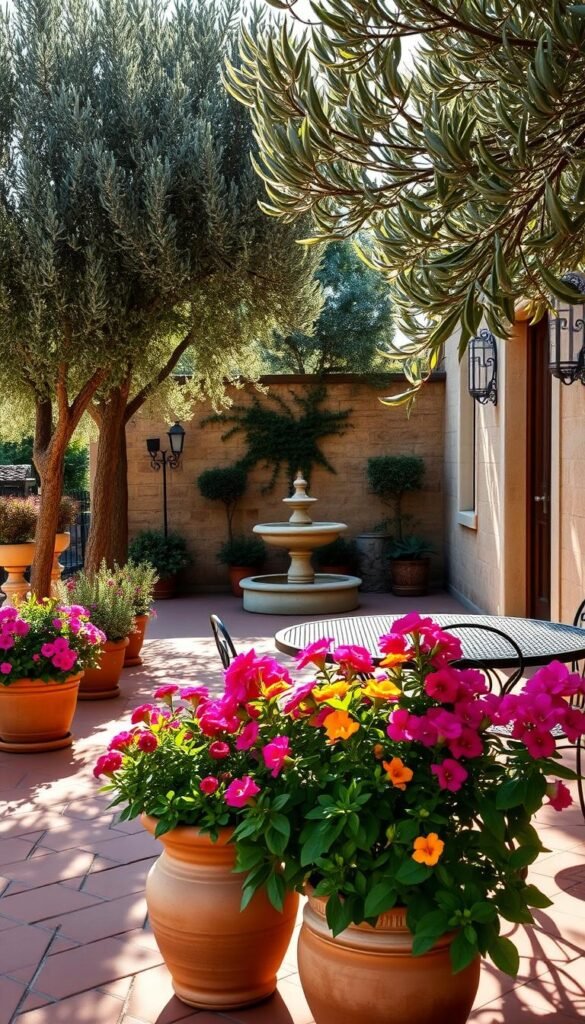
The heart of Tuscan design lies in its balance of rustic charm and structured elegance. Centuries-old practices meet modern functionality here, creating outdoor spaces that feel both purposeful and poetic.
Terracotta Pots and Olive Trees
Warm, earthy containers define this style. Oversized terracotta pots act as sculptural anchors, their orange-red hues mirroring sunbaked Italian villages. These clay giants thrive when grouped in odd numbers or paired with cascading herbs like rosemary.
No Tuscan space feels complete without olive trees. Their twisted trunks and silver-green leaves add instant heritage. Studies show these slow-growing trees increase perceived property value by 12% in surveyed landscapes.
Terraced Layouts and Architectural Touches
Sloped gardens get purpose with stone-walled tiers. These leveled areas prevent erosion while creating “outdoor rooms” for dining or relaxation. Use local rocks for retaining walls to blend with regional geology.
Arched gateways or wrought-iron trellises add vertical interest. Train jasmine or grapevines over these structures for seasonal fragrance and shade.
Balancing Structure with Natural Beauty
Harmony emerges when man-made features complement nature’s spontaneity. Pair geometric hedge patterns with wild lavender borders. Let creeping thyme soften flagstone paths.
| Structural Elements | Natural Elements | Balance Tip |
|---|---|---|
| Terracotta pots | Olive trees | Group pots near tree bases |
| Stone walls | Climbing vines | Let plants cover 30% of surface |
| Gravel paths | Sprawling herbs | Allow plants to edge walkways |
For smaller yards, focus on elevating your garden aesthetic through vertical planters or dwarf citrus varieties. Even compact spaces can channel Tuscan magic through strategic material choices and layered plantings.
Embrace Mediterranean Flair with Tuscan Garden Design Inspirations
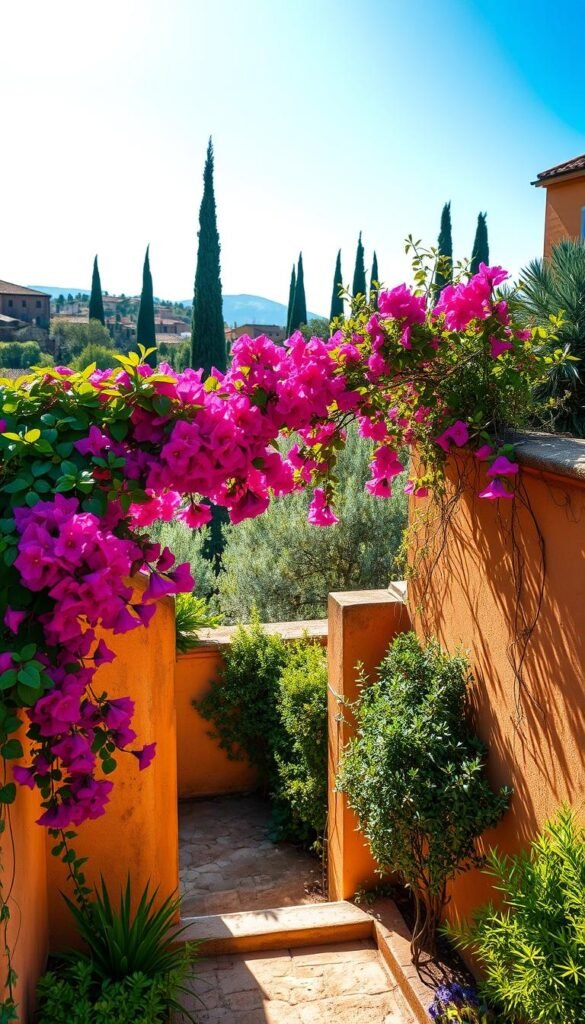
Creating an inviting outdoor retreat starts with understanding two essentials: smart layouts and earth-friendly materials. These foundations turn ordinary yards into cohesive, welcoming spaces that mirror coastal European charm.
Key Design Concepts
Divide your landscape into “outdoor rooms” using low walls or planters. A dining area might flow into a lounge space, separated by lavender hedges or olive trees. This approach maintains openness while defining zones for different activities.
Choose materials that age gracefully. Local stone patios develop character over time, while gravel paths mimic dry creek beds. For Tuscany-inspired garden ideas, blend rough textures with smooth surfaces—think tufa stone benches beside polished ceramic pots.
Incorporating Local Materials
Source stones and aggregates from nearby quarries to reduce costs and environmental impact. Warm-toned limestone walls pair perfectly with regional plants like sage or bougainvillea. These choices create visual harmony between your garden and its surroundings.
| Material | Use | Benefit |
|---|---|---|
| Tufa stone | Retaining walls | Natural drainage |
| Terracotta | Planters | Root protection |
| Gravel | Pathways | Weed suppression |
Soft angular architecture with trailing vines. Jasmine-covered pergolas or ivy-draped walls make concrete structures feel organic. Pro tip: Let plants cover about one-third of hard surfaces for balanced beauty.
Architectural Features and Outdoor Structures
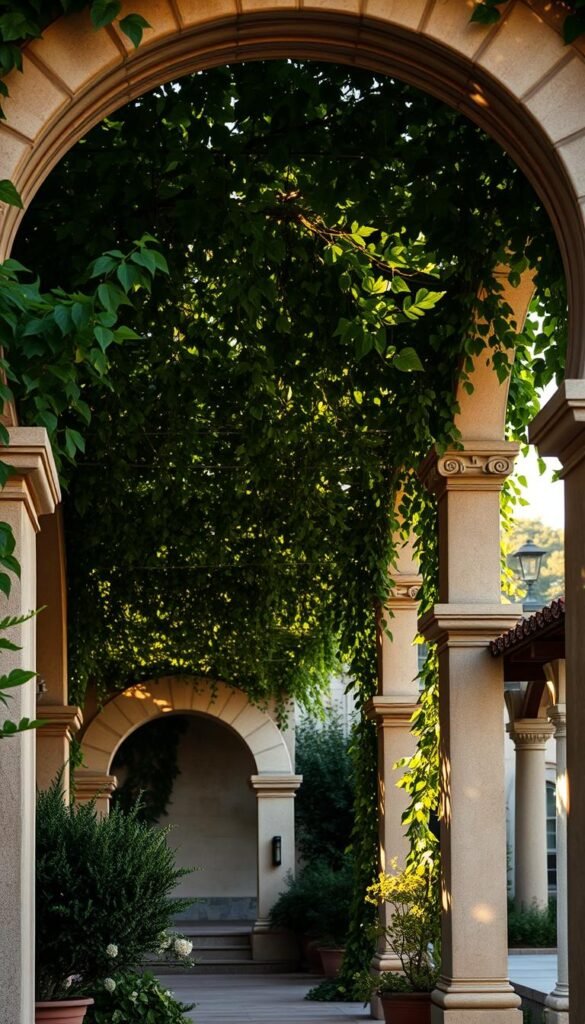
Transform your outdoor space with timeless structures that blend form and function. Thoughtful designs turn practical elements into artistic statements, creating focal points that anchor your landscape.
Pergolas, Arbors, and Climbing Vines
These shade providers do double duty. Their sturdy frames support flowering vines like bougainvillea, whose magenta blooms cascade overhead. Wisteria and jasmine add fragrance, turning basic structures into sensory experiences.
Position arbors near seating areas for instant ambiance. Train grapevines across pergola beams—you’ll get dappled sunlight and edible rewards. For quick coverage, Boston ivy climbs 10 feet yearly, softening concrete walls.
Stone Pavers and Natural Accents
Flagstone paths bring earthy texture underfoot. Choose irregular shapes for rustic charm or cut stones for clean lines. Pair with gravel borders to prevent weeds while mimicking dry riverbeds.
| Material | Best Use | Maintenance Tip |
|---|---|---|
| Limestone | Dining patios | Seal annually |
| Sandstone | Curved pathways | Brush debris weekly |
| Granite chips | Decorative borders | Rake level monthly |
Stacked stone walls add vertical interest and prevent erosion. Let creeping thyme spill over edges for a lived-in look. “A well-placed boulder can anchor a planting bed better than any sculpture,” says landscape designer Mara Hoffman.
Complete the scene with wrought-iron lanterns hung from pergola posts. Their flickering light highlights textured walls after sunset, extending your garden’s magic into evening hours.
Integrating Water Features and Natural Elements
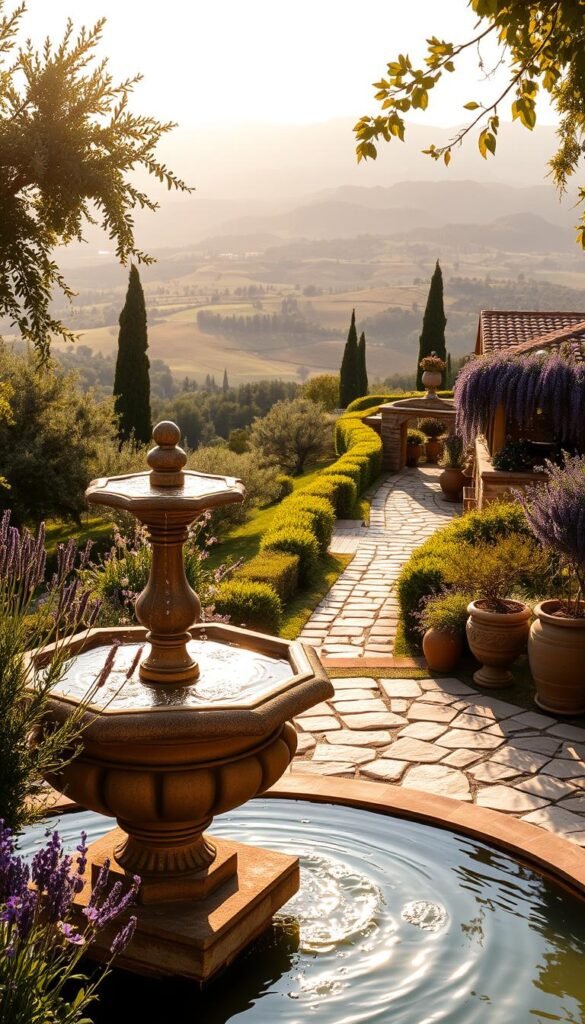
Water brings balance to sun-drenched spaces, offering relief from summer heat while attracting lively visitors. Strategic placement creates cooling microclimates and supports local ecosystems. Let’s explore how flowing and still water elements enhance both beauty and biodiversity.
Fountains, Pools, and Reflecting Surfaces
Tiered fountains with recirculating pumps become focal points that mask urban noise. Opt for limestone or travertine bowls—their porous surfaces develop a weathered patina over time. Shallow reflecting pools double your garden’s visual impact, mirroring skies and surrounding foliage.
| Feature Type | Materials | Key Benefit |
|---|---|---|
| Tiered Fountain | Limestone | Sound diffusion |
| Reflecting Pool | Polished stone | Light amplification |
| Wall Spout | Terracotta | Space efficiency |
Position water elements where afternoon breezes carry mist toward seating areas. This natural cooling trick lowers perceived temperatures by 5-8°F during peak heat.
Sustainable Irrigation and Bird-Friendly Designs
Connect decorative features to practical watering systems. Overflow from fountains can hydrate nearby lavender or rosemary plants. Add stone troughs with gradual slopes—birds prefer 1-2″ depths for safe drinking and bathing.
For dry climates, consider well-fed systems where water filters through gravel beds before reuse. “A recirculating feature uses 90% less water than traditional lawn irrigation,” notes landscape architect Elena Marquez. Incorporate perching stones near birdbaths to create welcoming pit stops for feathered guests.
Selecting Drought-Tolerant Mediterranean Plants
Choosing the right greenery turns dry conditions into design opportunities. Focus on species that thrive with minimal watering while adding texture and color to your space.
Evergreen Shrubs and Aromatic Herbs
Rosemary and lavender anchor beds with fragrant silver-green foliage that resists heat. These shrubs require pruning just twice yearly, making them ideal for low-maintenance plants lists. Boxwood hedges maintain structure year-round, framing pathways without constant shaping.
Vibrant Blooms and Succulents
Sedums and agaves store water in their fleshy leaves, surviving weeks without rain. Pair them with drought-hardy flowers like coneflowers, whose purple petals attract pollinators. For fiery accents, red yucca sends up tall spikes of coral blooms even in poor soil.
Layer textures for visual depth—soft lamb’s ear beside spiky aloe vera creates contrast. Gravel mulch around plants reduces evaporation while echoing natural Mediterranean landscapes. Your garden becomes a resilient oasis that flourishes under the sun’s gaze.