What if your backyard could become a peaceful escape from daily stress? Many homeowners are reimagining their yards by focusing on clean lines and purposeful elements. This approach removes visual clutter while highlighting nature’s inherent beauty, proving that less truly can be more.
These intentional landscapes prioritize functionality over excess. Instead of filling every corner with plants or decorations, they use open areas and strategic plantings to create harmony. The result? A low-maintenance space that feels both calming and sophisticated.
You might wonder: does simplicity mean sacrificing style? Absolutely not. By carefully selecting materials and plants, you can craft an environment that looks polished year-round. Think structured pathways, geometric planters, and foliage with clean shapes—elements that work together to create balance.
This guide will show you how to transform any yard into a sanctuary. Whether you have a sprawling lawn or a cozy patio, the principles of intentional design adapt effortlessly. You’ll discover how thoughtful choices can turn your outdoor area into a place where relaxation comes naturally.
Understanding the Essence of Modern Minimalist Garden Design

At its core, this approach to landscaping revolves around purposeful restraint. It’s not about emptiness but intentionality—every element serves a role while letting nature shine. The magic lies in how clean lines and thoughtful layouts transform ordinary yards into serene retreats.
Simplicity and Clean Lines
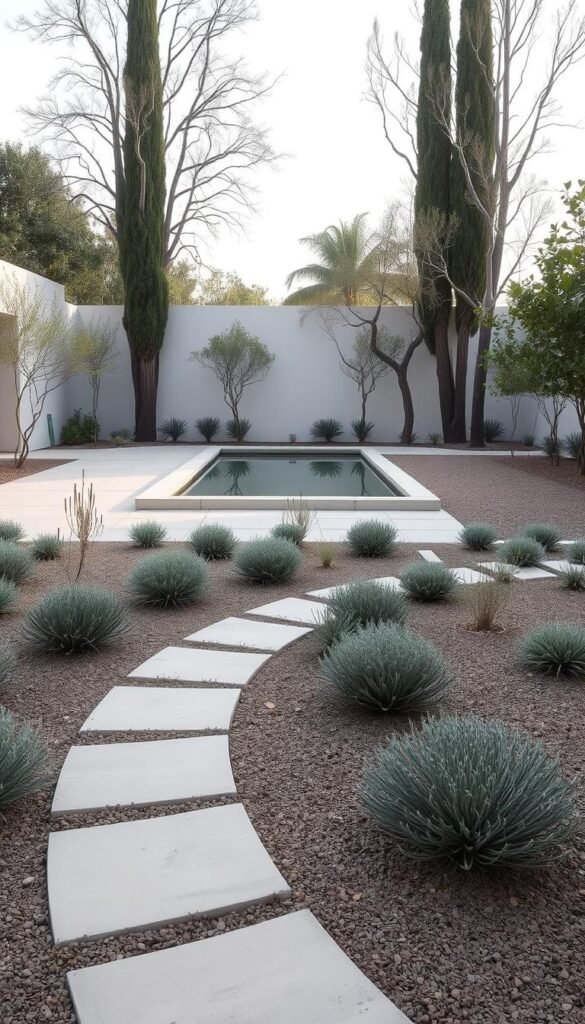
Straight edges and geometric shapes act as silent organizers in your outdoor space. Rectangular stone pathways guide footsteps, while square planters frame greenery without competing for attention. This structured foundation creates visual calm, making even compact areas feel uncluttered.
Neutral tones like soft grays and muted greens amplify this effect. They form a cohesive backdrop that highlights textures—think smooth concrete against feathery grasses. As you master minimalist landscaping principles, you’ll notice how less decoration often means more impact.
Creating a Tranquil Outdoor Atmosphere
Tranquillity emerges from balance. A single sculptural tree or water feature becomes a focal point, surrounded by open spaces that let the mind unwind. Materials matter too: weathered wood or polished stone add warmth without disrupting the sense of order.
Sound plays a subtle role. Wind rustling through ornamental grasses or water trickling over pebbles enhances the peaceful vibe. By prioritizing quality over quantity, your space becomes a refuge where stress dissolves naturally.
Planning Your Modern Minimalist Garden Layout with Functionality in Mind

Smart organization turns ordinary yards into purposeful retreats. Start by mapping your outdoor space like a floor plan—identify where you’ll unwind, dine, or host friends. This thoughtful approach ensures every inch serves your lifestyle while keeping clutter at bay.
Zones That Work as Hard as You Do
Divide your yard into clear areas for specific activities. A cozy seating nook with weather-resistant chairs becomes your morning coffee spot. Nearby, define a dining zone with a sleek table—perfect for summer dinners. Keep transitions smooth using low planters or subtle level changes.
Geometry Guides the Way
Straight pathways made of rectangular pavers create order underfoot. Frame planting beds with crisp angles that echo your home’s architecture. For inspiration on balancing form and purpose, explore how to design a minimalist garden using these principles.
Materials That Age Gracefully
Choose materials like brushed concrete or slate that withstand weather while looking sharp. These surfaces need minimal upkeep—no frantic scrubbing before guests arrive. Pair them with steel edging for definition, as seen in creative ways to decorate your outdoor.
Remember: good planning means less work later. Wide walkways allow easy movement between zones, while strategic lighting extends usability after sunset. Your yard becomes not just pretty, but genuinely useful.
Embracing Modern Minimalist Garden Design for Clean, Elegant Spaces

Even the most streamlined landscapes benefit from thoughtful touches of nature. By blending organic textures with intentional structure, you craft a space that feels inviting yet uncluttered. Let’s explore how to soften sharp edges while maintaining that crisp, purposeful look.
Utilizing Natural Elements for Added Warmth
Wooden decking or bamboo screens introduce earthy tones without overwhelming your design. Try pairing smooth stone pathways with irregular gravel borders—the contrast adds visual interest while keeping things clean. A shallow water basin surrounded by ferns creates movement and sound, proving simplicity doesn’t mean sterile.
Choose materials that age beautifully, like weathered teak benches or rust-resistant steel planters. These elements develop character over time, adding depth to your outdoor area. For more ideas on blending function with beauty, explore our guide to elevating your outdoor aesthetic.
Achieving a Balance Between Negative Space and Structure
Empty areas aren’t wasted—they’re design tools. Leave stretches of raked gravel between sculptural shrubs to let each plant shine. Frame a lone maple tree with concrete pavers, allowing its seasonal colors to become the star.
Remember: every addition needs breathing room. Cluster three matching pots in one corner rather than scattering twelve. This restraint makes each element feel deliberate, turning your yard into a gallery of intentional beauty.
Essential Tips for Transforming Your Outdoor Space

How do you balance beauty with practicality in your yard? Start by selecting elements that work smarter, not harder. Smart choices in plants and materials create spaces that feel polished yet require minimal effort to maintain.
Choosing Low-Maintenance Plants and Sustainable Materials
Drought-tolerant plants like agave or lavender thrive with little water. Pair them with native grasses that adapt naturally to your climate. These choices reduce irrigation needs while supporting local wildlife.
Consider recycled concrete pavers or repurposed vintage items for pathways. They add character without new resource consumption. For seating, opt for powder-coated aluminum benches—they resist weathering and keep their sleek look.
| Plant Type | Water Needs | Maintenance Level | Aesthetic |
|---|---|---|---|
| Succulents | Low | Minimal | Architectural |
| Ferns | Medium | Moderate | Soft textures |
| Bamboo | Low | Seasonal pruning | Vertical interest |
Drip irrigation systems deliver water directly to roots, cutting waste by up to 60%. Combine this with rain barrels to maximize sustainability. Your garden beds stay healthy with almost no hands-on work.
For dining areas, choose angular tables with built-in storage. They maintain clean lines while serving multiple purposes. Remember: every piece should enhance both functionality and visual appeal.
Final Thoughts on Crafting Your Contemporary Garden Oasis
Your journey to a calming outdoor haven starts with intentional choices. By focusing on simplicity and purposeful elements, you craft a space that feels both personal and polished. Remember: less clutter means more room for nature’s quiet charm to shine through.
This approach isn’t about stark emptiness—it’s about highlighting beauty through restraint. A single sculptural plant or smooth stone path can become the star when given breathing room. You’ll find that maintaining this aesthetic becomes easier over time, freeing weekends for relaxation instead of yard work.
Think long-term. Durable materials and native plants grow lovelier with age, while strategic layouts boost your home’s curb appeal. Whether you’re refining a patio or reimagining a lawn, every small change moves you closer to that tranquillity you deserve.
Your garden evolves with you. Start where you are, use what you have, and let clarity guide each decision. In today’s busy world, your outdoor sanctuary awaits—one thoughtful touch at a time.