Imagine stepping into your outdoor oasis knowing your veggies and blooms stay safe from hungry visitors. Combining smart fencing with elevated planting areas offers the ultimate protection for your greenery while adding visual charm to your yard. This method lets you enjoy fresh produce and vibrant flowers without constant battles against rabbits, deer, or curious rodents.
Elevated growing spaces simplify maintenance and improve soil control, making gardening accessible for all skill levels. Pair them with a well-designed barrier, and you create a dual defense system that deters pests without blocking sunlight or airflow. Whether you’re working with a cozy backyard corner or sprawling acreage, this approach adapts to your unique space.
Want to get started? Our step-by-step raised bed guide shows how proper planning leads to stunning results. Discover how materials like cedar or redwood extend your structure’s lifespan while naturally resisting rot – perfect for busy growers!
This isn’t just about keeping critters away. Thoughtful design transforms your plot into a stylish retreat that boosts property value. You’ll nurture healthier plants through better drainage and root development, all while enjoying a clutter-free landscape that feels both functional and inviting.
Introduction to a Stylish, Critter-Proof Garden
Your dream harvest starts with knowing what’s nibbling your nasturtiums before they bloom. Local wildlife sees your garden as an all-you-can-eat buffet, but strategic planning keeps your plants thriving. Start by tracking bite marks on leaves or dug-up soil—clues revealing whether rabbits, deer, or squirrels visit nightly.
Understanding Your Garden’s Needs
Walk your area at different times to spot pest patterns. Notice chewed stems? Rabbits likely hop through weak fence spots. Find trampled zones? Deer might be testing your barriers. For smaller invaders like voles, humane squirrel deterrents paired with raised beds work wonders.
What a Fenced Garden With Raised Beds Brings to Your Space
Elevated planting zones add height that deters ground pests while improving soil warmth. Pair them with a fence that matches your home‘s style—think cedar slats or powder-coated metal. This combo creates microclimates where tomatoes ripen faster and herbs resist mildew.
Smart design turns your green space into a fortress that looks intentional, not industrial. You’ll spend less time replanting and more enjoying your blooming sanctuary.
Benefits of a Fenced Garden with Raised Beds

Transform your outdoor space into a thriving haven where plants flourish without constant pest battles. Elevated garden beds paired with protective barriers create a solution that outperforms traditional plots. Let’s explore why this combo works so well.
Elevated growing zones prevent waterlogging by draining excess moisture 40% faster than ground-level setups. This means healthier roots and fewer fungal issues during rainy springs. You’ll also avoid kneeling in mud—a relief for backs and joints!
Soil in raised beds warms quicker, letting you plant cool-weather crops like spinach two weeks earlier. Extend your harvest into fall by shielding tender greens with row covers. Control your soil mix perfectly, whether you’re growing acid-loving blueberries or drought-resistant lavender.
The dual-layer protection works round-the-clock. Fences block deer and rabbits, while elevation discourages slugs and beetles. Rotate crops effortlessly within defined zones to maintain soil nutrients—no more guessing where tomatoes grew last year.
Pair these advantages with smart design, like the square-foot gardening layout, to maximize yields. You’ll spend less time battling pests and more enjoying juicy strawberries straight from your fortress of greenery!
Design and Aesthetic Considerations for Your Garden Fence

How do you merge security with style in your outdoor space? The right fence becomes both guardian and gallery, blending protection with personality. Your material choice sets the tone—whether you crave cottage warmth or modern minimalism.
Choosing the Right Materials and Styles
Wood offers timeless appeal, with cedar standing out for its natural rot resistance. It weathers to a soft silver-gray if untreated, or retains warm hues with periodic staining. Metal alternatives like powder-coated aluminum provide crisp lines and decades of durability, resisting rust and fading.
Consider height and opacity based on your needs. A 4-foot picket design keeps rabbits out while showcasing flower borders. For deer-prone areas, 8-foot metal panels with ornamental cutouts block views of tempting plants.
Incorporating Climbing Plants and Decorative Elements
Train climbing plants like clematis or jasmine onto trellis panels. They’ll soften hard edges while adding vertical color. Use flowers with shallow roots—nasturtiums or morning glories—to avoid competing with your fence’s foundation.
Add character with arched gates or post caps shaped like leaves. Paint pickets in muted greens to disappear into foliage, or bold navy to make them pop against golden rudbeckias. Your barrier becomes art when every detail reflects your vision.
Product Roundup: Top Fence Options for Garden Protection
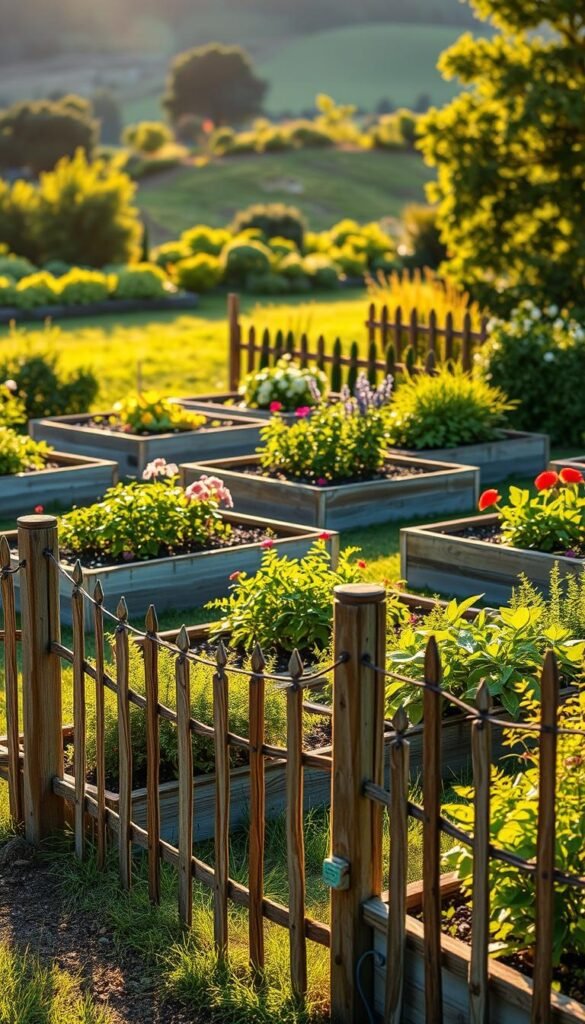
Finding the right barrier transforms pest control from a chore to a design feature. We tested popular fencing solutions to help you make purchase decisions that balance practicality with curb appeal.
Exploring Sturdy Metal and Wooden Fencing
The 21-inch metal garden fence ($45.99) stands out for no-dig installation. Its 18-foot span blocks rabbits while letting sunlight through narrow gaps. Rust-resistant coating ensures 5+ years of service, even in rainy climates.
For wooden alternatives, cedar panels offer natural rot resistance. Though pricier, they blend seamlessly with cottage-style landscapes. Both options reach 2 feet tall—ideal for raised bed perimeters.
Reviewing Decorative Picket and Chicken Wire Solutions
Six-pack picket panels ($19.04) create charming borders with interlocking design. Weather-resistant PVC withstands UV rays, while 14-inch height defines flower beds without blocking views. Perfect for front-yard herb gardens.
Chicken wire (18 feet, $24 avg.) provides budget-friendly protection. Its 1-inch mesh stops burrowing pests, and stakes let you shape curves around trees. Pair with taller fencing for full-coverage defense.
| Product | Price | Height | Length | Key Features |
|---|---|---|---|---|
| Metal Garden Fence | $45.99 | 21″ | 18′ | Rust-proof, no-dig stakes |
| Border Panels (6pk) | $19.04 | 14″ | 4′ each | Interlocking, UV-resistant |
| Chicken Wire | ~$24 | 20.5″ | 18′ | 1″ mesh, bendable design |
Taller fences (4+ feet) work best against deer, while ground-level panels deter diggers. Match your selection to local wildlife threats and desired maintenance level. Your greens get armor that looks intentional, not industrial.
Fenced Garden with Raised Beds: Keeping Out Critters in Style
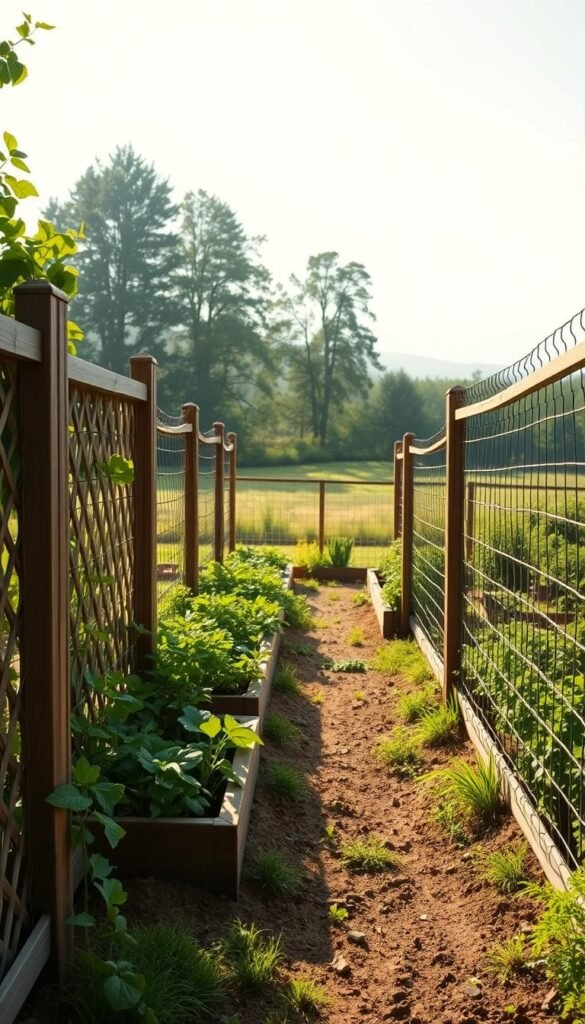
Karen and Andy Chapman cracked the code for safeguarding their 1,800-square-foot garden bed collection in Washington’s wooded terrain. Their secret? A pioneering double-fence system that confuses deer with physics. Two 5-foot barriers stand 5 feet apart—deer won’t leap into spaces where they can’t gauge landing safety.
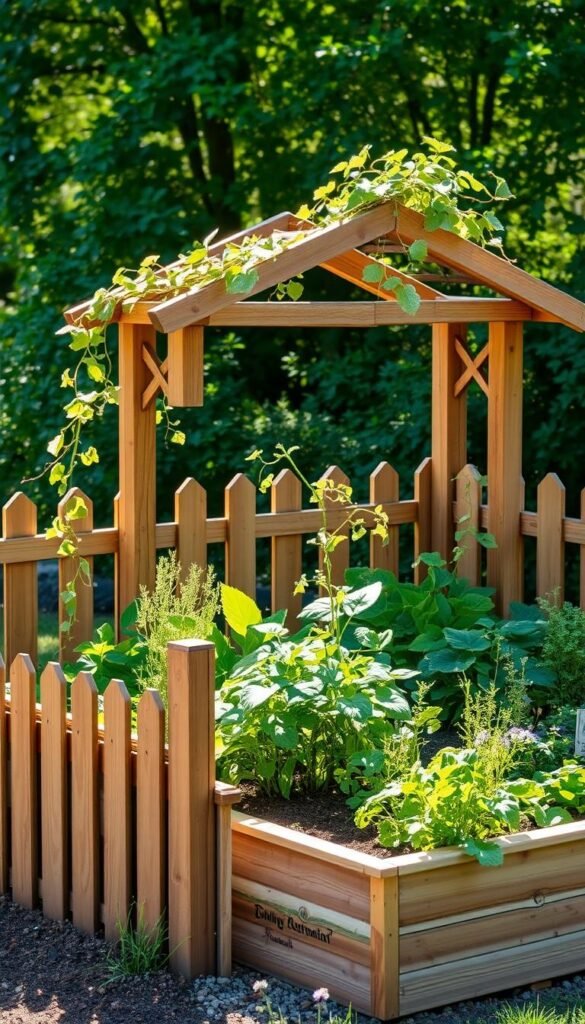
“Deer need visual confirmation for jumps,” Karen explains. “Our ‘boing-boing’ fences create a no-go zone that looks like an optical illusion.” The 8-foot cedar pergolas over gates add height while serving dual purposes: supporting honeysuckle vines and housing bird feeders.
Graduated hog-wire panels solve multiple challenges. Tight 2″ mesh at the base stops rabbits, while expanding 4″ gaps above let sunlight flood the beds. These framed cedar structures double as trellises for beans and apple trees—maximizing vertical growing space.
The Chapmans prove protection needn’t sacrifice beauty. Their system uses natural materials that blend into the landscape while outsmarting hungry visitors. You’ll spend less time repairing damage and more enjoying bumper crops of heirloom tomatoes and crisp greens.
Portable Garden Fence Kits for Seasonal Flexibility
Gardens evolve with the seasons, and your protection should too. Portable fencing solutions let you shift barriers as plants grow or weather shifts. These modular systems use lightweight panels or collapsible stakes, offering quick setup without digging or heavy tools.
Easy Assembly and Repositioning Tips
Interlocking fence sections snap together in minutes. For stability, angle stakes outward at 45-degree angles when securing corners. Use rubber mallets on soft ground—they’ll grip better than straight vertical posts. Rotate barriers every 4-6 weeks to follow crop progress, like shielding young peas in spring then moving to guard ripening pumpkins.
Adapting Portable Solutions for Varying Weather
Anchor kits deeper during storm season—bury stakes 3 inches deeper than usual. In snowy regions, remove panels before heavy snowfall to prevent warping. Pair temporary fences with windbreak fabric during summer heatwaves to reduce stress on tender greens.
These adaptable systems shine when paired with seasonal care strategies. You’ll spend less time wrestling permanent structures and more enjoying a garden that shifts seamlessly with nature’s rhythm.
Eco-Friendly and Natural Garden Barriers
What if your garden’s defense system could nourish the ecosystem while protecting your plants? Natural barriers blend seamlessly into landscapes while offering pest resistance and environmental benefits. Let’s explore options that turn your perimeter into a living asset.
Exploring Bamboo, Willow, and Living Fences
Bamboo stands out for its rapid growth and durability. These lightweight fences install in hours using pre-rolled panels or custom-cut poles. Their hollow stems provide natural insulation for garden beds, shielding roots from temperature swings.
Willow branches weave into flexible hurdles that decompose naturally over 3-5 years. As they break down, they enrich soil with organic matter—perfect for plants needing acidic conditions like blueberries. Both materials resist rot better than untreated pine.
Sustainable Design Choices for a Green Garden
Living barriers combine practicality with beauty. Boxwood hedges offer year-round structure, while lavender releases pest-repelling scents. Rosemary serves double duty—its sprigs flavor meals, and its oils deter beetles.
| Material | Cost per Foot | Lifespan | Best For |
|---|---|---|---|
| Bamboo | $8-$12 | 7-10 years | Modern designs |
| Willow | $6-$9 | 3-5 years | Rustic spaces |
| Living Fence | $4-$15 | 10+ years | Multi-use areas |
Pair these with climbing plants like clematis on wire grids. The combo deters rabbits while inviting pollinators. You’ll create habitats for beneficial insects that control aphids naturally.
Maintenance varies—bamboo needs yearly sealing, while willow thrives with occasional pruning. Choose materials matching your climate and commitment level. Your garden beds stay guarded, and local wildlife gains a sanctuary.
Incorporating DIY Techniques and Smart Technology
Elevate your growing game by blending hands-on projects with tech upgrades. Custom solutions let you protect plants while tailoring defenses to your garden’s evolving needs. This approach merges craftsmanship with modern convenience for a system that works smarter, not harder.
Simple DIY Projects for Custom Raised Beds
Build a removable bed fence using cedar planks and wire mesh. Cut panels to match your garden bed dimensions, then attach hinges for easy access. Use pressure-treated posts at corners for stability—they’ll withstand weather without leaching chemicals into soil.
Assemble components with rust-proof brackets, leaving gaps for pollinators but blocking insects like squash beetles. Paint frames to match your outdoor space or let wood age naturally. You’ll gain full planting access without sacrificing security.
Integrating Automated Watering and Smart Sensors
Clip drip irrigation lines onto your bed fence for targeted hydration. Add moisture sensors that alert your phone when beds need water. Solar-powered lights mounted on posts illuminate pathways while charging during daylight hours.
These upgrades turn basic barriers into responsive plant partners. You’ll catch issues before they harm crops, all while cutting daily maintenance time in half.