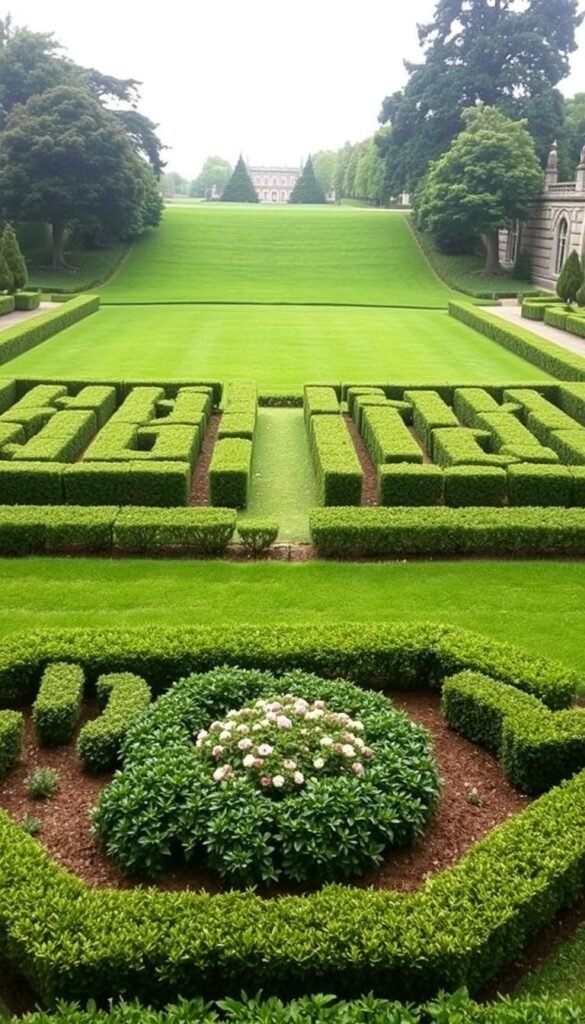
Ever feel like your yard needs a clear sense of direction? Thoughtful landscape structuring acts as a silent organizer, transforming wild greenery into intentional spaces. Sharp boundaries don’t just separate grass from flower beds – they give purpose to every corner of your property.
Imagine crisp pathways guiding visitors through your outdoor sanctuary. Defined edges prevent mulch from spilling onto walkways while keeping grass roots in check. This practical approach also elevates visual appeal, turning functional divisions into artistic statements.
Precision-cut materials create rhythm across your landscape. Geometric arrangements offer balance, whether you prefer subtle harmony or bold contrasts. These intentional details showcase your space’s personality while maintaining effortless upkeep.
You’ll soon discover how intentional placement solves common frustrations like soil creep and plant overgrowth. Structured layouts simplify maintenance while making flower colors pop against clean backdrops. Ready to turn chaotic patches into coordinated outdoor rooms?
Introduction to the Art of Formal Garden Borders Edging
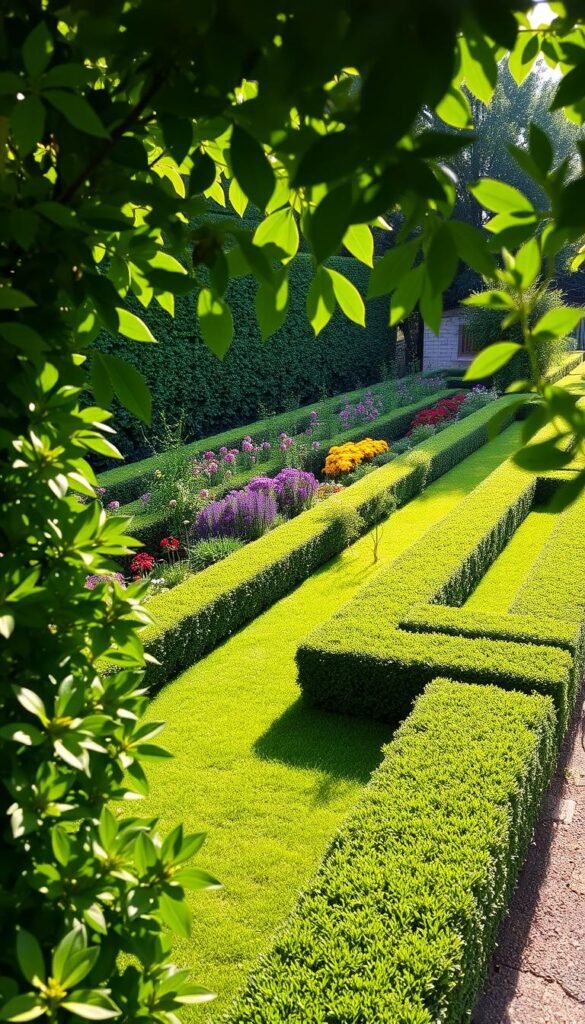
Have you ever noticed how crisp boundaries turn ordinary spaces into intentional designs? Structured landscape edges do more than separate grass from flower beds – they craft visual rhythm across your property. This silent framework transforms chaotic greenery into organized outdoor rooms that feel both purposeful and inviting.
Centuries ago, European estate designers perfected this craft. Versailles’ geometric parterres inspired modern layouts where clean divisions signal sophistication. Today’s homeowners borrow these principles to create balance without sacrificing practicality. As landscape architect Thomas Church once said:
“The frame defines the painting – edges give meaning to open spaces.”
Practical benefits shine through smart installations. Properly placed dividers:
- Block grass roots from invading flower beds
- Keep mulch contained during heavy rains
- Simplify mowing along crisp boundaries
| Material | Durability | Visual Impact |
|---|---|---|
| Brick | 10+ years | Classic warmth |
| Corten Steel | 15+ years | Modern contrast |
| Concrete | 20+ years | Clean minimalism |
Our brains crave order – studies show symmetrical layouts reduce visual stress by 34%. Structured lines guide the eye while making colors pop against neutral backdrops. Invest in quality dividers now, and you’ll spend less time battling overgrowth later. Sharp edges age like fine wine, requiring only occasional tweaks instead of full renovations.
The Aesthetic Appeal of Neat, Symmetrical Garden Borders
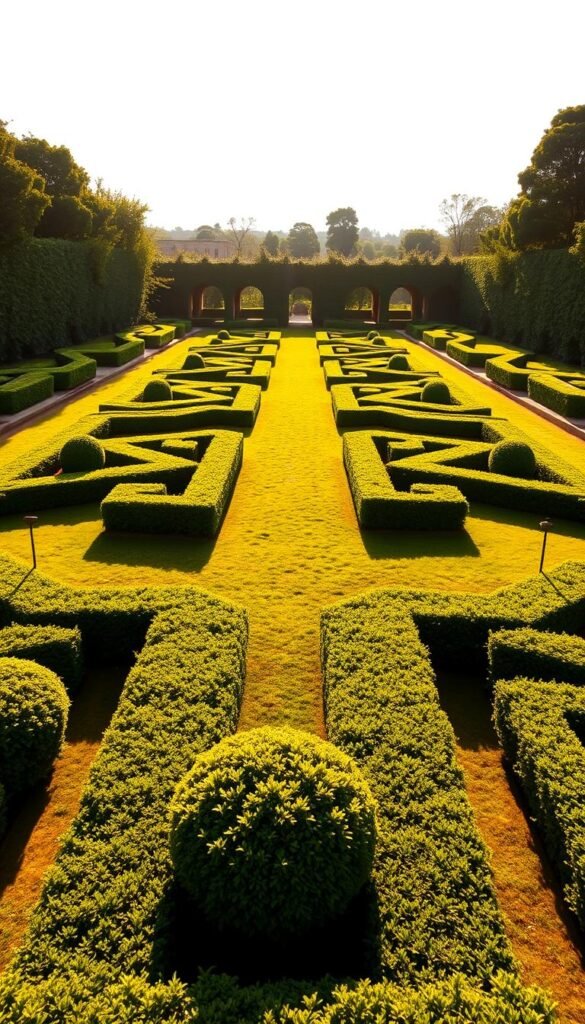
What transforms a patchy lawn into a polished oasis? Strategic visual framing turns functional boundaries into artistic statements. When every element aligns purposefully, your outdoor space becomes a living composition that delights the senses.
Understanding Symmetry in Landscape Design
Mirrored layouts trick the eye into seeing expanded spaces. Our brains prefer balanced arrangements – research shows they process symmetrical scenes 15% faster. Try these approaches:
- Repeat geometric shapes along pathways
- Use identical planters at entry points
- Align paving stones with window lines
Curating Colors and Textures for Visual Impact
Contrast creates drama without clutter. Dark basalt edging makes light gravel pop, while weathered copper adds warmth against cool stone. See how material pairings influence mood:
| Material Combo | Effect | Maintenance |
|---|---|---|
| Polished granite + mulch | Modern contrast | Low |
| Rough-cut limestone + grass | Organic blend | Medium |
| Powder-coated aluminum + succulents | Industrial chic | Minimal |
Flat-profile edging works best near seating areas – no tripping hazards. Choose materials that weather gracefully, like slate or composite blends. Your design choices today will define your space’s character for years.
Embracing Classic Materials in Garden Edging
Why do some yards look polished year after year? The secret lies in choosing time-tested materials that blend durability with design flexibility. Classic options create structure while letting your personality shine through.
Brick and Stone Inspirations
Red clay bricks bring instant charm to any space. Their uniform shape lets you craft gentle curves or sharp angles in minutes. For a rustic twist, try stacking fieldstones – their irregular surfaces create organic textures that soften rigid layouts.
Cut limestone offers cleaner lines for modern spaces. Pair it with creeping thyme between joints to add color contrast. Proper installation matters: dig a 4-inch trench, add gravel base, and use masonry sand for leveling.
Metal Accents for a Contemporary Touch
Galvanized steel strips create invisible boundaries that last decades. Their slim profile disappears into the landscape while containing mulch effectively. Want more character? Choose Corten steel – its rust-like patina develops naturally, blending with earthy tones over time.
| Material | Lifespan | Style Match |
|---|---|---|
| Brick | 12-15 years | Cottagecore |
| Slate | 20+ years | Modern farmhouse |
| Steel | 25+ years | Industrial chic |
Mix materials for custom flair. Try brick edging with steel corner accents, or stone borders with copper nameplates. These combinations require minimal upkeep – occasional brushing keeps surfaces looking fresh. Your space deserves boundaries that age gracefully, don’t you think?
Innovative Plastic and Rubber Edging Ideas for Modern Gardens
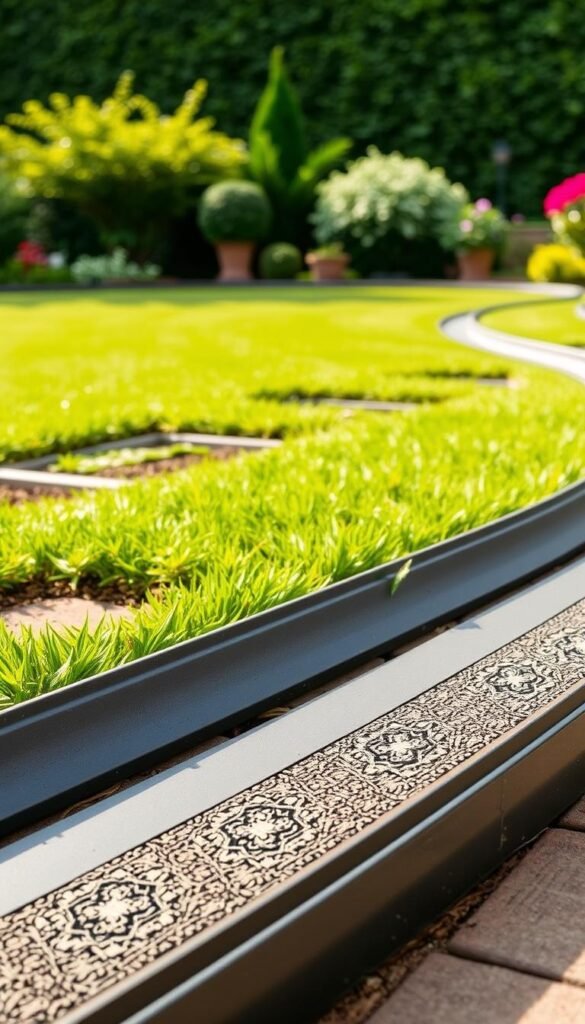
Gardens are getting smarter – and so are their boundaries. Today’s flexible materials let you craft crisp lines that bend to your creative will. Plastic and rubber options now deliver durability without sacrificing design freedom.
Benefits of Recycled and Flexible Materials
Modern plastic edging isn’t your grandma’s flimsy strips. Textured finishes mimic natural stone, while earth-toned colors blend seamlessly with contemporary layouts. Recycled rubber steals the spotlight – those old tires become rugged borders that laugh at lawnmowers and winter frost.
Installation becomes weekend-friendly with these materials:
- Roll-out systems needing just 3-inch trenches
- Peg-secured rubber strips that snap into place
- Pre-curved sections for perfect circles
| Material | Install Time | Climate Resistance |
|---|---|---|
| Recycled Plastic | 2 hours/50ft | UV-stable |
| Rubber (Tire) | 1.5 hours/50ft | -40°F to 120°F |
These options cost 60% less than stone while lasting 15+ years. For unconventional garden designs, flexible edging lets you carve swirling herb spirals or geometric succulent patterns. No more cracked borders after frost heave – synthetic materials flex with the earth’s movements.
Want curves that flow like ribbon? Unroll rubber strips on warm days when they’re most pliable. Bury just the lower third to maintain stability while keeping edges visible. Your garden’s frame just got a futuristic upgrade.
Wood and Timber Edging Techniques for a Natural Touch
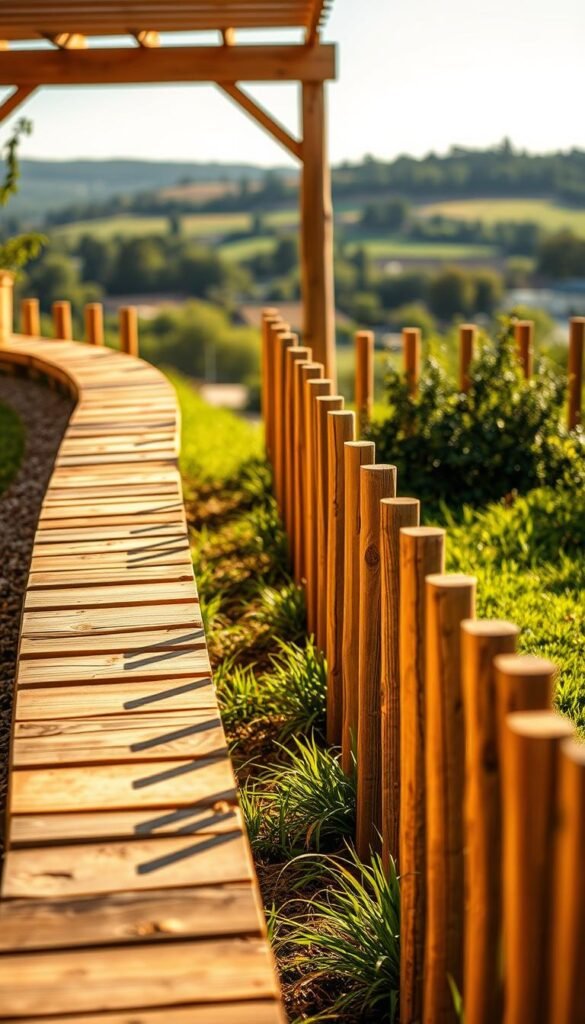
Looking to blend structure with nature in your outdoor space? Wood brings organic warmth to landscape design, softening hardscapes while defining planting zones. Unlike rigid materials, timber adapts to curved layouts, letting you craft flowing shapes that complement your yard’s contours.
Enhancing Rustic Charm with Natural Wood
Choose rot-resistant species for lasting appeal. Cedar and redwood weather beautifully, developing silvery patinas over time. Tropical hardwoods like eucalyptus thrive in humid climates, their reddish-brown tones pairing perfectly with lush foliage. Avoid placing untreated pine near soil – it decays quickly without protective coatings.
Installation determines longevity. Dig a 6-inch trench, layer gravel for drainage, and secure timbers with rebar stakes. For curved designs, use flexible cedar strips that bend without splintering. Want a farmhouse vibe? Try split-rail borders with staggered posts.
| Wood Type | Best For | Lifespan | Care Tips |
|---|---|---|---|
| Cedar | Curved borders | 8-12 years | Annual oil treatment |
| Redwood | Straight lines | 10-15 years | Brush debris monthly |
| Eucalyptus | Coastal gardens | 12-18 years | No treatment needed |
| Pressure-Treated Pine | Budget projects | 6-10 years | Seal cuts annually |
Preserve your wood’s natural look with linseed oil or water-based sealants. These products repel moisture without creating glossy surfaces. For low-maintenance options, consider composite timbers that mimic wood grain – they never need staining.
Blend timber edges with stone pathways by leaving small gaps filled with creeping thyme. This creates seamless transitions between materials while adding pops of color. Remember: inspect borders each spring for insect damage or warping. A little care keeps your wooden framework looking sharp for years.
Exploring Paver Stones and Concrete Edging for Durability
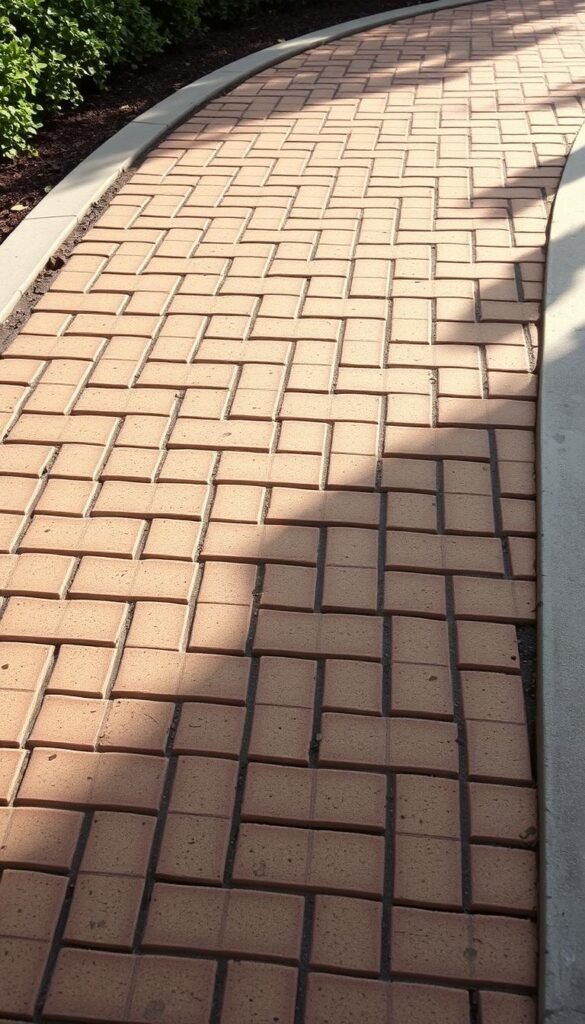
Want boundaries that outlast your plants? Paver stones and concrete create permanent divisions that withstand decades of foot traffic and weather shifts. These materials anchor your landscape design while requiring minimal upkeep – perfect for busy homeowners.
Natural stone pavers bring timeless elegance to any yard. Granite and limestone slabs resist cracking, while clay bricks offer uniform shapes for geometric precision. For curved layouts, consider interlocking concrete pavers that bend without breaking. Installation demands patience:
- Excavate 6-inch trenches
- Compact gravel base layers
- Level with sand bedding
| Material | Cost per Foot | Install Time | Best Use |
|---|---|---|---|
| Flagstone | $8-$12 | 8 hours | Organic layouts |
| Concrete Pavers | $4-$7 | 5 hours | Modern designs |
| Clay Brick | $6-$9 | 7 hours | Traditional spaces |
Poured concrete shines in custom applications. Its fluid form hugs irregular curves, creating seamless walls between lawn and flower beds. Stain or stamp the surface to mimic pricier materials – a budget trick that still delivers bulletproof performance.
Maintenance? Just rinse surfaces annually. These solutions stay put through frost heaves and downpours. Pair them with bold plantings or let them quietly frame existing features – their versatility supports any design vision. Once set, your weekends stay free for enjoying the view, not fixing crooked edges.
Formal garden borders edging with symmetrical patterns and neat lines
How do professional landscapes achieve that flawless look? Precision starts with smart layout strategies. Geometric arrangements create instant sophistication, whether you’re framing rose bushes or outlining pathways.
Start with parallel lines for classic appeal. Use a chalk reel to mark straight divisions between lawn and flower beds. For circular designs, drive a stake at the center point and swing a string line to create perfect curves. These techniques ensure mathematical accuracy in your layout.
Maintain crisp edges year-round with these tools:
| Tool | Use Case | Precision Level |
|---|---|---|
| Laser level | Long straight edges | ±1/8 inch |
| Steel edger | Annual re-cutting | Razor-sharp lines |
| Landscape fabric | Weed prevention | 95% reduction |
Adapt designs for small spaces using nested squares or half-circles. Large properties shine with concentric patterns that draw the eye outward. As designer Piet Oudolf notes:
“Symmetry grounds the viewer – it’s nature’s reassurance that order exists.”
Seasonal maintenance keeps divisions sharp. Check alignments each spring and refresh mulch barriers after heavy rains. Your structured spaces will radiate calmness while showcasing plants’ natural beauty.
Planting Strategies and Border Accents to Enhance Neat Lines
Ever wonder how manicured landscapes keep their crisp appearance through every season? Strategic plant choices act as living accents that reinforce your structured layout. The right greenery adds texture while respecting clean divisions between spaces.
Choosing Complementary Decorative Plants
Boxwood shrubs work magic beside stone or metal dividers. Their dense foliage holds sharp shapes when trimmed quarterly. Japanese holly offers deeper green tones that pop against light-colored edging materials.
For low-maintenance structure, try dwarf conifers. These slow-growers maintain their form with minimal pruning. Space them 18-24 inches apart for uniform coverage along pathways.
| Plant Type | Spacing | Mature Height | Bloom Time |
|---|---|---|---|
| Boxwood | 2-3 ft | 3 ft | N/A |
| Lavender | 12-18″ | 2 ft | Summer |
| Tulips | 4-6″ | 1 ft | Spring |
| Sedum | 8-12″ | 6″ | Fall |
Seasonal Flower Bed Ideas for Continuous Appeal
Layer bulbs beneath perennials for year-round surprises. Daffodils emerge first, followed by peonies, then chrysanthemums. This staggered approach keeps beds lively without overwhelming your clean lines.
Swap annuals seasonally in pre-measured containers. Petunias thrive in summer heat, while pansies add winter color. As master gardener Melinda Myers advises:
“Rotate three plant groups – they’ll refresh your space while letting edging remain the star.”
Maintain visual order by trimming spent blooms weekly. Use slow-release fertilizer to prevent uneven growth. Your structured beds will showcase nature’s beauty without appearing wild.
Mixing Materials: Combining Stone, Brick, and Metal for Unique Edging
Breaking design rules often leads to stunning results. Mixing stone, brick, and metal creates edges that reflect your personal style while solving practical needs. Contrasting textures add depth – imagine rugged slate paired with sleek steel strips or warm terracotta bricks beside weathered copper accents.
Start by choosing one dominant material. Use stone for organic curves, brick for structured lines, or metal for crisp divisions. Add secondary elements as accents – steel corner caps on brick borders or pebble inlays between flagstones. This layered approach builds visual interest without chaos.
Durability matters when combining materials. Match longevity by pairing powder-coated aluminum with granite or sealed concrete with corten steel. For inspiration, explore how to elevate your garden’s aesthetic through unexpected pairings like reclaimed wood and polished metal.
Your outdoor space becomes a canvas when materials collaborate. Let each element shine while working together – the secret to edges that feel both intentional and inviting.