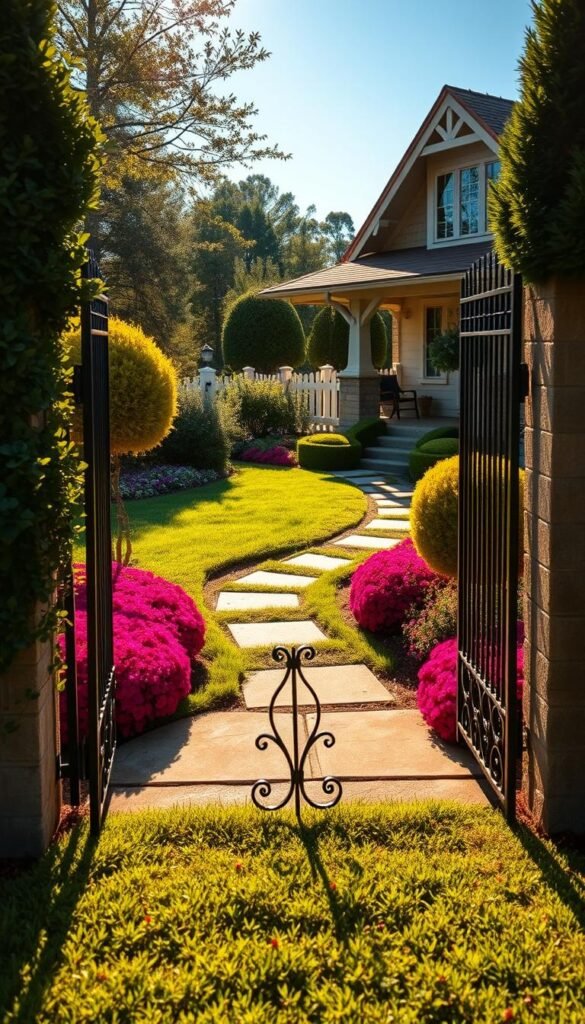
Your yard’s entrance acts as the ultimate welcome mat for your house. It shapes how others perceive your space before they reach the door. Whether you prefer neat hedges or wildflower beds, this area reflects your care for your property and community.
A thoughtful layout blends aesthetics with functionality. You might add seating for chats with neighbors or low-maintenance plants for busy schedules. Every choice should mirror your personality while boosting your home’s value.
Why does this matter? Studies show attractive exteriors spark positive emotions. They make guests feel invited and can even increase buyer interest. Your space isn’t just pretty—it’s a preview of your home’s character.
Balancing beauty with practicality ensures your yard works for daily life. Think durable pathways, seasonal colors, and lighting for evening charm. These elements create harmony between your house’s style and nature’s touch.
Understanding Curb Appeal and Its Impact
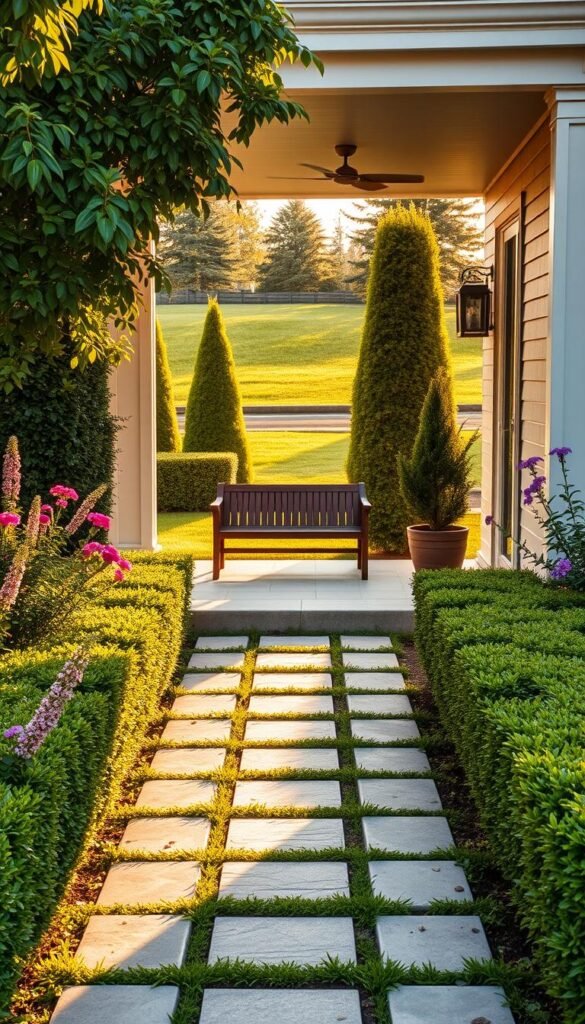
Your home’s exterior speaks volumes before anyone rings the doorbell. A polished landscape doesn’t just catch eyes—it shapes opinions and sparks curiosity. Let’s explore how thoughtful details create lasting reactions and tangible benefits.
Why First Impressions Matter
People form judgments about your property within 7 seconds. Bright blooms or trimmed hedges signal care, while overgrown grass suggests neglect. This instant reaction influences how visitors—or buyers—feel about your entire home.
The Role of Curb Appeal in Your Home’s Value
Homes with strong visual appeal sell 7% faster on average, according to recent real estate studies. A fresh outdoor makeover can boost perceived value by up to 12%. Even small upgrades like mulched beds or painted shutters make your house stand out in listings.
| Feature | With Curb Appeal | Without Curb Appeal |
|---|---|---|
| Buyer Interest | High (82% show interest) | Low (38% show interest) |
| Perceived Value | +$15,000 average | -$8,000 average |
| Sale Speed | 22 days faster | 45 days slower |
Neighbors often mirror attractive landscapes, creating community-wide value spikes. Your choices today could uplift entire streets tomorrow. That’s the power of a great first impression.
Planning Your Front Yard for Maximum Impact
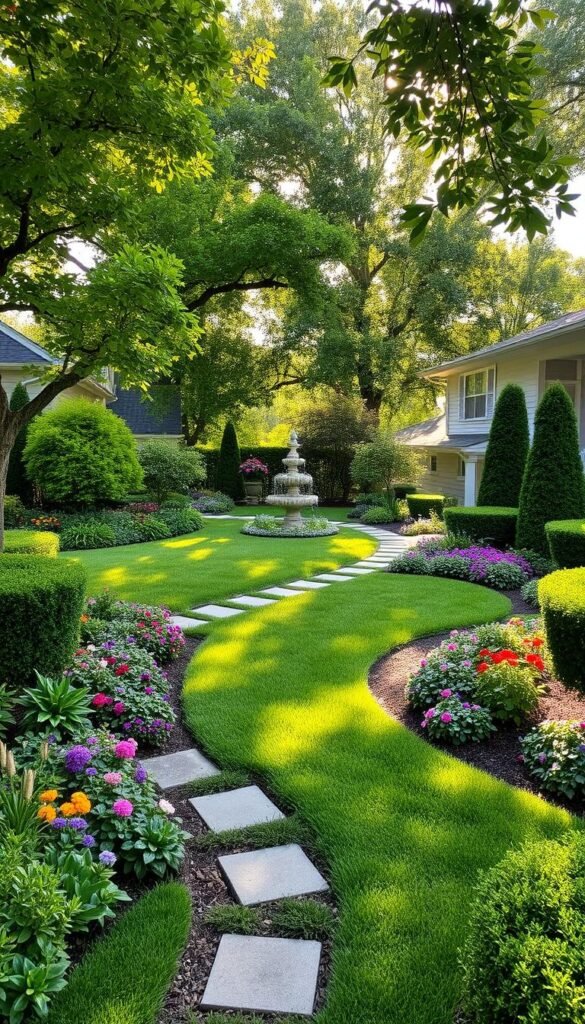
Ready to transform that patch of grass into your home’s star feature? Start by asking two questions: What’s possible here? and What’s practical for my life? Your answers will shape a yard that works with your space, not against it.
Assessing Your Space and Light
Grab a notebook and sketch your yard’s layout. Note where sunlight hits hardest at noon versus dusk. Shady spots under trees? Mark those too. Light exposure dictates whether roses thrive or hostas flourish. A southwest-facing area might bake in afternoon sun—perfect for lavender or sedum.
Measure walkways and existing features. “Scale matters most in urban yards,” says landscape architect Mara Diaz. “A 10-foot tree dwarfs a tiny lot but disappears on acreage.” Match plant sizes to your home’s proportions for harmony.
Setting Your Design Goals
Dream big but plan smart. Want a reading nook? Ensure there’s space between bushes for a bench. Need kid-friendly zones? Opt for soft ground covers like clover instead of prickly shrubs. Prioritize:
- Daily use (play areas vs. display gardens)
- Upkeep time (weekly watering or seasonal care)
- Local climate (drought-resistant picks for dry regions)
Balance beauty with purpose. Curved pathways guide eyes—and feet—toward your door. Strategic lighting highlights architectural details after dark. Every choice should say: This is us.
Front Garden Design Inspiration: Making a Bold First Impression
Your outdoor space becomes a canvas for self-expression. Start by gathering ideas from local parks or online platforms. Snap photos of porch swings that catch your eye or fencing styles that match your vibe. Jot down textures and colors that spark joy—this list becomes your style blueprint.
Match your home’s architecture with complementary elements. A Victorian house shines with rose arbors and stone urns, while mid-century modern homes pop with geometric succulents and concrete planters. “Your landscaping ideas should whisper secrets about what’s inside,” suggests designer Elena Torres.
| Style | Key Features | Plant Pairings |
|---|---|---|
| Cottage Charm | Weathered wood, climbing vines | Hydrangeas, lavender |
| Urban Modern | Cor-Ten steel, geometric shapes | Ornamental grasses, yucca |
| Desert Oasis | Gravel beds, boulders | Agave, prickly pear |
Current trends blend beauty with eco-smart choices. Rain gardens manage runoff while supporting butterflies. Native grasses like switchgrass thrive without chemicals—perfect for busy homeowners. Want to elevate your outdoor space? Add a sculptural Japanese maple as a living focal point.
Balance bold choices with neighborhood vibes. A neon-painted bench might clash in a historic district but rock in an artsy community. Test colors on small areas first—you can always expand what works.
Selecting the Perfect Plants and Garden Beds

The right greenery transforms your property into a living masterpiece. Start by mixing textures and heights to create visual rhythm. Evergreen shrubs like boxwood offer structure, while flowering perennials add bursts of color. This layered approach works year-round.
Low-Maintenance and Drought-Resistant Options
Save time with smart picks that thrive on neglect. Sedum varieties store water in their leaves, blooming from summer through frost. Russian sage offers silvery foliage and purple spikes with zero fuss. For shaded areas, try hostas or coral bells.
“Drought-tolerant doesn’t mean dull – it’s about working smarter with nature’s rhythms.”
Consider these winners for dry climates:
- Lavender: Fragrant and deer-resistant
- Yucca: Architectural shape with white flowers
- Blanket flower: Fiery blooms from June to October
Pair these with low-maintenance flowers in raised beds for easy access. Mulch heavily to retain moisture and suppress weeds.
Incorporating Seasonal Blooms for Color
Keep your space vibrant through all seasons with strategic planting. Spring bulbs like tulips give way to summer’s coneflowers. In fall, switchgrass turns golden while chrysanthemums blaze. Winterberries add pops of red against snow.
| Season | Plant Pick | Color Impact |
|---|---|---|
| Spring | Peonies | Soft pinks/whites |
| Summer | Black-eyed Susans | Sunny yellows |
| Fall | Ornamental kale | Purple/green hues |
| Winter | Red twig dogwood | Fiery stems |
Group plants with complementary colors near entryways. Cool blues soothe, while warm oranges energize. Rotate annuals in containers for instant seasonal updates.
Integrating Unique Water Features for a Refreshing Touch
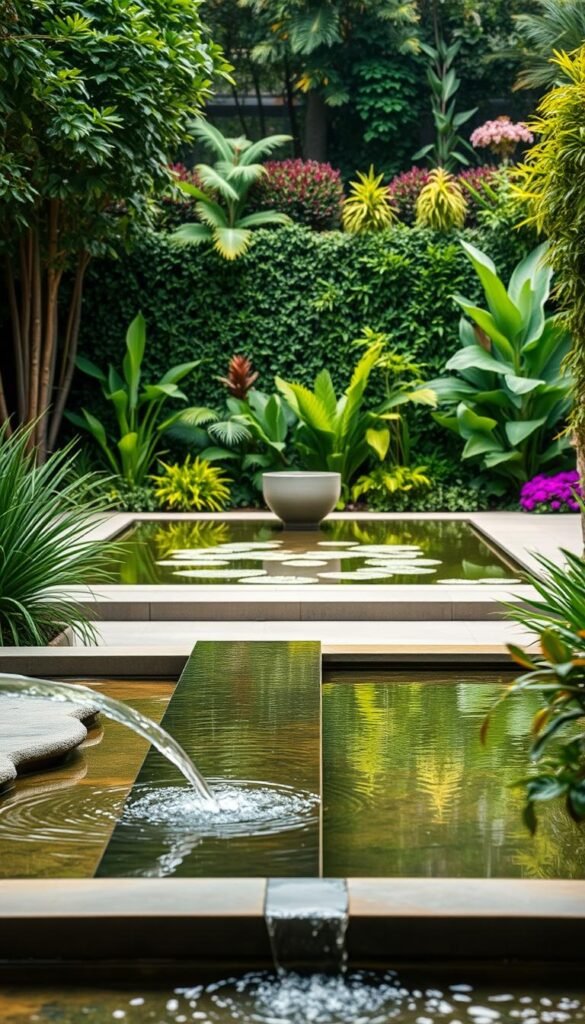
The gentle trickle of water adds instant calm to your outdoor space. Whether you choose a sleek fountain or natural-looking pond, these elements create visual drama while masking street noise. They also attract birds and butterflies, turning your yard into a lively sanctuary.
Choosing Fountains, Ponds, or Mini Waterfalls
Match your water feature to your home’s scale and style. A tiered stone fountain suits traditional houses, while corten steel basins complement modern architecture. For small areas, wall-mounted spouts or bowl fountains save space without sacrificing charm.
| Type | Best For | Installation Cost |
|---|---|---|
| Recirculating Fountain | Small yards | $200-$800 |
| Koi Pond | Large spaces | $2,500-$5,000+ |
| Tabletop Waterfall | Porches/decks | $150-$400 |
Tips for Easy Maintenance
Keep your feature sparkling with smart choices. Solar-powered pumps eliminate wiring hassles. Add barley straw pellets to prevent algae naturally. “Always position water elements where leaves won’t clog filters,” advises landscaper Jenna Cole.
- Clean pumps monthly during peak use
- Use aquatic plants like water lilies for natural filtration
- Winterize systems before first frost
Pair your water element with low-maintenance blooms for a cohesive look. With proper care, your bubbling centerpiece becomes a year-round highlight.
Enhancing Your Front Porch and Entryway
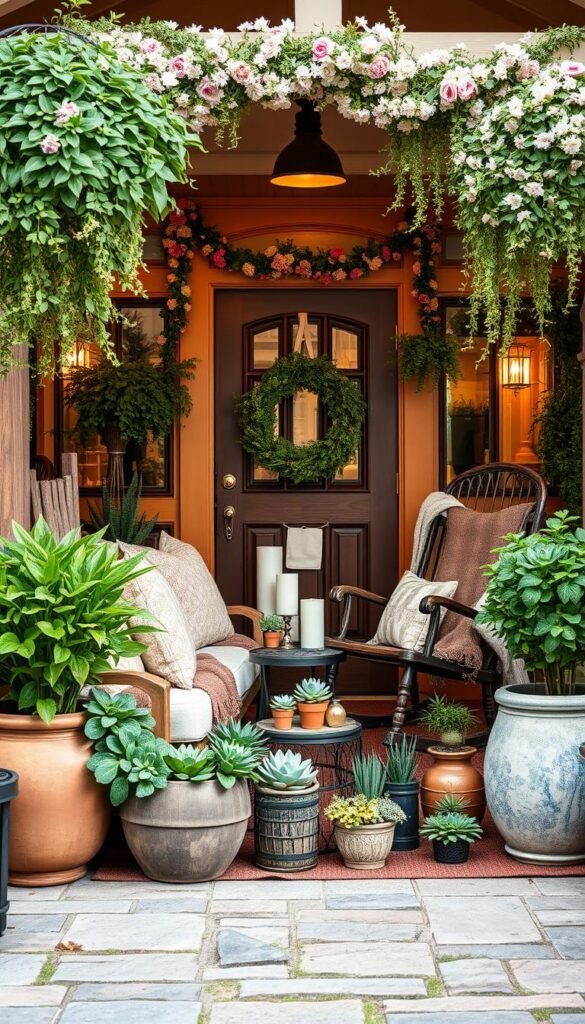
Your entry area bridges outdoor charm with indoor comfort. This space sets expectations for what lies beyond while offering a spot to enjoy fresh air. Thoughtful touches here create harmony between your home and its surroundings.
Smart Seating and Personal Touches
Choose furnishings that match your lifestyle. A swing works for large spaces, while foldable chairs suit compact areas. Built-in benches with storage maximize functionality. Pro tip: Add outdoor pillows in weather-resistant fabrics for pops of color.
Your front door deserves star treatment. Deep navy or sage green makes a modern statement, while crimson red nods to tradition. Update hardware like knockers or house numbers for instant polish. According to entryway experts, matching planters to your door color creates visual flow.
| Seating Type | Best For | Style Tip |
|---|---|---|
| Porch Swing | Traditional homes | Add striped cushions |
| Adirondack Chairs | Cottage styles | Use bold hues |
| Modern Loveseat | Urban spaces | Pair with metal side tables |
Layer accessories thoughtfully. Hang a wreath that reflects the season—dried autumn leaves or spring blooms. Outdoor rugs define zones without permanent changes. For cohesive vintage-modern blends, pair antique lanterns with sleek planters.
Protect your investments with all-weather materials. Powder-coated metals resist rust, while teak wood ages beautifully. Store cushions during storms and apply sealant to wooden surfaces annually. Your porch should welcome you home through every season.
Designing Hardscaped Pathways and Paver Areas
Paths guide both feet and eyes through your outdoor space. A well-planned path creates flow while defining different areas. Choose materials like natural stone or geometric pavers to match your home’s personality.
Durable options like brick or concrete last decades with minimal upkeep. Mix textures for visual interest—pair smooth stepping stones with rough gravel borders. Your yard gains structure while keeping mud off shoes during rainy seasons.
Curved layouts soften angular architecture, while straight lines suit modern landscaping. Leave space between pavers for groundcover plants like thyme or sedum. This clever way blends greenery with hardscape charm.
Maintenance matters. Seal porous materials to prevent stains in high-traffic areas. Use edging to keep gravel in place and weeds at bay. With smart landscaping choices, your yard becomes both practical and inviting—no green thumb required.