
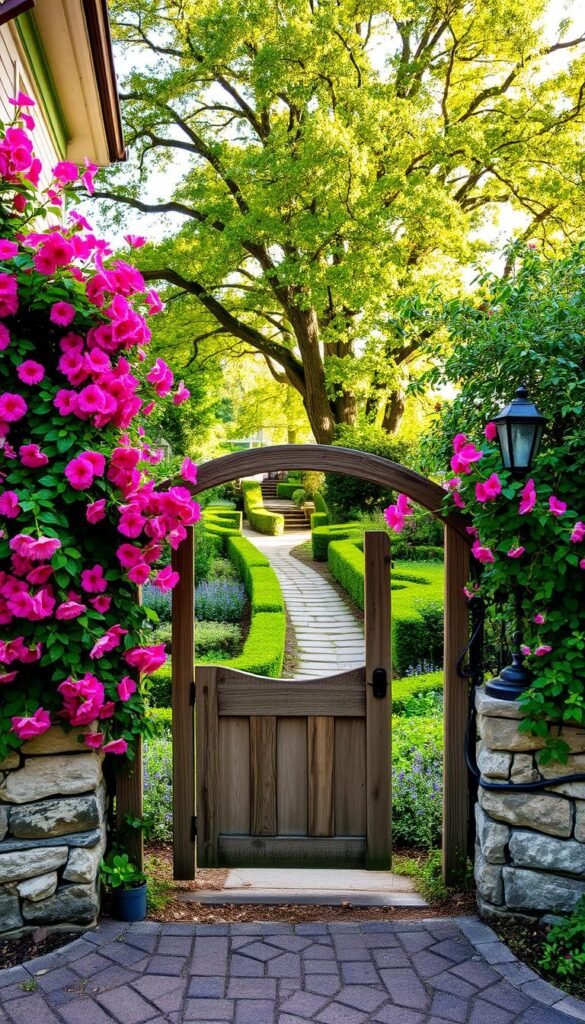
Imagine stepping into a space where relaxed beauty meets everyday magic. A cottage-style entryway offers more than curb appeal—it creates an emotional connection, wrapping visitors in warmth before they even reach your door. This approach celebrates imperfection, letting nature’s whimsy take center stage while balancing seclusion and openness.
You don’t need a sprawling landscape to begin. Start with a single flower bed or a cluster of herbs near your walkway. Over time, these pockets of life grow into a tapestry of color and texture. The best part? Mistakes become design features—a leaning trellis or uneven path adds character.
Privacy here feels natural, not rigid. Tall grasses or flowering vines on simple structures create gentle barriers that guide the eye without shutting people out. Curved pathways invite exploration, making even compact areas feel expansive. For inspiration, explore how the cottagecore aesthetic blends nostalgia with functional design.
Your garden becomes a living reflection of your personality. Mix heirloom roses with modern drought-resistant plants, or add vintage lanterns beside wild strawberry patches. This style thrives on experimentation, growing more charming as you refine what works for your lifestyle and climate.
Ready to transform your entry? We’ll walk through practical steps to assess your space, choose resilient plants, and create year-round interest—all while keeping that essential “glad you’re here” vibe.
Understanding the Cottage Garden Aesthetic
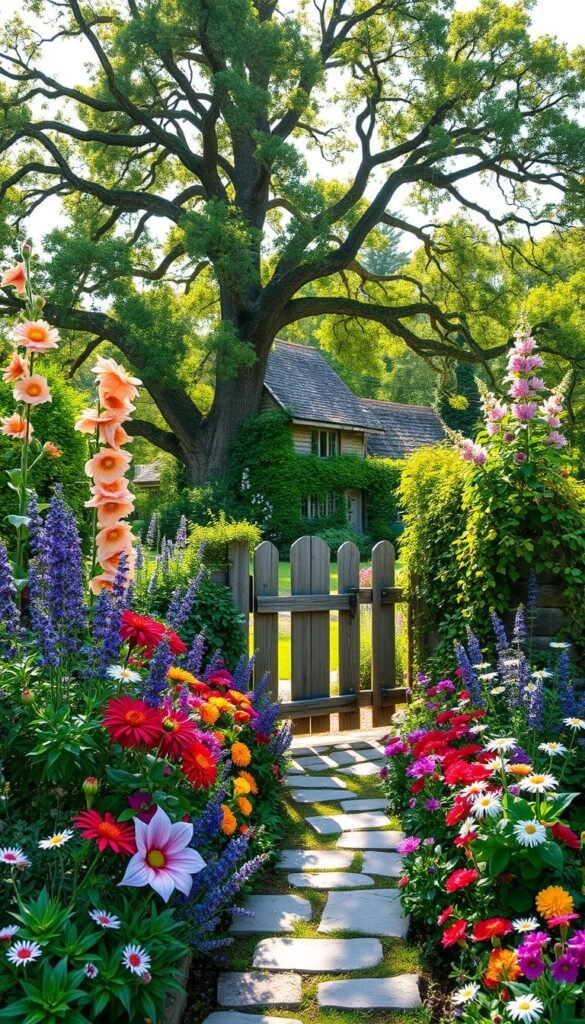
There’s a timeless charm to spaces that feel both curated and carefree. At its core, the cottage garden aesthetic thrives on effortless beauty—where structured chaos creates warmth and visual harmony. This style isn’t about rigid rules but celebrating growth in all its forms.
Romantic and Relaxed Design Elements
Think winding paths framed by fragrant roses and lavender. Soft curves replace straight lines, guiding visitors through clusters of peonies, foxgloves, and herbs. Traditional color schemes lean into muted pinks, creamy whites, and periwinkle blues, though adding bold accents like coral poppies can modernize the look.
Embracing a Natural, Layered Look
Layering plants at varying heights builds depth. Tall hollyhocks or delphiniums anchor the back, while lower-growing thyme spills onto walkways. Letting plants self-seed creates surprises—like violets peeking through stone gaps. For design tips that balance wildness with intention, explore ideas for elevating your space through texture and contrast.
| Traditional Elements | Modern Twists | Functional Benefits |
|---|---|---|
| White picket fences | Rustic metal edging | Defines space softly |
| Climbing roses | Drought-tolerant vines | Adds vertical interest |
| Mixed herb borders | Edible flowers | Doubles as kitchen resources |
Remember: the magic lies in balance. Let blooms mingle freely, but keep pathways clear for that “stroll-through-a-painting” feel. Your garden becomes a living scrapbook—each season adding new chapters to its story.
Planning Your Front Yard Layout for Optimal Curb Appeal
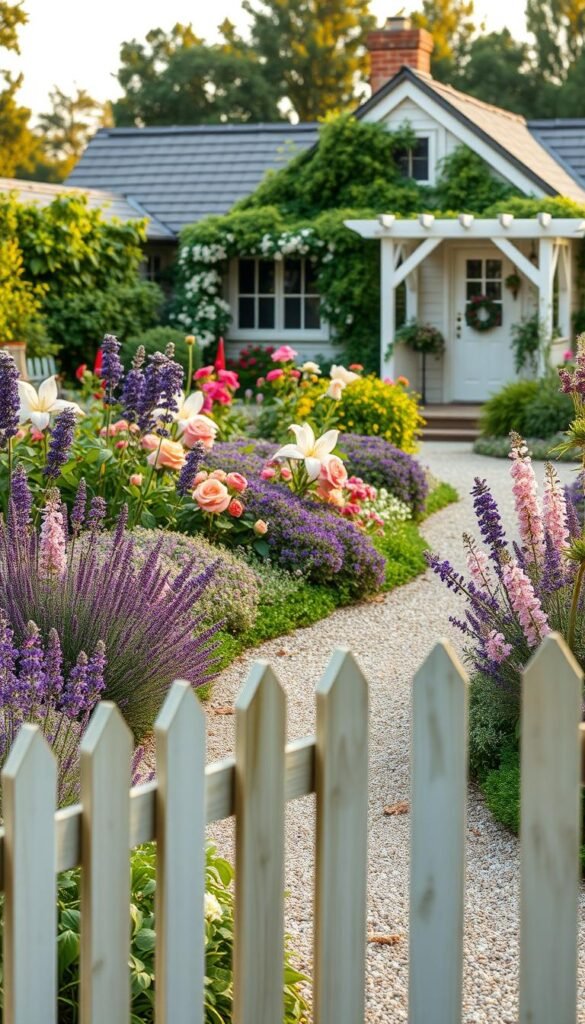
Creating an inviting entrance starts with smart spatial planning. Begin by measuring your available area and noting permanent features like trees or slopes. Sun exposure dictates plant choices—track shadows across your space through the day.
Assessing Space, Light, and Scale
Map zones needing privacy versus open sightlines. Full-sun spots suit roses and lavender, while ferns thrive in shaded corners. Match plant sizes to your home’s proportions—dwarf hydrangeas work for compact areas, while tall grasses anchor larger properties.
Sketching a Versatile Blueprint
Curved beds soften geometric architecture, guiding eyes toward focal points like birdbaths. Mark utility lines and irrigation access first. Test walkway routes by observing natural foot traffic patterns.
| Site Features | Design Solutions | Impact on Curb Appeal |
|---|---|---|
| Narrow walkway | Flanking with low thyme | Widens visual space |
| South-facing wall | Climbing clematis | Adds vertical color |
| Shady corner | Hostas + astilbe | Brightens dark zones |
Consider views from windows and street sightlines. A bench placed diagonally from your door creates depth. Update sketches seasonally as plants establish their footprint.
Front Yard Cottage Garden: How to Blend Privacy with a Welcoming Feel
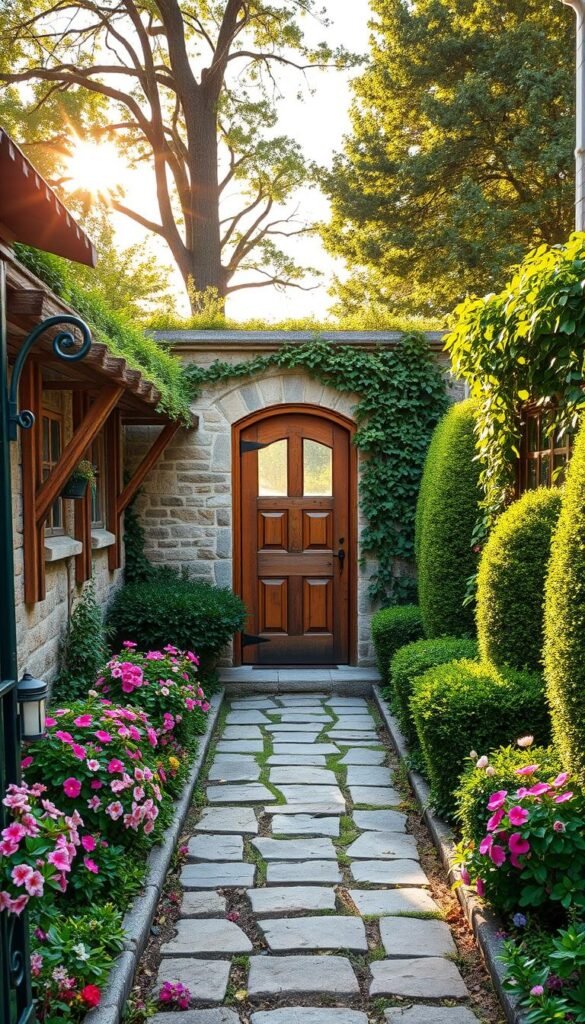
Your home’s entrance tells a story before anyone steps inside. The secret lies in designing boundaries that say “come closer” rather than “stay away.” Low barriers like boxwood hedges or picket fences frame your space while keeping sightlines open to the street.
Soft Barriers With Purpose
Waist-height structures work best near sidewalks. Try lavender borders or a lattice panel dotted with sweet peas. These let light filter through while gently steering people toward your front door. Taller plants like hydrangeas or ornamental grasses add depth behind them.
Guiding Guests Gracefully
Your entry path should feel like an invitation. Use irregular stepping stones flanked by thyme or chamomile. A curved arbor draped in jasmine creates a fragrant gateway. Keep the front porch visible but partially screened—maybe with potted ferns or a vintage shutter display.
Pro tip: Place seating nooks slightly off-center. A bench under a dogwood tree offers respite without blocking the view of your garden front. This layered approach makes spaces feel both private and accessible.
Selecting and Placing Hardscape Elements
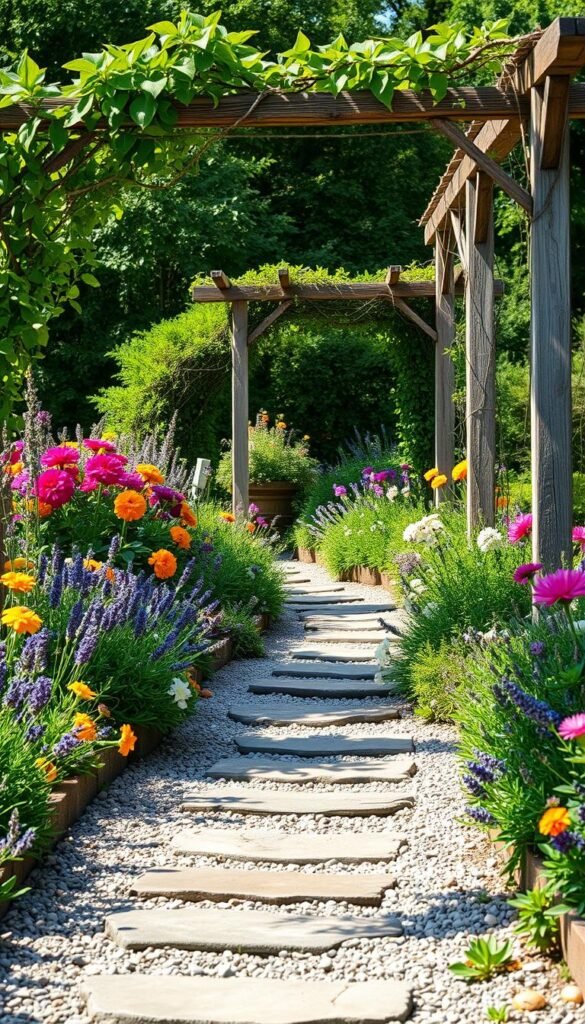
The bones of your outdoor space come alive through thoughtful hardscape choices. These features shape movement while adding texture and permanence. Unlike plants, they provide year-round structure, framing your greenery even in winter.
Designing Walkways, Sidewalks, and Stepping Stones
Curved paths feel more inviting than straight lines. Try irregular flagstone pieces with creeping thyme between them. For a cohesive look, match materials to your home’s exterior—weathered brick suits farmhouses, while slate complements modern cottages.
Keep walkways at least 3 feet wide. This allows two people to stroll side by side. Stepping stones leading from the driveway front to your door create a natural flow. Add solar lanterns along edges for evening charm.
Integrating Benches and Focal Points
A weathered wood bench under a flowering tree becomes an instant destination. Place seating where paths intersect or near fragrant plants. Iron arbors draped in roses make striking vertical accents while guiding eyes upward.
Consider scale: petite courtyards suit bistro sets, while sprawling lawns handle stone seating walls. For inspiration on blending eras, explore mixing vintage and modern elements in your design.
| Material | Best Use | Maintenance Tip |
|---|---|---|
| Flagstone | Primary pathways | Level annually with sand |
| Gravel | Secondary trails | Refresh layers every 2 years |
| Reclaimed brick | Porch accents | Brush moss gently |
Anchor designs with functional art—a wrought-iron gate or ceramic urn. These pieces draw attention without overwhelming plants. Remember: hardscapes should whisper, not shout, letting nature remain the star.
Choosing Plants and Seasonal Color Palettes
A thriving entryway garden dances between structure and spontaneity. Start by selecting anchor plants that hold visual weight year-round. Boxwoods, dwarf fruit trees, or hydrangeas work beautifully, offering winter texture when other plants sleep.
Building Layers With Purpose
Mix heights and bloom times for continuous interest. Early spring bulbs like tulips give way to peonies, while autumn sedums take the baton from summer roses. Group perennials in odd numbers—three coneflowers here, five lavender spikes there—to create rhythm without rigidity.
“A garden should surprise you each morning, yet feel familiar as your favorite chair.”
Color Conversations Through Seasons
Soft pinks and purples harmonize easily, while bold reds demand careful placement. Try this formula: 60% dominant hues (lavender, sage), 30% secondary tones (buttery yellows), and 10% accents (scarlet poppies). Colorful container arrangements let you test combinations before committing to beds.
| Anchor Plants | Mid-Height Fillers | Groundcovers |
|---|---|---|
| Boxwood | Salvia | Creeping thyme |
| Hydrangea | Coreopsis | Sedum |
| Smokebush | Echinacea | Ajuga |
Prioritize plants pulling double duty—bee balm offers scarlet blooms and herbal fragrance. Leave seed heads standing through winter; they feed birds and add sculptural interest. Remember: your plant choices become the neighborhood’s changing artwork.
Incorporating Decorative and Functional Garden Features
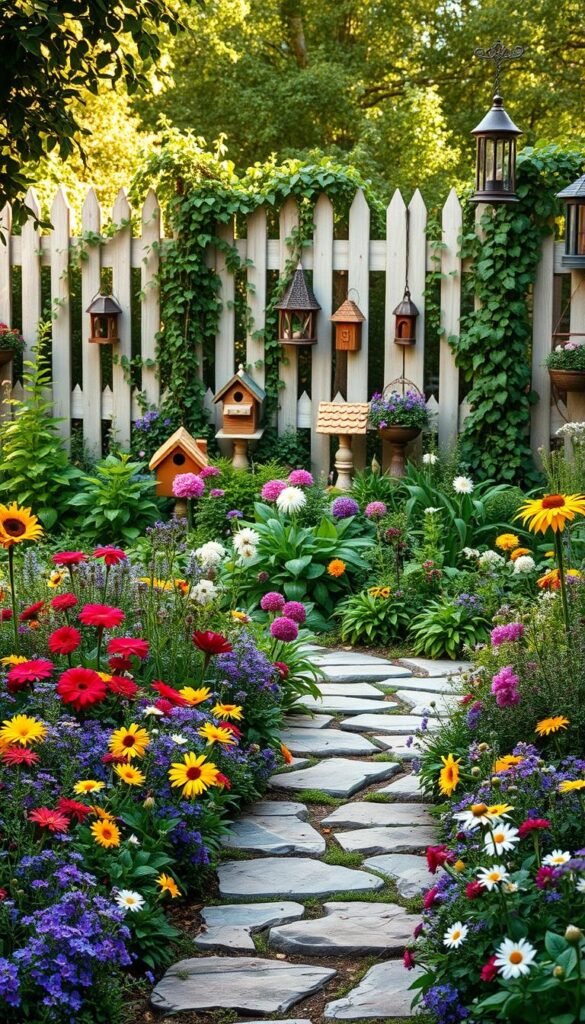
Every great outdoor space thrives on the marriage of beauty and purpose. Thoughtful accents transform ordinary plantings into living art while solving practical needs. The key lies in choosing elements that spark joy through multiple seasons.
Vertical Accents That Work Hard
Trellises aren’t just pretty backdrops—they’re multitaskers. A 7-foot structure supports climbing roses in summer, then shines bare against winter skies. Position arbors where paths begin, framing views of your space. For low-maintenance options, try powder-coated metal arches that age gracefully.
Water’s Quiet Magic
A small recirculating fountain adds movement without demanding a pond. Place basins near seating areas where their gentle sounds mask street noise. For dry climates, decorative urns filled with trailing succulents offer similar visual calm.
Playful Touches With Staying Power
Mix concrete rabbits with vintage tools as unexpected focal points. Picket fencing sections make charming plant markers when painted soft sage. Follow cottage garden ideas that balance whimsy with timeless materials like stone and wrought iron.
| Feature Type | Seasonal Impact | Care Level |
|---|---|---|
| Birdbath | Year-round | Weekly rinse |
| Rustic bench | Best in bloom seasons | Annual sealant |
| Glass garden stakes | Sparkles in sunlight | Dust occasionally |
Remember: scale matters. A single statement piece—like a weathered wheelbarrow planter—often outshines cluttered collections. Let your personality shine through choices that feel authentic, not forced.
Balancing Maintenance with Visual Impact
Creating a beautiful space shouldn’t mean endless chores. Smart choices let your garden thrive while keeping weekends free for enjoyment rather than upkeep. Focus on resilient plants and systems that work with nature, not against it.
Low-Maintenance Plant and Hardscape Solutions
Drought-tolerant stars like lavender and sedum offer color without constant watering. Pair them with native perennials that support local pollinators—think coneflowers or black-eyed Susans. For hardscapes, gravel paths or resin planters cut cleaning time while adding texture.
Simplify container setups with self-watering pots that maintain moisture for weeks. Lightweight fabric planters reduce strain on balconies while keeping roots healthy during heatwaves.
Smart Irrigation, Mulching, and Seasonal Upkeep
Drip systems deliver water precisely where plants need it, slashing usage by 60%. A 3-inch mulch layer suppresses weeds and locks in moisture. Rotate seasonal accents like pansies or ornamental kale to refresh your space effortlessly.
Remember: beauty grows from balance. Let your garden evolve with minimal intervention, saving time for what matters most—savoring its ever-changing charm.