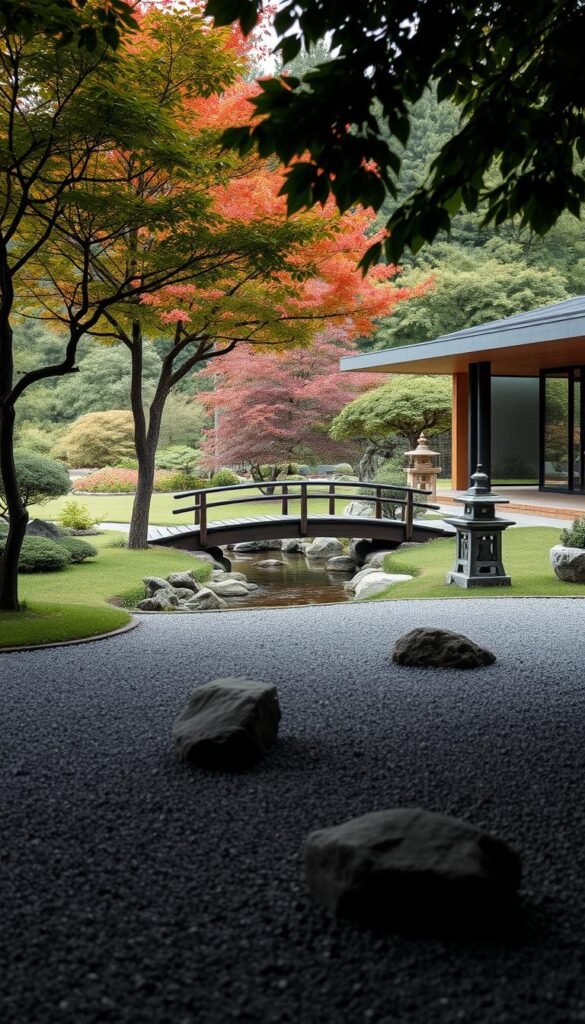
What happens when centuries-old gardening principles collide with 21st-century creativity? Today’s Japanese garden spaces answer that question with bold experimentation. No longer confined to strict historical formats, designers now blend organic elements with industrial materials, creating landscapes that reflect both heritage and contemporary life.
Imagine strolling through a serene space where weathered stone paths meet sleek metallic accents. Architects, sculptors, and urban planners are reshaping these environments using colored concrete, geometric layouts, and even recycled plastics. Yet moss-covered boulders and trickling water features remain central, proving innovation doesn’t erase tradition—it reimagines it.
These evolving gardens address modern needs. Compact urban installations replace sprawling estates, offering peaceful retreats in bustling cities. Public plazas and corporate campuses now feature Zen-inspired designs that reduce stress while maximizing limited space.
You’ll notice how today’s creators prioritize personal expression alongside cultural reverence. By balancing nature with human ingenuity, they craft spaces that feel timeless yet unmistakably current. This approach transforms gardens into living art—a dialogue between past and present that invites you to pause and reflect.
Understanding the Evolution of Japanese Garden Design
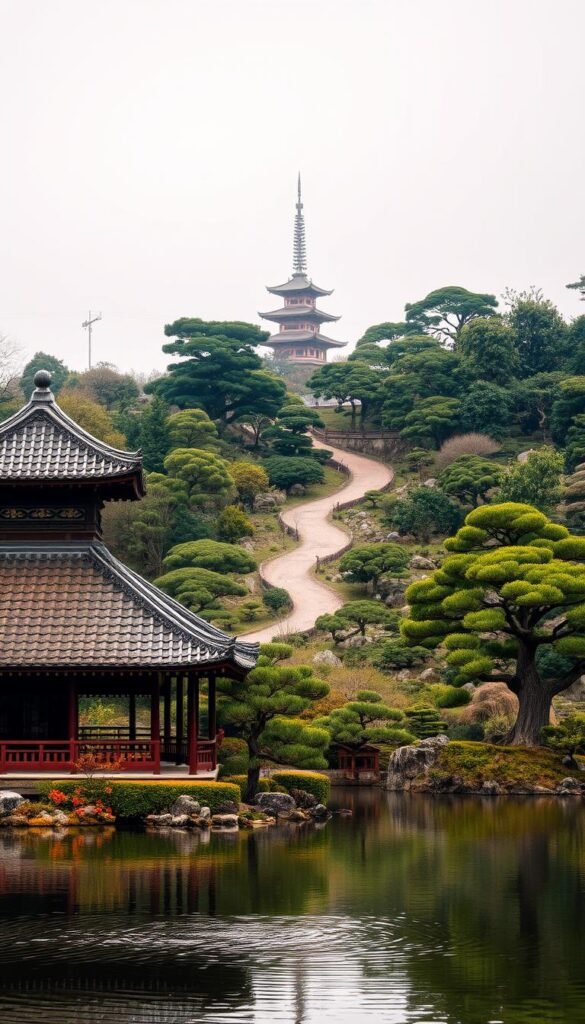
From sacred pebble arrangements to sleek urban retreats, Japanese gardens tell a living history. These spaces have transformed across fifteen centuries while maintaining their core purpose: connecting people with nature’s rhythms.
Historical Roots and Cultural Significance
Your journey begins in 5th-century Japan, where Shinto practitioners marked spiritual zones with stones. These early designs created borders between human and divine worlds. When Buddhism arrived, gardens grew into immersive landscapes with ponds and artificial hills.
- Karesansui’s raked gravel patterns for meditation
- Chaniwa’s winding paths for tea ceremonies
- Kaiyu shiki teien’s expansive stroll routes
- Tsuboniwa’s intimate courtyard layouts
- Modern hybrids blending East-West elements
Transition from Traditional to Contemporary Approaches
Post-war Japan reshaped its garden culture as cities expanded. Designers started mixing concrete with bamboo, pairing digital water features with moss gardens. Today’s spaces honor traditions while solving urban challenges—like creating tranquility in tight spaces.
You’ll notice how century-old principles adapt. Dry rock gardens now frame office towers, while recycled materials form new Zen installations. This evolution proves great design respects roots while growing new branches.
Fuse Tradition and Innovation in Modern Japanese Garden Design: Bridging Past and Present
How do today’s gardens maintain cultural roots while embracing new possibilities? The answer lies in how creators reinterpret time-honored principles through modern garden aesthetics. Take Shunmyo Masuno, a Zen priest and award-winning designer, whose work pairs ancient meditation concepts with urban spatial solutions.
When Heritage Meets Personal Vision
You’ll notice Masuno’s projects aren’t replicas of historic gardens. Instead, they reimagine stone arrangements as abstract art or use steel to frame moss patches. This approach respects traditions while making spaces feel relevant to 21st-century life.
Walk through one of these updated landscapes, and you might find:
- Pruned pines beside geometric concrete planters
- Dry riverbeds crafted from recycled glass
- Digital projections enhancing moon-viewing platforms
These choices prove innovation doesn’t erase the past—it finds fresh ways to honor it. By blending eras, designers create places where you can both reflect on history and engage with current design trends.
What makes this fusion successful? It’s the balance between reverence for age-old practices and courage to experiment. You experience tradition not as a rigid rulebook, but as a living language that adapts to our evolving world.
Modern Materials and Techniques in Japanese Gardens

Imagine walking through a garden where tradition wears a modern coat. Today’s designers redefine boundaries by merging industrial materials with time-tested principles. Their creations challenge expectations while preserving the soul of Japanese landscape artistry.
The Use of Synthetic and Unconventional Elements
You’ll find gardens where concrete slabs frame moss carpets, and recycled plastics mimic weathered stones. Architect Itsuko Hasegawa’s Shonandai Cultural Center showcases this boldness—its garden uses only water as a natural element. Rooftop spaces take it further, swapping heavy rocks for hollowed-out or fiberglass versions.
Innovative Approaches to Stone, Water, and Landscape Features
Modern gardens reimagine classic components. Split granite forms angular pathways, while LED-lit pools reflect digital sky patterns. Designers even use climate-controlled systems to sustain delicate moss in urban heat islands.
| Traditional Technique | Modern Adaptation | Key Benefit |
|---|---|---|
| Natural stone placement | Geometric concrete slabs | Precision & durability |
| Clay-lined ponds | Recycled polymer basins | Water conservation |
| Hand-raked gravel | Laser-guided patterns | Consistent aesthetics |
These methods prove Japanese gardens aren’t frozen in history. They’re living canvases where designers balance reverence for the past with solutions for today’s cities.
The Role of Contemporary Designers in Shaping Garden Trends

The new faces behind Japan’s outdoor spaces might surprise you. Architects sketch water features between buildings, while sculptors shape stone installations for hotel courtyards. This fusion of skills creates landscape experiences where art meets function in unexpected places.
Multi-Disciplinary Influences and New Professionals
You’ll find rooftop zen gardens designed by interior arrangers and stormwater systems planned by urbanists. Teams now include:
| Traditional Experts | New Contributors | Impact |
|---|---|---|
| Master gardeners | Digital artists | Interactive elements |
| Stone specialists | Materials engineers | Eco-friendly solutions |
| Tea ceremony scholars | Project managers | Urban scalability |
These collaborations transform public spaces into living galleries. A department store roof becomes a meditation zone with pruned maples. Corporate atriums feature raked gravel patterns that employees walk through daily.
What makes modern garden designs thrive? It’s the blend of formal training and fresh perspectives. Even self-taught creators bring crucial skills—like adapting ancient layouts to climate-controlled landscape systems.
You see tradition evolving through these partnerships. The result? Spaces that honor history while solving today’s urban puzzles through art and ingenuity.
Reinterpreting Traditional Elements: Stone, Water, and Plants
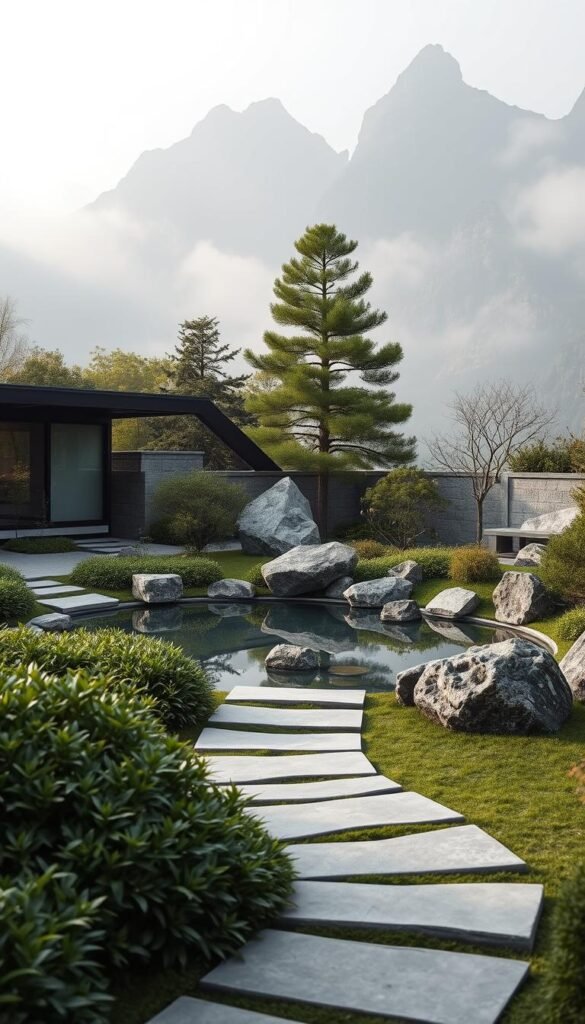
Step into spaces where rocks whisper new stories and water dances to urban rhythms. Today’s designers reshape nature with unapologetic creativity, treating stone and foliage as raw materials for personal expression. “We’re not copying landscapes—we’re capturing their spirit,” explains a Kyoto-based architect.
From Zen Landscapes to Urban Mind-Scapes
You’ll notice boulders no longer anchor compositions—they become abstract sculptures. A jagged rock might hover above polished concrete, its shadow tracing patterns like mountain peaks. Water features ditch literal streams for mist walls that visitors can walk through, merging purification symbolism with sensory play.
Plants get reinvented too. Designers pair spiky succulents with smooth steel planters, prioritizing shape over seasonal blooms. These choices thrive in city homes, where low-maintenance greenery meets architectural flair. Even moss gets a modern twist, growing on vertical panels in air-conditioned lobbies.
Symbolism and Natural Motifs in Modern Settings
Traditional meanings persist but wear new skins. Recycled glass chips mimic riverbeds, while LED-lit “ponds” reflect digital skies. You’ll recognize nods to sacred landscapes in these installations—just reinterpreted through laser-cut screens or 3D-printed stone replicas.
This approach lets urban dwellers reconnect with nature through metaphor. A rooftop garden might use spiraling hedges to evoke ocean waves, or arrange crushed granite into constellations. For those inspired to blend old and new at home, DIY garden art projects offer accessible starting points.
What emerges isn’t rebellion against tradition—it’s a vibrant conversation. Designers honor the past by keeping its essence alive in forms that speak to contemporary lives and spaces.
Public Spaces and Urban Garden Trends in Today’s Japan

Your morning commute now includes moments of Zen. Across Japan’s cities, gardens bloom where you least expect them—airport terminals hum with bamboo groves, while subway stations feature miniature rock arrangements. This shift turns public spaces into shared sanctuaries, blending nature with urban functionality.
Urban Oases in Corporate and Public Areas
Walk into any major office tower, and you’ll find raked gravel patterns beside escalators. Companies now use gardens as branding tools and employee stress relievers. The Mitsui Fudosan building in Tokyo proves this trend—its lobby features a 40-foot moss wall monitored by AI sensors.
| Traditional Role | Modern Application | Key Benefit |
|---|---|---|
| Private contemplation | Public mindfulness zones | Community access |
| Seasonal viewing | Year-round installations | Consistent engagement |
| Natural materials | Recycled composites | Urban durability |
Reflecting the Changing Lifestyles of Modern Communities
Your apartment might lack a backyard, but the café downstairs has a koi pond. As homes shrink, shared spaces fill the gap. Designers adapt by:
- Using drought-resistant plants in shopping center atriums
- Installing sound-dampening green walls near train platforms
- Creating Instagram-friendly flower tunnels in parking garages
These innovations make nature accessible in today’s fast-paced world. Next time you’re stuck in an office building, look for the bonsai beside the water cooler—it’s more than decor. It’s a lifeline to tranquility.
Tea Culture and the Evolution of Chaniwa Gardens
Have you ever sipped matcha surrounded by nature’s poetry? Chaniwa gardens answer this experience, evolving from 16th-century tea rituals into spaces where every stone guides your focus. These landscapes aren’t just backdrops—they’re active participants in the tea ceremony, shaping how you move and breathe.
The Role of the Tea Ceremony in Garden Design
You’ll notice winding paths that slow your pace, preparing mind and body for tea. Stone basins called tsukubai demand kneeling—a physical reminder to shed daily stresses. Designers choose plants like camellias and pines not just for beauty, but for the sound of wind through their leaves.
Modern tea gardens adapt these principles. Rooftop installations use compact layouts with recycled stone, proving tradition thrives in cities. One Kyoto café even mirrors seasonal tea practices through rotating plant displays.
These spaces show how Japanese tea culture remains vital. By blending ritual with contemporary needs, they offer pockets of calm in today’s fast-paced world—inviting you to pause, reflect, and savor each sip.