
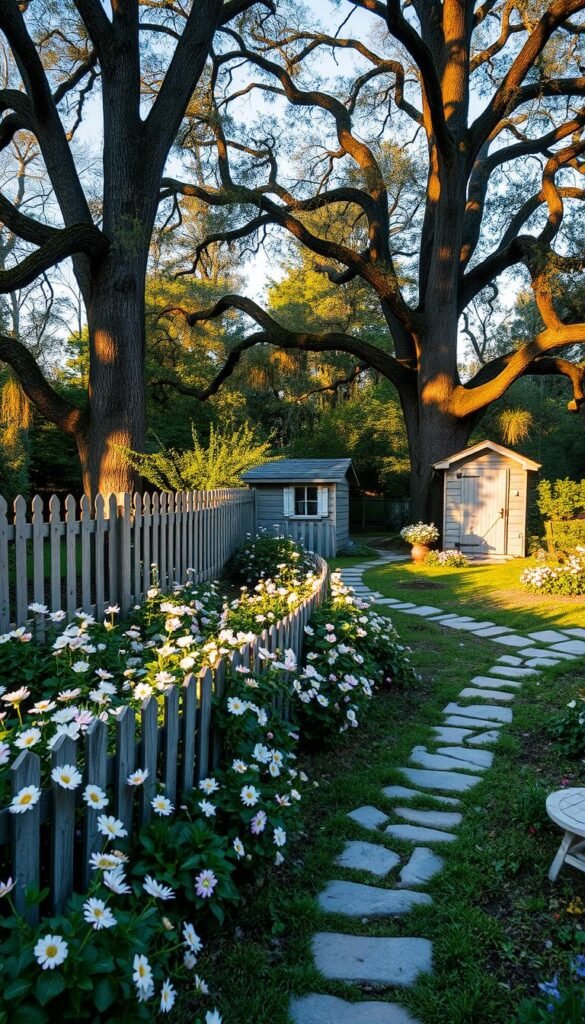
Imagine stepping into a sanctuary where sunlight filters through climbing roses and weathered benches invite quiet reflection. This style blends rustic simplicity with storybook allure, turning ordinary yards into extensions of warmth and history. It’s about crafting areas that feel lived-in yet magical, where every detail whispers of connection to the earth.
At its heart, this approach celebrates slow living. Winding stone paths encourage leisurely strolls, while mixed plantings of herbs and blooms create practical beauty. Studies show curved walkways can make compact areas feel larger—a perfect trick for intimate settings. You might blend bee balm for summer color with goldenrod for autumn interest, supporting local wildlife through the seasons.
Discover how the cottagecore movement reimagines nature as an extension of home comfort. Think mismatched teacups doubling as planters or repurposed ladders displaying trailing ivy. These touches transform functional spaces into emotional experiences, blending yesterday’s charm with today’s need for serenity.
Your journey begins by seeing potential in what already exists. A weathered fence becomes a canvas for clematis. Forgotten tools morph into decorative accents. By balancing natural textures with curated finds, you’ll create layered depth that feels collected over time—not designed overnight.
Understanding the Garden Cottage Aesthetic
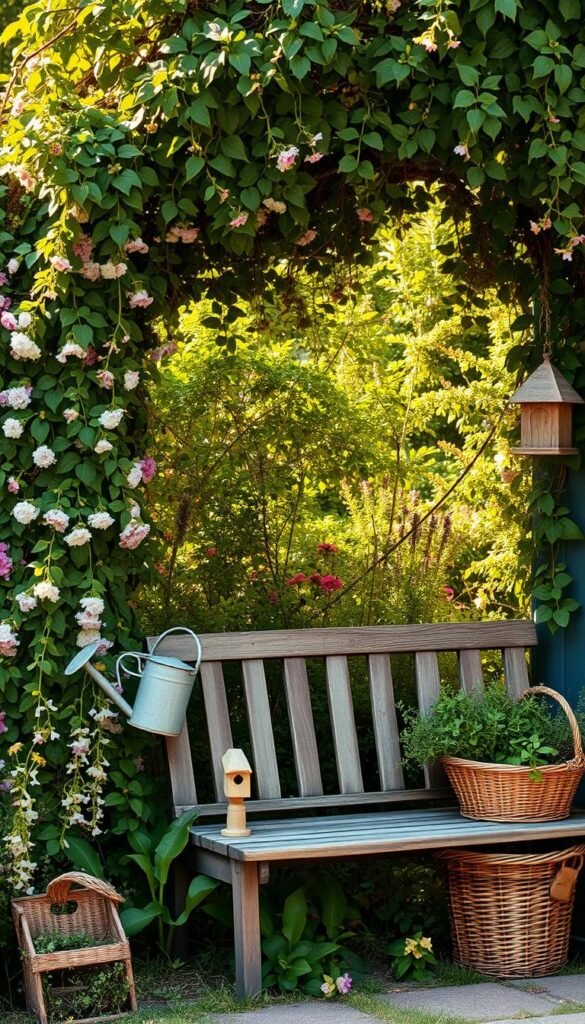
Picture a lifestyle where time slows to the rhythm of rustling leaves and handcrafted details outshine mass-produced perfection. This philosophy lies at the heart of cottagecore—a movement embracing nature’s imperfections and rustic authenticity over polished uniformity.
Defining Cottagecore and Its Rustic Charm
More than a fleeting trend, cottagecore celebrates daily rituals like baking bread or tending herbs. It values purposeful simplicity—think wildflower bouquets in mason jars or benches crafted from reclaimed barn wood. This style thrives on blending natural elements with nostalgic touches that whisper stories of rural traditions.
Historical Inspirations and Modern Adaptations
Early English country homes mastered the art of multipurpose spaces. Kitchen gardens doubled as floral displays, while stone walls provided structure and warmth. Today’s interpretations keep this practical spirit alive through clever updates like repurposed vintage items as planters or seating made from salvaged materials.
Modern cottagecore enthusiasts balance historical nods with contemporary needs. They might swap traditional thatched roofs for drought-resistant green roofs or mix heirloom vegetables with pollinator-friendly blooms. The result? Spaces that honor heritage while supporting sustainable living.
Creating a Cozy and Inviting Garden Atmosphere
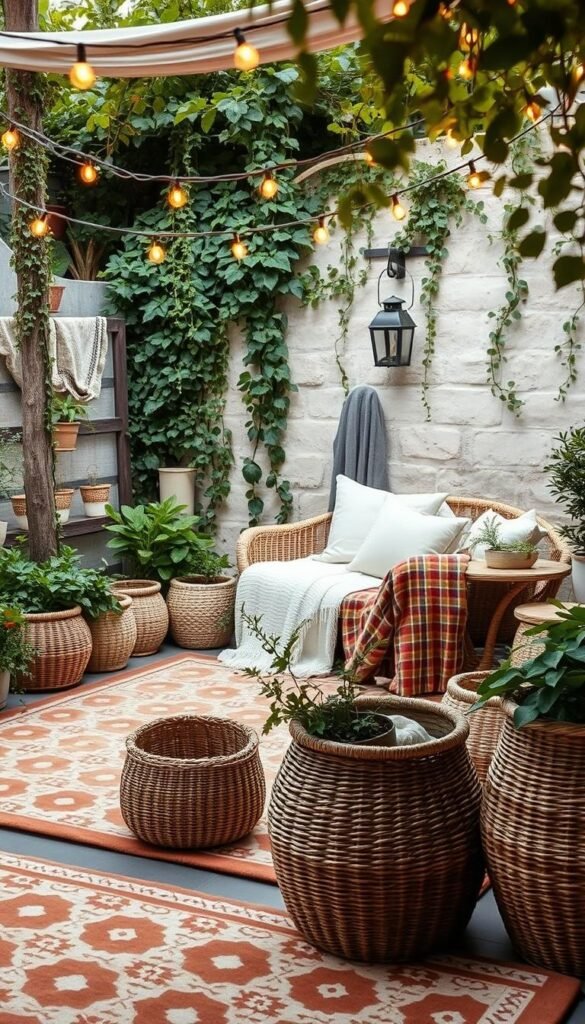
Transform your area into a retreat that wraps visitors in warmth from the moment they arrive. Thoughtful combinations of tactile fabrics and gentle illumination turn functional spots into destinations for connection. It’s about designing moments where comfort meets nature’s rhythm.
Layering Textiles and Soft Furnishings Outdoors
Start with durable rugs in earthy tones to anchor seating zones. Layer weather-resistant cushions in linen or canvas across benches, mixing patterns for visual intrigue. A chunky knit throw draped over a chair adds instant comfort while inviting longer stays.
| Material | Best Use | Weather Resistance | Aesthetic |
|---|---|---|---|
| Cotton Canvas | Seat Cushions | High | Rustic |
| Polyester Blend | Outdoor Rugs | Waterproof | Modern |
| Bamboo Fiber | Table Runners | UV Resistant | Organic |
Enhancing Ambiance with Natural Lighting
Solar-powered string lights woven through pergolas create a starry canopy effect after dusk. Place lanterns with flicker LEDs along pathways to guide movement while maintaining softness. For dining areas, hang pendant bulbs at eye level to cast a warm glow over shared meals.
Combine these elements to build depth—a wool blend rug underfoot, flax-colored pillows catching golden light. The result? A seamless blend between home living comforts and nature’s tranquility, perfect for unwinding as daylight fades.
Choosing Ideal Plants and Flowers for Charm
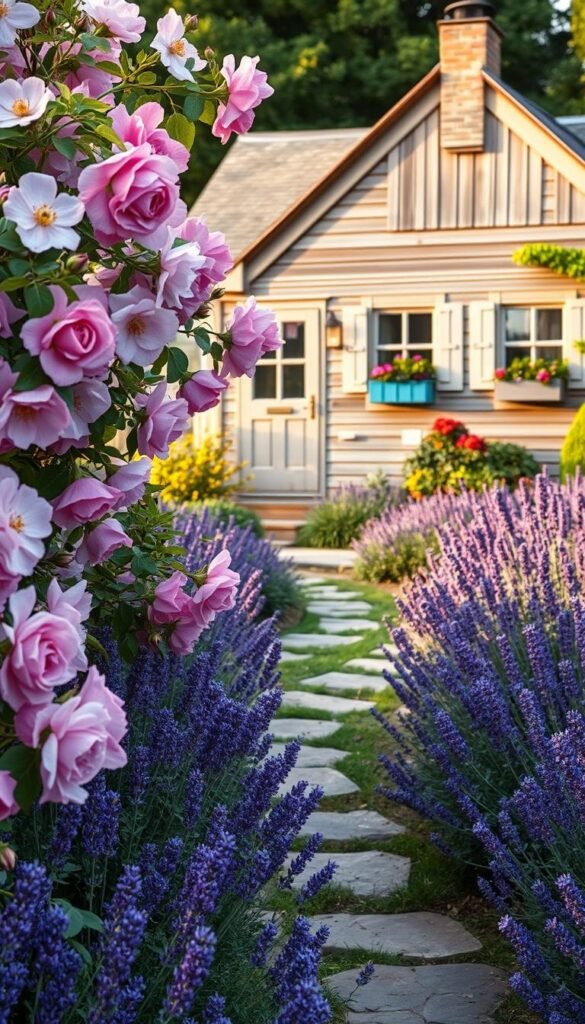
Crafting a plant palette that feels both abundant and intentional starts with mixing structure and spontaneity. Vertical elements like trellises or arbors become living art when paired with climbing roses, their delicate blooms softening hard edges. These classic romantic accents thrive in sunny spots, weaving through supports to create natural privacy screens.
Curating Blooms for Year-Round Interest
Lavender’s silvery foliage and purple spikes bring sensory appeal while supporting bees. Plant it near seating areas where its fragrance can drift through the air. For layered texture, pair it with feathery cosmos or spiky salvia—their contrasting shapes add depth to beds.
| Plant Type | Key Features | Seasonal Impact | Care Level |
|---|---|---|---|
| Climbing Roses | Vertical coverage, fragrant blooms | Spring to Fall | Moderate |
| English Lavender | Drought-tolerant, pollinator-friendly | Summer | Low |
| Rosemary/Thyme | Culinary use, evergreen foliage | Year-round | Easy |
| Shasta Daisies | Cheerful white blooms | Late Spring-Summer | Minimal |
Herbs like rosemary and thyme serve dual roles—their aromatic leaves enhance meals, while woody stems add structure. Tuck them between stepping stones or let them spill from raised planters for casual charm. Perennials like daisies keep the space lively with minimal effort, returning stronger each year.
Allow some plants to self-seed freely. Poppies or forget-me-nots dancing between stones create that cherished “lived-in” magic. For expert tips on curating plant combinations, explore seasonal guides that balance color and function.
Incorporating Natural Elements and Vintage Materials
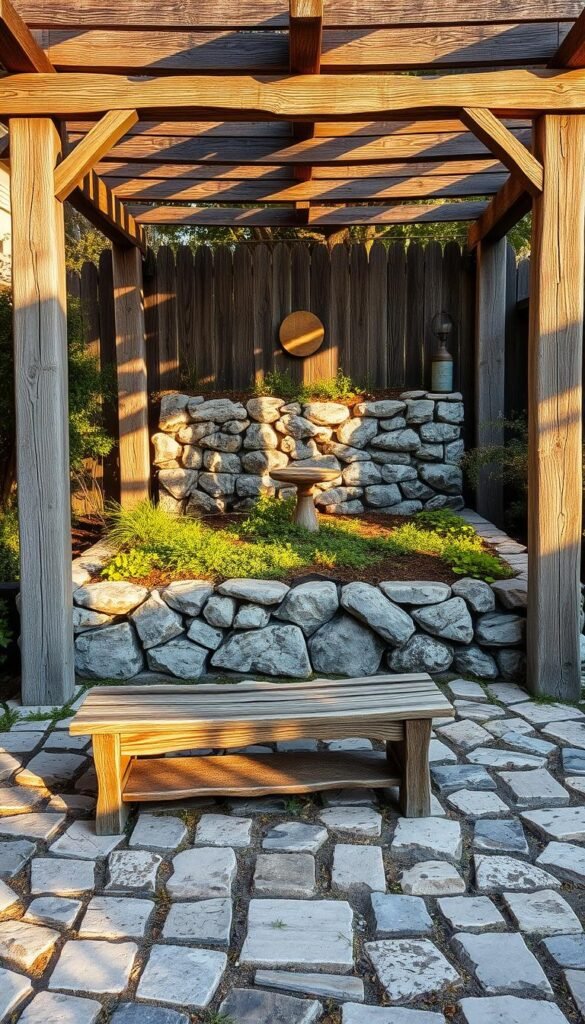
There’s magic in materials that carry whispers of the past while grounding your design in nature’s raw beauty. By blending weathered textures with functional forms, you create spaces that feel both storied and alive.
Using Reclaimed Wood, Stone, and Exposed Beams
Salvaged barn wood adds instant character to benches or planter boxes. Its grooves and knots tell tales of seasons weathered, offering rustic contrast to softer blooms. For pathways, irregular flagstone pieces create meandering routes that mimic nature’s asymmetry.
Exposed wooden beams elevate pergolas from simple structures to architectural statements. Pair them with climbing ivy for a living canopy effect. Natural stone walls serve as durable backdrops for seating areas, their cool surfaces balancing the warmth of aged timber.
Mix materials thoughtfully—iron brackets securing cedar planks, or river rocks edging a gravel path. This layering builds visual harmony while letting each element shine. Over time, sun-bleached wood and mossy stones deepen the connection to the natural world, making your space feel like it’s always belonged.
Designing Functional Areas in Your Garden
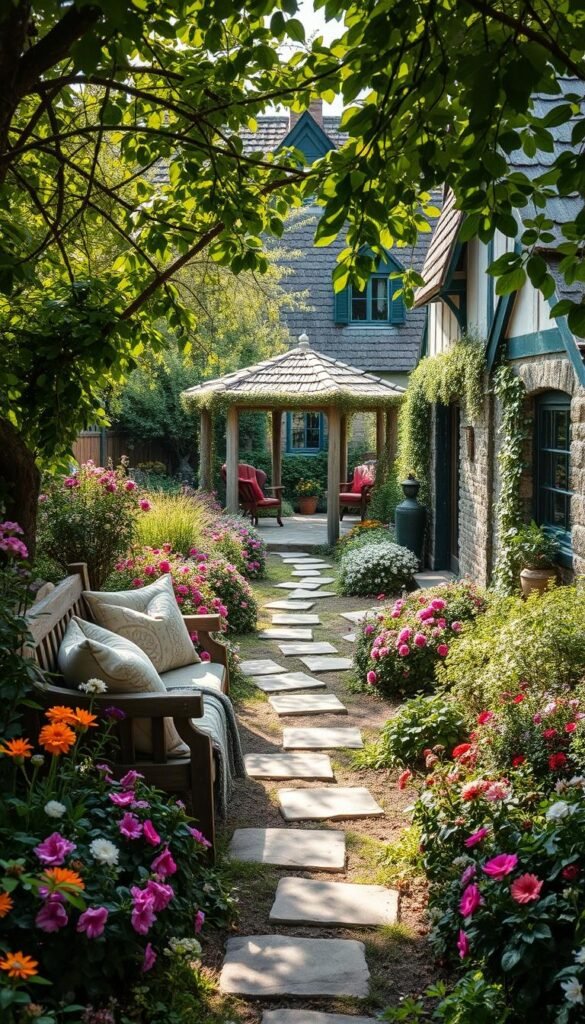
Turn every corner into a purposeful retreat where relaxation meets intention. By carving out distinct zones, you create destinations within your landscape that invite lingering and connection. It’s about balancing open gathering spots with tucked-away hideaways.
Allocating Cozy Seating and Intimate Nooks
Start with seating that complements your surroundings. A weathered bench nestled beneath flowering vines offers solitude, while wrought-iron chairs near a water feature encourage conversation. Mix materials like teak and iron for visual contrast—blending eras adds depth to your design.
Create privacy without walls using natural screens. Train jasmine over lattice panels or plant tall grasses around a lounge area. These living barriers soften sightlines while letting breezes through. For reading spots, position chairs near fragrant herbs like lemon balm—their scent enhances quiet moments.
- Use gravel paths edged with thyme to link seating zones
- Install solar lanterns beside benches for evening use
- Add weatherproof cushions in earthy patterns to wooden seats
Define each area’s purpose through placement. Morning coffee stations thrive near east-facing borders, while fire pits become evening hubs. Keep transitions smooth by repeating plants or stones between zones. With thoughtful planning, your landscape becomes a series of discovered experiences rather than a single static view.
DIY Projects to Enhance Your Cottage Garden Look
Unleash your creativity by turning everyday objects into enchanting garden features. These hands-on projects let you shape a space that mirrors your personality while celebrating resourcefulness. Start with forgotten items waiting for new purpose—they’ll become conversation starters brimming with rustic elegance.
Upcycling Old Materials for Unique Planters
Give weathered boots a second life as whimsical homes for trailing petunias. Chipped teapots transform into charming containers for herbs like mint or basil. Distress wooden crates with sandpaper to create timeworn plant displays perfect for succulents or wildflowers. Each piece develops a patina that blends seamlessly with natural elements.
Handcrafting Garden Ornaments and Decor
Twist willow branches into circular frames for dried flower wreaths. Press autumn leaves between glass panes to make sun-catching hangings. Arrange river stones into spiral patterns near pathways for subtle artistic flair. These handmade touches add personalized charm you won’t find in stores.
Try stenciling vintage-inspired patterns onto thrifted furniture using weatherproof paint. A faded bench becomes a focal point when adorned with floral motifs. As seasons change, your creations evolve alongside the landscape—proof that true beauty grows through loving attention.