Today’s outdoor spaces are becoming more than just pretty backyards. They’re evolving into eco-friendly retreats that balance personal joy with environmental care. Across the U.S., people are rethinking how they cultivate their plots, blending time-tested techniques with fresh ideas to support local ecosystems.
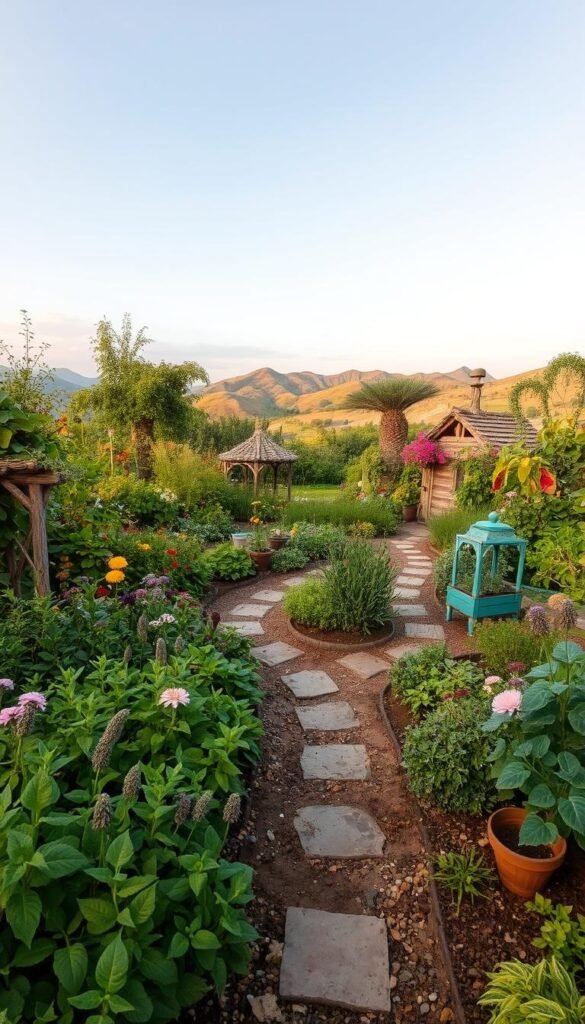
Many now prioritize native plants and natural materials, creating habitats for pollinators while reducing water use. This shift goes beyond aesthetics – it’s about forming deeper connections with the land. You might find inspiration in cottagecore-inspired spaces that mix whimsy with practical sustainability.
What makes these modern approaches special? They address climate challenges while nurturing mental well-being. Rain gardens filter stormwater, while bird-friendly shrubs offer daily nature encounters. Even small balconies can host compact compost systems or bee-friendly flowers.
These changes reflect a broader movement toward mindful living. Your choices – from plant selection to mulch types – directly affect neighborhood biodiversity. The result? Outdoor areas that feel truly alive, offering sanctuary for both people and wildlife.
Discover the Allure of Organic Garden Designs

A movement toward imperfect gardens is redefining outdoor spaces. Instead of fighting seasonal shifts, this design philosophy celebrates textures and forms that change with time. Think cracked seed pods catching morning dew or dried grasses swaying in autumn breezes.
Understanding Organic Aesthetics
True beauty in this style comes from letting plants complete their lifecycle. Leaving fading flowers and fallen leaves creates shelter for beetles and butterflies. You’ll notice birds visiting more often to snack on leftover seeds.
Benefits of Natural Materials in Your Garden
Rough-cut stone paths and untreated wood benches blend seamlessly with their surroundings. These elements age gracefully, developing patinas that tell your landscape’s story. For gardening aesthetic tips that prioritize sustainability, consider locally sourced rocks or reclaimed timber.
Why does this approach work? Natural materials regulate soil temperature and support beneficial fungi. They also reduce the need for synthetic products, letting your space thrive with minimal intervention.
Harness Nature’s Charm with Organic Natural Garden Design Trends

2025 brings fresh ideas that merge wild beauty with thoughtful layouts. These approaches let you create vibrant areas that feel both intentional and free-flowing. Whether you’re updating a small patio or redesigning an acre, current trends focus on harmony between human needs and ecological health.
One standout approach combines meadow-like planting beds with structured seating zones. This mix offers visual charm while providing spaces for relaxation and wildlife observation. You might pair native grasses with smooth stone benches, creating contrast that delights the senses.
Many gardeners are surprised how easily they can adopt these concepts. Start by adding clusters of drought-resistant perennials to existing beds or swapping part of your lawn for clover. For those torn between wild and organized layouts, exploring chaos vs structured gardening methods helps find your sweet spot.
This year’s designs also address practical concerns. Vertical gardens maximize limited spaces, while permeable pathways reduce runoff. Even beginner-friendly projects like installing a rain chain or creating brush piles for critters make meaningful impacts.
The best part? These updates often increase property appeal while cutting maintenance time. As you experiment, you’ll discover which innovations align with your climate and lifestyle – proof that modern gardens can be both stunning and sensible.
Organic Garden Design: Incorporating Sustainable Practices
Transforming your outdoor area into an eco-conscious space starts with smart resource management. Thoughtful choices in water use and plant selection create thriving habitats while conserving precious materials.
Eco-Friendly Watering Systems
Cut water waste by 50% with targeted irrigation methods. Drip lines deliver moisture straight to roots, while rain barrels collect runoff for dry days. Pair these with swales – shallow ditches that redirect stormwater to thirsty plants.
Rain gardens offer dual benefits. These sunken beds filter pollutants and provide homes for frogs and dragonflies. For larger spaces, consider permaculture gardening principles that mimic natural water cycles through earth shaping.
Supporting Local Ecosystems
Choose blooms that feed pollinators from spring through fall. Coneflowers and milkweed sustain butterflies, while tubular salvias attract hummingbirds. Cluster these plants near vegetable patches to boost crop yields naturally.
| Traditional Practice | Sustainable Alternative | Environmental Impact |
|---|---|---|
| Chemical fertilizers | Compost tea | Enriches soil microbiology |
| Monoculture lawns | Clover groundcover | Supports 4x more bee species |
| Plastic mulch | Leaf mold | Reduces microplastic pollution |
Leave some areas slightly wild. Brush piles become winter shelters for beneficial insects, while bare soil patches give ground-nesting bees safe havens. Your green space can serve as a vital link in neighborhood wildlife corridors.
Native Plants and Nativars: A Growing Garden Favorite
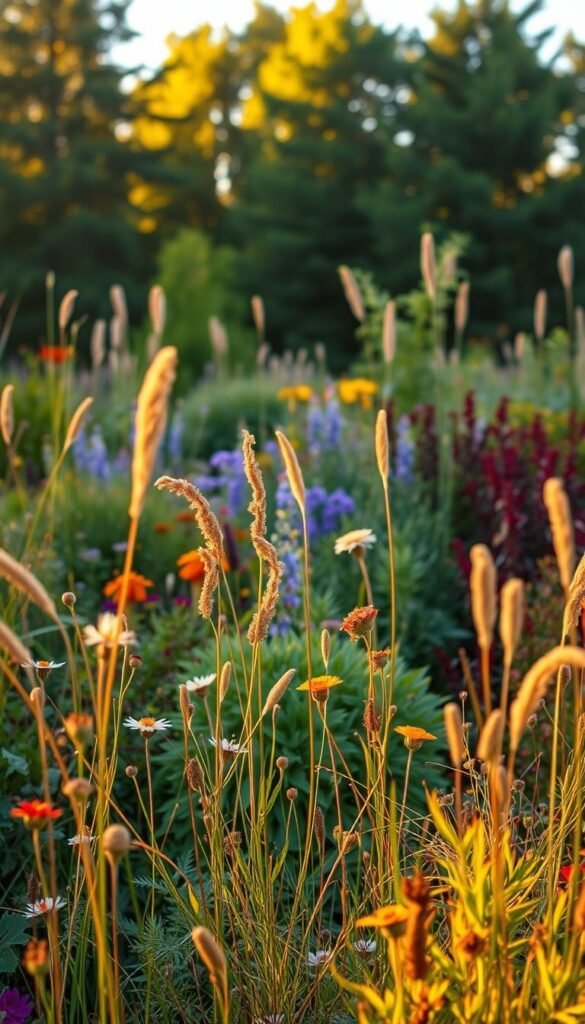
Landscape choices are shifting toward local roots as native plants dominate nursery wishlists. These species thrive in regional conditions, needing less care than imported alternatives. Gardeners report 60% less watering and pest issues when using plants adapted to their area.
True native species grow naturally in your region, while nativars are cultivated versions with enhanced traits. Breeders develop these variants for brighter blooms or compact sizes while maintaining ecological benefits. Both options support butterflies and birds better than non-native plants.
Choosing the Right Native Varieties
Start by researching your USDA zone and soil type. Local extension offices often provide free guides to regional plant superstars. Purple coneflower variants like ‘Magnus’ offer larger flowers than wild types, while still feeding pollinators.
| Feature | True Native Plants | Nativars |
|---|---|---|
| Genetic Diversity | High | Moderate |
| Bloom Size | Natural | Often enlarged |
| Adaptability | Established | Enhanced |
| Maintenance | Low | Low-Medium |
Prioritize plants that match your sunlight levels and drainage. For shady spots, consider wild ginger instead of thirsty hostas. In dry areas, try prairie dropseed grass – its wispy seed heads add movement to borders.
Source specimens from ethical nurseries that avoid pesticides. Many state native plant societies host annual sales with expert guidance. Avoid look-alikes like invasive Bradford pear by checking scientific names before buying.
Low-Water Landscaping & Fire-Resistant Garden Solutions
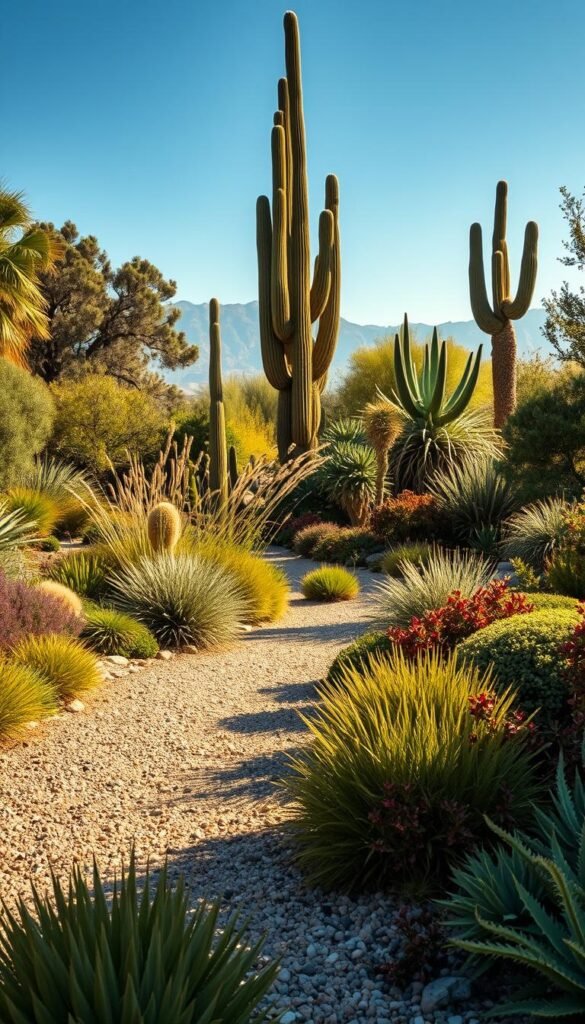
Smart landscaping now balances beauty with practical resilience. Across dry regions and beyond, homeowners are reimagining spaces to thrive with less water while adding protective features. This approach creates vibrant areas that adapt to climate shifts without sacrificing style.
Selecting Drought-Tolerant Species
Modern plants prove you don’t need constant irrigation for lush results. Russian sage offers silvery foliage and purple spikes, while red yucca adds sculptural flair. These varieties store moisture in leaves or roots, thriving in full sun with weekly watering.
Designing for Safety and Aesthetics
Create defensible zones using low-flammability options like succulents and deciduous trees. Space specimens apart to limit fire spread, and use gravel paths as natural barriers. For color, try ice plant groundcover – its vibrant blooms resist flames while needing minimal care.
| Traditional Choice | Fire-Resistant Alternative | Water Needs |
|---|---|---|
| Juniper shrubs | Manzanita | Low |
| Pine trees | Coast live oak | Moderate |
| Lawn grass | Blue fescue | Very low |
Improve soil with compost to help roots access moisture deeper underground. Mulch with crushed stone instead of bark to reduce fire risks. Group thirsty specimens near downspouts to maximize rainfall use.
Even small changes make impacts. Swap one turf area for drought-resistant sedges, or add a rock garden feature. Your space can be both water-wise and welcoming – proof that practicality and charm grow well together.
Expanding Outdoor Living: Spaces for People and Wildlife
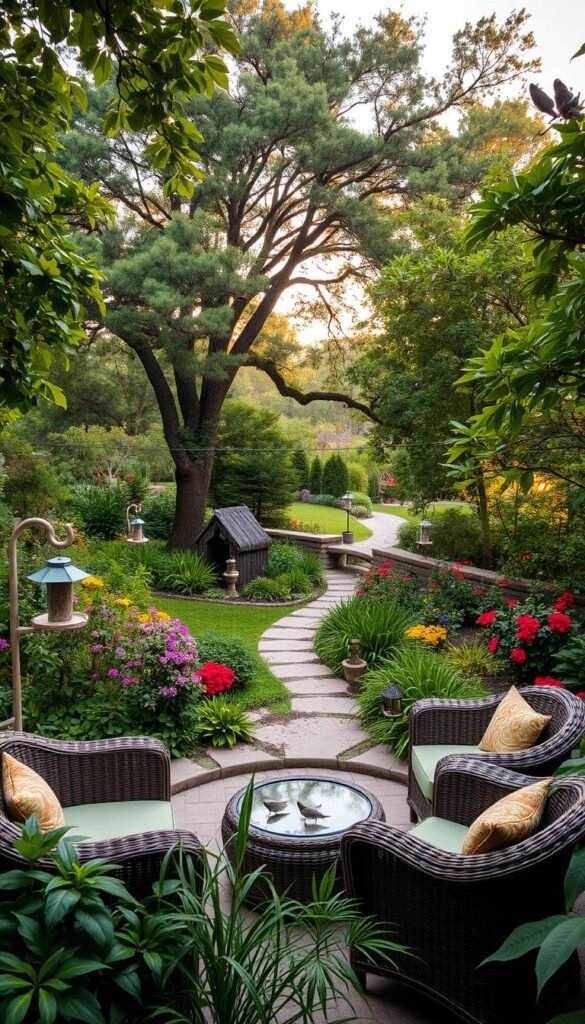
Your property holds hidden potential waiting to bloom. Across American neighborhoods, creative homeowners are turning forgotten corners into lively zones that serve families and local fauna. From Chicago’s parkway gardens to rooftop oases, these dual-purpose areas prove every square foot matters.
Start by walking your yard with fresh eyes. That narrow side strip? Perfect for a pollinator corridor. Cracked driveway edges? Ideal spots for creeping thyme. Even flat garage roofs can host lightweight planters filled with sedums that butterflies adore.
Transforming Every Inch of Your Yard
Smart layouts make spaces work harder. A bench flanked by aromatic lavender serves as both seating and bee buffet. Elevated planters on patios create visual screens while offering nesting sites for solitary bees. For evening enjoyment, solar path lights guide visitors without disrupting firefly mating signals.
| Underused Area | Transformation Idea | Benefits |
|---|---|---|
| Parking strip | Drought-tolerant wildflowers | Colorful curb appeal + butterfly food |
| Driveway border | Permeable pavers with moss | Reduces runoff + cools air |
| South-facing wall | Vertical herb garden | Fresh cooking ingredients + ladybug habitat |
Balance hard surfaces with green pockets. Gravel paths edged with native grasses allow drainage while sheltering ground beetles. For privacy, train native vines like coral honeysuckle on trellises – their tubular flowers feed hummingbirds better than invasive species.
Even modest changes boost your home’s ecological value. A birdbath near seating areas provides entertainment and hydration for feathered friends. By reimagining your yard’s possibilities, you create welcoming spaces that nurture both relaxation and biodiversity.
Cottage Garden Inspirations: Embracing Nostalgia
Warm memories bloom where weathered fences meet clusters of cheerful flowers. This timeless cottage approach turns yards into living scrapbooks, blending fragrant blooms with stories from generations past. Recent surveys show 68% of homeowners now prioritize plants that spark personal connections over trendy specimens.
Timeless Plant Choices for a Classic Look
Peonies anchor these spaces with their lavish spring shows, while climbing roses soften stone walls. Delphiniums add vertical drama, their spires reaching for sunlight like nature’s own cathedral arches. For continuous color, pair early-blooming iris with late-season asters.
| Heirloom Variety | Modern Cultivar | Key Advantage |
|---|---|---|
| Grandma’s rose | David Austin roses | Repeat bloom cycles |
| Wild columbine | McKana Giant mix | Extended flowering period |
| Common hollyhock | Spotlight series | Rust disease resistance |
Create depth by layering plants in uneven groupings. Tall foxgloves peek behind mid-height daisies, while creeping thyme spills over walkways. This “organized chaos” effect works in small urban plots and sprawling country yards alike.
For cohesive color schemes, explore the cottagecore color palette that pairs soft pinks with muted greens. In arid regions, substitute lavender for hydrangeas – its silvery foliage maintains that dreamy texture while conserving water.
Your space becomes a bridge between past and present when you mix heritage plants with resilient newcomers. Those rambling roses might not win perfection awards, but their scented petals will write new family stories.
Wildflower Wonders: Embracing Chaos and Natural Growth
Release your inner rebel by trading garden gloves for a handful of wildflower seeds. This carefree approach celebrates nature’s spontaneity, creating living tapestries that shift with each season. Unlike traditional plots, these dynamic spaces thrive on surprise – you’re not planting a garden so much as starting a floral conversation.
Achieving a Naturally Unruly Garden
Scatter seed mixes in early spring or late fall, letting weather decide what grows. Embrace uneven clumps of color where poppies mingle with lupines. Birds will drop new varieties, adding unexpected guests to your floral party.
Focus on regional mixes suited to your soil. Northeast gardeners might choose black-eyed Susans and bee balm, while Southwest growers opt for desert marigolds. A simple table shows smart pairings:
| Region | Top Wildflowers | Bloom Period |
|---|---|---|
| Midwest | Purple coneflower | June-September |
| Pacific Northwest | California poppy | April-July |
| Southeast | Blanket flower | May-October |
Creating Pollinator-Friendly Arrangements
Cluster flowers in odd-numbered groups for visual appeal. Leave spent blooms standing – their seeds feed finches while dried stems shelter overwintering bees. Add shallow water dishes with stones for butterfly pit stops.
Swap turf areas for mini meadows using low-growing varieties like creeping thyme. These fragrant carpets need no mowing and bloom persistently. You’ll spot more swallowtail butterflies within weeks while saving 3-4 hours of weekly yard work.
Romantic Edible Gardens: Beauty Meets Bounty
Imagine plucking fresh basil between blooming roses or harvesting ruby-hued chard beside lavender spikes. Modern vegetable gardens now rival flower beds in visual splendor, merging practicality with poetic charm. This movement transforms functional plots into living canvases where dinner ingredients double as design elements.
Mixing Ornamentals with Edible Delights
Start by pairing colorful kale with feathery cosmos. The kale’s ruffled leaves create texture, while cosmos add airy height. Try these winning combinations:
| Edible Star | Ornamental Partner | Seasonal Impact |
|---|---|---|
| Rainbow chard | Dwarf sunflowers | Summer-fall contrast |
| Purple basil | White alyssum | Continuous blooms |
| Artichokes | Russian sage | Year-round structure |
Perennials like asparagus make excellent green backdrops for tulip displays. Let herbs spill over pathways – thyme releases fragrance when brushed, while flowering oregano attracts bees. For vertical beauty, train scarlet runner beans up wrought-iron arches.
Plan succession plantings to maintain visual flow. Replace spent lettuce with nasturtiums in summer, then swap autumn pumpkins for ornamental cabbage. This approach keeps your space productive and picturesque through three seasons.
Edible landscapes cut grocery bills while boosting curb appeal. Studies show homes with food gardens sell faster, and you’ll enjoy salads garnished with petals from your own yard. Who knew practicality could taste – and look – this good?
Your outdoor space becomes more than plants and soil—it’s a living story. Every choice creates ripples, from buzzing pollinators to childhood memories made under shade trees. These vibrant areas prove beauty and purpose grow best when rooted in care.
Simple shifts make lasting impacts. A thriving ecosystem might begin with scattered wildflower seeds or a shallow water dish for butterflies. Even cracked pavement edges can host resilient sedums that feed bees through summer droughts.
Consider the chaos gardening approach if rigid plans feel restrictive. This spontaneous style builds biodiversity while celebrating nature’s surprises. You’ll find beauty in unexpected plant partnerships and shifting seasonal patterns.
Your efforts matter beyond property lines. Native shrubs become rest stops for migrating birds, while healthy soil filters rainwater for entire neighborhoods. These spaces quietly combat urban heat islands and plastic pollution one compost pile at a time.
What’s next? Start small—replace a lawn patch with clover or install a rain barrel. Watch how quickly life arrives, proving every square foot holds potential. Your plot isn’t just yours—it’s a vital piece in Earth’s puzzle, waiting to bloom.