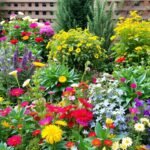
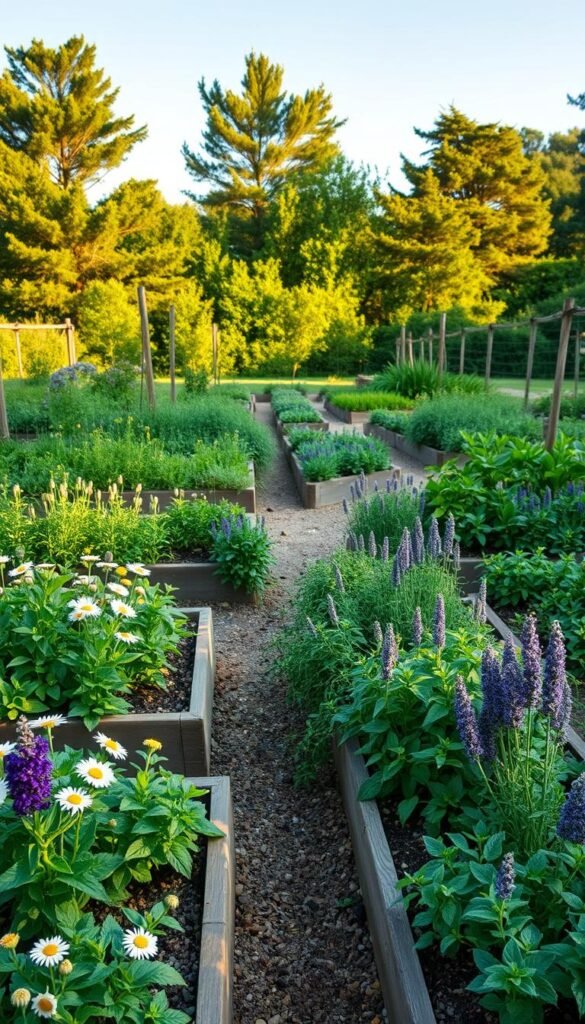
Imagine stepping into your backyard to find fresh solutions for everyday health needs. Many plants thriving in nature’s wild spaces can become powerful allies in your own green space. These resilient growers adapt easily to containers, raised beds, or sunny patches, needing little more than basic care to flourish.
Common issues like seasonal sniffles or minor burns often respond well to homegrown remedies. Plants like calendula and peppermint work double duty – their vibrant blooms brighten your landscape while their leaves and flowers stock your wellness toolkit. You’ll find these natural helpers require far less attention than fussy vegetables, yet deliver impressive therapeutic benefits.
Starting with 5-6 versatile species lets you build skills gradually. A compact plot or clustered pots can yield ingredients for soothing teas, skin-soothing balms, and aromatic essential oils. Bonus: these green companions attract butterflies and bees, creating a lively ecosystem right outside your door.
Whether you’re nurturing seedlings on a balcony or designing a dedicated growing area, your efforts will blossom into tangible rewards. Each harvest brings you closer to self-reliance, turning ordinary spaces into sources of natural vitality.
Why Fast-Growing Medicinal Herbs Are Perfect for Your Garden
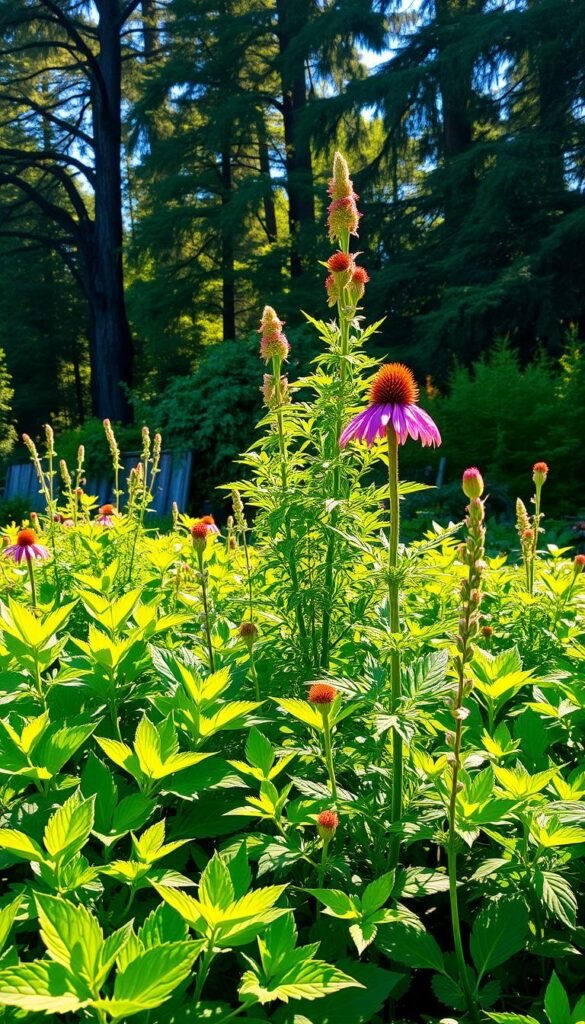
Ever wished your green space could multitask as both healer and habitat? These rapid-growth plants deliver practical solutions while beautifying your landscape. Their adaptability makes them ideal for beginners or those with limited time.
Quick Harvest Benefits
You’ll see usable leaves and flowers faster than with traditional perennials. Some varieties like lemon balm and basil yield harvest-ready leaves in just 3-4 weeks. Three key advantages:
- Instant gratification: Make your first herbal tea within a month of planting
- Continuous yields: Frequent trimming encourages bushier growth
- Season-long production: Many species thrive from spring through fall
Low-Maintenance Care Tips
These resilient growers ask little but give much. They naturally deter pests through aromatic oils, reducing your need for sprays. Smart strategies for success:
- Let soil dry slightly between waterings – overwatering causes more issues than neglect
- Mix sand into clay-heavy earth for better drainage
- Group plants with similar needs to simplify your routine
You’ll love how these botanical allies improve your space while stocking your wellness cabinet. Their dual-purpose nature means every trim provides both garden beauty and usable materials.
Understanding Your Garden’s Unique Environment
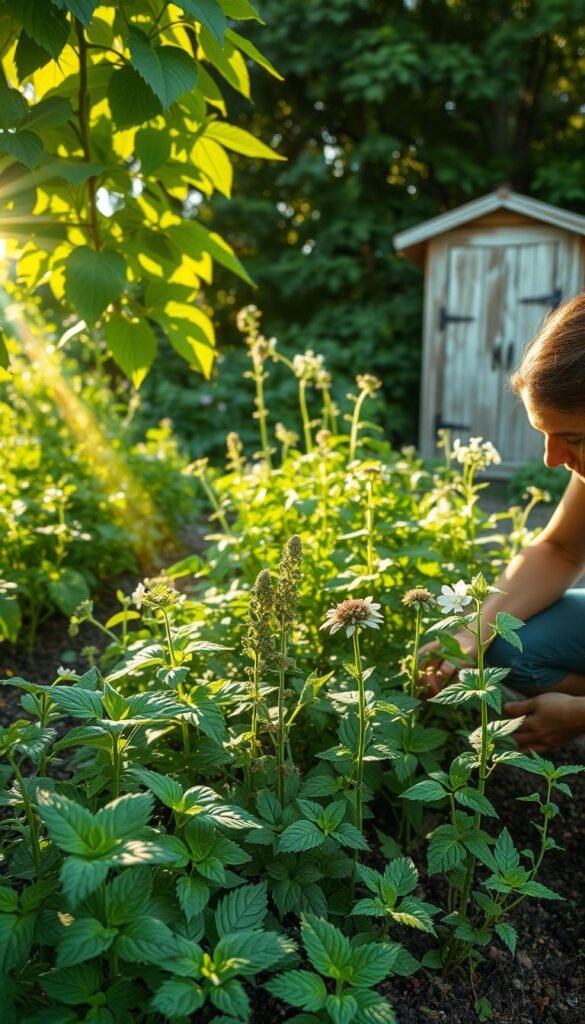
Every green space tells its own story through sunlight and soil. Before choosing what to grow, become a detective of your outdoor area’s natural rhythms. The way shadows dance across your plot or rainwater pools near that old oak tree reveals more than you might expect.
Assessing Sunlight, Soil, and Water Requirements
Start by tracking how light moves through your space. Use a free app or simple notebook to record hourly patterns. You’ll spot sweet spots where six hours of direct sun hit consistently – prime real estate for sun-loving species.
Don’t stress if your soil looks less than perfect. Many resilient varieties actually produce stronger beneficial compounds in lean earth. A quick squeeze test tells you what’s underfoot: sandy soil crumbles immediately, while clay forms a dense ball.
Water needs surprise most new growers. “These plants aren’t thirsty neighbors,” says an experienced urban gardener. Once established, they’ll thrive on rainfall alone except during extreme droughts. Group moisture-loving species separately to simplify care.
By matching your plant choices to existing conditions, you create a self-sustaining ecosystem. South-facing zones become powerhouses for sun worshippers, while shaded corners host cool-weather allies. Your garden will reward you with vigorous growth when you work with – not against – its natural personality.
High-Yield Medicinal Herbs Garden: Selecting Fast-Growing Varieties
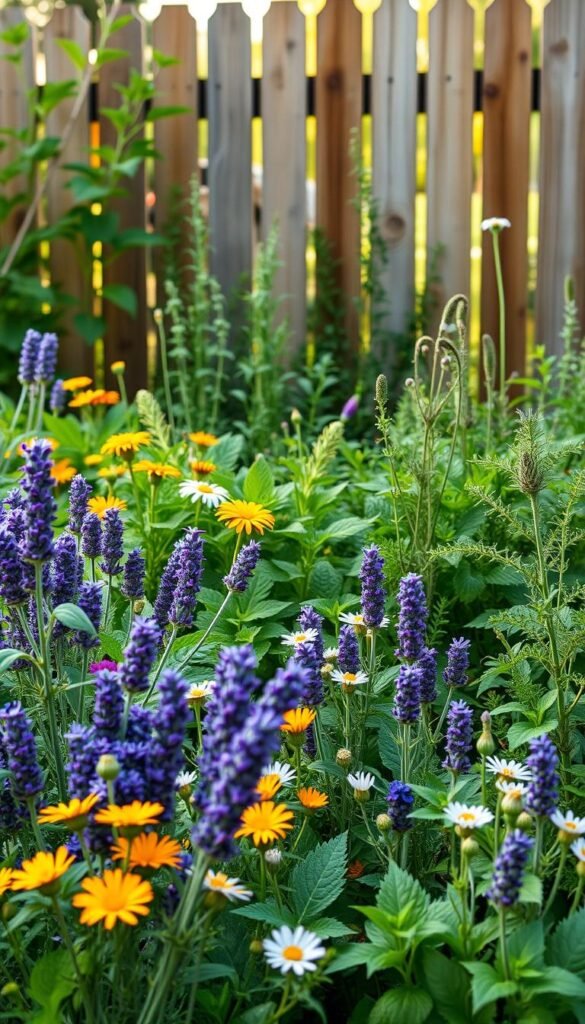
Transform your outdoor space into a living pharmacy by picking plants that serve both beauty and purpose. Start with 6-8 varieties you’ll actually use – think teas for relaxation or salves for minor cuts. Matching your choices to local weather patterns ensures they’ll thrive with minimal fuss.
Ask yourself: What health needs pop up most often? Chamomile’s calming flowers work wonders in bedtime brews, while peppermint’s fresh leaves ease stomach discomfort. “Your garden becomes most valuable when it solves real problems,” notes a Texas-based herbalist. Pair these with multi-taskers like calendula – its sunny petals heal skin and brighten salads.
Annuals like basil give quick rewards, letting you harvest within weeks. Perennials like rosemary take longer but offer year-round access. Smart starters often mix both types for continuous yields. Check your USDA zone before planting – lavender loves dry heat, while lemon balm prefers partial shade.
Grow what you already buy. If echinacea tinctures fill your cold-season cabinet, dedicate space to these immune-boosting blooms. Track which store-bought remedies you replace first – those become your garden priorities. Starting from seeds saves money, while nursery plants offer instant gratification for eager beginners.
Easy Grow Techniques and Planning Your Herbal Space
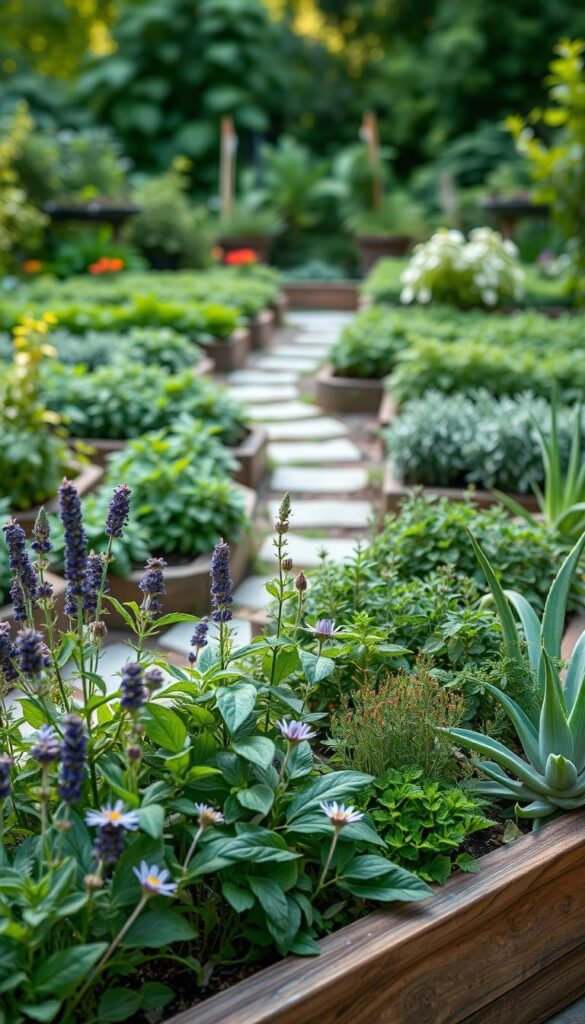
Your healing oasis doesn’t need sprawling fields – even a sunny windowsill can become a powerhouse of green remedies. Smart layout choices let you grow more in less space, whether you’re working with acres or apartment square footage.
Choosing Containers or Garden Beds
Pots give you ultimate flexibility. Mint thrives in 12-inch containers but will invade neighboring garden beds if planted directly. Three advantages of container growing:
| Feature | Containers | Garden Beds |
|---|---|---|
| Space Flexibility | Move plants daily | Fixed location |
| Maintenance Control | Custom soil mixes | Natural earth |
| Root Management | Prevents spreading | Needs barriers |
| Mobility | Chase sunlight | Seasonal placement |
Use deep pots with drainage holes for healthy roots. Cluster containers to create humidity pockets that reduce watering needs. One gardener shares: “My rosemary outgrew three pots last summer – a happy problem!”
Vertical Gardening Ideas
Turn blank walls into thriving herb areas. Hanging pocket planters work perfectly for thyme and oregano. Tiered shelves let you grow 15 plants in a 3-foot footprint. Benefits of upward growth:
- Maximizes air circulation
- Simplifies pest inspections
- Brings plants to eye level
Wall-mounted systems with drip irrigation keep plants hydrated without daily attention. Remember: lightweight soil mixes prevent structural strain. Your vertical space becomes both functional and decorative.
Top Fast-Growing Medicinal Herbs to Cultivate at Home
Your kitchen windowsill or patio can transform into a natural wellness station with these six powerhouse growers. These species deliver quick results while fitting into small spaces – perfect for urban dwellers or busy families.
Chamomile and Calendula
Chamomile’s daisy-like flowers work overtime in your daily routine. Harvest blossoms weekly for stress-relieving teas that also soothe skin irritations. One gardener notes: “I dry enough in summer to last through winter blues.”
Calendula’s vibrant petals heal cuts while brightening salads. Its plant thrives in poor soil, producing nonstop blooms from spring until frost. Mix petals with olive oil for DIY salves – no fancy equipment needed.
Peppermint, Rosemary, Echinacea, and Thyme
These multitaskers offer solutions for common household needs. Check their specialties:
| Herb | Key Benefits | Growth Tips |
|---|---|---|
| Peppermint | Eases headaches, freshens air | Containers prevent spreading |
| Rosemary | Sharpens focus, flavors meals | Needs full sun, sandy soil |
| Echinacea | Boosts immunity, attracts bees | Plant in clusters for impact |
| Thyme | Fights germs, seasons dishes | Trim often for bushy growth |
For tight spaces, try container gardening hacks that maximize vertical surfaces. Most species thrive in pots, letting you move them as seasons change. Start with two favorites, then expand as confidence grows.
Incorporating Herbal Remedies into Your Daily Routine
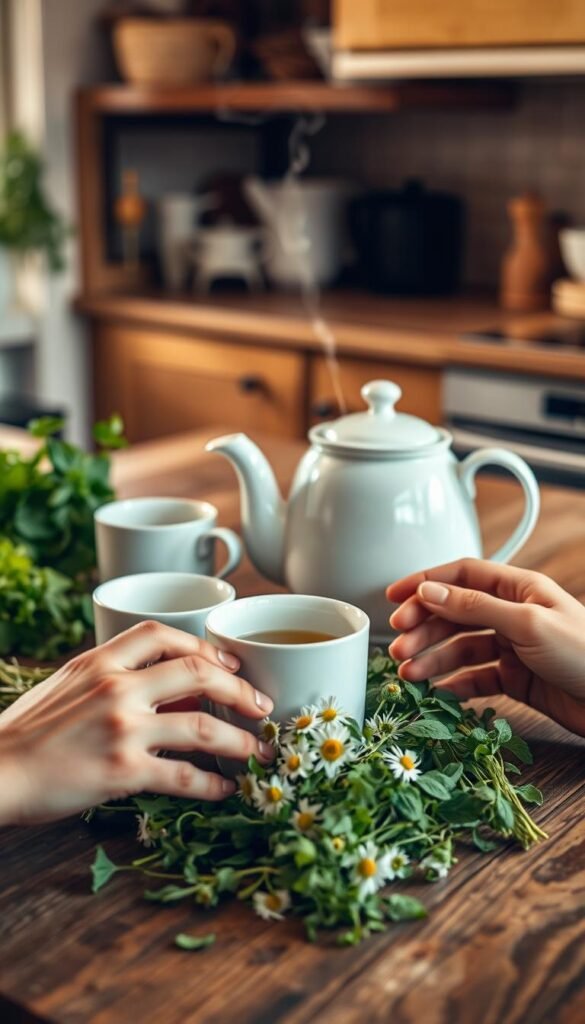
Turn your morning ritual into a wellness moment with plants from your windowsill. Fresh leaves and flowers offer endless possibilities – from sunrise pick-me-ups to evening wind-downs. Start simple by swapping store-bought products with homemade creations that match your lifestyle.
Brewing Teas, Tinctures, and Salves
Harvesting herbs at peak freshness unlocks their full potential. Try these three methods to preserve nature’s goodness:
| Preparation | Key Ingredients | Time Required | Best Uses |
|---|---|---|---|
| Tea Infusion | Fresh/dried leaves + hot water | 5-10 minutes | Daily relaxation or digestion |
| Tincture | Chopped herbs + alcohol | 4-6 weeks | Long-term immune support |
| Salve | Dried flowers + oil + beeswax | 2 hours | Skin repair & muscle relief |
Morning routines shine with peppermint tea – steep fresh leaves while scrambling eggs. For evening calm, chamomile buds mixed with honey become liquid serenity. One gardener shares: “My homemade sleep blend works better than anything from the store.”
Preserve summer’s bounty by drying extra harvests. Hang small bunches in a dark closet or use a dehydrator. Store in airtight jars labeled with dates – most retain potency for 12-18 months. With these techniques, your pantry becomes a year-round wellness hub.
Optimizing Garden Layout for Maximum Yield
Want your green space to work smarter, not harder? Strategic arrangements boost productivity while cutting maintenance. Smart pairings and water-wise planning turn ordinary plots into thriving ecosystems.
Companion Planting Strategies
Strong aromas from rosemary or thyme become nature’s security system. These fragrant allies repel pests from nearby veggies while attracting beneficial insects. Try these winning combinations:
- Basil with tomatoes – improves flavor and deters flies
- Chamomile near cabbage – lures hoverflies that eat aphids
- Lavender bordering paths – confuses pests with its scent
Mix flowering perennials like echinacea among your lettuce. You’ll get pollinator traffic and natural pest control in one move.
Efficient Watering Methods
Group thirst levels like you’re hosting a plant party. Drought-tolerant sage thrives in dry zones, while mint prefers moist corners near downspouts. Three water-saving tricks:
- Use soaker hoses in high-need areas
- Mulch around lavender to lock in moisture
- Test soil before watering – if it sticks together, wait
“My oregano gets rainwater runoff from the shed roof,” shares a Midwest gardener. “Zero extra watering needed.” Observe where puddles form naturally – those spots become hydration hubs for water-loving species.
Pruning, Harvesting, and Proper Care Tips
Mastering harvest timing transforms your plants into potent remedies. Proper techniques boost both plant health and therapeutic value, creating a cycle of abundance. Let’s explore how to maximize your green allies’ potential through strategic care.
When to Harvest for Peak Potency
Morning light holds magic for flower collectors. Gather chamomile blooms when petals fully open, using fingertips to pluck without damaging stems. Calendula’s vibrant flowers reach peak power mid-morning – wait until dew dries but before sun intensifies. For leafy friends like mint, snip stems before buds form to capture maximum essential oils.
Follow these guidelines for thriving plants:
- Pinch just above leaf nodes to encourage bushier growth
- Limit cuts to one-third of the plant per session
- Rotate harvesting areas to prevent bare patches
Seasonal rhythms affect potency. Spring growth offers tender leaves for fresh use, while autumn harvests provide dense materials for drying. A Colorado State pruning guide confirms: “Frequent, light trims yield healthier specimens than occasional heavy cuts.”
Container-grown plants need extra attention. Their confined roots demand precise watering – check soil moisture before harvesting. For stress-free maintenance, try these container care strategies that prevent overhandling.
Remember: Your time investment pays dividends. Regular trimming prevents leggy growth while increasing usable yields. Observe how plants respond – bushy basil or prolific calendula will show approval through vigorous regrowth.
Seasonal Considerations for Rapid Herb Growth
Timing shapes your success with green allies more than you might expect. By syncing your planting calendar with nature’s rhythms, you’ll enjoy fresh harvests while avoiding common pitfalls.
Spring Planting and Summer Care
Early spring marks prime time for sowing seeds like chamomile directly in beds after frost risks pass. These sun-lovers sprout within two weeks when soil warms. Start holy basil indoors 4-6 weeks before your last freeze date for robust transplants.
Come summer, shift focus to smart hydration. Most species thrive with weekly deep watering rather than daily sprinkles. In humid regions, morning irrigation prevents fungal issues. Pair this routine with strategic pruning to boost airflow through leafy canopies.
Winter Protection and Frost Readiness
Cold zones demand extra planning. Move potted lemon balm indoors before first frost, but let hardy perennials like thyme experience light freezes – it intensifies their oils. Mulch root zones with straw after ground chills to buffer temperature swings.
For regions with harsh winters, consider cold-hardy crops that share similar care needs. Many leafy varieties survive under snowpack when properly prepared. Track local frost dates each year – shifting patterns affect your timing.
With these seasonal shifts in mind, your green space becomes a year-round source of wellness. Each phase brings new opportunities to refine your approach and deepen nature connections.