
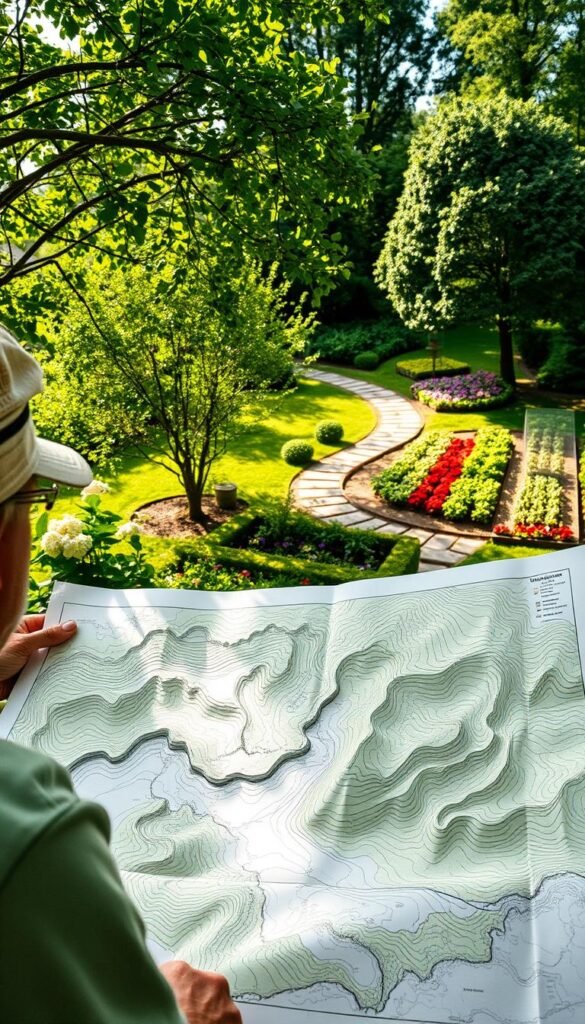
Your property’s natural features hold the key to creating a stunning, functional landscape. Every slope, elevation change, and drainage pattern shapes what’s possible in your outdoor area—whether you’re working with a flat backyard or a hillside retreat.
Discover how to turn land contours into creative opportunities. Properly reading your site’s layout helps you avoid costly mistakes while enhancing visual flow. Gentle slopes can guide visitors through winding paths, while elevation shifts create perfect spots for cozy seating nooks.
Smart planning protects your space from erosion and water issues. By matching plants to microclimates formed by sunlight and wind patterns, you’ll build a healthier ecosystem. Even tricky terrain becomes an asset when you work with—not against—its unique character.
This guide will show you practical ways to blend beauty and practicality. You’ll learn to craft outdoor areas that feel harmonious, sustainable, and uniquely yours—all by letting the land itself inspire your vision.
The Role of Soil in Shaping Your Garden

Every successful garden starts with understanding the ground it’s rooted in—your soil’s secrets. Its texture, nutrients, and structure determine whether plants flourish or struggle. Let’s dig into what makes your dirt unique.
Understanding Soil Composition
Three ingredients shape your soil’s personality: sand, silt, and clay. Squeeze a handful of damp earth to test its type:
| Type | Texture | Drainage | Ideal For |
|---|---|---|---|
| Sand | Gritty | Fast | Cacti, herbs |
| Silt | Powdery | Moderate | Vegetables |
| Clay | Sticky | Slow | Wetland species |
“Soil isn’t just dirt—it’s a living system that feeds your plants,”
Soil Quality and Organic Matter
Healthy earth smells earthy and crumbles easily. Boost poor-quality dirt with compost—nature’s multivitamin. A single inch of compost added annually can transform heavy clay or sandy soils into plant paradise.
Existing vegetation reveals hidden clues. Dandelions thrive in compacted earth, while ferns prefer acidic conditions. For precise adjustments, no-dig gardening methods help preserve soil structure while adding nutrients.
Exploring Topography: Laying the Foundation for Garden Design
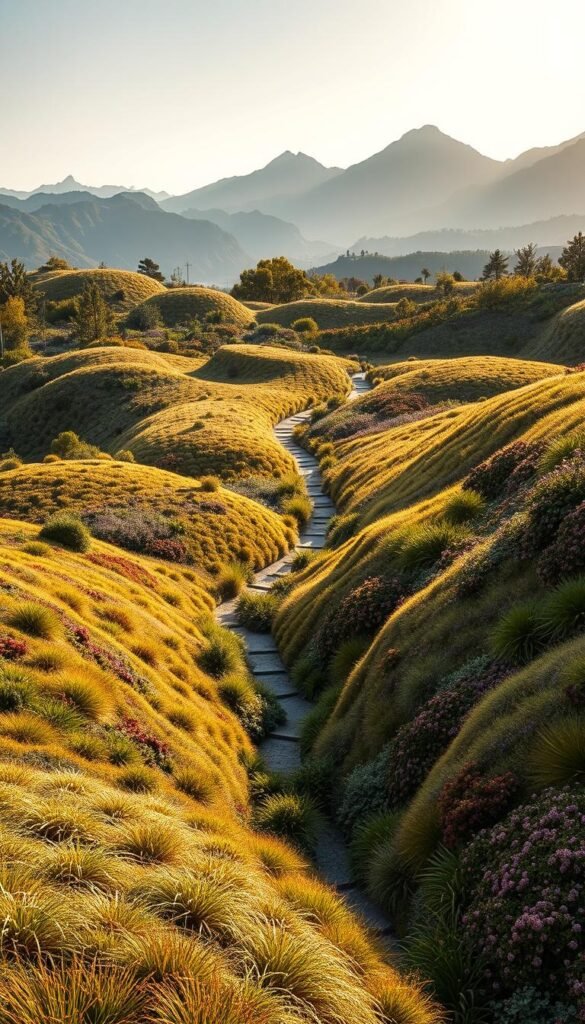
Every contour tells a story—your land’s natural blueprint determines what thrives where. By reading these patterns, you unlock hidden potential while avoiding drainage disasters or plant mismatches.
Identifying Slopes and Elevation Changes
Walk your property with fresh eyes. Notice where the ground rises or dips—these variations create micro-environments. Steeper slopes (over 15% grade) need terracing, while gentle inclines guide water flow naturally.
| Slope Gradient | Design Solution | Plant Strategy |
|---|---|---|
| 0-5% | Flat lawns | Grasses, perennials |
| 5-10% | Rain gardens | Native shrubs |
| 10-15% | Retaining walls | Groundcovers |
How Aspect Affects Sunlight and Microclimates
South-facing spaces bake in afternoon rays—perfect for lavender or rosemary. North-facing zones stay cooler, hosting ferns and hostas. Use professional mapping tools to pinpoint elevation shifts that create these solar pockets.
“Aspect turns slopes into climate controllers—harness this free energy source,”
Morning sun warms east-facing areas gently, while west exposures face intense evening heat. Match plants to these microclimates for lower maintenance and healthier growth.
How Soil and Topography Influence Your Garden Design Choices
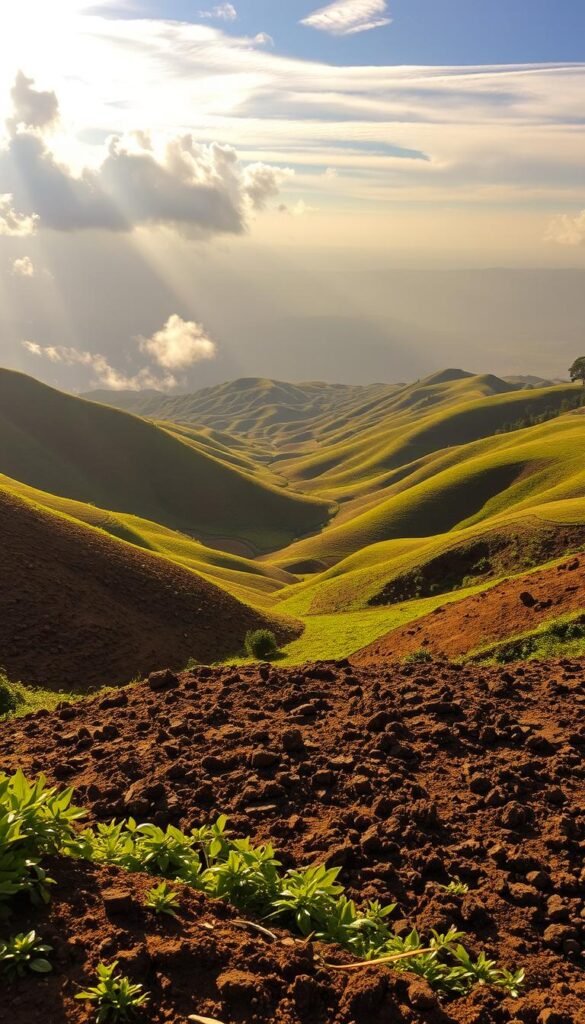
Nature teams up beneath your feet to create living conditions for every plant. The relationship between ground structure and surface shape determines where water flows, what nutrients stay, and which greenery thrives.
Ground Features Shape Plant Communities
Hillsides act like water slides for rainfall, creating fast-draining zones perfect for drought-tolerant species. Valley floors become natural sponges, holding moisture for water-loving plants. Observe these patterns during spring rains to see your property’s hidden water map.
| Location | Soil Traits | Water Patterns | Plant Matches |
|---|---|---|---|
| Hillside | Rocky, loose | Quick drainage | Lavender, sedum |
| Valley | Rich, dense | Moisture retention | Ferns, astilbe |
| Mid-slope | Mixed texture | Moderate flow | Native grasses |
South-facing slopes bake in sunlight, creating warm microclimates. North-facing areas stay cooler and damper. These solar effects combine with soil types to form four distinct growing zones in many yards.
Smart planting uses these natural partnerships. Match deep-rooted shrubs to erosion-prone slopes. Place thirsty flowers where water collects naturally. This approach reduces maintenance while boosting plant health.
“Let the land whisper where things want to grow—your job is to listen,”
Assessing Your Land’s Features and Environmental Factors

Your landscape holds hidden clues that shape its potential. Start by walking your property after heavy rain—watch where puddles form and how streams flow. These observations reveal critical details about natural drainage and problem spots.
Mapping Out Natural Drainage and Water Flow
Identify low areas where water collects and elevated zones that dry quickly. Use simple tools like colored flags to mark these spots. South-facing slopes often drain faster, while north-facing sections retain moisture longer.
Track wind patterns by observing tree lean or using ribbon markers. Strong breezes create microclimates—areas needing wind protection or extra airflow. Pair this data with local climate details like frost dates and rainfall averages for smarter plant choices.
| Climate Factor | Observation Method | Design Impact |
|---|---|---|
| Rainfall | Gauge measurements | Swale placement |
| Sun Exposure | Shadow tracking | Plant zoning |
| Wind Direction | Flag movement | Windbreak design |
“Water follows the path of least resistance—your job is to guide it where plants need it most.”
Document existing structures like patios or utility lines that affect water movement. Proper soil preparation in key areas helps balance drainage and moisture retention. This approach transforms challenges into thriving plant zones while preventing erosion.
DIY Techniques for Mapping Your Garden’s Terrain
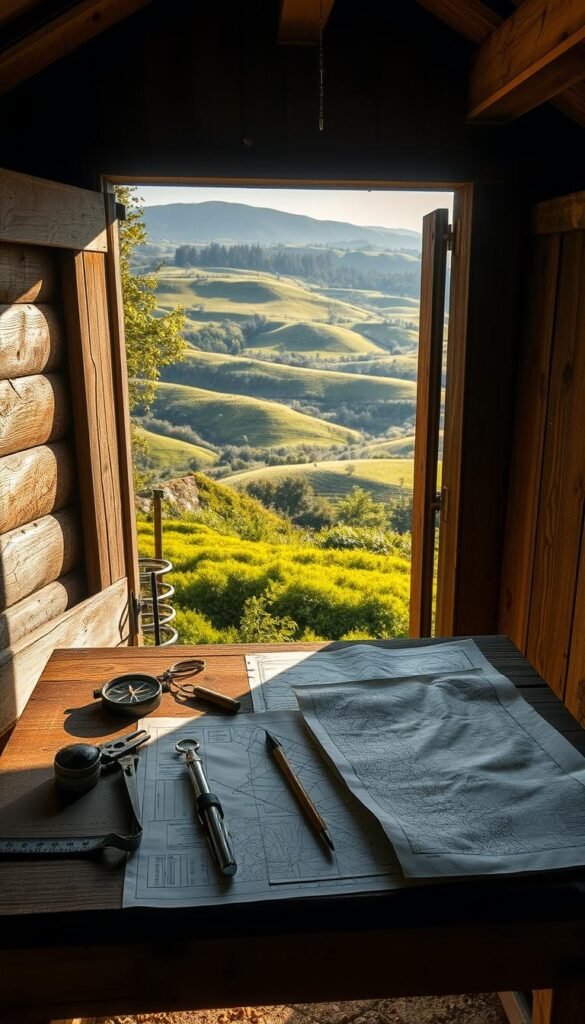
Charting your garden’s terrain unlocks hidden design opportunities. Start by walking your site with fresh eyes—notice slopes, low spots, and elevation changes. Jot initial notes about drainage patterns and sunlight exposure in different areas.
Simple Tools and Smartphone Apps to Measure Slope and Elevation
Transform everyday items into professional-grade tools. A string level stretched between stakes reveals slope angles. Free apps like Topography Tracker use your phone’s sensors to calculate elevation changes instantly.
| Tool | Purpose | Best For | Example |
|---|---|---|---|
| String Level | Measuring slope gradients | Small gardens | 3% grade detection |
| Smartphone Apps | Elevation tracking | Large properties | 0.5 ft accuracy |
| Graph Paper | Scale drawings | Layout planning | 1/4″ = 1 ft scale |
| Measuring Tape | Distance mapping | Boundary marking | 50-ft lengths |
Follow this process for precise results:
- Sketch base map showing permanent features
- Mark elevation changes with colored pencils
- Record measurements in field notes
Capture afternoon shadows and morning dew patterns—these reveal microclimates. Your final planning document becomes a living guide, adapting as you discover new site details over time.
“Accurate mapping turns guesswork into strategy—it’s the foundation of every great garden design.”
Creative Garden Strategies for Sloping Landscapes
Sloped spaces become design goldmines when approached thoughtfully. These techniques turn tricky terrain into eye-catching features while solving practical challenges like water management and soil stability.
Terracing and Retaining Walls for Erosion Control
Transform steep grades into cascading planting zones using terraces. Each level acts as a soil anchor while creating distinct growing areas. Retaining walls offer structural support and design flair—choose materials that complement your landscape style.
| Material | Cost | Durability | Best Use |
|---|---|---|---|
| Natural Stone | High | 50+ years | Formal gardens |
| Pressure-Treated Timber | Medium | 15-20 years | Rustic settings |
| Concrete Blocks | Low | 30+ years | Modern designs |
Explore professional slope solutions for inspiration. Groundcovers like creeping juniper between terrace levels provide extra erosion protection through dense root networks.
Utilizing Natural Depressions for Rain Gardens
Low spots that collect water become ecological assets. Fill these areas with native plants that filter runoff and support pollinators. Swamp milkweed and blue flag iris thrive in wet conditions while adding seasonal color.
| Plant | Bloom Time | Water Needs | Wildlife Value |
|---|---|---|---|
| Sedges | Spring | High | Bird habitat |
| Joe-Pye Weed | Summer | Medium-High | Butterfly magnet |
| Cardinal Flower | Late Summer | Consistent moisture | Hummingbird favorite |
“Rain gardens turn drainage issues into living art installations that benefit the ecosystem.”
Designing Effective Drainage and Irrigation Solutions
Standing water in your garden signals more than just a puddle—it’s a design opportunity waiting for smart solutions. Soggy areas can drown plant roots and invite pests, but strategic planning transforms these zones into thriving spaces. Let’s explore techniques that balance function with visual appeal.
Grading and Swales for Optimal Water Management
Subtle slope adjustments make dramatic differences. A 2% grade (1/4 inch per foot) redirects water flow away from foundations while preventing erosion. Swales—shallow ditches filled with gravel—become hidden guides that channel rainwater to thirsty plants.
| Slope Adjustment | Purpose | Materials Needed |
|---|---|---|
| 1-2% grade | Foundation protection | Topsoil, rake |
| Swale creation | Water redirection | Gravel, landscape fabric |
| Soil amendment | Improved permeability | Compost, sand |
“Proper grading is like teaching water to dance—it moves where you want without trampling your plants.”
Incorporating Rain Gardens and French Drains
Turn problem spots into ecological assets. Rain gardens filled with native iris or sedges absorb excess moisture while attracting pollinators. For severe drainage issues, French drains (perforated pipes buried in gravel trenches) offer invisible solutions that last decades.
| Solution | Installation Depth | Best Plants |
|---|---|---|
| Rain garden | 6-8 inches | Swamp milkweed |
| French drain | 18-24 inches | N/A (structural) |
Mix 30% sand into heavy soil to boost permeability. These methods reduce mosquito habitats while creating healthier growing conditions. Remember—every water challenge holds the seed of a beautiful solution.
Optimizing Plant Selection Base
The secret to thriving greenery lies in aligning your picks with nature’s blueprint. Match species to your site’s light exposure, moisture levels, and earth composition. Plants that mirror existing vegetation often adapt faster—native species already evolved for local conditions.
Observe where sun lovers and shade seekers naturally thrive. Dry, rocky slopes suit lavender and yucca. Boggy areas welcome iris and ferns. This strategic pairing reduces watering needs while boosting pest resistance.
Local nurseries offer climate-adapted varieties proven in your region. Ask about root depth for slopes or salt tolerance near driveways. Pro tip: Group plants with similar water needs to simplify irrigation.
Don’t fight microclimates—use them. Warm south walls extend growing seasons for veggies. Cool north beds host woodland blooms. Experiment with container gardens to test new spots before permanent planting.
“Right plant, right place” isn’t just a slogan—it’s the key to low-maintenance beauty. Let your land’s unique personality guide every selection, creating a landscape that flourishes effortlessly.