Imagine stepping into a space where vibrant blooms mingle with juicy berries and fragrant herbs. This garden philosophy transforms your yard into a living canvas that feeds your family while dancing with butterflies. Christian Douglas, author of The Food Forward Garden, calls this approach “planting with purpose” – where every leaf and petal serves multiple roles.
Your outdoor area can become a thriving ecosystem bursting with color and flavor. Plants like lavender and sunflowers attract bees, while berry bushes offer sweet snacks for you and birds. By mixing edible and ornamental varieties, you create beauty that works overtime – supporting pollinator habitats while growing fresh ingredients.
Strategic placement makes all the difference. Tuck nasturtiums between tomato plants, or let flowering thyme carpet walkways. These pairings boost pollination rates for better harvests, turning functional beds into eye-catching displays. You’ll discover how thoughtful design creates spaces that nourish both people and wildlife through every season.
This approach goes beyond growing food – it’s about cultivating connection. As you watch hummingbirds dart between scarlet runner beans or snack on sun-warmed strawberries, your garden becomes a place of shared abundance. Ready to create your own slice of earth that’s equal parts pantry and paradise?
Understanding the Benefits of a Dual-Purpose Garden
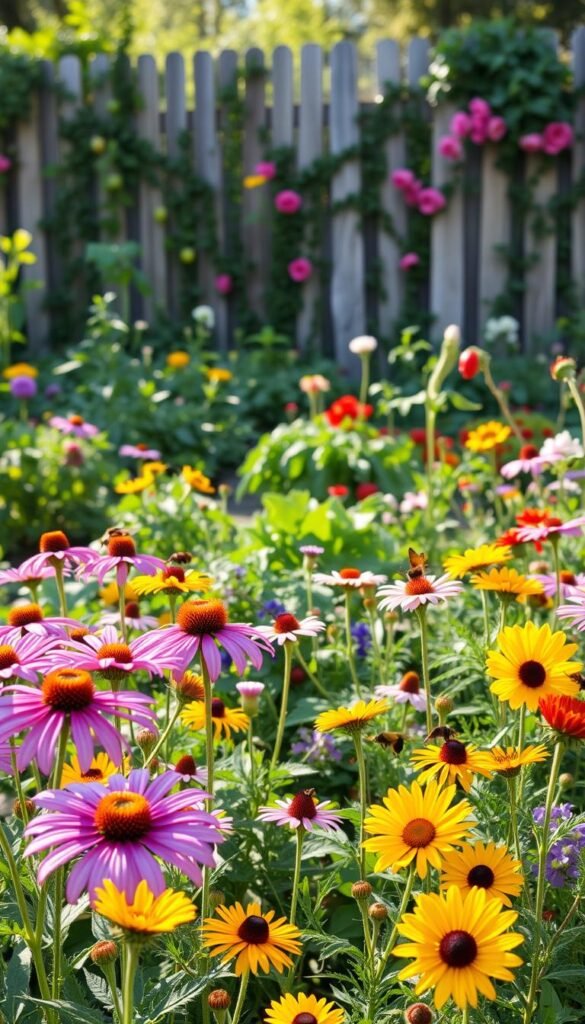
Your backyard can become a vibrant tapestry where tasty crops and showstopping blossoms thrive side by side. This approach transforms ordinary plots into dynamic spaces that nourish both people and nature.
Where Beauty Meets Bounty
Strategic pairings like Pink Pearl Agastache – with its pink-and-purple spikes – next to kale or peppers create living bouquets you can snack on. These combinations maximize space while boosting ecosystem health. Stefani Bittner of Homestead Design Collective notes: “Seasonal blooms aren’t just pretty – they’re essential workforce recruiters for your veggies.”
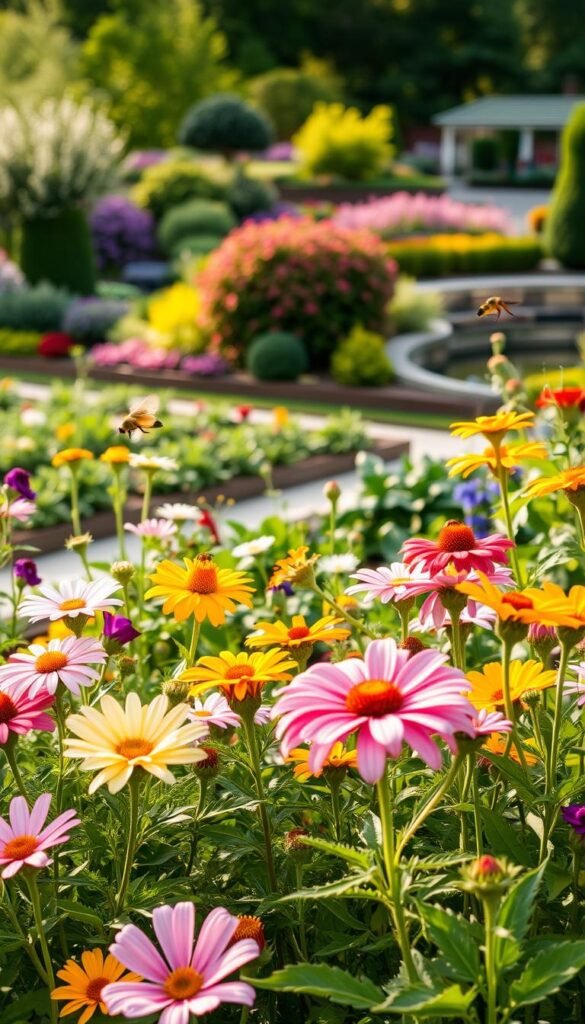
Sunseekers White Perfection Coneflower demonstrates this dual role perfectly. Its white petals shift to sunny yellow as they mature, offering months of visual interest while feeding bees and butterflies.
Nature’s Pest Control Team
Flowering companions attract helpful insects like ladybugs and lacewings that devour aphids. This natural defense system means:
- Fewer chemicals needed
- Stronger plant growth
- Better fruit set for crops
By planting nectar-rich varieties that bloom from spring through fall, you’ll maintain a steady buzz of pollinators. Marigolds deter nematodes near tomatoes, while borage improves strawberry flavor – proving functional plants can be stunning partners.
Planning Your Garden Layout and Design Concepts
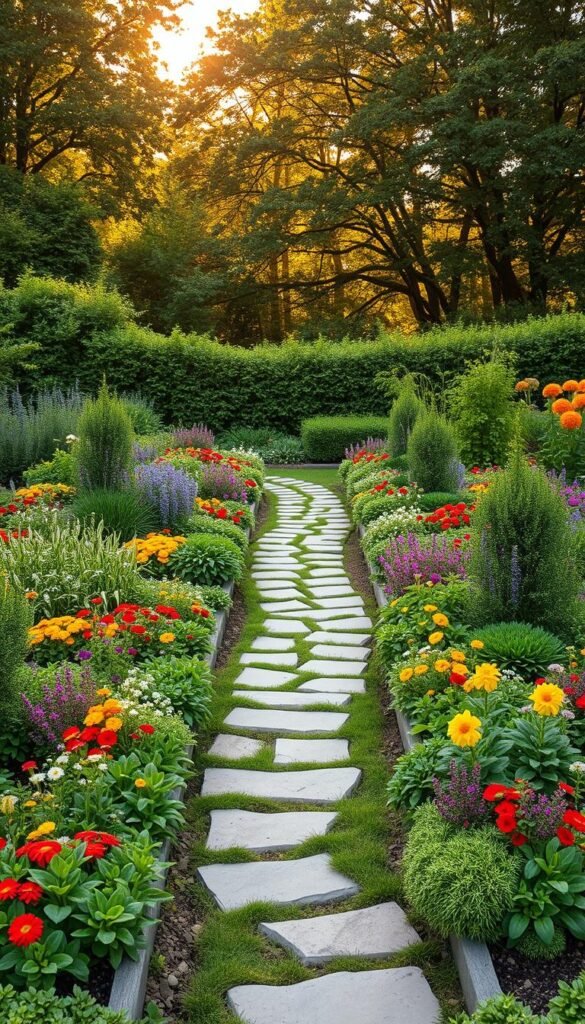
A well-designed edible landscape blends beauty and function through intentional placement. Start by mapping sunlight patterns and testing soil quality – these factors determine which plants will thrive where. Christian Douglas suggests focusing on one area first: “Master a small zone before expanding. Success builds confidence.”
Assessing Site Conditions and Sunlight Exposure
Use apps like Sunseeker to track how light moves across your space through seasons. The “Russian doll” technique maximizes shady areas: plant apple trees for dappled light, followed by blueberries, then strawberries. This layered approach turns challenging shade into productive garden spaces.
Balancing Edible Beds with Ornamental Spaces
Create smooth transitions between vegetable beds and flower borders using fragrant herbs as living edging. The French Laundry’s team prioritizes soil health, recommending compost tea to feed microorganisms. Curved pathways lined with thyme or chamomile elevate your landscape’s visual appeal while keeping crops accessible.
Position frequently harvested plants near walkways for easy picking. Vertical layers – climbing beans on trellises beneath dwarf fruit trees – make every inch productive. Your design becomes a living tapestry that shifts colors and textures with the seasons.
Practical Steps for Incorporating Flowers into an Edible Garden Design for Beauty and Pollinators
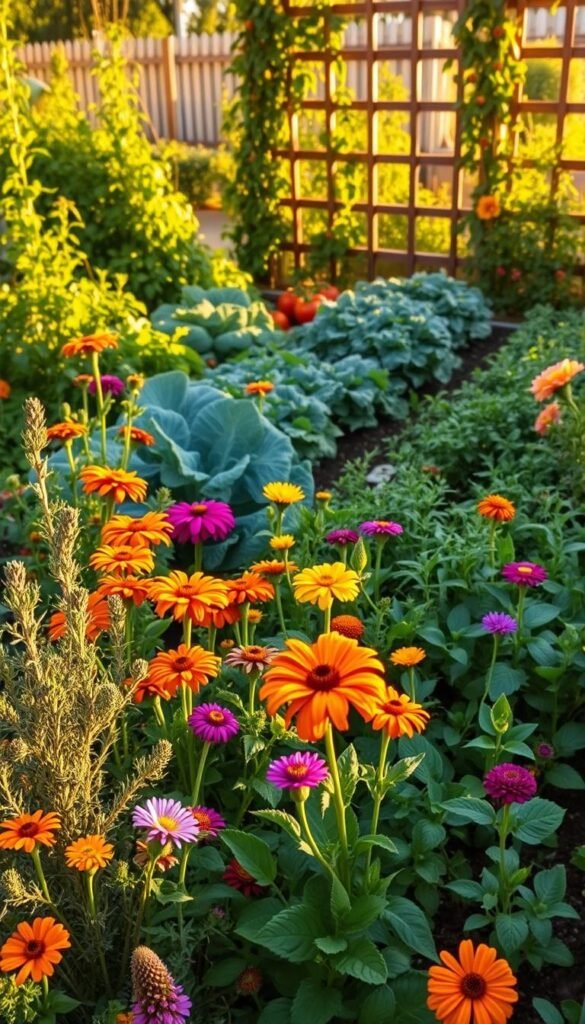
Design a garden that feeds both your family and local wildlife with smart plant combinations. Start by matching edible plants with partners that boost growth and beauty. “Think of your garden as a layered ecosystem,” suggests Christian Douglas, recommending strawberries as ground cover and artichokes as dramatic focal points.
Step-by-Step Guide to Plant Pairing
Pair aromatic herbs like basil with tomatoes to repel hornworms while adding fresh flavors to salads. The French Laundry’s approach proves this works – they grow 150+ vegetable varieties alongside flowers that attract hoverflies. Try these winning combinations:
- Nasturtiums climbing through bean trellises
- Marigolds bordering squash mounds
- Borage nestled between strawberry plants
Designing with Versatility: Herbs, Vegetables, and Fruits
Choose fruit trees like figs that provide spring blossoms for bees and autumn harvests for your kitchen. Homestead Design Collective uses pomegranates as drought-tolerant shrubs with dual-purpose blooms and edibles. Integrate vertical layers by training grapes up arbors with flowering clematis – a feast for eyes and pollinators.
For seamless edible landscaping, mix thyme between stepping stones and plant blueberry hedges as living fences. Your gardening space becomes a dynamic tapestry where snap peas climb sunflower stalks, and chamomile flowers edge carrot beds. These partnerships create continuous blooms from spring frost to fall harvest.
Integrating Companion Planting and Pollinator-Friendly Techniques
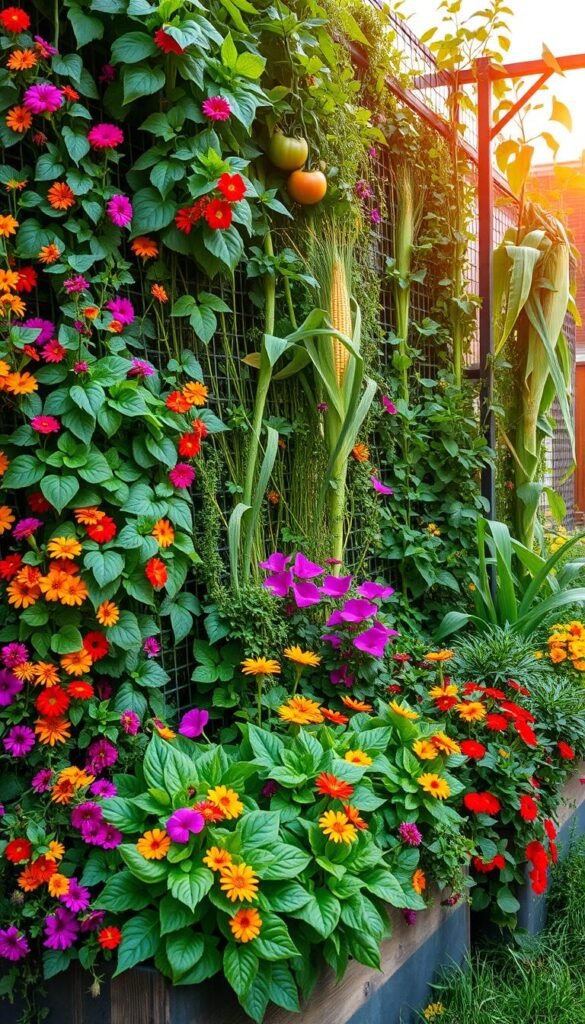
Transform your growing space into a multi-level paradise where plants work together like nature’s perfect team. Teresa Kao from The French Laundry advises: “Inspect leaves daily – early detection prevents big problems.” This hands-on approach keeps your gardening efforts thriving without harsh chemicals.
Sky-High Solutions for Grounded Results
Vertical structures let you grow up, not out. Try these space-saving ideas:
- Train scarlet runner beans up trellises dotted with morning glory blooms
- Hang strawberry towers wrapped in trailing nasturtiums
- Install wall-mounted planters with cherry tomatoes and trailing lobelia
These living towers boost air flow while creating shelter for birds and beneficial insects. Pair climbing veggies with flowering vines from beginner-friendly blooms that attract pollinators all season.
Layer your plants like a pro by positioning sunflowers behind pepper bushes, with thyme carpeting the ground. This staggered approach ensures every leaf gets light while creating visual depth. Kao’s pest control triad – hand-picking bugs, using row covers, and releasing ladybugs – keeps ecosystems balanced without harming diversity.
Rotate flower varieties to maintain continuous blooms from crocuses to chrysanthemums. Flat-faced zinnias invite butterflies, while tubular snapdragons beckon hummingbirds. Your garden becomes a self-regulating habitat where every petal serves multiple purposes.
Essential Garden Maintenance for Year-Round Abundance
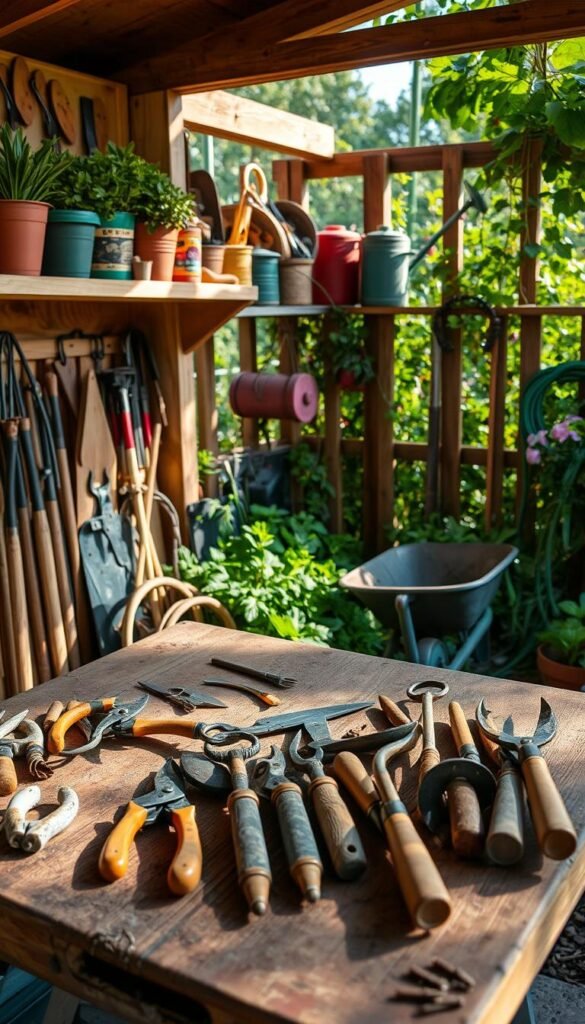
Keep your dual-purpose paradise thriving with smart routines that protect both soil health and plant vitality. Teresa Kao from The French Laundry shares her secret: “Feed the underground workforce first – healthy microbes mean fewer pests above ground.”
Watering, Mulching, and Soil Health Practices
Deep watering beats daily sprinkles. Install drip systems to deliver moisture straight to roots while conserving water. Stefani Bittner recommends 2-3″ of organic mulch to lock in hydration and suppress weeds. Boost soil fertility naturally:
| Season | Task | Benefit |
|---|---|---|
| Winter | Plant cover crops | Prevents erosion |
| Spring | Add compost tea | Feeds microbes |
| Summer | Refresh mulch | Retains moisture |
| Fall | Test soil pH | Prepares beds |
Rotate crops annually to prevent nutrient depletion. For Mediterranean climates, pair thirsty veggies with drought-tolerant natives that need less care.
Seasonal Pruning and Organic Pest Management
Prune fruit trees in late winter when dormant. Shape flowering shrubs after spring blooms fade. Homestead Design Collective uses garlic spray against aphids and releases ladybugs for scale insects.
Weekly garden walks help spot early trouble. Remove diseased leaves promptly and compost healthy trimmings. This proactive approach keeps your gardening space productive through every season.
Harvesting the Rewards and Enhancing Your Outdoor Space
Your garden becomes a living pantry bursting with flavors and colors. Picture plucking sun-warmed blueberries beside buzzing lavender patches, or snipping fresh herbs minutes before dinner. This abundance transforms meals into celebrations of your landscape’s generosity.
The French Laundry’s 3.5-acre farm shows how productive spaces educate and inspire. Like their team, you’ll gain reverence for ingredients by growing 150+ varieties of fruits and vegetables. Homestead Design Collective recommends perennial edibles like rhubarb as low-maintenance “elders” that yield yearly without replanting.
Your outdoor area evolves into a social hub. Host tomato-tasting parties or teach neighbors container gardening tricks using marigolds and basil. These connections deepen your relationship with food and community.
Seasonal shifts keep the garden dynamic – crimson fall berries contrast with golden chamomile blooms, while winter’s bare branches reveal bird nests. Every visit offers fresh interest, proving functional ecosystems can be breathtakingly beautiful.