
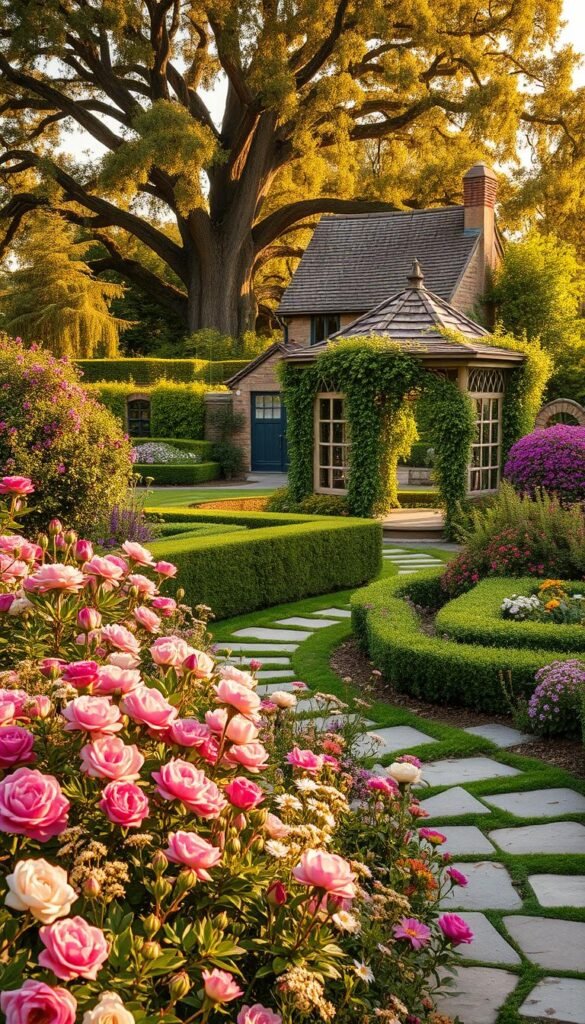
Imagine stepping into a lush retreat where every path leads to discovery and every bloom tells a story. This is the magic of gardens inspired by the english country tradition – spaces that blend structured elegance with wild, natural beauty. For centuries, this style has captivated homeowners by working harmoniously with nature rather than trying to control it.
At its core, this approach balances symmetry with free-flowing plant arrangements. Think stone pathways winding through vibrant flower beds or climbing roses softening aged brick walls. Water features like bubbling fountains add peaceful accents, while secret seating areas invite you to linger among fragrant herbs and buzzing pollinators.
What makes these spaces so enduring? They combine practical gardening aesthetic choices with ecological mindfulness. By mixing perennials, annuals, and native plants, you create layered textures that thrive in any climate. Stone borders and weathered benches add character without overwhelming the natural landscape.
Whether you’re transforming a small backyard or acres of land, these principles adapt beautifully. The result? A living masterpiece that feels both curated and spontaneous – your personal slice of countryside charm, no matter where you call home.
Introduction to English Garden Style
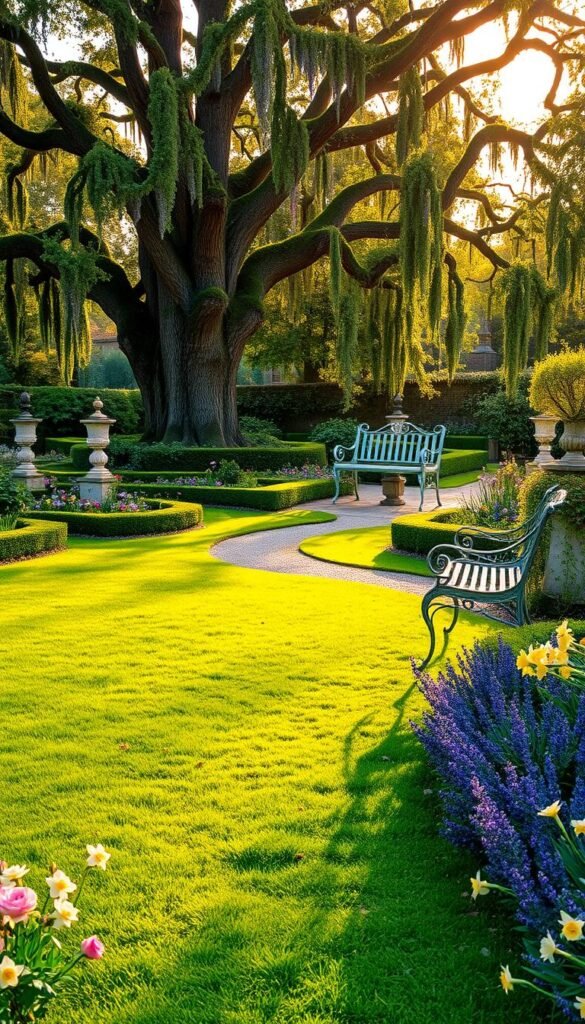
Think of a space where structured beauty meets wild, untamed nature. This garden style traces its roots to medieval plots that blended edible plants with flowers for practicality. Over time, it evolved into romantic designs championed by visionaries like Gertrude Jekyll, whose vibrant cottage gardens still inspire today’s landscapes.
- Cottage charm: Overflowing with roses, lavender, and foxgloves in joyful disarray
- Formal elegance: Geometric hedges and symmetrical flower beds framing historic homes
- Modern country: Clean lines paired with loose, natural plantings for newer properties
What unites them? A celebration of the countryside’s effortless beauty. Unlike rigid formal gardens, this approach lets plants spill over paths and climb walls freely. Vita Sackville-West’s famous white garden at Sissinghurst Castle shows how color themes can create magic while respecting nature’s rhythms.
You’ll find this style adapts beautifully to any space – from urban backyards to sprawling estates. It’s about creating moments of discovery: a bench hidden under wisteria or a stone fountain bubbling beside wild strawberries. By blending history with personal flair, you craft a living masterpiece that feels both curated and wonderfully wild.
Historical Inspirations and Classic Features
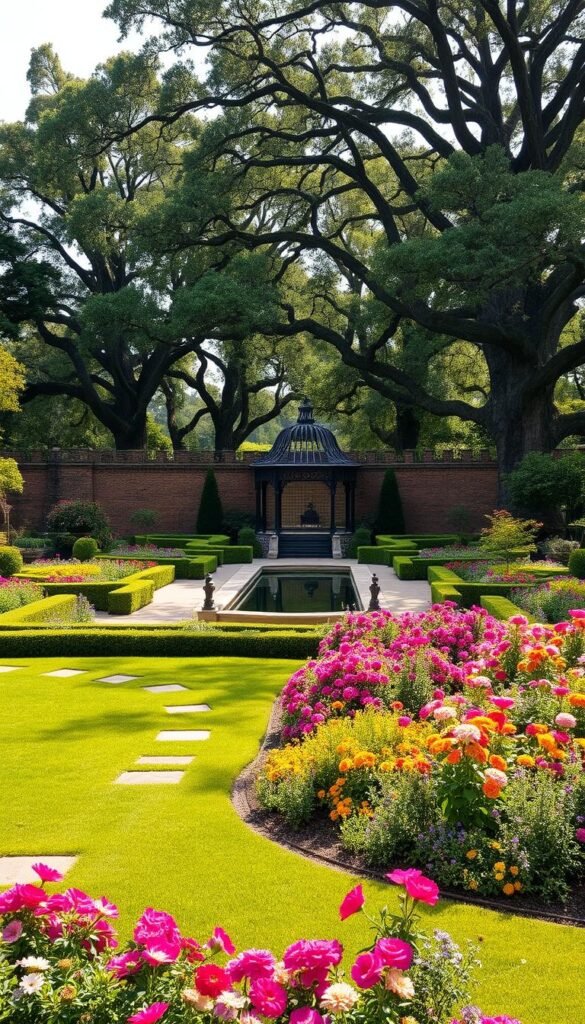
How did humble vegetable patches transform into today’s romantic landscapes? The story begins with medieval families blending practicality and beauty – their cottage gardens mixed herbs, veggies, and flowers like marigolds for both sustenance and joy.
From Survival to Symbolism
By Victorian times, these plots became artistic statements. Helen Allingham’s paintings captured climbing roses and hollyhocks framing thatched cottages – a stylized vision that still defines country charm. Meanwhile, grand estates developed formal layouts:
- Precise topiary animals guarding manor entries
- Sweeping herbaceous borders in geometric patterns
- Productive kitchen gardens supplying noble houses
Modern Masters of Tradition
Twentieth-century designers like Gertrude Jekyll bridged these worlds. Her naturalistic plantings around country houses proved wild beauty could coexist with structure. Today’s experts like Xa Tollemache build on this legacy:
“Start with your land’s bones – ancient trees, existing slopes. Then layer plants like nature does, from canopy to groundcover.”
This evolution through time explains why English-style gardens feel both timeless and fresh. Whether you’re working with acres or a small urban plot, understanding this rich past helps you create spaces that honor history while thriving in modern times.
Key Elements of English Garden Design for a Classic Look
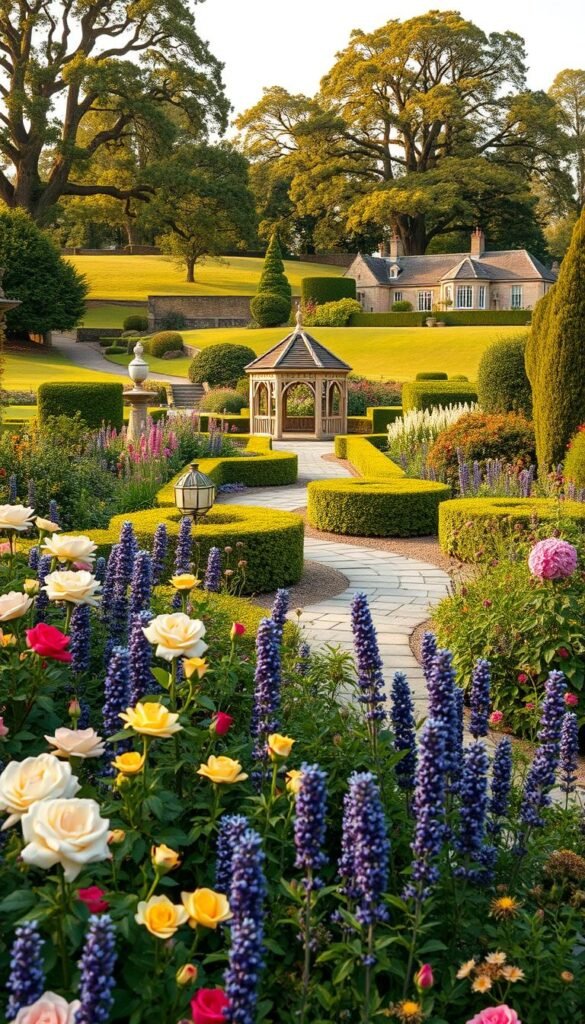
What transforms ordinary yards into those charming retreats that feel both planned and wild? The answer lies in balancing structure with nature’s spontaneity. Start with clean lines – think low stone walls or neatly trimmed hedges – then let plants soften those edges.
Defining the Essential Components
Successful layouts rely on layers. Begin with evergreen shrubs or a manicured lawn as your base. Add flowering perennials that bloom in succession, ensuring color year-round. Stone pathways guide exploration, while water features like birdbaths create soothing soundscapes.
Vertical layers matter too. Train clematis or ivy on trellises to add height without bulk. Hidden benches tucked behind lavender patches invite discovery. These strategic combinations make spaces feel larger and more dynamic.
Benefits of Timeless Design
Why does this approach endure? It’s adaptable. Formal bones work in urban courtyards, while loose plantings suit rural areas. Wildlife-friendly choices – like native flowers – boost biodiversity naturally.
Maintenance stays manageable when plants thrive in their preferred conditions. You’ll spend less time battling nature and more enjoying your personal sanctuary. Best of all, this style ages gracefully, gaining character as climbing roses weather fences and moss carpets stone steps.
Mastering Hardscaping and Natural Materials
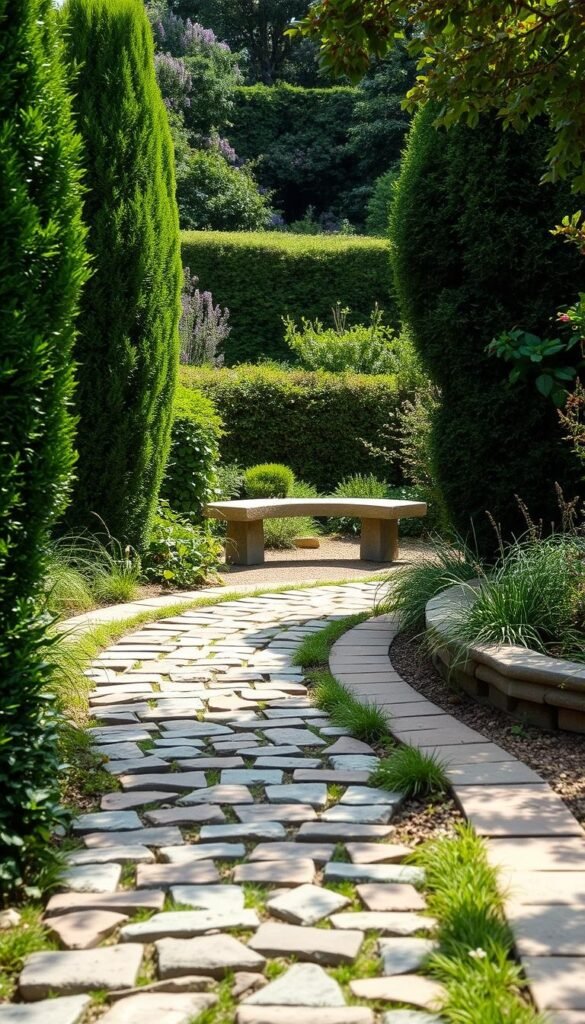
What gives English gardens their timeless appeal? The secret lies in materials that age like fine wine. Your hardscape choices create the foundation for everything else – paths that invite strolls, walls that frame flower beds, and surfaces that weather beautifully through decades.
Start with locally sourced stone or reclaimed brick for authenticity. These materials blend seamlessly with nature and develop a charming patina over time. A herringbone brick pattern behind your roses adds structure now and becomes a moss-kissed masterpiece later.
Choosing the Right Stone, Brick, and Gravel
Curved gravel paths edged with weathered brick guide visitors through your space naturally. For stability, set limestone stepping stones into the gravel – they’ll stay put during rainstorms while letting water drain. When building walls, consider split-face limestone. Its rough texture supports climbing plants and withstands frost better than smooth surfaces.
Three principles ensure success:
- Use permeable materials like crushed granite for paths to prevent puddles
- Match colors to your region’s natural palette – warm sandstone for the Southwest, slate blues for New England
- Leave gaps between pavers for creeping thyme or moss to soften edges
Experts at traditional garden design recommend testing materials in different weather. Does that gravel crunch pleasantly underfoot when dry? Does the brick stay slip-resistant after rain? These details make your landscaping both beautiful and functional year-round.
Remember: The best hardscapes look like they’ve always been there. Let materials show their age – lichen on stone, rust on iron gates, worn spots on gravel. These “flaws” become the soul of your garden’s story.
Planting with Passion: Roses, Perennials, and More
Picture a tapestry of blooms where each plant plays its part in nature’s grand show. Start with roses – the undisputed stars of this style. Award-winning designer Jo Thompson advises, “Let their canes arch freely through perennials like catmint or salvias for that effortless cottage charm.”
Selecting Climbing and Cascading Plants
Train climbing roses over arbors or let clematis tumble down stone walls. Pair them with fragrant jasmine or honeysuckle to create vertical drama. For ground-level texture, try sweet alyssum spilling onto paths or lady’s mantle catching raindrops in its leaves.
Balancing Color, Texture, and Seasonal Interest
Mix peonies’ bold blooms with airy grasses like stipa. Use purple salvias to make yellow roses pop, then add silver-leafed artemisia for contrast. Include cold-hardy perennials like hellebores to keep borders lively in winter.
Create rhythm by repeating key plants every 10 feet. Try this trio for continuous color:
- Spring: Lilacs + bleeding heart
- Summer: Roses + lavender
- Fall: Sedum + Russian sage
Don’t forget scent! Plant oriental lilies near seating areas and mint where feet might brush past. This layered approach ensures your garden feels abundant yet intentional – a living masterpiece that evolves with the seasons.
Integrating Water Features and Functional Spaces
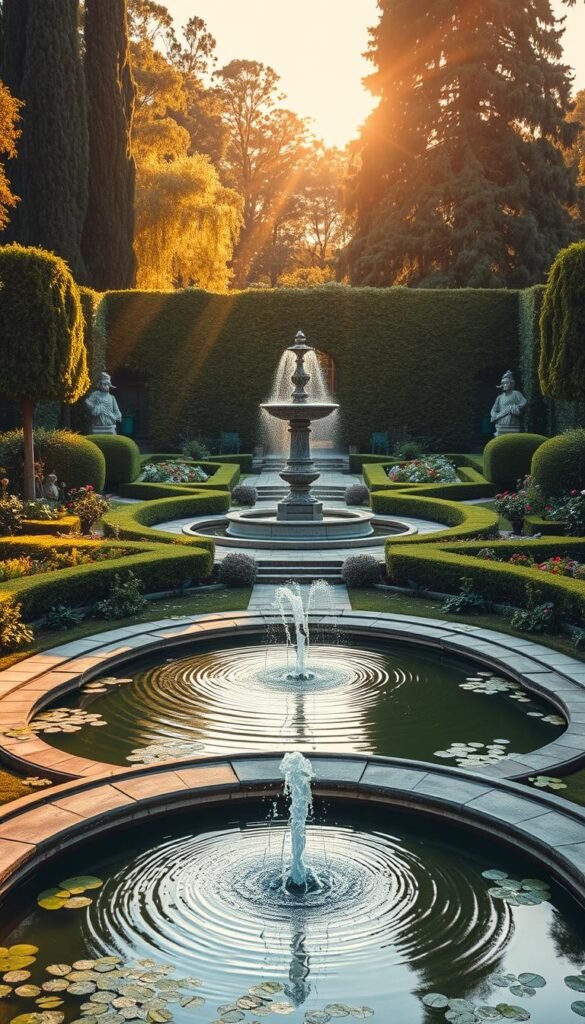
Have you ever noticed how water brings a garden to life? A simple fountain or winding stream adds movement while attracting birds and butterflies. These elements turn your outdoor space into a sensory experience, blending sight and sound with nature’s rhythms.
Paths That Tell a Story
Curved walkways made of gravel or reclaimed brick invite exploration. Let them follow your land’s natural slopes, leading to surprises like hidden benches or reflective ponds. Wider paths edged with lavender allow two people to stroll side by side, while stepping stones create playful routes through flower beds.
Rest Spots With Purpose
Position seating areas where views and privacy meet. A wrought-iron bench under a cherry tree becomes a focal point in spring. For larger spaces, build a rose-covered pergola with weather-resistant cushions. Even small nooks can shine – try a vintage stool beside a bubbling birdbath.
| Water Feature | Best For | Maintenance Level |
|---|---|---|
| Stone Fountain | Formal areas | Low |
| Wildlife Pond | Natural corners | Medium |
| Recirculating Stream | Sloped spaces | High |
Remember: Your living space outdoors should feel welcoming in all seasons. Add heating elements near seating or incorporate creative gardening ideas like mosaic stepping stones. These touches make every visit feel like discovering your garden anew.
Expert Insights and Professional Tips
What separates ordinary yards from magazine-worthy masterpieces? Top designers reveal their secrets. Jo Thompson notes growing demand for relaxed garden design: “People want spaces that buzz with life, not sterile lawns. Let clover invade your grass – bees will thank you.”
Xa Tollemache’s approach starts with your land’s personality. Walk your property in different weather. Note where puddles form or sun lingers. Remove elements that clash – like plastic edging beside vintage brick. Instead, use local stone for paths that look unearthed, not installed.
Debbie Roberts’ pro tips blend old and new. Pair weathered troughs with bold architectural plants. Allow foxgloves to self-seed between pavers. “Controlled chaos creates that ‘lived-in’ charm,” she advises.
Three landscape design hacks for success:
- Layer heights – tall shrubs behind mid-size perennials
- Repeat colors every 10 feet to guide the eye
- Use native grasses as living mulch
These ideas help you create spaces that feel both intentional and wild. Remember: Great garden design works with your land’s natural way of being. Start small, observe often, and let nature co-author your masterpiece.
Bringing Your English Garden to Life
Ready to transform your outdoor space into a living work of art? Start by observing your home’s natural rhythms – notice where sunlight lingers or rain collects. These clues help your garden and landscape work as one cohesive entity.
Choose materials that age gracefully, like reclaimed brick paths or limestone walls. Let climbing roses soften edges while supporting local pollinators. This combination creates timeless beauty that deepens with each season.
For year-round interest, layer native perennials with evergreen shrubs. Add a stone bench where you can watch butterflies dance among lavender. Your countryside-inspired retreat will evolve naturally, blending structure with wild charm.
Remember: Great landscaping respects your land’s unique story. Whether updating an existing space or starting fresh, focus on harmony between house and habitat. With patience, you’ll craft a sanctuary that feels both designed and delightfully spontaneous.