

Well-defined edges transform ordinary yards into polished landscapes. They create clean lines between flower beds and walkways while stopping grass from invading your blooms. But wind, rain, and daily use can slowly break down even the toughest materials.
Imagine your stone or metal dividers staying straight and sturdy through summer storms and winter freezes. With thoughtful care, you’ll avoid tripping hazards and keep mulch where it belongs. Proactive attention means fewer surprises – like discovering hidden rot or shifted pavers after heavy rains.
This guide shares practical tips to protect your investment. You’ll learn how seasonal shifts affect popular materials, from classic brick to modern composites. We’ll show you when to tighten connections on metal strips or refresh gravel trenches. Our affordable solutions work for both new installations and older borders needing love.
Discover how five minutes weekly can prevent hours of weekend repairs. Whether you’re managing wooden dividers or recycled plastic edges, you’ll find easy routines that fit your schedule. Let’s help your outdoor features stay functional and eye-catching through every season.
Designing Your Garden Border for Lasting Appeal
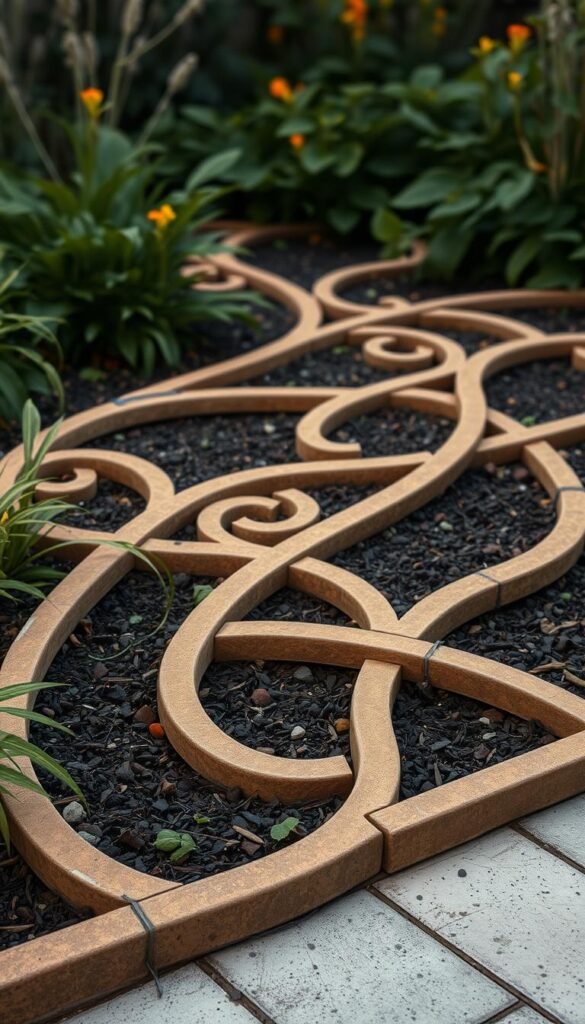
Great outdoor spaces begin with smart layouts. Your garden’s structure determines how easily you can maintain its beauty while keeping grass invasions at bay. Start by visualizing how beds interact with your lawn and pathways – this harmony prevents future headaches.
Shape Matters More Than You Think
Lay garden hoses on the ground to experiment with curves and angles before digging. This trick helps you create natural-looking lines that flow with your property’s architecture. Aim for bed shapes that let your mower glide smoothly along edges – sharp corners become weed magnets.
Connect beds to existing walkways at 90-degree angles. This simple technique creates crisp transitions while eliminating awkward grass strips. As landscape designer Mia Harrison notes:
“Borders that hug hardscapes need less trimming and look intentionally designed.”
Beauty Meets Practicality
Balance visual charm with smart features:
- Match bed depths to your reach – no straining to tend plants
- Use repeating curves to guide eyes through the space
- Leave 18-inch gaps between beds for easy foot traffic
Remember: your lawn’s shape impacts bed design as much as flower arrangements. Wider grass areas simplify mowing patterns, while narrow strips demand constant attention. Test your layout by walking the proposed lines – if it feels awkward empty, it’ll frustrate you when planted.
Choosing the Right Edging Materials for Your Landscape
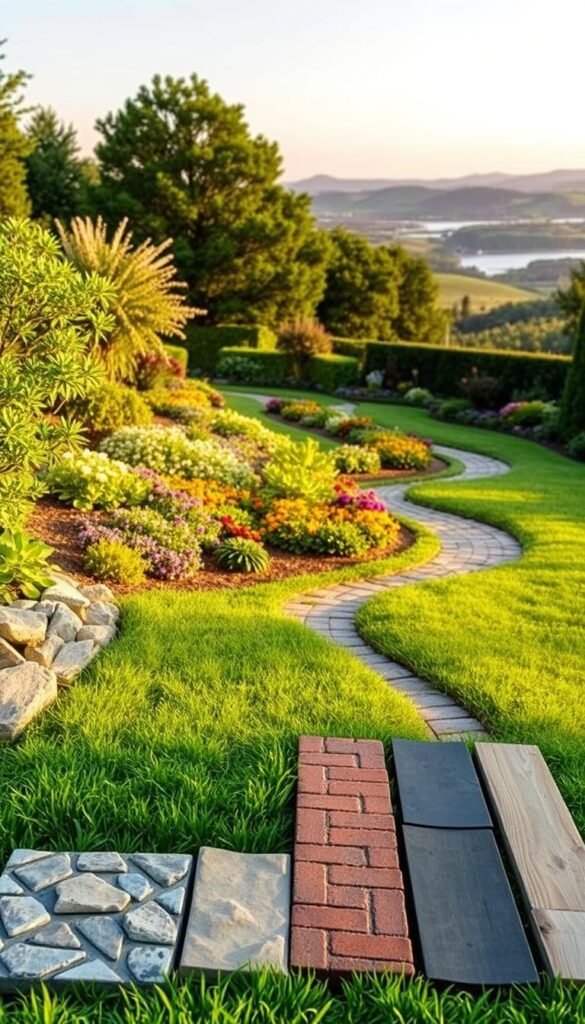
Material selection shapes your landscape’s durability and visual impact. The perfect border balances practicality with personality, whether you prefer rustic charm or sleek modern lines. Let’s explore options that suit your soil type, climate, and design vision.
Stone, Metal, Plastic, or Wood: What Works Best?
Natural stone offers timeless appeal but requires precise installation. Cobblestones handle freeze-thaw cycles better than porous limestone. Metal strips create crisp lines but may bend near tree roots.
Recycled plastic edges shine in rainy regions. Brands like EverEdge use HDPE plastic that won’t crack in cold snaps. Wood brings warmth but needs yearly sealing to prevent rot.
| Material | Cost per Foot | Lifespan | Best For |
|---|---|---|---|
| Stone | $8–$20 | 25+ years | Formal gardens |
| Metal | $4–$12 | 15–20 years | Curved paths |
| Plastic | $1–$5 | 10–15 years | DIY projects |
| Wood | $3–$8 | 5–8 years | Rustic themes |
Smart Spending Meets Style
Brick edging costs 40% less than natural stone but mimics its elegance. For tight budgets, vinyl strips provide clean lines at $0.50 per foot. Pair materials creatively – use metal near patios and wood around vegetable beds.
Remember: cheaper options often need more frequent adjustments. As landscape architect Troy Donovan advises:
“Invest in quality corners and connectors – they’re the first parts to fail.”
Your choice affects weeding ease and mowing patterns. Glossy metals reflect sunlight beautifully but show dirt faster than textured plastics. Choose what makes your heart and your shovel happy!
Maintenance strategies for long-lasting garden borders edging
Your landscape’s crisp lines depend on consistent care. Regular checks preserve both function and beauty, stopping small issues from becoming eyesores. Let’s explore simple habits that protect your hard work through seasonal changes.
Routine Inspection and Cleaning Tips
Walk your property monthly with a critical eye. Look for leaning dividers or gaps where soil peeks through. Professional landscaper Jake Morrow advises:
“Five minutes of observation often prevents five hours of weekend repairs.”
Clear debris with these steps:
- Scrape grass clippings from metal strips using a putty knife
- Blast composite materials with a garden hose nozzle
- Wipe stone borders with vinegar solution to prevent moss
Seasonal Adjustments and Repairs
Weather shifts demand specific responses. Use this seasonal guide:
| Season | Task | Tool |
|---|---|---|
| Spring | Reset shifted sections | Rubber mallet |
| Summer | Apply UV protectant | Spray bottle |
| Fall | Clear leaf buildup | Stiff broom |
| Winter | Check for frost heave | Level tool |
After storms, push loose stakes 2 inches deeper using your body weight. For sun-faded plastics, try automotive wax to restore color. Pro tip: Mark problem areas with surveyor flags for easy monitoring.
These practices help your dividers stay crisp without eating up weekends. Remember – consistent small efforts beat marathon fix-it sessions!
Easy DIY Methods: Trenched and Strip Edging Techniques
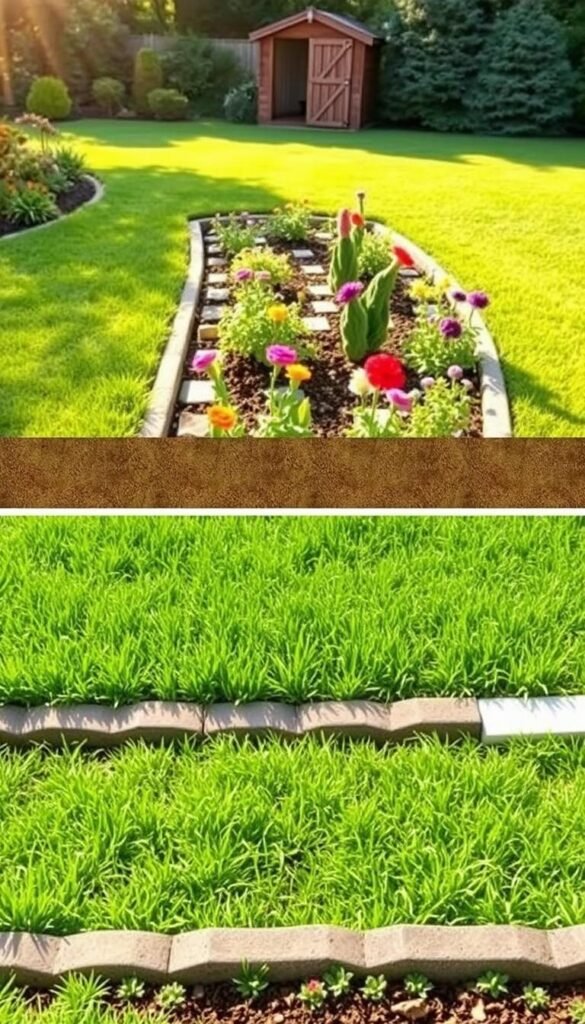
Your flower beds deserve crisp boundaries that say “this means business” to invading grass. Let’s explore two wallet-friendly techniques that deliver sharp lines without professional help.
A Step-by-Step Guide to Cutting a Trenched Edge
Grab a flat spade and mark your desired bed line with flour or spray paint. Push the blade vertically through the turf, then angle it 45 degrees toward the lawn. Remove the wedge-shaped sod to create a 5-inch-deep trench.
Pro tip: Wet soil cuts cleaner than dry ground. Landscape pro Aaron Simmons recommends:
“Work in 3-foot sections – it’s easier to maintain consistent depth.”
Reinforce trenches monthly by running a weed eater along theedge. This prevents soil collapse and keeps yourlawnfrom creeping back.
How to Install Strip Edging for a Defined Look
Flexible strips create instant separation between soil and grass. Compare popular options:
| Material | Install Time | Curve Handling |
|---|---|---|
| Plastic | 15 mins/bed | Excellent |
| Metal | 25 mins/bed | Good |
| Rubber | 20 mins/bed | Fair |
For curves, warm plastic edging in sunlight first – it becomes more pliable. Secure every 18 inches with U-shaped stakes. Metal versions need galvanized spikes to prevent rust.
Both methods thrive with quick weekly checks. Straighten leaning strips immediately, and refresh trench lines after heavy rains. Your lawn won’t know what hit it!
Creative Solutions with Eco-Friendly and Recycled Materials
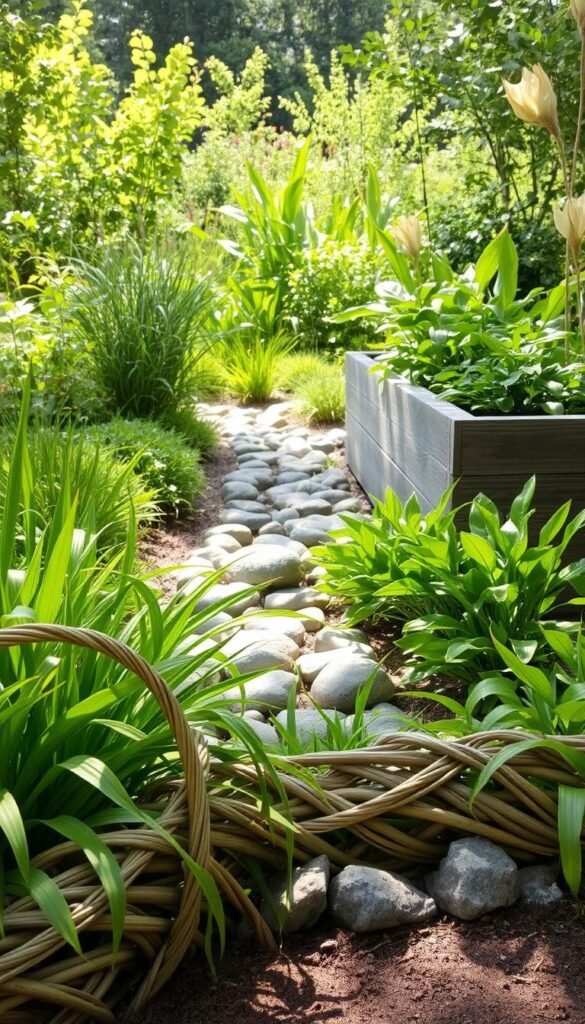
Your outdoor space can sparkle with personality while keeping waste out of landfills. Upcycled treasures turn ordinary boundaries into conversation starters, blending environmental care with artistic flair.
Breathing New Life Into Old Resources
Local farmers often have surplus fieldstones perfect for borders. Check construction sites for discarded bricks – many companies give them away to avoid dump fees. As urban gardener Lila Chen notes:
“Reclaimed materials add instant character you can’t buy at big-box stores.”
Try these creative combinations:
- Glass bottles sunk neck-down create shimmering light catchers
- Salvaged wood planks form rustic dividers between herb beds
- Crushed concrete pieces mimic gravel at half the cost
For structured edges, layer river rock between steel strips. The stones allow drainage while metal prevents spreading. Decomposed granite works wonders in dry climates, staying put better than traditional mulch.
Always scrub reclaimed bricks with water and bleach solution. This removes harmful residues while preserving their weathered charm. Pair these finds with budget-friendly container gardening techniques for a cohesive, earth-conscious design.
Your choices tell a story. Maybe it’s wine bottles from family gatherings or bricks from a historic downtown building. These touches make your landscape uniquely yours while protecting the planet.
Integrating Edging with Your Garden Beds and Landscape Design
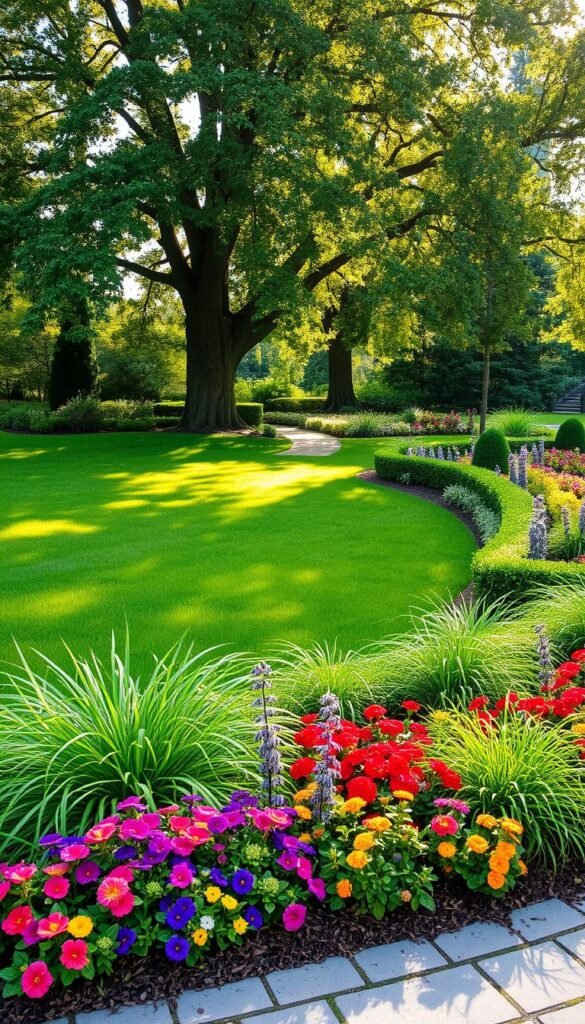
Blending your divider choices with existing features turns functional lines into artistic statements. The magic happens when edges complement your planting schemes while managing practical needs like mowing and soil retention.
Smart Material Pairings for Visual Flow
Match edging textures to your lawn’s personality. Sleek aluminum works with modern succulent beds, while weathered wood suits cottage-style blooms. Keep these spacing rules in mind:
| Material | Ideal Gap | Best Paired With |
|---|---|---|
| Stone | 1.5 inches | Decorative gravel |
| Plastic | 0.75 inches | Shredded bark |
| Metal | 1 inch | River rock |
Overfilled beds push against dividers like overstuffed suitcases. Leave breathing room between mulch and edging tops – this gap stops erosion during storms. For inspiration on mixing materials, explore these creative edging ideas that balance form and function.
Color coordination matters too. Earth-toned composites blend into natural settings, while bold red bricks pop against green turf. Landscape designer Elena Torres suggests:
“Treat edging like picture frames – they should enhance what’s inside without stealing the show.”
Transition smoothly between areas by repeating one material. Use steel strips near patios and the same metal as accents in distant flower beds. This creates rhythm without monotony.
Remember: your lawn’s edge should guide the eye, not block it. Keep grass 2 inches shorter near borders for crisp contrast. Proper integration means your garden feels intentional, not pieced together.
Preventive Practices to Keep Your Garden Borders Tidy
Smart protection starts before problems appear. A few simple habits can shield your hard work from common threats like rogue mower blades and shifting soil.
Guarding Against Equipment and Elements
Create a 4-inch buffer zone between your lawn equipment and edging. This space lets you trim grass safely without nicking materials. Landscape pro Ryan Carter suggests:
“Treat your borders like museum exhibits – admire them, but keep tools at a respectful distance.”
Adjust mower deck heights to match your border height. Taller settings prevent blade contact with metal or plastic edges. For string trimmers, attach a plastic guard – it acts like bumper rails in a bowling alley.
After heavy rains, check for soil erosion near curves. These spots face extra pressure from water flow. Push stakes deeper into soft ground and add crushed stone for stability.
| Season | Risk | Quick Fix |
|---|---|---|
| Spring | Mower damage | Mark edges with flags |
| Summer | UV fading | Apply protective spray |
| Fall | Leaf buildup | Install temporary mesh |
| Winter | Frost heave | Add drainage gravel |
Keep grass 2 inches shorter near borders to prevent overgrowth. This simple trick makes edges pop while reducing trimming needs. Your lawn stays neat, and your edging stays secure!
Final Steps for a Long-Lasting and Beautiful Outdoor Space
Your landscape’s polished finish depends on blending care with creativity. Start by building a seasonal calendar that aligns with local weather patterns. Note when to check connections on metal strips or refresh mulch near curved dividers.
Evaluate your choices quarterly. Do stone edges still frame flower beds neatly? Are recycled plastics holding their shape? Adjust routines as plants mature – growing roots might require wider gaps between pavers.
Balance visual charm with earth-friendly practices. Epic Plastics’ commercial-grade options withstand heavy use, but even durable materials benefit from occasional cleaning. Pair these with drought-resistant greenery or container gardening ideas for low-fuss appeal.
Celebrate smart upkeep by hosting weekend gatherings. Your crisp lines and thriving blooms prove beauty and responsibility coexist. With these habits, your outdoor living artwork stays vibrant through every season’s challenges.