

What separates ordinary yards from breathtaking outdoor environments? For over 28 years, Rob Steiner has perfected eight fundamental guidelines that help transform chaotic spaces into cohesive, inviting retreats. These principles focus on balancing living elements with intentional layouts – a sweet spot where creativity meets practicality.
You’ll discover how blending organic shapes with purposeful patterns creates visual rhythm without stifling nature’s spontaneity. As professional designers emphasize, successful projects rely on strategic “bones” – pathways, hedges, or architectural features – that maintain appeal through all seasons.
Think of your property as an extension of your home’s character. Clever arrangements turn functional areas into seamless extensions of indoor living spaces. Through thoughtful aesthetic planning, you can craft zones for relaxation, entertainment, and natural beauty that evolve gracefully over time.
This approach isn’t about strict formulas. It’s about understanding proportions, plant behavior, and spatial relationships to make informed choices. Whether you’re refining an existing layout or starting fresh, these insights help avoid costly mistakes while maximizing your property’s potential.
Defining Your Dream Garden Vision
Crafting your ideal outdoor retreat begins with clarity of purpose. What design dream makes your heart race? Maybe it’s a vibrant social space for summer barbecues or a quiet nook surrounded by fragrant blooms. Your vision sets the blueprint for every decision that follows.
Start by mapping your property’s unique features. Note soil quality, sunlight patterns, and existing plants worth keeping. A sloped area could become terraced flower beds, while poor drainage spots might transform into rain gardens. These natural clues help shape practical solutions.
Your lifestyle plays a starring role. Ask yourself:
- How many weekends can you dedicate to pruning and weeding?
- Do you need child-friendly zones or pet-resistant plants?
- Should pathways accommodate strollers or wheelchairs?
| Design Style | Key Features | Maintenance Level |
|---|---|---|
| Cottage Charm | Mixed borders, climbing roses | Moderate-High |
| Modern Minimalist | Clean lines, ornamental grasses | Low |
| Formal Elegance | Boxwood hedges, symmetry | High |
Align your garden plans with your home‘s architecture. A craftsman bungalow pairs beautifully with native plantings, while mid-century modern homes demand sleek hardscaping. Budget wisely – install permanent structures first, then add botanical flourishes over seasons.
Remember, great landscape designs mature like fine wine. Start with strong “bones” like pathways and focal points, then let your space evolve through thoughtful experimentation. Your perfect outdoor experience awaits!
The Harmony of Natural Beauty and Structured Design
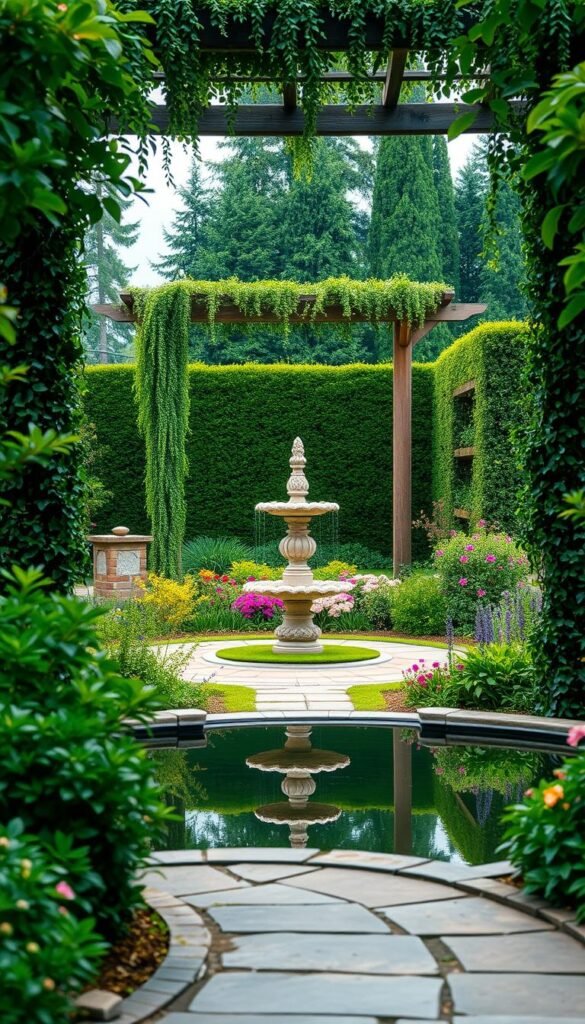
A garden’s true magic emerges when spontaneous growth meets intentional layout. Rob Steiner calls this balance “good bones” – the hidden framework that lets wildflowers tumble over crisp stone edges without chaos. Like a tailored suit with artful wrinkles, these spaces feel both polished and alive.
Le Corbusier’s regulating lines concept helps create order. Imagine extending your home’s roofline into pathways or aligning shrubs with window frames. These invisible guides build cohesion, while plants soften geometry – think ivy cascading over angular pergolas or grasses swaying beside rectilinear benches.
Three techniques keep designs dynamic yet grounded:
- Year-round anchors: Evergreen hedges or dry-stack walls add winter structure
- Controlled wildness: Let climbing roses spill from defined arbors
- Rhythmic repeats: Use matching planters or recurring stone colors
Seasonal shifts demand smart planning. Deciduous trees cast dappled summer shade but reveal sculptural branches in colder months. Pair them with handmade garden art that shines when blooms fade.
The sweet spot? Spaces where clipped boxwood parterres frame meadow-like perennials. Where streams trickle through geometric stone channels. Where your eye dances between human ingenuity and nature’s improvisation – a partnership that grows richer each year.
Merge Nature and Structure with Inspiring Landscape Garden Design Concepts
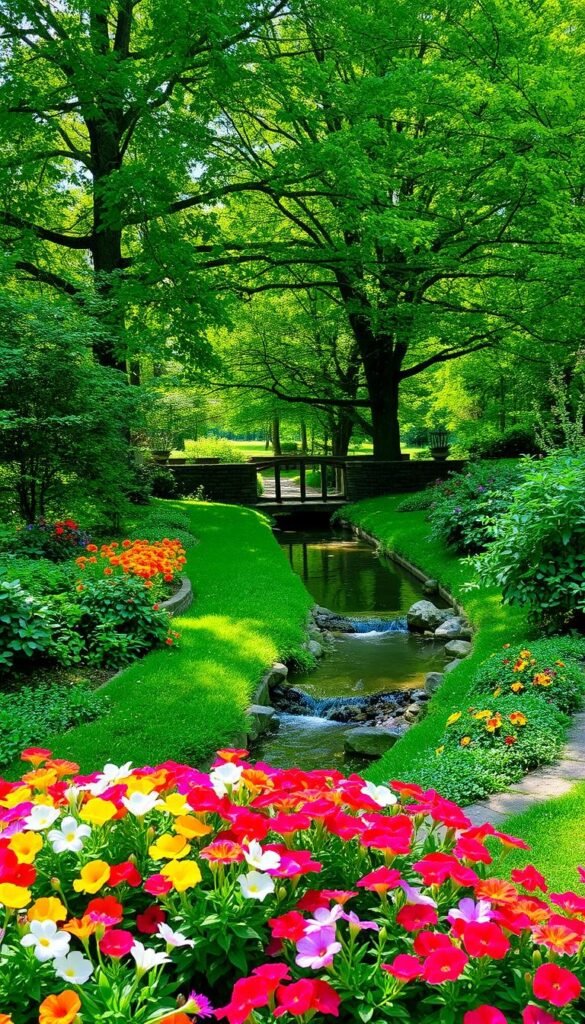
Transform your yard into a living masterpiece where every path tells a story. The secret lies in pairing functional elements like stone benches or gravel walkways with soft, billowing plants that soften edges. Think concrete planters overflowing with lavender or retaining walls draped in creeping fig – these combinations create depth while serving practical needs.
Smart landscaping guides movement without rigid boundaries. Use these strategies to connect spaces naturally:
- Line pathways with low-growing thyme that releases fragrance when stepped on
- Let arched arbors draped in wisteria mark transitions between seating areas and flower beds
- Install tiered water features that double as bird baths near vegetable plots
Vertical growing systems solve two challenges at once. Wall-mounted planters add structure to fences while showcasing trailing petunias or strawberries. For a cottagecore aesthetic, train climbing roses over weathered trellises – the contrast between rustic wood and delicate blooms creates instant charm.
Evening lighting reveals hidden dimensions. Uplight textured bark on mature trees, or embed subtle fixtures along stair edges. This approach highlights both crafted details and nature’s artistry, proving great design works day and night.
Mastering Garden Layout and Proportions

Ever wonder why some outdoor areas feel just right? The secret lies in mathematical harmony. Professional designers use time-tested ratios to craft spaces that feel intuitively balanced, whether you’re sipping coffee on a patio or wandering through flower beds.
The Science of Space and Scale
The law of significant enclosure transforms empty yards into cozy retreats. For a seating area spanning 12 feet wide, install 4-foot-tall hedges or screens. This 1:3 ratio creates intimacy without feeling cramped. Rob Steiner applies this principle to his 5×8-foot vegetable beds – a perfect Golden Rectangle example that optimizes both function and beauty.
Apply the 1:1.6 ratio to hardscaping projects. A 10-foot-long patio pairs best with 16-foot-deep planting beds. Use existing architecture as guides: align pathways with window lines or extend decking to match roof overhangs. These invisible connections make your entire property feel unified.
Visual Weight and Emotional Impact
Vary element sizes to guide the eye naturally. Place large specimen trees at the back of borders, then layer downward in scale with shrubs and perennials. This creates depth while letting each plant shine. For open lawns, add vertical interest with obelisks or tall grasses that reach one-third the width of the surrounding space.
Remember – proportions shape moods. Low walls and dense plantings foster security, while sweeping vistas encourage exploration. Test layouts with rope and stakes before digging. Your perfect balance of structure and spontaneity awaits!
Incorporating Functional Elements: Raised Beds, Trellises, and Patios

Smart gardens marry practicality with beauty through clever installations. These features solve spatial challenges while adding character to your outdoor areas. Let’s explore how purposeful elements elevate both form and function.
Expanding Your Space with Raised Beds and Trellises
Raised beds revolutionize how you grow plants. They boost drainage, prevent soil compaction, and bring gardening to comfortable heights. For those exploring square foot gardening layouts, these structures maximize yields in limited spaces.
Trellises turn vertical surfaces into lush displays. Train cucumbers or climbing roses upward to free up ground space. This technique triples planting capacity while creating natural privacy screens. Metal or cedar options blend durability with rustic charm.
Creating Seamless Indoor-Outdoor Transitions with Patios
Your patio becomes an extension of your living room when designed thoughtfully. Use matching flooring materials to blur boundaries between interior and exterior zones. Add built-in seating with weather-resistant cushions for instant hospitality.
Strategically placed containers soften hard edges. Try dwarf fruit trees in sleek planters or herbs in repurposed crates. These touches make your outdoor room feel curated yet casual – perfect for morning coffee or sunset gatherings.
Designing Outdoor Structures with Personalized Flair

Your outdoor space becomes truly yours when architecture dances with imagination. Professional designers use a clever technique called regulating lines – invisible guides drawn from your home’s features that create harmony between built environments and green spaces.
Using Regulating Lines and Architectural Cues
Start by standing at your back door. Notice how window frames create vertical lines or how roof angles form dynamic diagonals. These become your blueprint for positioning patios, pergolas, and planting beds. Rob Steiner transformed a client’s sloped yard by extending their bay window lines into terraced herb gardens.
Three ways to apply this principle:
- Extend your home’s roofline to determine deck dimensions
- Align fire pit seating with prominent tree trunks
- Mirror arched doorways in curved garden pathways
Existing landscape elements offer natural guides too. A mature maple tree might dictate the curve of a stone wall, while property boundaries could shape raised bed arrangements. This approach creates visual “handshakes” between your house and yard.
“Regulating lines are the secret sauce – they create order so your personality can shine through details.”
Once the framework feels right, inject your style. Swap standard pavers for reclaimed bricks in zigzag patterns. Add laser-cut metal screens featuring your favorite botanical motifs. These custom touches turn functional structures into conversation starters while keeping the overall design cohesive.
Selecting the Perfect Plants for Your Landscape
Building a thriving outdoor space starts beneath your feet – with smart plant selection. Professionals use a top-down approach that saves time and creates instant structure. Let’s explore how to layer your greenery for maximum impact.
Planting Big to Small: Trees, Shrubs, and Perennials
Always start with trees – they’re your garden’s backbone. Mature specimens define spaces and cast shade patterns. Choose species that fit your climate first, then consider their visual role. A Japanese maple makes a stunning focal point, while river birches create airy screens.
Next, add shrubs as transitional elements. Evergreen varieties like boxwood maintain structure year-round, while hydrangeas offer seasonal blooms. Leave ample space between them – overcrowding leads to disease.
| USDA Zone | Best Trees | Shrub Partners | Perennial Pairings |
|---|---|---|---|
| 5-7 | Red Maple | Viburnum | Coneflowers |
| 7-9 | Crape Myrtle | Loropetalum | Black-Eyed Susans |
| 9-11 | Palm Species | Bottlebrush | Lantana |
Choosing Climate-Appropriate Species
Your local weather dictates success. A magnolia might thrive in Georgia’s humidity but struggle in Arizona’s dry heat. Always check:
- Average rainfall patterns
- Winter low temperatures
- Soil pH compatibility
Group plants with similar needs together. Create microclimates using stone walls or water features. As Russell Page observed:
“The most striking visual pleasure comes from massing one simple element.”
Remember – nature rewards patience. Start with sturdy plants that establish quickly, then add delicate specimens as your garden matures. Your living canvas will evolve beautifully through the seasons.
Enhancing Aesthetics with Focal Points and Water Features
Great outdoor spaces tell stories through intentional highlights. Focal points act as punctuation marks in your garden’s visual narrative, guiding eyes to key elements while establishing rhythm. A weathered stone urn bursting with succulents or a gnarled Japanese maple can anchor your space, transforming random plantings into purposeful compositions.
Water features double as sensory experiences and wildlife hubs. A bubbling urn draws visitors toward seating areas, while a shallow pond edged with smooth rocks invites dragonflies to dance. Position these focal points where sightlines converge – at pathway ends, beneath arched entries, or framed by windows.
Three rules ensure balance:
- Scale features to their surroundings – petite courtyards suit tabletop fountains, not grand cascades
- Use repetition to connect zones – matching ceramic pots at intervals create rhythm
- Let nature collaborate – allow ivy to soften stone sculptures or moss to patina bronze
Practical magic happens when aesthetics meet function. Conceal utility boxes behind sculptural trellises or redirect attention from fences with vertical water walls. For families, consider splash-free creative accents like pebble-filled basins that toddlers can safely explore.
As designer Julie Moir Messervy notes:
“Water’s movement mirrors life’s flow – it captivates without demanding attention.”
Whether you choose a minimalist steel trough or a meandering stream, let your features reflect both personal style and ecological awareness.
Creative Hardscaping and Material Choices for Modern Gardens
Your outdoor surfaces deserve as much creativity as your plantings. Modern materials blend durability with artistic potential, turning functional elements into style statements. The right combinations create texture underfoot while solving practical challenges like drainage and erosion.
Stone, Gravel, and Earth-Friendly Solutions
Permeable pavers shine in eco-conscious landscaping. These interlocking units allow rainwater to seep into the ground, reducing runoff. Pair them with creeping thyme or moss for soft edges that surprise visitors with color and fragrance.
Gravel offers endless versatility. Use pea gravel for casual pathways or crushed granite beneath dining sets for stability. For contrast, lay geometric stone slabs through loose gravel beds – the mix of precision and randomness elevates designs.
Natural stone steps make slopes feel intentional. Choose local bluestone or sandstone to harmonize with regional geology. Bury them slightly to let grass or sedum grow between cracks, softening edges naturally.
Your patio becomes a canvas with mixed materials. Try stamped concrete borders framing decomposed granite centers. Add warmth with cedar bench surrounds or corten steel planters. These layered choices build visual depth while standing up to heavy use.