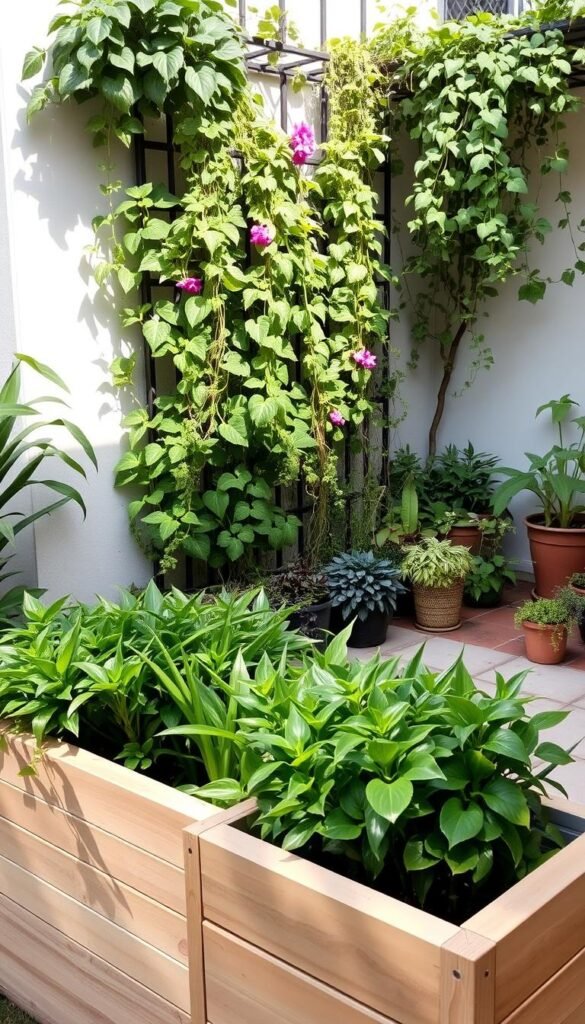
Welcome to the vibrant world of small-space growing, where clever design turns even the tiniest corners into lush, productive spaces. You don’t need acres to cultivate fresh herbs, crisp veggies, or blooming flowers—just a dash of creativity and the right strategies.
Think your yard is too cramped for a garden? Think again. Modern gardening techniques let you grow more in less space. Vertical systems climb upward, tiered containers stack plants efficiently, and raised structures optimize soil quality. These solutions work whether you’re tending a balcony, patio, or postage-stamp lawn.
This guide isn’t about sacrificing beauty for function. You’ll discover how to blend practicality with eye-catching arrangements. Learn to pair sleek planters with cascading vines or mix textures in raised beds for visual depth. Every choice serves a purpose, from maximizing sunlight to simplifying maintenance.
Ready to transform your outdoor area? We’ll walk through layouts suited for urban rooftops, suburban plots, and everything in between. By the end, you’ll have fresh ideas to create a sanctuary that feeds both body and soul—no sprawling estate required.
Embracing Compact Garden Designs for Small Yards
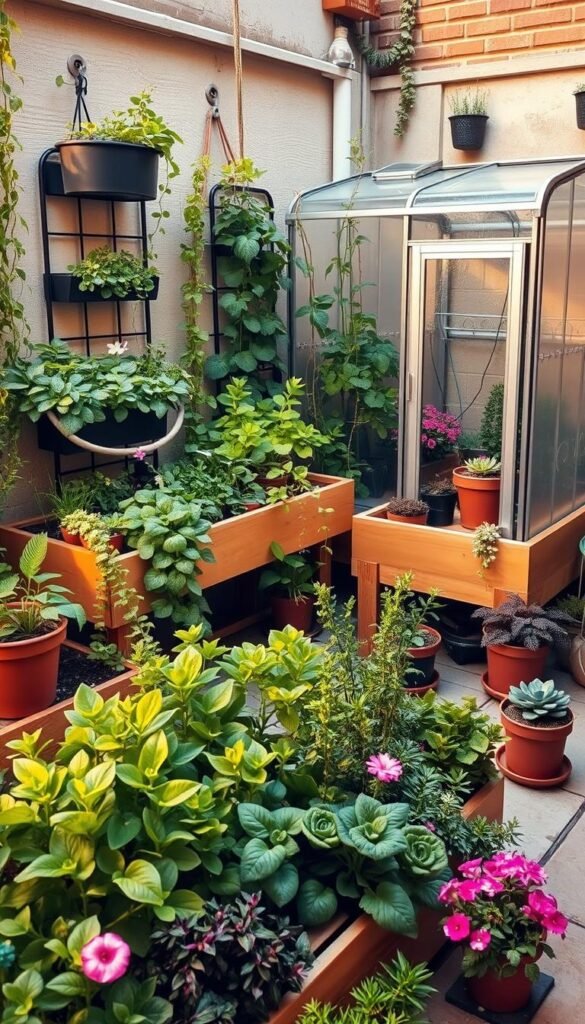
Great gardens aren’t about square footage—they’re about smart garden design. Whether you’re working with a narrow patio or a tiny urban plot, the right layout turns limitations into opportunities.
Start by tracking sunlight patterns. Most vegetables thrive in spots with 6-8 hours of daily sun. Morning light paired with afternoon shade works best for leafy greens and herbs. Sketch your yard’s sunniest areas across seasons—this map becomes your planting blueprint.
Multi-functional zones are game-changers. A bench with built-in planter boxes creates seating while growing strawberries. Fold-down tables double as potting stations and dining surfaces. This approach lets you maximize your garden’s without sacrificing livability.
| Design Strategy | Space Used | Best For |
|---|---|---|
| Vertical growing systems | Wall surfaces | Climbing beans, cherry tomatoes |
| Corner planters | Underutilized angles | Herbs, dwarf citrus trees |
| Rolling containers | Pathways/decking | Seasonal flowers, salad greens |
Don’t overlook awkward nooks. That 3-foot strip between your garage and fence? Perfect for a slim rainwater-fed planter. Stepped containers turn sloped areas into cascading herb displays. Remember: start modestly, then expand as your confidence grows.
Your small space can evolve with your needs. Today’s radish bed could become tomorrow’s pollinator habitat. By staying flexible, you’ll create a living landscape that’s both productive and personal.
Optimizing Raised Beds for Comfort and Productivity
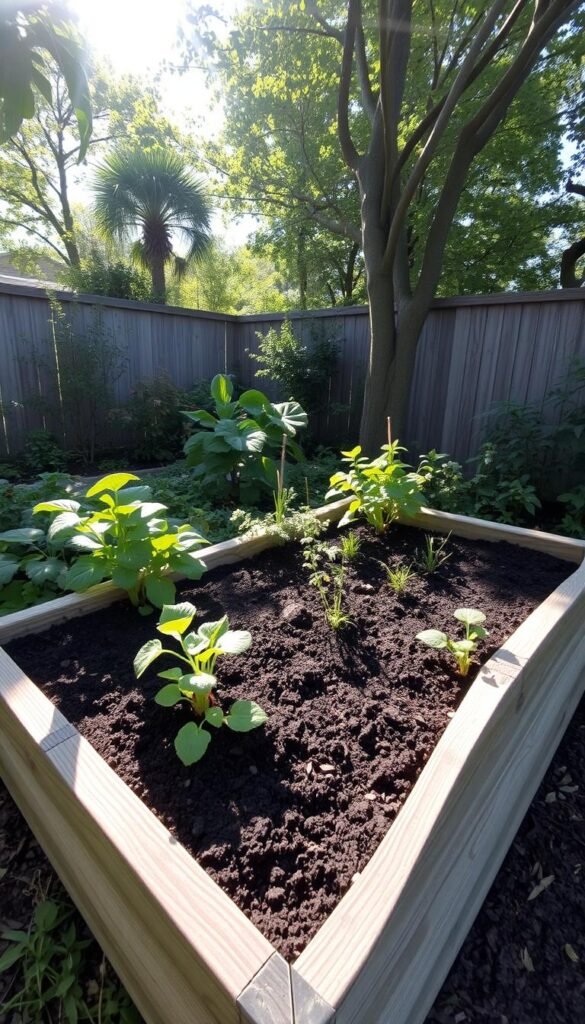
Say goodbye to sore knees and stiff backs. Raised beds bring your plants closer to you, turning gardening into a comfortable activity rather than a chore. These elevated systems let you nurture herbs, flowers, and veggies without constant bending—perfect for urban spaces or anyone seeking a more accessible growing experience.
Ergonomic Benefits of Waist-High Beds
Waist-level raised beds eliminate 90% of the bending required in traditional gardens. This height lets you tend to plants while standing or sitting, reducing strain on joints and muscles. They’re ideal for those with limited mobility or anyone wanting to avoid midday yoga poses just to check on tomatoes.
Choosing the Right Raised Bed Materials
Material choice impacts both function and style. Cedar resists rot naturally, while powder-coated steel offers modern durability. Stone or brick blends seamlessly with existing landscapes but requires more upfront effort. Consider these factors:
| Material | Best For | Lifespan |
|---|---|---|
| Cedar Wood | Natural aesthetics | 7-10 years |
| Galvanized Metal | Urban spaces | 15+ years |
| Composite | Low maintenance | 10-12 years |
Ensure your bed has drainage holes and at least 12″ soil depth for roots. Pair materials with your climate—metal heats soil faster in cool regions, while stone insulates in hot areas. Your back (and harvests) will thank you.
Mini Backyard Garden Inspiration: Planters, Raised Beds, and Vertical Growers – Essential Ideas
Unlock the potential of every square inch by blending garden elements that work together. Start with a base layer of shallow-rooted greens in ground-level containers. Add mid-height planters for peppers or dwarf tomatoes. Then, let vertical structures host climbing beans or flowering vines.
Create visual flow by repeating colors or textures across levels. Silver thyme in a low pot might echo variegated ivy cascading from a wall planter. This cohesion makes tight spaces feel intentional, not cramped.
Consider these space-smart pairings:
| Plant Type | Ground Level | Vertical Layer |
|---|---|---|
| Herbs | Window boxes | Tiered shelves |
| Leafy greens | Shallow trays | Hanging pockets |
Rotate crops seasonally. Spring radishes make way for summer basil, then fall kale. Keep pathways clear—18 inches wide allows easy watering and harvesting. Your backyard oasis should invite both growth and relaxation.
Smart layouts thrive on adaptability. That sunny corner could house a rotating herb spiral today and a citrus tree tomorrow. Start with one clever idea, then build outward as your confidence—and harvests—grow.
Maximizing Space with Vertical Growers and Multi-Level Solutions
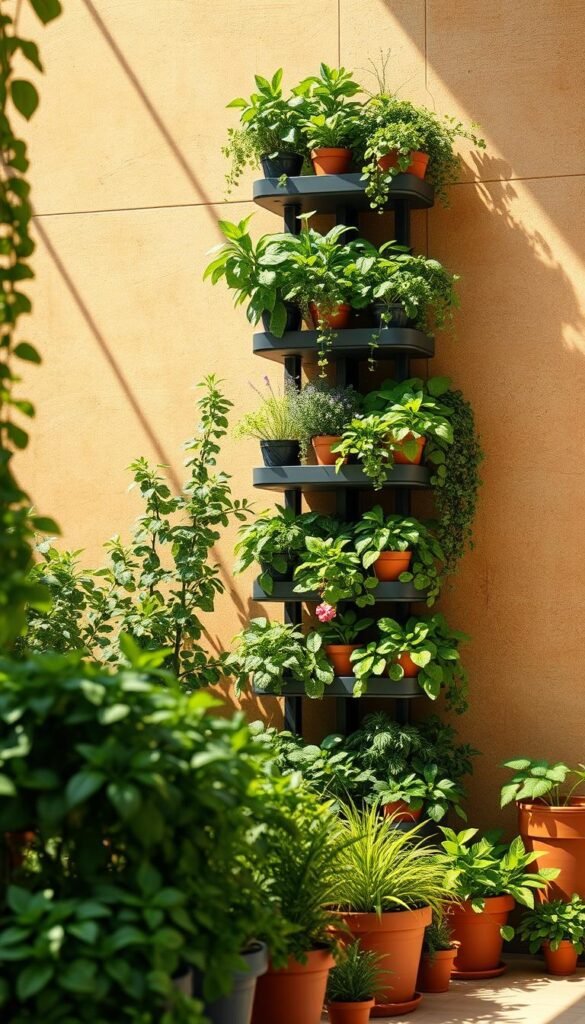
Transform blank walls into lush, living canvases with smart vertical solutions. By directing growth upward, you create room for more plants while keeping pathways clear. This approach works wonders for patios, balconies, and narrow side yards.
Incorporating Vertical Planters
Wall-mounted containers turn unused surfaces into thriving ecosystems. Fabric pockets or modular plastic systems let you grow herbs like basil and mint within arm’s reach. For heavier crops, try stacked metal troughs anchored securely to fences.
Consider these space-saving options:
| Planter Type | Best Plants | Maintenance Level |
|---|---|---|
| Pocket systems | Strawberries, lettuce | Low |
| Wall-mounted trays | Chives, radishes | Medium |
| Hanging baskets | Cherry tomatoes, nasturtiums | High |
Utilizing Trellises and Wall Supports
Teepee-shaped structures add drama while supporting beans or morning glories. For heavier climbers like squash, use arched metal grids that handle weight without bending. These features double as natural screens when foliage fills in.
Match supports to your garden needs:
- Bamboo stakes: Lightweight vines (peas, sweet peas)
- Wire grids: Cucumbers, small melons
- Wooden lattices: Flowering vines (clematis, jasmine)
Position trellises where they’ll cast afternoon shade on heat-sensitive plants. This clever placement protects tender greens while maximizing your space.
Selecting the Perfect Containers and Planter Options
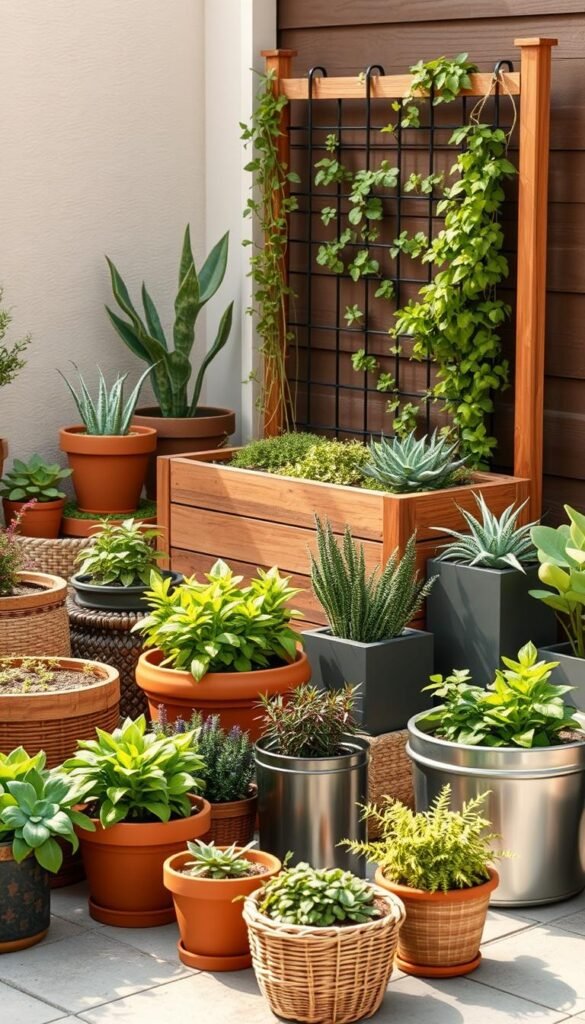
Galvanized metal tubs offer more than rustic charm—they’re workhorses for thriving container gardens. These durable vessels warm soil faster than traditional pots, giving cool-season crops like kale and spinach a head start. Their heat retention also lets you harvest mint or pansies weeks after frost nips other containers.
Exploring Material Choices Like Galvanized Tubs and Buckets
Metal troughs excel in urban settings where space matters. A 24-inch galvanized tub holds enough soil for lettuce mixes while fitting balcony railings. Pair with wooden buckets for contrast—cedar resists rot, while painted designs brighten your space.
Consider these options for different needs:
| Material | Best Use | Drainage Tip |
|---|---|---|
| Galvanized Metal | Herbs & salad greens | Drill 5+ holes in base |
| Cedar Wood | Dwarf fruit trees | Add gravel layer |
| Composite | Wet climates | Built-in drainage |
Match container size to plant roots. Shallow 6-inch pots suit thyme, while 18-inch depths let carrots stretch. Odd-shaped nooks? Try triangular planters that squeeze into corners. Just ensure all vessels drain well—soggy soil kills faster than neglect.
Your garden thrives when containers complement both plants and place. Start with one versatile tub, then expand as green thumbs grow.
Creative Raised Bed Design Techniques for Your Yard
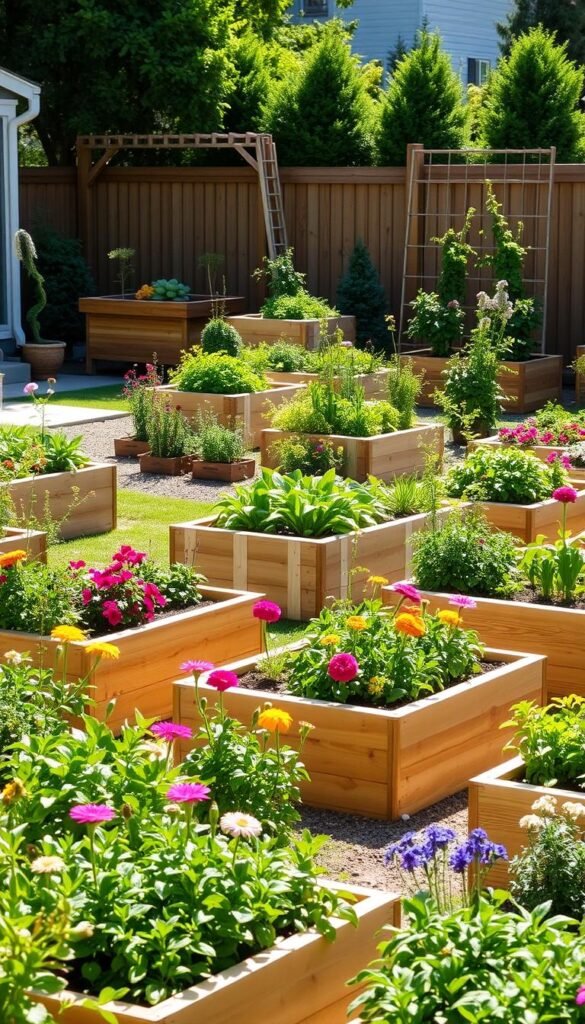
Your soil isn’t the only thing that deserves customization—your raised beds should match your crops’ needs too. Smart layouts combine practicality with artistry, turning functional plots into living sculptures.
Tailoring Planter Height for Different Crops
Carrots stretch deeper than lettuce roots. Build 18-inch-tall raised garden beds for root vegetables. Leafy greens thrive in 6-inch shallow boxes. This tiered approach saves materials while giving each plant ideal conditions.
| Crop Type | Ideal Bed Height | Key Benefit |
|---|---|---|
| Carrots/Beets | 18-24″ | Prevents stunted roots |
| Lettuce/Spinach | 6-8″ | Faster soil warming |
| Tomatoes/Peppers | 12-16″ | Better moisture control |
Innovative Shapes and Triangular Bed Ideas
Australian grower Ashenden Burke proves angles aren’t awkward. His triangular designs fit snugly into corners, adding dimension while conserving space. Hexagonal layouts create natural walkways between planting zones.
| Bed Shape | Space Saved | Best Plants |
|---|---|---|
| Triangular | 35% | Herbs, strawberries |
| Curved | 20% | Flowers, trailing vines |
| Hexagonal | 40% | Companion planting |
Sloped yard? Terraced raised bed garden tiers improve drainage while creating visual rhythm. Mix heights and shapes for layouts that work harder—and look sharper—than traditional rows.
Designing Ergonomic Garden Spaces That Work for You
Comfort meets productivity in well-planned growing zones. The secret lies in garden design that prioritizes easy access over expansive layouts. Keep raised beds under four feet wide—this lets you tend to plants from both sides without stepping on soil. Three-foot pathways between planting areas create room for wheelbarrows and kneeling pads.
Path surfaces matter more than you think. Brick or stone pavers stay level through seasons, unlike shifting gravel. They also add visual rhythm to your space while supporting carts and stools. For sloped yards, consider staggered steps with built-in planter edges.
Smart layouts cut physical strain. Position frequently harvested herbs near seating walls. Install tool racks at waist height along pathways. These tweaks let you garden longer without aches. Even small additions like fold-out work surfaces transform railings into potting stations.
| Feature | Ideal Placement | Benefit |
|---|---|---|
| Seating bench | Between two beds | Rest while pruning |
| Tool storage | Near entry points | Reduce carrying distance |
| Watering station | Central location | Minimize hose drag |
Organize tasks by height. Store heavy pots on waist-level shelves. Place root vegetables in ground-level containers to limit bending. Your garden should work with your body, not against it. Test layouts by mimicking daily routines—if reaching feels awkward, adjust the way you arrange elements.
Incorporating Trellises and Vertical Elements for Climbing Plants
Turn your vertical surfaces into productive gardens with clever trellis designs. These structures do more than save space—they create living art as plants weave through their frames. Imagine cucumber tendrils curling around metal grids or morning glories spilling over wooden lattices.
Why Vining Plants Thrive With Support
Climbing varieties grow 30% faster when given proper guidance. A well-placed trellis keeps fruits off damp soil, reducing rot. It also improves air circulation to prevent mildew—a common issue in tight gardens.
Strategic placement matters most. Position supports on the north side of raised garden beds to avoid shading sun-loving crops. This trick works wonders for:
- Tomatoes soaking up southern exposure
- Peas climbing east-facing grids
- Flowering vines framing west walls
| Plant Type | Support Style | Key Feature |
|---|---|---|
| Heavy Squash | Steel Cattle Panels | Holds 50+ lbs |
| Delicate Peas | Bamboo Teepees | Easy to reposition |
| Rambling Roses | Arched Trellis | Creates shaded seating |
Kids adore hiding under bean-covered arbors. These playful spaces teach them about growth cycles while you harvest dinner ingredients overhead. For step-by-step builds, explore our guide to DIY trellis projects that fit any skill level.
Match structures to your garden’s personality. Wrought iron adds elegance, while reclaimed ladders bring rustic charm. As flowers and foliage fill in, even basic frames become breathtaking focal points.
Utilizing Multi-Functional Hardscaping in Your Garden Area
Your outdoor space becomes more than just planting zones when hardscaping does double duty. Strategic paths and structural elements boost accessibility while adding polished style to your garden area. These features create order in lush landscapes, guiding feet and eyes through your green sanctuary.
Carving Walkways with Brick and Stone
Swap shifting gravel for stable pavers that frame your beds with intention. Brick offers timeless charm, while flagstone brings natural texture. Both materials withstand weather better than mulch or loose stones. A 36-inch width lets you maneuver carts comfortably while tending plants.
| Material | Installation Ease | Durability |
|---|---|---|
| Clay Brick | Moderate | 50+ years |
| Concrete Pavers | Easy | 25 years |
| Natural Flagstone | Advanced | Lifetime |
Curved paths soften angular designs, while straight lines emphasize modern layouts. Bury edges slightly to prevent tripping. For drainage, slope surfaces 1/4 inch per foot away from planting zones.
Adding Grid Wiring for Organized Planting
Transform chaotic seed spacing into military precision with simple wire grids. Stretch galvanized mesh across bed surfaces before planting. Each 3-inch square becomes a designated spot for seedlings, eliminating overcrowding.
Benefits include:
- Consistent air circulation between plants
- Clear visual guides for succession planting
- Reduced weeding from defined growing zones
As vines and leaves expand, the grid disappears beneath thriving foliage. This system works wonders for root vegetables and bush beans. Your garden stays tidy from first sprouts to final harvest.
Pair functional elements with personal flair—maybe slate stepping stones through herb spirals or copper edging around strawberry towers. When hardscaping serves both form and function, every inch of your area shines.
Enhancing Your Garden with Decorative and Functional Touches
Transform your outdoor space into a multi-sensory retreat where style meets purpose. Thoughtful accents elevate both aesthetics and usability, turning ordinary garden areas into inviting extensions of your home.
Lighting That Works Day and Night
Solar-powered string lights do more than illuminate pathways—they create cozy evening atmospheres. Drape them over pergolas or weave through trellises to highlight climbing flowers. Warm white bulbs make spaces feel larger, while colored options add playful accents.
Choose planters that pull double duty. Sage green metal boxes make herbs appear lusher, while terra-cotta pots retain soil moisture naturally. Cluster varying heights near seating areas for visual depth. Window boxes bursting with petunias or pansies add curb appeal while maximizing vertical real estate.
Every decorative choice should solve a problem. A bench with hidden storage holds tools. Mosaic stepping stones mark herb zones. By blending beauty with brains, your design becomes as practical as it is personal.