
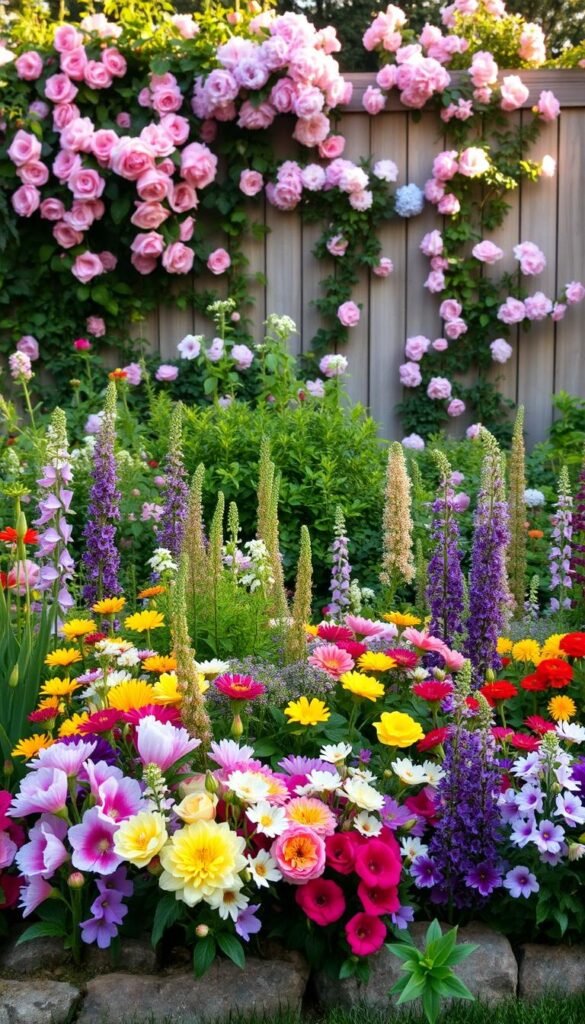
Picture a garden bursting with color, fragrance, and life – where every corner tells a story. This is the essence of traditional cottage garden style, blending practical herbs with ornamental blooms in a dance of organized chaos. These spaces aren’t just pretty; they’re living ecosystems that nourish both people and pollinators.
The secret to achieving this look lies in strategic plant combinations. Woody varieties provide year-round structure, while flowering plants add seasonal drama. Together, they create depth and movement that mimics nature’s own design patterns.
Beyond beauty, this approach offers real benefits for your home landscape. Dense plantings suppress weeds, conserve moisture, and create microhabitats for helpful insects. You’ll spend less time maintaining your garden and more time enjoying its ever-changing tapestry of textures and hues.
Understanding the Cottage Garden Style
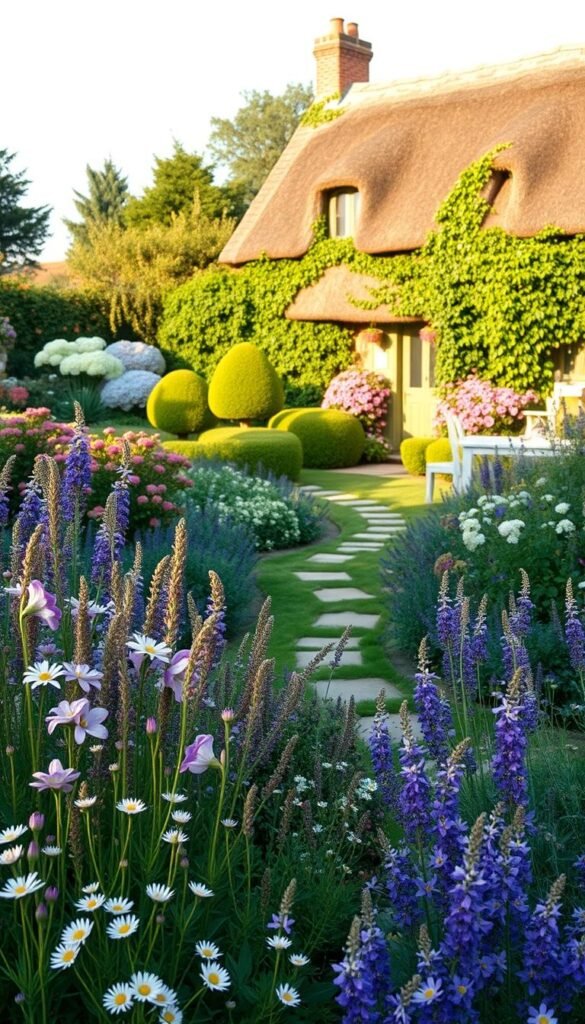
Imagine stepping into a space where time slows and nature takes the lead. Unlike crisp formal landscapes, this style thrives on gentle curves and unexpected surprises at every turn. Let’s explore what makes these spaces feel like living storybooks.
Where Magic Meets Practicality
True cottage gardens aren’t just pretty – they’re productive partners. Picture rosemary bushes framing clusters of daisies, or sage mingling with snapdragons. This blend creates layered beauty while keeping your kitchen stocked with fresh herbs.
“A garden should make you feel you’ve entered privileged space – a place not just set apart but reverberant.”
Building Blocks of Charm
Three principles define this approach:
| Element | Cottage Style | Formal Gardens |
|---|---|---|
| Lines | Winding paths | Straight edges |
| Materials | Weathered wood | Polished stone |
| Planting | Dense clusters | Spaced specimens |
Your space will evolve beautifully as plants mature. Peonies expand their territory while lavender forms aromatic mounds. This natural progression means your garden becomes more captivating each season.
Planning Your Layered Border Design
Transform your outdoor space into a living painting by embracing organic shapes. Curved lines soften edges and create natural movement, guiding visitors through your planting masterpiece. Let’s map out your dream layout step by step.
Sketching Curvy Pathways for Flow
Begin your plan by drawing winding walkways that disappear around bends. Gravel, stone, or mulch paths work beautifully when shaped like meandering streams. These curves make compact areas feel expansive while hiding surprises around each turn.
Determining Space and Plant Groupings
Follow the “smallest to tallest” rule for visibility. Place creeping thyme or violas near pathway edges, then build upward with mid-height blooms like salvias. Taller varieties like hollyhocks anchor the outermost border.
| Planting Zone | Height Range | Spacing Tips |
|---|---|---|
| Pathway Edge | 6-12 inches | Cluster 3-5 plants |
| Middle Border | 1-3 feet | Allow 12-18″ between |
| Outer Edge | 4-6 feet | Space 24-36″ apart |
Always check mature size labels when planning placements. Leave room for growth while maintaining that lush, full appearance. Your design will thrive when plants aren’t competing for sunlight or nutrients.
Mixing Shrubs and Perennials for Layered Cottage Garden Borders
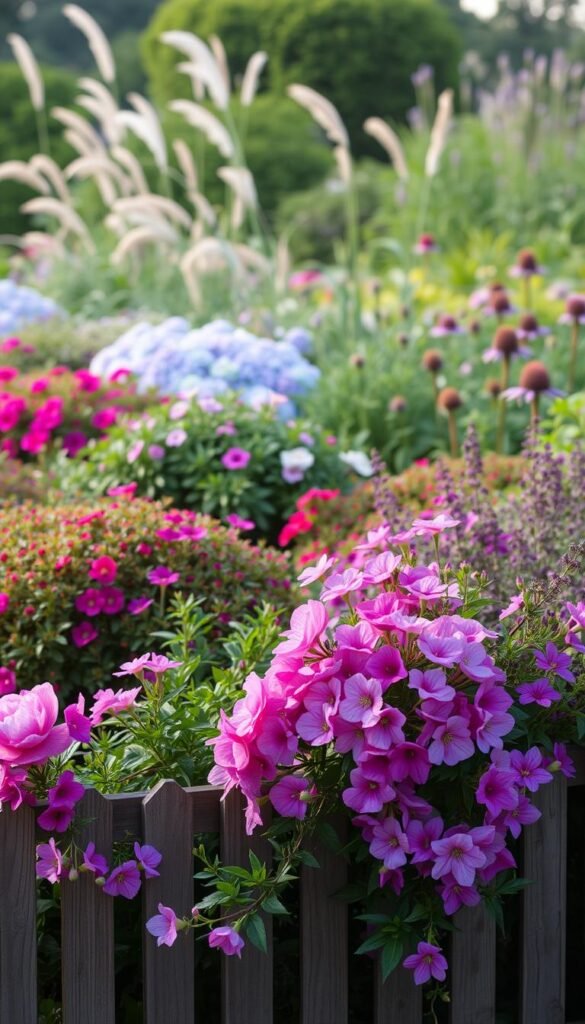
Blend woody anchors with floral waves to craft borders that delight through every season. This approach combines permanent structure with ever-changing blooms, offering both stability and surprise in your landscape. Thoughtful pairings ensure your space remains vibrant while reducing upkeep demands.
Building Your Garden’s Backbone
Choose multi-season performers like reblooming hydrangeas and fragrant roses. These plants establish height and form while delivering rotating color displays. Consider these reliable options:
| Shrub Type | Seasonal Interest | Companion Perennials |
|---|---|---|
| Weigela | Spring blooms | Catmint |
| Camellia | Winter flowers | Hellebores |
| Bougainvillea | Summer color | Lavender |
Curating Floral Flourishes
Fill spaces between woody plants with self-seeding varieties like columbine or Shasta daisies. These return stronger each year, developing richer texture over time. Divide clumps every 3-4 seasons to refresh growth and expand your displays.
“The best gardens balance steadfast companions with fleeting beauties – a dance between the enduring and ephemeral.”
Pair silver-leaved artemisia with crimson roses for striking contrast. Combine feathery astilbes with glossy-leaved camellias to play with light reflection. These partnerships create interest that evolves daily, keeping your border endlessly engaging.
Incorporating Design Elements and Decorative Touches
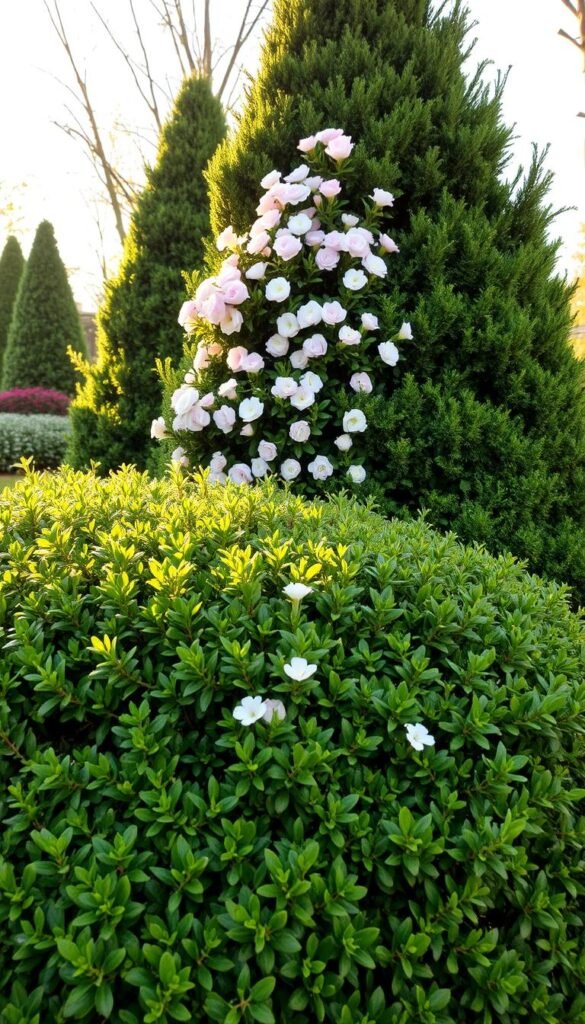
Think beyond blooms to create visual harmony that lasts through every season. Strategic choices in foliage and decor elevate your space from pretty to purposeful, blending nature’s beauty with human creativity.
Year-Round Anchors With Personality
Evergreens work overtime in your landscape. They frame views, guide the eye, and maintain structure when other plants sleep. Mix heights and textures for depth – try feathery junipers behind glossy boxwoods.
| Shrub Type | Mature Height | Foliage Color | Perfect Pair |
|---|---|---|---|
| Dwarf Alberta Spruce | 6-8 ft | Emerald | Ornamental grasses |
| Golden Euonymus | 4-6 ft | Yellow-green | Purple sage |
| Blue Star Juniper | 2-3 ft | Silver-blue | Rosemary |
Place taller specimens near seating areas or pathways. Their vertical lines create natural waypoints that look intentional yet relaxed. Underplant with lavender or sedum to soften edges.
Decorative elements should whisper, not shout. A weathered urn planted with trailing ivy makes quieter impact than bright plastic ornaments. Match materials to your home’s architecture – wrought iron for Victorians, cedar for farmhouses.
When using variegated plants like hostas, pair them with solid green neighbors. This prevents visual chaos while letting unique foliage shine. Your choices create rhythm that feels wild yet composed – the hallmark of great design.
Soil, Light, and Climate: Preparing Your Garden Space
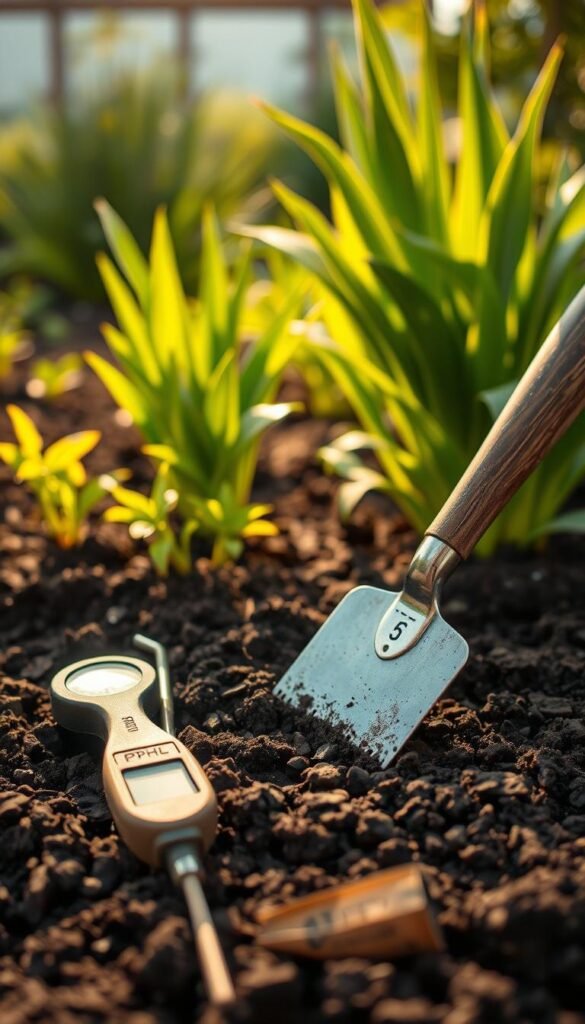
Your garden’s success begins below the surface and extends to the skies above. Understanding your unique growing conditions helps you work with nature rather than against it. Let’s explore how to create the perfect foundation for thriving greenery.
Testing Soil Conditions and pH Levels
Start by getting to know your dirt. Simple test kits from local nurseries reveal pH levels and soil type in minutes. Clay holds moisture but drains slowly, while sandy earth needs frequent watering. Most flowering varieties prefer slightly acidic conditions (6.0-6.5 pH).
| Soil Type | Drainage Speed | Ideal Plants |
|---|---|---|
| Clay | Slow | Rudbeckia, Daylilies |
| Sandy | Fast | Lavender, Sedum |
| Loam | Moderate | Peonies, Phlox |
Assessing Sunlight, Aspect, and Microclimates
Track how light moves across your space through seasons. South-facing areas bake in afternoon sun – perfect for roses and sage. North-facing zones suit hostas and ferns. Notice how walls or trees create sheltered pockets for delicate plants.
| Garden Aspect | Sun Exposure | Plant Suggestions |
|---|---|---|
| South | 6-8 hours | Salvia, Coneflowers |
| North | 2-4 hours | Astilbe, Bleeding Heart |
Remember, your local climate plays a starring role. Coastal regions need salt-tolerant varieties, while inland gardens might require cold-hardy plants for frosty winters. Observe wind patterns and rainfall to complete your site profile.
Tips and Tricks for Garden Maintenance and Long-Term Success
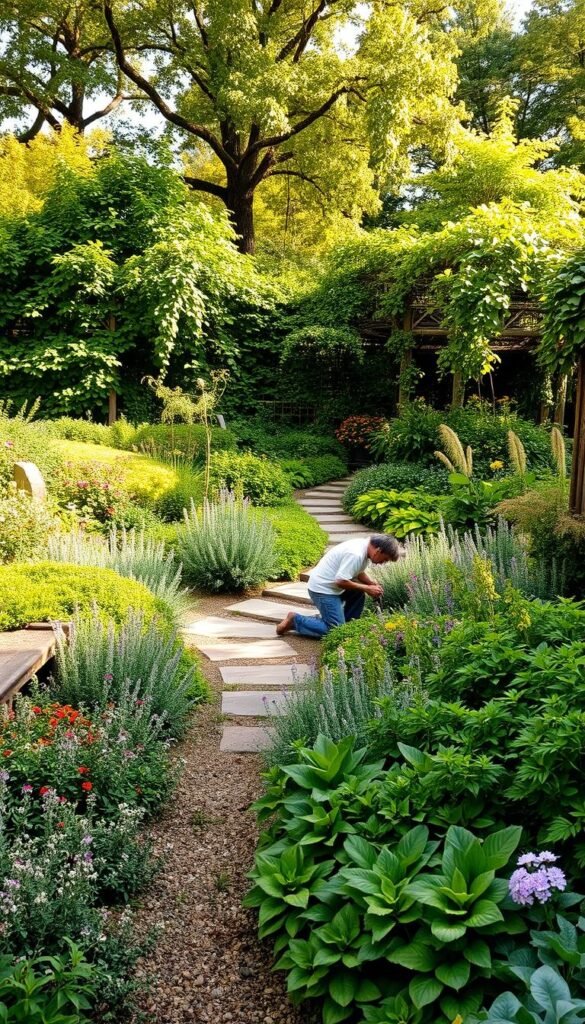
Crafting a thriving landscape requires balancing wild beauty with smart care strategies. Embrace a relaxed approach that celebrates natural growth while keeping key elements in check. This balance reduces chores and lets your space mature gracefully.
Seasonal Pruning and Plant Division
Let ornamental grasses sway freely but trim woody stems after flowering. For perennials like hostas, divide clumps every 3-4 years using a sharp spade. This refreshes growth and prevents overcrowding.
Consider maintenance needs when selecting varieties:
| Low-Effort Choices | High-Care Options |
|---|---|
| Sedum | Hybrid tea roses |
| Catmint | Delphiniums |
| Russian sage | Dahlias |
Allow groundcover roses to spill onto lawn edges for that “lived-in” charm. As plants reach mature height, selectively prune taller stems to maintain sightlines. Remember – a slightly untamed look captures the cottage feeling perfectly.
“Good gardening is about making wise choices, not endless work.”
Track growth patterns through gardening journals or photo videos. These tools help you spot overcrowding early and plan divisions before plants compete for space. With smart timing, you’ll spend less time wrestling with overgrowth.
Bringing Your Layered Cottage Garden Vision to Life
Your outdoor space becomes a living canvas when personal touches meet smart planning. Forget rigid rules – your garden thrives on choices reflecting your family’s tastes and routines. Snack-ready cherry tomatoes mingle with fragrant mint, creating edible beauty that delights kids and pollinators alike.
Build your plant list around multi-taskers like calendula. These golden blooms brighten spaces while healing skin in salves. Lavender serves triple duty – fragrance, tea leaves, and bee buffet. Every selection should earn its spot through beauty and purpose.
Smart sourcing makes dreams affordable. Reputable nurseries offer bareroot roses and fruit bushes from November through March – dormant treasures that awaken in spring. Phase your design over seasons, letting mature plants fund new additions through divisions.
Start small with a sunlit corner or pathway border. Layer in herbs first, then expand with flowering perennials as confidence grows. Your home landscape evolves into a personalized sanctuary where practicality dances with charm.