Transforming limited outdoor areas into functional, inviting spaces ranks among the top requests homeowners share with design professionals. With smart planning, even the coziest plots can become extensions of your living area that maximize every inch while radiating sophistication.
Contemporary approaches focus on simplicity and purpose. Geometric layouts paired with intentional plant selections create visual flow, making tight quarters feel expansive. As experts note, strategic material choices like modular pavers or vertical gardens help maintain openness without sacrificing style.
You’ll discover how curated greenery and multi-functional features turn challenging spots into personal sanctuaries. Low-maintenance options prove particularly valuable – think drought-resistant grasses or self-watering containers that conserve resources. For urban settings, space-saving planters offer flexibility while complementing architectural lines.
This guide reveals practical techniques to blend form and function seamlessly. Learn to use color palettes that expand perceived boundaries and layouts that guide the eye effortlessly. Whether hosting gatherings or enjoying quiet moments, your transformed area will feel like a natural continuation of your home’s character.
Embracing Minimalism in Small Backyard Spaces

Less truly becomes more when designing compact outdoor areas for maximum impact. By focusing on intentional choices, you’ll turn your yard into a calming sanctuary that feels twice its actual size. Start by removing unnecessary items and selecting features that serve both aesthetic and practical roles.
Geometric patterns and restrained color schemes work wonders in tight spaces. Stick to two or three materials – like smooth stone paired with weathered wood – to maintain visual harmony. Neutral tones help expand perceived boundaries, while bold accents (think a single sculptural planter) add personality without chaos.
Curate your greenery carefully. Choose architectural plants like snake plants or ornamental grasses that command attention without overcrowding. Leave breathing room between elements – empty areas let the eye rest and amplify the sense of order. As noted in our guide on aesthetic cohesion, repetition of shapes creates rhythm that ties the space together.
Finally, define zones using subtle transitions. A low concrete divider separates seating from planting areas cleaner than overgrown hedges. Remember: minimalist design thrives on precision. Every item should earn its place through beauty or function – or better yet, both.
Defining Priorities for Your Outdoor Space

What makes your outdoor time truly valuable? Start by listing activities that matter most – from Sunday barbecues to quiet morning coffees. Ground space disappears fast in compact yards, so ranking must-haves prevents overcrowding. A stunning fire pit might tempt you, but will it leave room for kids’ play areas?
Assess Your Needs and Lifestyle
Track your family’s habits for a week. Do you host friends monthly or unwind solo daily? Storage for gardening tools could outweigh decorative fountains if practicality tops your list. Smart space planning strategies often combine functions – benches with hidden compartments or raised planters doubling as seating ledges.
Setting Realistic Goals for Functionality
Dream big, but anchor plans in reality. That pizza oven requiring weekly use? If you cook outdoors twice a year, opt for portable grills instead. Allocate zones using painter’s tape on your lawn – you’ll quickly see if dining areas crowd out walking paths.
Consider future changes too. Will toddlers need play space in five years? Could aging parents require smoother pathways? Build flexibility into your design with movable planters or modular furniture. Your perfect layout today should adapt as life evolves.
Planning a Functional Layout for Modern Backyard Design
Smart spatial arrangements turn compact yards into versatile retreats. Start by mapping how you actually move through your outdoor area – where do you walk most? Where does sunlight linger? These insights shape layouts that feel intuitive rather than forced.
Maximizing Every Square Foot
Think vertically when floor space is limited. Wall-mounted herb gardens or tiered planters add greenery without cluttering pathways. Multi-use features shine here: a bench with built-in storage doubles as a side table during gatherings.
Traffic flow makes or breaks small designs. Leave 36-inch walkways between zones – enough for two people to pass comfortably. Avoid dead-end paths by connecting seating clusters with curved stepping stones. As one landscape architect notes: “Circulation patterns should feel effortless, like the space guides you naturally.”
Creating Zones for Different Activities
Define areas using texture changes rather than walls. Try gravel under dining sets paired with smooth decking near loungers. Potted bamboo clusters work better than fences to separate reading nooks from play spaces.
Pair complementary functions: place beverage stations near seating, but keep grills downwind. Flexible layouts adapt best – foldable furniture lets a yoga zone transform into an evening entertainment area in minutes.
Blending Indoor and Outdoor Living

Your home’s character shouldn’t stop at the back door. By merging interior comforts with fresh-air freedom, you create a unified living environment that feels both spacious and intimate. Start by mirroring your indoor style outside – matching cushion fabrics or repeating wall colors establishes visual harmony.
Flooring transitions work magic. Extend kitchen tiles onto the patio or use decking that echoes hardwood floors. This trick makes your outdoor space feel like another room rather than a separate zone. One designer notes: “Continuity in materials bridges the gap between built environments and nature.”
Furniture choices matter too. Weather-resistant sectionals that match your sofa’s silhouette create instant cohesion. Add throw pillows in indoor hues, but opt for sunproof fabrics. For smaller yards, try folding bistro sets that mimic your dining chairs’ blended aesthetic.
Lighting ties everything together. Hang pendant lights similar to indoor fixtures above seating areas. Solar-powered path markers can mirror table lamp shapes. These touches make evening gatherings flow naturally from kitchen to garden.
Don’t forget greenery’s role. Place potted ferns near entryways to soften transitions. Window boxes with herbs connect indoor kitchens to outdoor spaces. Remember: successful blending isn’t about copying – it’s about creating dialogue between your home’s interior and exterior personality.
Modern Backyard Landscaping for Small Yards: Sleek Lines and Minimalist Plants

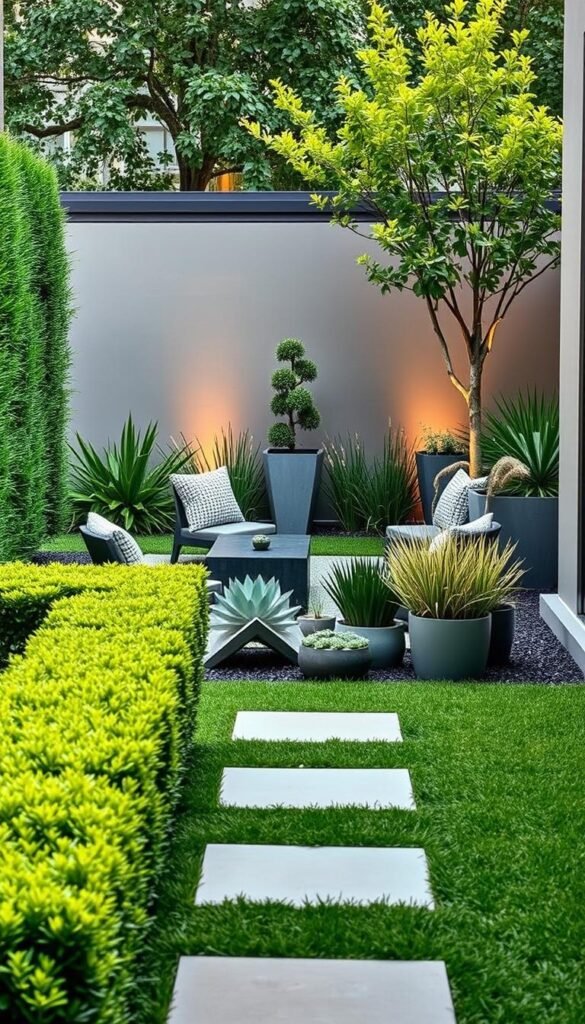
Crafting an outdoor oasis in limited spaces requires precision and purpose. Focus on structured layouts that enhance perceived space through intentional geometry. Straight pathways or rectangular plant beds create rhythm, while diagonal patterns add dynamic energy without clutter.
Choose vegetation that works overtime. Architectural specimens like yucca or agave offer bold silhouettes year-round. Pair them with ornamental grasses that sway gently, adding movement. As one designer advises: “Every plant should earn its spot through form or function – ideally both.”
Restraint defines successful small-space landscape design. Limit your palette to three materials maximum – perhaps smooth concrete, weathered steel, and river rocks. This approach keeps the eye moving smoothly across your yard. Neutral tones expand boundaries, while a single vibrant planter adds personality.
Sustainability strengthens modern layouts. Native species thrive with minimal watering, and drip irrigation systems conserve resources. Solar-powered lights outline pathways while reducing energy use. These choices create spaces that feel both intentional and eco-conscious.
Balance is key. Let hardscape elements like patios frame your greenery rather than dominate. A narrow strip of thyme between pavers softens edges, while vertical gardens maximize planting areas. Your space becomes a testament to smart, sophisticated design principles that prioritize harmony over excess.
Incorporating Clean Lines and Geometric Shapes

The secret to making compact spaces feel expansive lies in crisp, intentional patterns. Geometric arrangements guide the eye smoothly across your area, creating rhythm that eliminates visual clutter. This approach works particularly well with hardscaping elements that define your yard’s structure.
Choosing the Right Hardscaping Materials
Select surfaces that balance durability with design appeal. Large-format concrete tiles or travertine slabs create seamless patios, while textured pavers add grip without sacrificing style. As one designer notes: “Materials should whisper sophistication, not shout for attention.”
Benefits of Pavers, Concrete, and Gravel
Concrete’s versatility shines in modern designs. Use it for smooth walkways, raised planters, or minimalist benches. Gravel offers a budget-friendly alternative to grass, with natural drainage that prevents pooling. Pair rectangular pavers with loose stones to create floating pathways that invite exploration.
For contrast, lay geometric stone tiles within gravel beds. This combo adds tactile interest while keeping maintenance low. Remember: clean lines thrive on simplicity. Stick to two complementary materials to maintain cohesion.
Selecting Minimalist Plantings for a Sleek Look
Your plant choices make the final brushstroke in crafting a cohesive outdoor retreat. Focus on specimens that command attention through form rather than quantity. Architectural options like yucca or agave deliver sculptural impact without overcrowding, turning greenery into living art.
Limit your palette to 2-3 varieties that complement your space’s geometry. Ornamental grasses shine here – their wispy blades add movement while framing pathways neatly. Consider low-maintenance options like sedum or fountain for textural contrast that thrives with minimal care.
Single statement trees anchor designs powerfully. A Japanese maple’s crimson canopy or olive tree’s gnarled trunk becomes an instant focal point. Pair these with shrubs offering year-round structure, like boxwood or dwarf juniper.
Remember: restraint amplifies sophistication. Each plant should enhance your layout’s rhythm, not compete for attention. This approach creates harmony between nature and design, proving less truly cultivates more.