
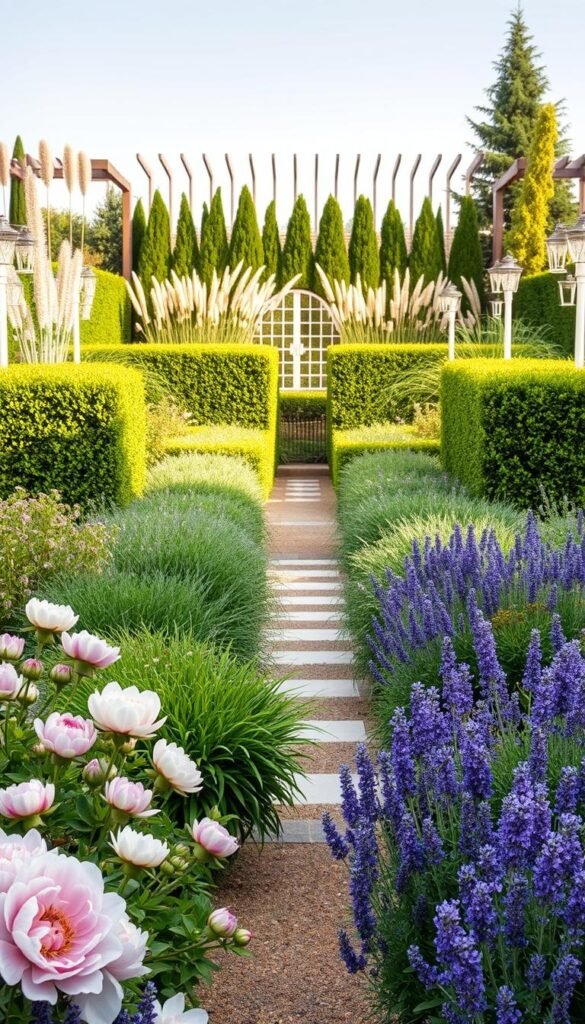
Imagine transforming your outdoor space into a sanctuary that balances nostalgic beauty with today’s practical needs. This design philosophy reimagines classic floral abundance through intentional layouts and smart plant choices. It’s about creating visual poetry that adapts to your lifestyle while celebrating nature’s spontaneity.
You’ll find this approach particularly valuable if you love lush blooms but prefer manageable upkeep. By focusing on strategic groupings rather than random plantings, these spaces maintain their magic without demanding constant attention. Thoughtful arrangements mirror architectural lines, creating harmony between your home and landscape.
Discover how to layer plants for year-round color using our seasonal bloom strategies. We’ll show you why simplifying your plant selection leads to healthier growth and cleaner aesthetics. The secret lies in balancing free-form textures with purposeful structure.
Whether you’re refining an existing space or starting fresh, these principles work in any setting. You’ll learn to combine natural materials with contemporary flair, crafting borders that feel both effortless and polished. Let’s explore how to make your outdoor area a true extension of your personal style.
Understanding the Modern Cottage Garden Aesthetic

What makes today’s approach to floral spaces feel fresh yet timeless? The answer lies in rethinking classic principles through a lens of purposeful creativity. This design philosophy celebrates the relaxed vibe of cottage garden style while adding refined touches that suit 21st-century living.
Key Design Elements and Inspirations
Naturalistic planting forms the backbone of this style. Instead of chaotic mixes, plants grow in bold clusters that create rhythm. You’ll see swathes of lavender or salvias repeating like brushstrokes across the landscape. This technique builds visual cohesion while letting each species shine.
Color coordination plays a crucial role. Designers often limit palettes to three dominant hues, using foliage textures for contrast. A contemporary cottage garden might pair soft pinks with silver-leafed plants and structural evergreens. The result feels curated but never stiff.
Balancing Romantic and Contemporary Styles
The magic happens when free-spirited blooms meet clean edges. Imagine billowy roses spilling over geometric stone paths. You maintain that dreamy cottage garden charm through plant choices but anchor it with intentional spacing and materials.
Strategic repetition helps bridge these contrasts. Using the same plant variety in multiple areas creates unity. You’ll achieve that coveted look where nature appears artfully arranged—not overly controlled. It’s about finding harmony between wild beauty and human touch.
Creating Modern cottage garden borders blending old-world charm with sleek lines

Your home’s structure holds the key to crafting borders that feel both timeless and fresh. Start by examining its rooflines, window shapes, and exterior finishes. These elements dictate whether curved or angular layouts will harmonize best with your space.
Notice how sunlight interacts with your walls at different times? That natural spotlight guides plant placement. Match taller species to shaded areas and low-growing varieties where light dances on surfaces. Your home’s color palette becomes your planting guide—echo brick tones with burgundy heucheras or mirror siding hues through silvery artemisia.
Connect your borders to the larger landscape by repeating native plants from nearby woods or meadows. This approach builds visual flow while supporting local ecosystems. Use evergreen shrubs as anchor points, then layer in perennials that soften edges without overwhelming.
Define boundaries with materials that complement your architecture. A farmhouse might pair with reclaimed timber edging, while a midcentury home could use smooth concrete dividers. These structural elements ground the space, letting floral displays shine without chaos.
Remember: successful borders balance spontaneity with intention. Allow self-seeding flowers to mingle with strategic groupings of ornamental grasses. This creates rhythm that feels organic yet purposeful—a hallmark of thoughtful outdoor design.
Selecting the Perfect Natural Materials and Plants

The magic of a well-designed space lies in pairing living elements with earthy foundations. Let’s explore how to choose companions that thrive together while creating depth through thoughtful combinations.
Choosing Plants for Texture and Color
Start with performers like Salvia ‘Caradonna’ – its purple spikes bloom from spring through frost. Pair it with Geranium ‘Rozanne’, whose blue flowers spread gently without taking over. These cottage garden plants work hard while keeping upkeep simple.
Add playful contrast with Allium ‘Summer Beauty’. Its spherical blooms rise above mounding foliage, deterring hungry rabbits. For airy movement, try Calamintha nepeta – its tiny white flowers dance in breezes. Phlox paniculata brings bold color clusters that hummingbirds adore.
Incorporating Earthy Foundations
Natural materials like flagstone or reclaimed timber create structure that ages beautifully. Use flat stones for winding paths that invite exploration. Wood edging defines planting areas while blending seamlessly with surrounding greenery.
Brick offers timeless appeal for raised beds or low walls. Combine different materials strategically – gravel around seating areas, smooth pebbles near water features. These choices ground your design, letting plants take center stage without chaos.
Remember: The best combinations feel inevitable. When building your palette, ask – does this stone echo the plant’s foliage? Does that weathered bench complement the salvias’ purple hues? That’s how harmony happens.
Establishing Clean Lines and Structured Layout
Great outdoor spaces begin with a blueprint that guides both growth and movement. Think of your layout as the framework that lets plants shine while keeping your space functional. Strong geometric shapes in beds or pathways give the eye clear focal points amid nature’s wilder displays.
Designing Well-Defined Beds and Paths
Start by sketching bed outlines that echo your home’s angles or rooflines. Rectangular planters under windows or circular islands around trees create rhythm. Use materials like brick or stone to edge these spaces, ensuring they hold their form through seasons.
Paths should invite exploration without confusion. Offset walkways with gentle bends lead visitors through your design naturally. Pair straight sections near seating areas with curved stretches through floral zones for balance.
Using Symmetry and Curves Effectively
Mirror plant groupings on either side of a central path for instant harmony. Flank entryways with matching containers or repeat shrubs at intervals. These touches build structure without rigidity.
Soft arcs in lawn edges or flower beds soften angular architecture. Oval gravel patios make perfect gathering spaces, while kidney-shaped borders add fluidity. Remember: curves work best when balanced with straight lines nearby.
For more ideas on elevating your space with smart design, explore our guide to blending form and function. Your layout becomes the silent partner to your plants – shaping experiences while staying quietly in the background.
Incorporating Contemporary and Traditional Elements
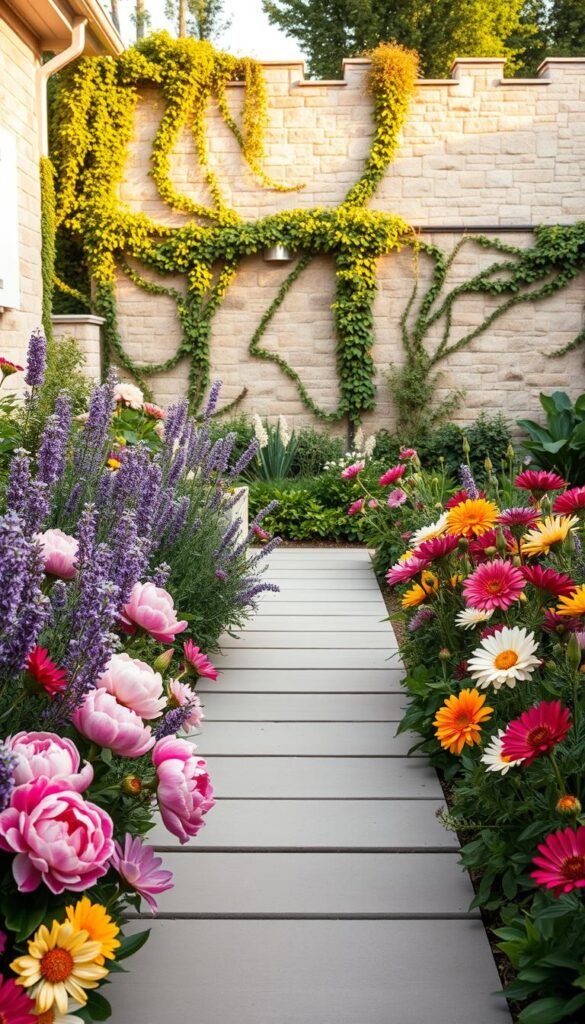
Merging eras in your outdoor space creates a living tapestry where history meets today’s design sensibilities. The trick lies in choosing focal points that honor heritage while embracing fresh perspectives. Think of it as curating a gallery where each piece tells part of your landscape’s story.
Fusing Fresh Ideas with Time-Honored Appeal
Start by reimagining classic structures. A powder-coated steel arbor offers clean lines where climbing roses can run wild. Pair it with reclaimed brick pathways – their weathered hues soften modern materials while maintaining crisp edges.
Color strategies make or break the blend. Limit your palette to two dominant shades plus neutrals. Try pairing blush peonies with charcoal planters, then repeat both tones throughout the space. This creates rhythm without monotony.
“The best gardens whisper stories of the past while shouting joy about the present.”
Materials bridge eras beautifully. Consider these combinations:
| Traditional Element | Contemporary Partner | Unifying Feature |
|---|---|---|
| Wooden trellis | Laser-cut metal panels | Geometric patterns |
| Stone fountain | Corten steel edging | Warm rust tones |
| Wrought iron gate | Recycled glass mulch | Light-reflective surfaces |
Balance abundant plantings with intentional negative space. Let drifts of lavender spill toward a minimalist bench, or frame a sleek water feature with billowy hydrangeas. The contrast feels exciting yet harmonious.
Remember: updates should enhance, not erase. Keep heirloom plants but showcase them in raised beds with crisp lines. Your space becomes a dialogue between generations of garden wisdom.
Step-by-Step Planting and Layout Implementation
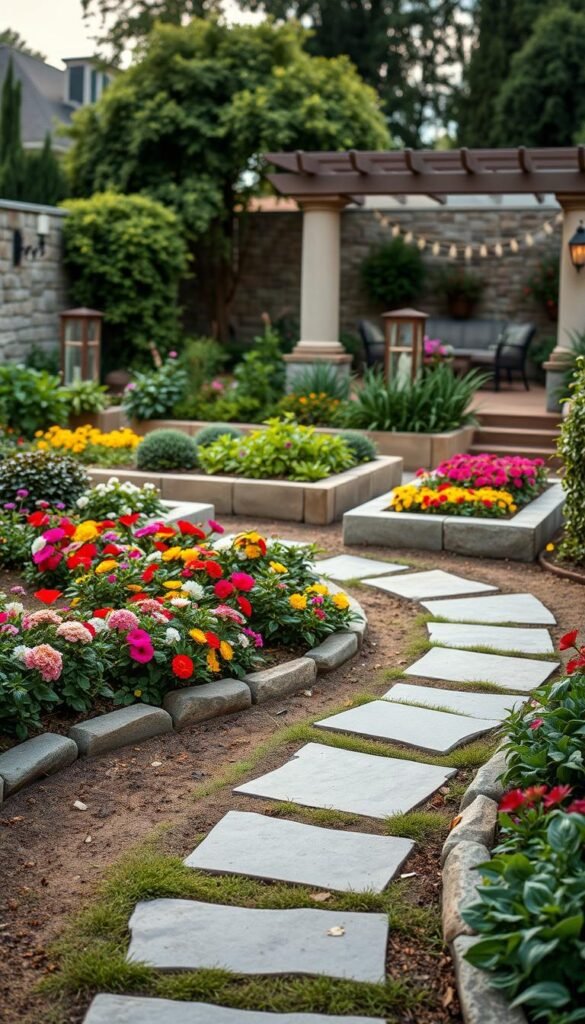
A successful outdoor space starts with careful planning that balances beauty and function. Begin by sketching your vision on paper, marking existing trees, sunlight patterns, and drainage areas. This approach helps you visualize how different zones will interact before lifting a shovel.
Building Your Framework
Install pathways and edging first to define your garden areas clearly. Use flexible hoses or flour to outline curves, ensuring walkways feel natural but purposeful. Anchor corners with evergreen shrubs like boxwood – their year-round structure prevents bare spots in winter.
Follow this installation sequence for best results:
| Structural Element | Purpose | Examples |
|---|---|---|
| Pathways | Direct movement | Flagstone, gravel |
| Edging | Define spaces | Corten steel, brick |
| Anchor plants | Create backbone | Hydrangeas, holly |
| Soil prep | Ensure growth | Compost, mulch |
Space plants using their mature width as your guide. Leave room for seasonal fillers between permanent specimens. For example, tuck spring bulbs under deciduous shrubs – they’ll bloom before leaves emerge.
Phase your project to manage effort and costs. Complete one design area fully before moving to the next. This maintains visual cohesion while letting you adjust plans based on real-world results. Remember: even the best plans improve with flexibility.
Planning for Seasonal Bloom and Year-Round Interest
A garden that captivates through every season begins with smart plant partnerships. Think of your space as a living calendar where each week reveals new textures and hues. This approach ensures your outdoor area remains vibrant even when flowers aren’t blooming.
Mastering the Art of Successional Planting
Start by mapping bloom cycles like puzzle pieces. Early risers like crocuses and hellebores kick off the show in March. By June, peonies and salvias take center stage. Come September, asters and sedums keep the performance alive.
Evergreen shrubs form the backbone of winter interest. Boxwoods provide structure while ornamental grasses like miscanthus add motion. Don’t forget seed heads – coneflowers and hydrangeas create sculptural silhouettes against frost.
“A well-planned border is like good jazz – improvisation within structure.”
Try this three-season combo for seamless transitions:
| Season | Star Plants | Supporting Cast |
|---|---|---|
| Spring | Tulips | Lungwort foliage |
| Summer | Daylilies | Catmint |
| Fall | Japanese anemones | Switchgrass |
Track bloom times using a simple spreadsheet or gardening app. Note which plants overlap their flowering periods. This helps fill gaps and prevents color drop-offs. Remember: foliage plants work overtime, providing texture when blooms fade.
Integrating Hardscaping for Enhanced Structure
Hardscaping acts as the backbone of your outdoor design, creating order amid floral abundance. These elements guide foot traffic, frame plantings, and add visual weight to balance softer textures. The right choices feel like they’ve always belonged there.
Utilizing Edging Stones, Gravel Paths, and Corten Steel
Edging stones work like picture frames for your plantings. Try irregular limestone pieces for a rustic feel or sleek granite slabs for crisp lines. Gravel paths offer flexibility – rake them smooth or let footprints create natural patterns.
Corten steel brings industrial flair that weathers beautifully. Landscape designer Tim Pilgrim used it around an oak tree, noting: “The rust tones mirror autumn leaves while keeping edges sharp.” Pair it with sand-colored gravel for seamless blending.
| Material | Best Use | Visual Impact |
|---|---|---|
| Edging Stones | Defining flower beds | Grounds plantings |
| Gravel | Informal pathways | Adds texture |
| Corten Steel | Modern borders | Creates contrast |
Chunky timber steps or local stone walls connect your space to regional landscaping traditions. For raised beds, stack flat rocks loosely to encourage moss growth. These materials like stone age gracefully, gaining character over time.
Balance is key. Limit hard surfaces to 30% of your total area. Curved gravel walks soften angular layouts, while straight steel edges modernize winding beds. Discover more about mixing vintage and modern elements to achieve this equilibrium.
Adding Texture with Ornamental Grasses and Foliage
Ornamental grasses weave magic through your landscape, bridging classic charm and fresh design. Unlike traditional cottage garden staples, these swaying beauties bring rhythm to your space while supporting pollinators. Their feathery plumes catch sunlight like nature’s wind chimes, adding depth without clutter.
Choose varieties like feather reed grass for vertical drama or blue fescue for silvery mounds. Plant them first as living scaffolding – their forms create structure for showier blooms. Mix tall species behind peonies or let low-growing types spill onto paths.
Grasses solve multiple challenges. They mask fading bulb foliage in summer and glow golden through frost. For a whimsical charm, pair pink muhly grass with lavender. Birds will feast on seeds while you enjoy the ever-changing show.
Remember: balance is key. Use grasses in drifts, not dots. Alternate fluffy and spiky textures near seating areas. Your space gains movement and mystery, proving even time-honored gardens can embrace graceful evolution.