
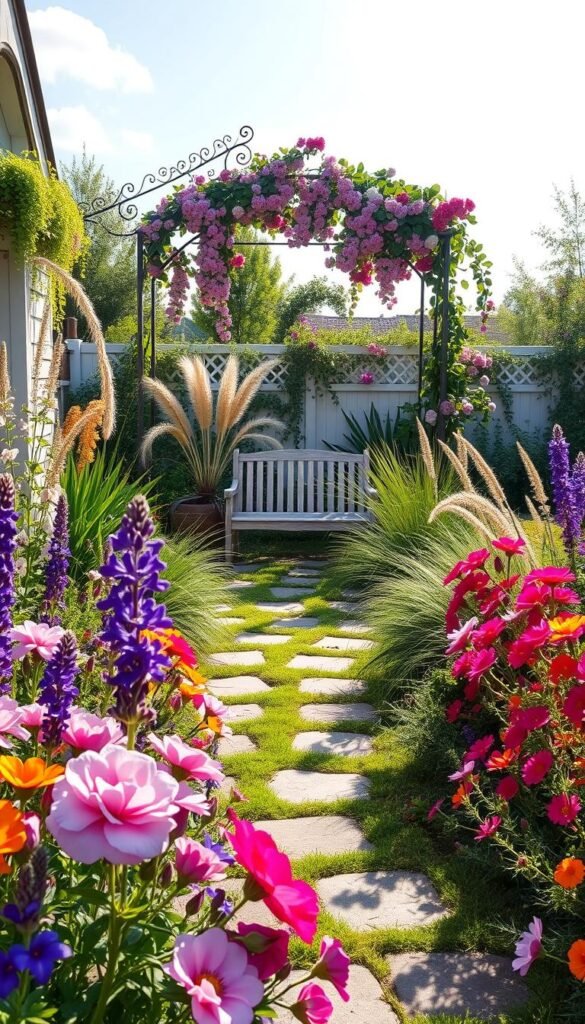
Imagine creating a lush landscape that captures the romance of classic English designs while fitting seamlessly into today’s busy lifestyles. This fresh take on floral arrangements combines natural elegance with smart solutions for common gardening challenges. Joy Davey’s story shows how reimagining traditional concepts can yield stunning results – her Craftsman-style home now features four-season appeal without constant upkeep.
Today’s approach to floral displays focuses on strategic plant selection and thoughtful layout. Designers like Rebecca Sams and Buell Steelman recommend using hardy varieties that bloom longer while resisting deer and drought. By mixing textures and staggered bloom times, you’ll enjoy continuous color from spring through fall.
Discover how to balance free-spirited beauty with functionality in your yard. We’ll explore techniques for creating cohesive layouts using garden design style pairings that work across different seasons. You’ll learn to incorporate structural elements that provide winter interest while maintaining that cherished informal look.
This guide reveals the secrets behind low-maintenance landscapes that never sacrifice visual impact. From selecting the right perennials to adding meaningful personal touches, you’ll gain practical insights for crafting your own enchanting outdoor retreat.
Embracing the Modern Cottage Garden Concept

Think of a garden that honors the past while simplifying upkeep. This refreshed approach keeps the wildflower charm you love but adds smart solutions for real life. Designers now focus on creating spaces that feel abundant yet organized – perfect for those wanting beauty without backbreaking work.
Discovering the Charm of a Reimagined Style
Today’s interpretation maintains the loose, free-flowing spirit of classic designs but with intentional structure. Naturalistic planting becomes key here – grouping similar plants in sweeping waves rather than random scattering. As landscape expert Tim Pilgrim notes:
“This style celebrates repetition and thoughtful color coordination while keeping that beloved informal feel.”
How Traditional Meets Contemporary
You get the best of both worlds with this hybrid approach:
- Simplified care through drought-resistant plants
- Year-round interest from strategic evergreen placements
- Clear pathways that guide the eye without rigid formality
The magic happens when romantic blooms meet clean edges. You might pair billowy peonies with geometric stone borders, or let ornamental grasses soften angular seating areas. This balance creates spaces that soothe the soul while fitting busy schedules.
Modern cottage garden borders that fuse contemporary plants and vintage accents: Design Fundamentals

Transform your outdoor space with smart design choices that blend timeless appeal with practical maintenance. Start by selecting 5-7 hardy perennials instead of overwhelming your beds with dozens of varieties. This focused approach creates bold drifts of color while cutting weeding time in half.
Shape matters as much as plant choices. Mirror your home’s roofline or window patterns in bed layouts for instant harmony. A rectangular ranch pairs beautifully with curved borders softened by airy grasses, while angular modern homes shine with crisp-edged beds filled with billowy blooms.
Keep colors flowing year-round with strategic layering. Plant early bloomers like peonies behind late-season stars such as sedum. Add vertical interest with climbing roses on arched trellises – these structures guide the eye upward while supporting growth.
Consistency ties everything together. Repeat key hues in different seasons using foliage and flowers. Purple salvia in spring transitions to lavender asters in fall, creating rhythm without monotony. This method builds visual depth while keeping care simple.
Remember: great design balances spontaneity with intention. Let plants spill slightly over pathways, but maintain clear edges for that polished finish. Your space will feel both wild and welcoming – exactly how a cherished retreat should.
Starting with Your Garden’s Structure

Building a beautiful outdoor space begins with a strong foundation. Landscape designer Tim Pilgrim emphasizes:
“Your home’s architecture should whisper to the surrounding greenery, not shout over it.”
At Oak Cottage, this philosophy comes alive through plantings that echo the building’s lines while merging with wilder landscapes beyond.
Planning Your Layout and Pathways
Curved walkways work magic in connecting spaces. Instead of straight lines leading to doors, try gentle arcs that invite exploration. These meandering paths soften angular architecture while creating natural sightlines to your favorite blooms.
| Feature | Traditional Approach | Modern Adaptation |
|---|---|---|
| Pathway Shape | Straight, formal | Curved, organic |
| Materials | Crushed stone | Permeable pavers |
| Edging | Rigid metal | Low-growing herbs |
| Maintenance | Weekly weeding | Mulched surfaces |
Defining Your Garden’s Backbone
Evergreen shrubs act as living bookends for your floral displays. Boxwoods or holly bushes provide crisp definition to planting beds, ensuring winter interest when flowers fade. Pair these with ornamental grasses for movement that dances in the breeze.
Zoning simplifies care while boosting visual impact. Dedicate areas for cutting flowers, kitchen herbs, and showstopper perennials. This smart layout planning reduces maintenance while making every season feel intentional.
Integrating Foliage, Color, and Texture

Transform your outdoor canvas with clever combinations of leaves and blooms. Joy Davey’s vibrant space demonstrates how strategic foliage choices elevate floral displays while reducing maintenance. Her secret? Using bold accents as permanent anchors in ever-changing beds.
Using Bold Foliage Accents
Deep burgundy leaves create instant drama. Plants like smokebush and pineapple lily offer year-round structure while letting flowers shine. These living sculptures work double duty – their rich hues make pastel blooms pop and unify different garden zones.
| Feature | Traditional Gardens | Modern Approach |
|---|---|---|
| Focal Points | Flower clusters | Foliage specimens |
| Color Strategy | Seasonal changes | Consistent anchors |
| Maintenance | Frequent replanting | Multi-year impact |
| Seasonal Interest | 4-6 months | 8-12 months |
Creating Contrast with Pastel and Dark Tones
Pair soft pinks with inky purples for eye-catching combos. Try pairing blush astilbes with deep-hued heucheras. Silver-leafed plants like artemisia bridge bold and soft tones beautifully. This trick prevents color clashes while adding depth.
Limit your palette to three main colors per area. Stick to blues, pinks, and whites near seating areas. Use burgundy and gold in walkway borders. This focused approach maintains that cherished cottage feel while looking intentional.
Choosing the Right Plants for Low-Maintenance, Year-Round Interest

Crafting a vibrant outdoor space starts with smart plant choices that deliver beauty through every season. Landscape designer Tim Pilgrim’s 70/30 rule simplifies decision-making: rely on hardy varieties for 70% of your layout, then sprinkle in daring picks for personality. This strategy builds resilience while letting your creative side shine.
Safe Plant Selections for Your Climate
Begin with tough performers suited to your region. Nepeta’s lavender spikes and Stachys’ silver leaves thrive in most zones with minimal fuss. Group these reliable stars in clusters of three to seven – this creates bold swaths of color that deter weeds naturally.
Red valerian and salvias offer extended bloom times, filling beds with life from spring through fall. As Pilgrim notes:
“Repetition isn’t just pretty – it’s practical. Matching groups create visual flow while simplifying care routines.”
Experimenting With Statement Blooms
Reserve 30% of your space for showstoppers like Kniphofia’s torch-like flowers. These eye-catchers work best when repeated in key spots – near seating areas or along pathways. Pair fiery Achillea ‘Pineapple Mango’ with soft grasses for contrast that lasts months.
Remember: even bold choices need planning. Test new varieties in small batches before expanding. This approach keeps your layout cohesive while allowing room for delightful surprises each year.
Using Grasses to Enhance the Modern Look
Picture your outdoor space transformed by whispering stems that dance with every breeze. Ornamental grasses offer a fresh solution for connecting classic floral charm with today’s laid-back aesthetics. As designer Tim Pilgrim observes:
“Grasses inject rhythm into plantings – their swaying forms make static layouts feel alive.”
Selecting Grasses That Work While You Relax
Australian Blue Grass (Poa labillardierei) shines as a top pick for blending old and new. Its steel-blue blades create perfect harmony with cottage favorites like red valerian. Why this pairing works:
- Soft textures balance bold blooms
- Drought tolerance reduces watering needs
- Seed heads feed finches through winter
These versatile performers change outfits seasonally. Spring brings fresh green shoots, summer shows feathery plumes, and frost turns blades into golden sculptures. You get three distinct looks from one planting.
Smart placement maximizes impact. Use taller varieties as living screens behind flower beds. Low-growing types make elegant edging along walkways. Their neutral tones let roses and dahlias take center stage while adding subtle depth.
Wildlife thrives where grasses grow. Beneficial insects hide in dense clumps, while sparrows feast on seeds. You’ll create habitats simply by letting plants follow their natural cycles – no extra work required.
Incorporating Natural Hardscape Elements
Blend rugged textures with soft blooms using earth-friendly materials that age gracefully. Landscape designer Tim Pilgrim proves simplicity works wonders:
“Let your garden’s bones whisper through materials found in nature – their imperfections become features over time.”
Informal pathways set the tone for relaxed exploration. Instead of formal pavers, try decomposed granite or crushed shells that crunch underfoot. These permeable options handle rain better than concrete while inviting spontaneous detours to admire your flowers.
Edging with Natural Materials
Chunky timber borders solve two problems at once. They contain sprawling perennials while adding warm contrast to delicate blooms. Use locally-sourced logs for an authentic look – their rough bark pairs beautifully with airy grasses and climbing roses.
Corten steel offers invisible structure that blends into surroundings. When wrapped around tree bases or lining planting beds, its rusty patina mirrors autumn leaves within weeks. You get crisp definition without artificial shine.
| Feature | Traditional Edging | Natural Approach |
|---|---|---|
| Materials | Plastic strips | Weathered wood |
| Installation | Labor-intensive | Simple trenching |
| Aging Process | Fades/Cracks | Develops character |
Create elevation naturally by mounding soil from excavation projects. These gentle slopes improve drainage for fussy plants like lavender while adding depth to flat yards. Top with creeping thyme between stepping stones for fragrant footpaths.
Balancing Traditional Cottage Elements with Modern Twists
Reviving time-honored charm with smart updates brings fresh life to outdoor spaces. Joy Davey’s approach shows how respecting heritage designs doesn’t mean sacrificing ease—her methods preserve romance while trimming hours off weekly chores.
Reimagining Classic Features
Swap fussy pastels for moody drama. ‘Shiraz’ New Zealand flax adds inky blades that contrast with airy blooms, while purple smokebush varieties like ‘Velvet Cloak’ create living sculptures. These bold choices maintain cottage style whimsy but with contemporary edge.
Say goodbye to high-maintenance topiaries. Compact conifers like ‘Papoose’ spruce offer structure without shearing. Their natural shapes echo traditional forms but thrive on neglect—perfect for today’s busy gardeners.
Mass plantings simplify care while amplifying impact. Drifts of catmint flow like lavender rivers, blooming for months with minimal deadheading. This strategy honors traditional cottage garden abundance but streamlines upkeep.
Your space becomes a sanctuary where heritage meets practicality. Dark foliage anchors seasonal changes, easy-care evergreens frame views, and flowing perennials soften edges. It’s the best of both worlds—nostalgic charm tailored for modern living.