
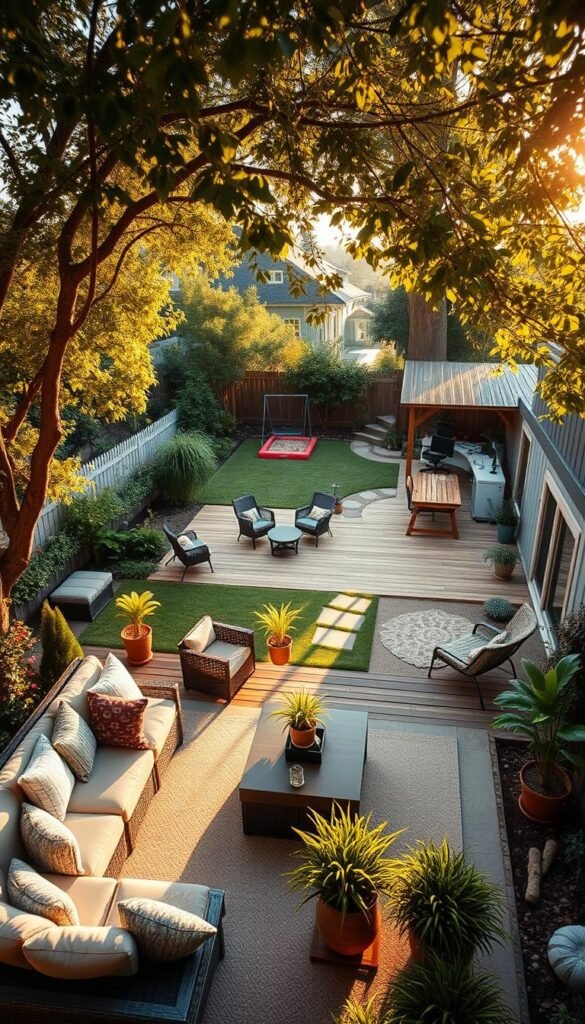
Your yard holds untapped potential to become more than just grass and flowerbeds. Today’s outdoor areas serve as flexible extensions of your living space, adapting to everything from morning coffee breaks to afternoon video calls. With smart planning, even small patios can host yoga sessions, family dinners, and creative projects without feeling cluttered.
Strategic layout ideas from space-saving experts show how to divide your landscape into purposeful zones. Imagine transitioning from a dining area to a reading nook simply by rearranging movable planters. These solutions work whether you’re updating a balcony or redesigning a half-acre plot.
Durable materials matter when creating low-maintenance areas. Weather-resistant furniture lasts decades with proper care, as highlighted in this guide to outdoor aesthetics. Replace water-thirsty lawns with gravel pathways or native plants that thrive with minimal attention.
Your outdoor haven should grow with your needs. A well-planned setup lets kids play tag today while hosting dinner parties tomorrow. By blending practicality with personal style, you’ll create a living space that truly earns its keep – no green thumb required.
Creating Distinct Zones for Different Activities
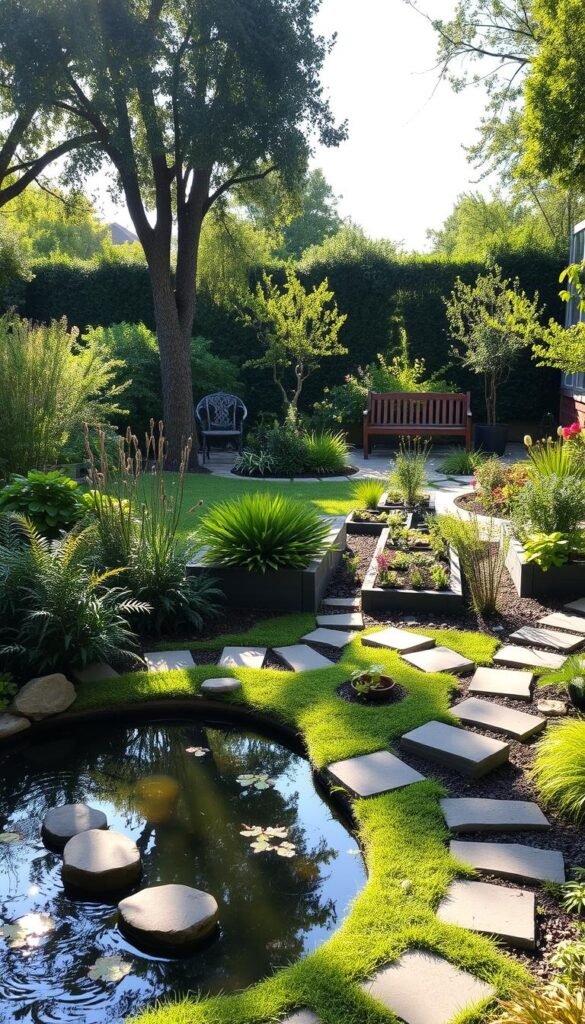
Turn your outdoor area into a tailored experience by mapping activity zones before planting. Clear divisions help your yard serve multiple purposes without chaos. Start by sketching where you’ll entertain, unwind, or focus – even narrow side spaces hold potential.
Defining Spaces with Natural Boundaries
Use feathery ornamental grasses as living curtains between your dining spot and reading corner. Their swaying stems soften edges while letting breezes through. For stronger separation, boxwood hedges create green walls that double as windbreaks.
Raised planters work wonders in tight quarters. Line them along walkways to split cooking zones from lounging areas. You maintain flexibility – rearrange containers seasonally as needs change.
| Boundary Type | Best For | Maintenance Level |
|---|---|---|
| Ornamental Grasses | Visual separation | Low |
| Hedgerows | Sound barriers | Medium |
| Movable Planters | Flexible layouts | High |
Incorporating Transitional Elements
Guide foot traffic naturally with stepping stones nestled in creeping thyme. These fragrant pathways invite exploration while protecting delicate groundcover. Arbors draped with jasmine mark entry points to new areas, creating anticipation.
Repeat curved lines in both hardscaping and planting beds to unite different zones. A winding gravel path mirroring nearby flower shapes makes your entire space feel intentional. For more creative gardening ideas, explore unexpected uses for vertical surfaces and underutilized corners.
Maximizing Vertical Space with Living Walls
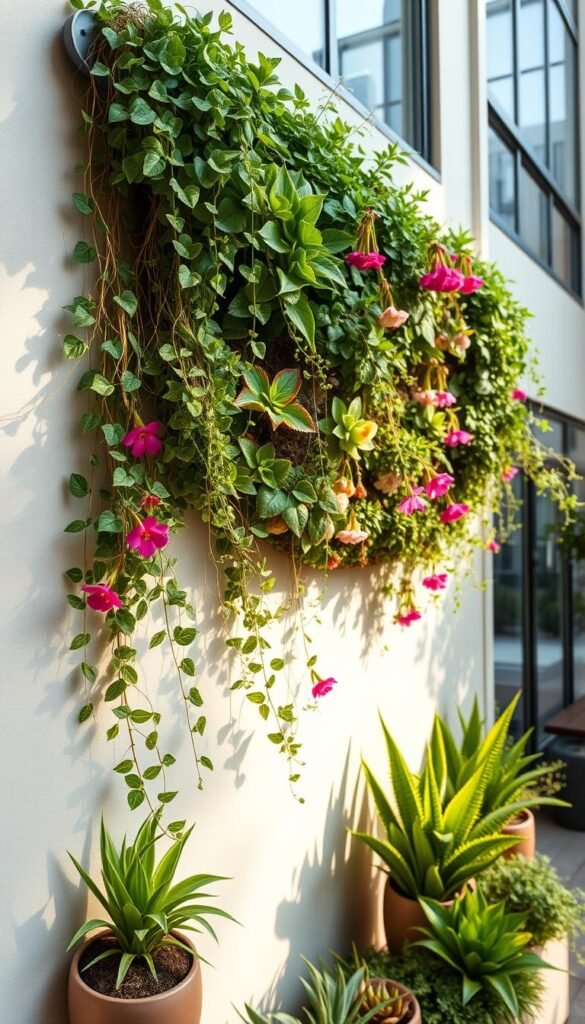
Unused vertical surfaces become prime real estate when ground space runs short. Living walls turn blank facades into thriving ecosystems that save room while boosting curb appeal. These plant-filled installations work equally well on balcony railings or backyard fences, offering fresh herbs and vibrant blooms at eye level.
Selecting the Right Plants for Vertical Gardens
Match greenery to your wall’s conditions for year-round success. Sun-drenched surfaces love succulents like sedum and echeveria, which store water in their leaves. Shady spots transform with feathery ferns and velvety mosses that crave moisture.
Mix practical and pretty choices for double-duty walls. Rosemary and thyme release calming scents when brushed against, while cherry tomatoes dangle like edible ornaments. For urban settings, try creative vertical gardening ideas using stacked planters to grow salad greens vertically.
Integrating Functional Storage Solutions
Smart storage keeps tools handy without cluttering your oasis. Slide narrow shelves between plant modules to tuck away pruners or watering cans. Waterproof cabinets mounted at waist height store cushions during rainstorms while blending with your greenery.
Use climbing plants to camouflage storage zones. Passionflower vines can weave through wire baskets holding spare pots, creating natural curtains. This approach maintains visual flow while adding hidden utility to every square foot.
Designing Convertible Seating and Dining Areas
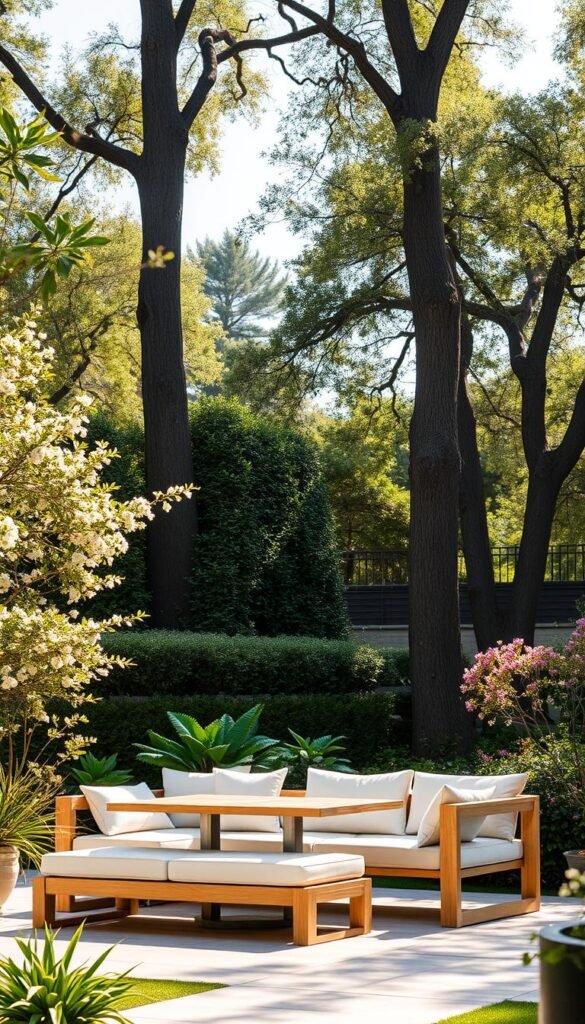
Your patio becomes three distinct spaces before lunchtime. A morning coffee corner evolves into a workspace by 10 AM, then transforms into an alfresco dining spot at dusk. The secret? Furniture that moonlights as storage and shade that dances with the sun.
Choosing Multifunctional Furniture Pieces
Modular outdoor furniture acts like building blocks for your yard. Stackable chairs tuck under expandable tables when not in use. Ottomans pull double duty – store throws inside, then flip the lid for impromptu side tables during gatherings.
Consider these space-saving champions:
| Piece | Daytime Use | Evening Use |
|---|---|---|
| Storage Bench | Reading nook | Buffet server |
| Nesting Tables | Plant stands | Drink stations |
| Convertible Daybed | Sun lounger | Guest bed |
Crafting Versatile Shade Solutions
Retractable pergola louvers let you chase sunlight or hide from it. One minute you’re basking in golden hour glow, the next – creating full coverage for that Zoom call. Freestanding umbrellas with concrete bases roll where needed, shading the grill station at noon and the appetizer spread by 5 PM.
“The best shade structures disappear when you don’t need them,” notes landscape architect Mia Torres. Motorized canopy systems retract completely, revealing starlit skies for evening entertaining. Pair with string lights that automatically dim as the sun sets.
Incorporating Edible Landscaping into Decorative Gardens
Your landscape can nourish both body and soul when food crops meet floral beauty. By blending edible plants with ornamental varieties, you create beds that delight the eye while stocking your kitchen. This approach works in raised planters, border areas, or even replacing sections of lawn.
Harmonizing Vegetables with Ornamentals
Choose veggies that rival flowers in visual appeal. Purple kale forms rosettes as striking as roses, while scarlet runner beans climb trellises with fiery blooms. Tuck chives between peonies – their spiky leaves complement rounded petals, and you’ll snip fresh garnishes all season.
Use herbs as living mulch. Creeping thyme spills over bed edges, releasing fragrance when brushed. For height contrasts, pair dwarf fruit trees with ornamental grasses. This layering technique maximizes space while creating depth.
Planning for Year-Round Harvests
Rotate crops using a seasonal care plan to keep beds productive. Early radishes make way for summer basil, followed by fall kale. Interplant quick-growing lettuce beneath slower tomatoes – you’ll harvest greens before the tomatoes need full sun.
Enrich soil with compost to support continuous growth. A 30% compost blend feeds both edible and decorative plants. Mulch pathways with wood chips to retain moisture and reduce maintenance. With smart timing, every square foot becomes a rotating gallery of color and crunch.